
David Westerfield
Murderer Robert Martines Perez
Murderer · USA · 1994
Name: Robert Martines Perez · Other name used in proceedings: Robert Martinez P…
15 victims
Robert Martines Perez
Murderer · USA · 1994
Name: Robert Martines Perez · Other name used in proceedings: Robert Martinez P…
15 victims
 Billy Frank Vickers
Murderer · USA · 1993
Billy Frank Vickers Vickers was executed by lethal injection in Texas on Januar…
14 victims
Billy Frank Vickers
Murderer · USA · 1993
Billy Frank Vickers Vickers was executed by lethal injection in Texas on Januar…
14 victims
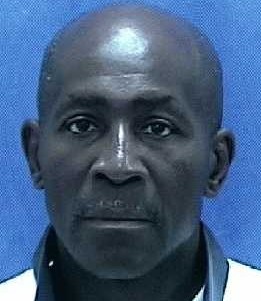 Stanley Edward Allen
Murderer · USA · 1981
Stanley Edward Allen was convicted in Elbert County for the murder, rape and ro…
1 victim
Stanley Edward Allen
Murderer · USA · 1981
Stanley Edward Allen was convicted in Elbert County for the murder, rape and ro…
1 victim
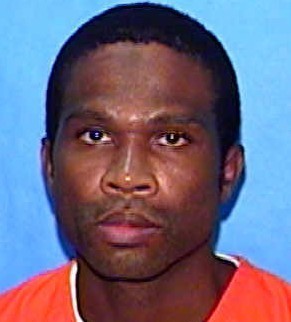 Chadwick Banks
Murderer · USA · 1992
Chadwick Banks was a Black male who was born on June 15, 1971. His aliases incl…
2 victims
Chadwick Banks
Murderer · USA · 1992
Chadwick Banks was a Black male who was born on June 15, 1971. His aliases incl…
2 victims
 Harold Glenn Smith
Murderer · USA · 1985
August 13, 1986 — A jury convicted Harold Glenn Smith of first-degree murder an…
4 victims
Harold Glenn Smith
Murderer · USA · 1985
August 13, 1986 — A jury convicted Harold Glenn Smith of first-degree murder an…
4 victims
 Leigh Robinson
Murderer · Australia · 1968
Leigh Robinson murdered Valerie Dunn, his teenage girlfriend, in 1968. He was o…
2 victims
Leigh Robinson
Murderer · Australia · 1968
Leigh Robinson murdered Valerie Dunn, his teenage girlfriend, in 1968. He was o…
2 victims
- Gender
- male
- Country
- USA
- Location
- San Diego, California, USA
- Date of birth
- February 25, 1952
- Age at first offence
- 50
- Characteristics
- kidnapping, rape
- Victim profile
- Danielle van Dam, 7 ( his neighbor)
- Method of murder
- ???
- Date(s) of murder
- February 1, 2002
- Years active
- 2002
- Date of arrest
- 21 days after
- Status
-
Sentenced to death
Sentenced to death on August 21, 2002
Case record: David Westerfield
Status
David Westerfield was sentenced to death on August 21, 2002.
Background
David Westerfield (born February 25, 1952) was convicted of the kidnapping and murder of seven-year-old Danielle Van Dam in 2002. He was described as a successful, self-employed engineer who owned a luxury motor home and lived two houses away from Van Dam. He was a twice-divorced father of two college students. He was incarcerated at San Quentin State Prison.
Westerfield declined the opportunity to speak in court during the penalty phase.
The offence
On the evening of February 1, 2002, Brenda Van Dam and a couple of her friends went out to a bar. Damon Van Dam stayed behind to look after Danielle and her two brothers. Damon put Danielle to bed around 10:30 p.m., and she fell asleep. Damon also slept until his wife returned around 2:00 a.m. with four of her friends. The six chatted for approximately a half hour, and then Brenda’s friends went home. Damon and Brenda went to sleep believing their daughter was safely sleeping in her room.
The next morning, Danielle was missing. The couple searched their home but never found her.
Westerfield was convicted of kidnapping 7-year-old Danielle Van Dam and killing her sometime during a weekend he spent roaming San Diego and Imperial counties in his motor home. Danielle was snatched from her canopy bed the night of February 1.
A jury found Westerfield guilty of kidnapping and first degree murder on August 21, 2002. He also received an additional conviction for a misdemeanor charge of possessing images of subjects under the age of 18 in a sexual pose on his computer.
Investigation
Police initially focused on Westerfield because his alibi for the weekend she vanished seemed convoluted. He told officers he took a meandering 560-mile solo road trip in his recreational vehicle. Investigators later found strands of Danielle’s long blond hair in Westerfield’s bed, RV and laundry. They found drops of her blood on the floor of his RV and a stain on his jacket. Her palm and fingerprint was discovered above the RV’s bed, and distinctive orange and blue fibers from the death scene were also found on Westerfield’s property.
Police discovered a stash of violent child pornography on Westerfield’s computer, presented in court as a motive for the crime.
San Diego Police Chief David Bejarano credited the quality and thoroughness of the investigation with the conviction, saying:
"Based on the evidence, the person responsible will not be able to harm another child,"
Because of a gag order, the lawyers and family members did not comment.
During the trial, Westerfield’s defense blamed prosecution “spin,” contamination by police and even the van Dam family for the allegations against him. The defense suggested that the van Dams’ unconventional lifestyle could have let a killer into their lives.
Arrest
On February 22, police arrested Westerfield for Danielle’s kidnapping after two small stains of her blood were found on his clothing and in his motor home.
Danielle’s severely decomposed body was found February 27.
Trial
Westerfield pleaded not guilty and went on trial on June 4, 2002. The trial concluded on August 8, 2002 and lasted two months.
During the trial, Westerfield’s lawyers, Steven Feldman and Robert Boyce, suggested that the child pornography might have been downloaded by Westerfield’s 18-year-old son, Neal. Neal denied this.
A major focus during the trial was the science of entomology. Three entomologists consulted by the defense testified that flies first laid eggs on Van Dam’s body sometime in mid-February—long after Westerfield was under police surveillance. One entomologist, David Faulkner, conceded under cross-examination that his time estimate was based mostly on the fly larvae and that his research could not determine a maximum time her body was outside. Another forensic entomologist, Neal Haskell, using a weather chart prepared by forensic artist James Gripp, stated that warm temperatures made it likely that insects immediately colonized Danielle’s corpse. Dr. Robert Hall estimated initial insect infestation occurred between February 12 and February 23, but acknowledged under cross-examination that the insect infestation of the corpse wasn’t “typical” because so few maggots were found in the girl’s head.
Prosecutor Jeff Dusek questioned Hall about why Hall’s calculations were compiled through a method less favorable to the prosecution and why Hall criticized the findings of the prosecution’s entomologist, Dr. Madison Lee Goff, and favored the entomologist hired by the defense. Goff testified the infestation may have occurred February 9 to February 14 and stressed that other factors may have delayed insect arrival. Goff explained that a covering, such as a blanket, might have kept flies at bay initially, but no covering was found, and Goff later said the longest delay by such a shroud was two and a half days.
Prosecutors presented physical evidence including fingerprints, blood, hair and fibers that linked Westerfield to Danielle’s abduction and murder. Two days after Danielle Van Dam went missing, a haggard and bare-footed David Westerfield showed up at a dry cleaners dropping off two comforters, two pillow covers, and a jacket that later yielded Danielle Van Dam’s blood. When law enforcement first interviewed Westerfield he did not mention going to the dry cleaners. Westerfield then said he had driven around the desert and the beach and stayed at a campground. Law enforcement put Westerfield on 24 hours surveillance from February 4, as they found it suspicious that he had given his RV a cleaning upon his return from his trip. The RV, his SUV, and other property were impounded for testing on February 5.
About three days before her disappearance, Danielle and her mother Brenda sold Girl Scout cookies to Westerfield, who invited them into his home and chatted with Brenda.
Westerfield’s lawyers suggested that detectives improperly interrogated him for more than nine hours, ignoring his repeated requests to call a lawyer, take a shower, eat, and sleep.
Westerfield’s lawyers asserted that the prosecution could not present evidence that directly linked Westerfield to Danielle. They said there were no traces of evidence that he had been in her house (“not hair, not fingerprints, not fiber, not nothing”) and none of his DNA was found on her body.
For the prosecution, a trio of criminalists linked microscopic fibers found on Danielle Van Dam’s body to hundreds found in Westerfield’s home.
Verdict and jury finding
On August 21, 2002, a jury found Westerfield guilty of kidnapping and first degree murder. The same jury that convicted him of murder, kidnapping and child pornography possession was set to reconvene on August 28 to decide whether to sentence him to death or life in prison without parole.
The jury deliberated 40 hours over 10 days. At the time the verdict was announced, a clerk read the verdict at 2:15 p.m. ET.
Jurors later recommended to Mudd that Westerfield be sentenced to death rather than life in prison without possibility of parole.
Pornography evidence
Some computers and loose computer media in Westerfield’s office contained pornography. Westerfield’s attorneys claimed that police once reported not finding child pornography.
According to the prosecution computer expert James Watkins, 100,000 images were found, including 8,000 to 10,000 nude images and 80 that could be considered child pornography. The material included brief movie clips found in Westerfield’s office featuring an underage girl being raped by one man while another man restrained her. These clips, including sound of the girl struggling, were played in the courtroom. Two sets of movie clips, six animated cartoons, and 13 still images taken from computers, zip disks, or CD-Roms in David Westerfield’s home were shown, each featuring underage girls.
Westerfield denied the pornography was for his enjoyment and claimed he was accumulating the images so he could send them to Congress as examples of smut on the Internet.
Eyewitness and defense testimony about relationships
Brenda van Dam confirmed that she and Westerfield attended the same bar that Brenda had attended with her girlfriends, but denied that she and Westerfield had danced together as he had claimed. Two eyewitnesses testified to seeing them dance together.
During the trial, part of Westerfield’s defense focused on the lifestyle of Danielle Van Dam’s parents. The defense suggested the couple were known for letting each other have sex with other people and claimed this lifestyle might have brought the kidnapper to their home.
Sentencing
Westerfield was sentenced after rejection of allegations of police misconduct during the investigation. The sentencing judge was Superior Court Judge William Mudd.
Proceedings and arguments
Westerfield’s lead defense attorney, Steven Feldman, argued that a life sentence would be easier on the van Dams and the San Diego community because a death sentence would “pry at the scab” of Danielle’s death by requiring a series of appellate hearings.
Mudd began the hearing by considering requests from Westerfield’s attorneys to rule out the death penalty as an option. Feldman argued that the San Diego Police Department violated Westerfield’s rights early in the investigation by interrogating him without reading him his rights and without his lawyer. Feldman reminded Mudd that the judge had said he was “troubled” by the activities of investigating detectives and that one of the detectives had admitted to deliberately violating Westerfield’s civil rights.
Feldman argued:
"We cannot allow the guardians of our civil liberties to violate our rights,"
"The ends simply do not justify the means, your honor."
Prosecutor Woody Clarke called the probe into Danielle’s kidnapping and disappearance “the finest investigation conducted in this county” and argued that Mudd had already ruled on the admissibility of all the evidence in the case.
Mudd rejected Feldman’s request, saying the jury never heard any of the disputed evidence. Mudd said:
"The defendant suffered absolutely no, zero, zip, nada prejudice in this trial as a result of the conduct of these officers,"
Mudd then considered a request to rule out the death penalty as an option as part of an automatic process under California law. Mudd said he worked his way down an 11-point list of factors that could weigh for or against Westerfield. Mudd focused mainly on the circumstance of the crime, including that the girl was taken out of her own home in the middle of the night, physical evidence pointed to Westerfield, and her body was found unclothed and appeared to have lost teeth due to trauma.
Mudd said:
"This factor is of enormous magnitude,"
Mudd also weighed against Westerfield his simultaneous conviction on charges of possessing child pornography and testimony by a niece that she once awoke to find him fondling her teeth when she was younger. Mudd said:
"The weight of the evidence supports the jury's verdict of death,"
Victim family statements
During the sentencing, Mother Brenda van Dam directed most of her tearful statement to the stone-faced defendant. She said:
"It disgusts me that your sick fantasies and pitiful needs made you think that you needed Danielle more than her family,"
"You do not deserve any leniency, any mercy, because you refused to give it to Danielle."
Damon van Dam told the judge he would never get to see his daughter grow up, be a sister to her two brothers, get married and have her own children. He said:
"As the years pass and these things don't happen, all I'll have are the memories of her ... and having to know how brutal her last hours were,"
Hearing timing and appeal process
Under California law, Westerfield’s sentence was automatically appealed to the state Supreme Court. Originally scheduled for Nov. 22, the hearing was delayed six weeks after Westerfield’s lawyers admitted they were not prepared to argue his case.
Appeals
No appeal outcome was stated. It was stated that under California law, Westerfield’s sentence would be automatically appealed to the state Supreme Court.
Outcome
David Westerfield was convicted of kidnapping and first degree murder on August 21, 2002, and he was sentenced to death.
Aftermath
Statements after sentencing
At a news conference after sentencing, legal activist Gloria Allred said an effort by Westerfield’s attorneys to avoid the death penalty by arguing that Danielle was killed in her bed—and therefore not kidnapped—and that the death penalty could not be imposed pointed out a loophole in California law. Allred said she would work with the van Dams and state legislators for the passage of “Danielle’s Law,” which would make it a death-penalty special circumstance to kill a child in his or her own home.
Condition of body and search description
A massive search involving hundreds of community volunteers was described, and Danielle’s naked body was found near the side of Dehesa Road east of El Cajon on Feb. 27. It was stated that the body was found in a trash-strewn lot some 25 miles from her home.
Jail incidents and mental state interview
In the months following the end of the trial, audio tapes of Westerfield being interviewed were released to the media. In one police interview, he told investigators he did not feel emotionally stable. He was told he failed a polygraph test, and he told them he wanted a retest and that he was not involved in Danielle’s disappearance.
Niece testimony and related incident
During the penalty phase, a nineteen-year-old niece testified when she was seven years old her uncle entered his daughter’s bedroom where she was spending the night with her parents attending a party, to check on the kids, and she woke up finding him rubbing her teeth. The niece said she bit his finger as hard as she could. She went downstairs to tell her mother. Westerfield was questioned about the incident at the time by his sister-in-law, where he explained that he was trying to comfort her. The incident was then forgotten.
Police misconduct allegations and judge’s ruling
It was stated that Mudd rejected Feldman’s request regarding police misconduct, saying the jury never heard any of the disputed evidence and that Westerfield suffered no prejudice in the trial as a result of the conduct of the officers.
Selby confession and later suicide
In 2003, after Westerfield’s conviction, James Selby wrote to the police confessing to the Van Dam murder. Selby was wanted for raping women in San Diego in 2001, and for kidnapping a 9-year-old Oklahoma girl from her bedroom in the middle of the night and raping her in 1999, and he was charged with a spring 2001 sexual assault on a 12-year-old girl in Sparks, Nevada, but police did not believe that he murdered Van Dam. Prosecutor Jeff Dusek read the confession and viewed it as not credible.
It was believed that Selby was in the Tucson, Arizona area when Van Dam was kidnapped in February 2002. Selby was believed to be responsible for a series of rapes in Arizona from October 2001 to May 2002.
Selby was a divorced father of three who worked as a handyman and machinist and traveled often between San Diego and Tucson. He had a prior rape conviction in Colorado. In addition, Selby admitted responsibility in the slaying of Jon Benet Ramsey.
It was stated that Deputy County Attorney Bradley Roach said:
"It was an aspect of his personality to confess to something to see what other people would say,"
Selby committed suicide in his jail cell on November 22, 2004.
Execution scheduling and sentencing timeline
In January 2003, a California judge sentenced David Westerfield to be executed. He was transported to San Quentin State Prison.
Civil lawsuit and settlement
The Van Dams sued Westerfield, but the case was settled out of court. The Van Dams were awarded $416,000 from several insurance companies who insured Westerfield’s home, SUV, and motor home. The settlement also prevented Westerfield from ever profiting from his crime.
Reports about plea negotiations and discovery of the body
When the trial was over, media quoting unnamed police sources reported that Westerfield’s lawyers were just minutes away from negotiating a plea bargain when a private citizen’s group, started by the Laura Recovery Center and concerned local citizens, found Danielle’s body. It was reported that under the deal, Westerfield would have taken police to the dump site in exchange for life without parole. Both the prosecution and the defense declined to comment on these reports.
Timeline
- February 1, 2002 — Danielle Van Dam was put to bed around 10:30 p.m.; she later went missing that night.
- February 4, 2002 — Law enforcement put Westerfield on 24 hours surveillance.
- February 5, 2002 — Westerfield’s RV, SUV, and other property were impounded for testing.
- February 22, 2002 — Police arrested Westerfield for Danielle’s kidnapping.
- February 27, 2002 — Danielle’s body was found near Dehesa Road east of El Cajon.
- February 27, 2002 — Danielle’s body was described as found in a trash-strewn lot some 25 miles from her home.
- June 4, 2002 — Westerfield went on trial.
- August 8, 2002 — The trial concluded.
- August 21, 2002 — A jury found Westerfield guilty of kidnapping and first degree murder; he was sentenced to death.
- August 28, 2002 — The jury was to reconvene to decide whether to sentence him to death or life in prison without parole.
- November 22, 2004 — James Selby committed suicide in his jail cell.
- January 2003 — A California judge sentenced David Westerfield to be executed.
- Thursday — The Van Dams filed a lawsuit against David Westerfield accusing him of wrongful death in the “heinous murder” of the 7-year-old girl.
- 2003 — James Selby wrote to the police confessing to the Van Dam murder.
Other details
Westerfield was described as a successful, self-employed engineer who owned a luxury motor home and lived two houses away from Van Dam. He was convicted Aug. 21, 2002, of kidnapping 7-year-old Danielle Van Dam from the bedroom of her family’s Sabre Springs home the night of Feb. 1, 2002.
It was stated that Westerfield had no criminal record.

Spotted an error, or have more information about this case?