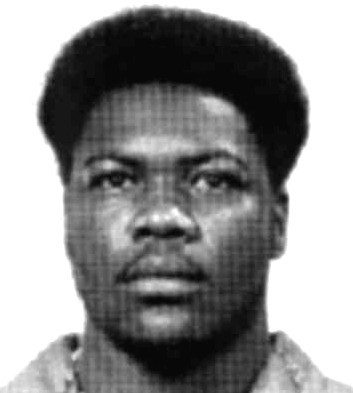
Edward Earl Williams
Murderer Brian Kevin Rosenfeld
Murderer · USA · 1985
Brian Kevin Rosenfeld Brian Kevin Rosenfeld was sentenced to three concurrent l…
23 victims
Brian Kevin Rosenfeld
Murderer · USA · 1985
Brian Kevin Rosenfeld Brian Kevin Rosenfeld was sentenced to three concurrent l…
23 victims
 Russell Ellwood
Murderer · USA · 1991
Russell Ellwood was a former taxi driver. Authorities suspected him of killing…
20 victims
Russell Ellwood
Murderer · USA · 1991
Russell Ellwood was a former taxi driver. Authorities suspected him of killing…
20 victims
 Robert Martines Perez
Murderer · USA · 1994
Name: Robert Martines Perez · Other name used in proceedings: Robert Martinez P…
15 victims
Robert Martines Perez
Murderer · USA · 1994
Name: Robert Martines Perez · Other name used in proceedings: Robert Martinez P…
15 victims
 Billy Frank Vickers
Murderer · USA · 1993
Billy Frank Vickers Vickers was executed by lethal injection in Texas on Januar…
14 victims
Billy Frank Vickers
Murderer · USA · 1993
Billy Frank Vickers Vickers was executed by lethal injection in Texas on Januar…
14 victims
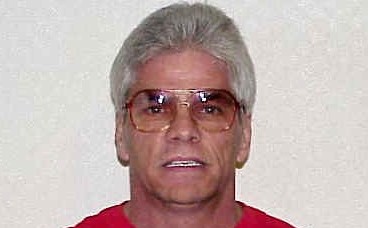 David Eugene Matthews
Murderer · USA · 1981
David Eugene Matthews was born on 9-6-48. He was sentenced to death on November…
2 victims
David Eugene Matthews
Murderer · USA · 1981
David Eugene Matthews was born on 9-6-48. He was sentenced to death on November…
2 victims
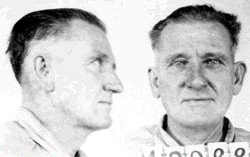 Lee Albert Smith
Murderer · USA · 1944
Lee Albert Smith, white, was executed by asphyxiation-gas in Arizona on April 6…
1 victim
Lee Albert Smith
Murderer · USA · 1944
Lee Albert Smith, white, was executed by asphyxiation-gas in Arizona on April 6…
1 victim
 Richard Valenti
Murderer · USA · 1973
Richard Raymond Valenti was identified as a suspect from Navy photos. Investiga…
3 victims
Richard Valenti
Murderer · USA · 1973
Richard Raymond Valenti was identified as a suspect from Navy photos. Investiga…
3 victims
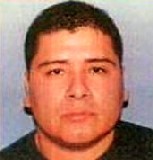 Gabriel Avila
Murderer · USA · 2003
Gabriel Avila was a 27-year-old Mexican national. Katie Sepich was 22 and from…
1 victim
Gabriel Avila
Murderer · USA · 2003
Gabriel Avila was a 27-year-old Mexican national. Katie Sepich was 22 and from…
1 victim
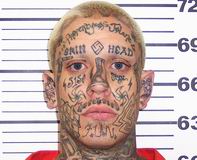 Curtis Allgier
Murderer · USA · 2007
Curtis Michael Allgier (born August 25, 1979) was a white supremacist skinhead…
1 victim
Curtis Allgier
Murderer · USA · 2007
Curtis Michael Allgier (born August 25, 1979) was a white supremacist skinhead…
1 victim
- Gender
- male
- Country
- USA
- Location
- Lake County, Indiana, USA
- Date of birth
- December 9, 1967
- Age at first offence
- 25
- Characteristics
- armed robbery, robbery, mentally ill
- Victim profile
- Robert Hollins, 26; Debra Rice, 42; and Michael Richardson, 41
- Method of murder
- Shooting
- Date(s) of murder
- June 19, 1992
- Years active
- 1992
- Date of arrest
- —
- Status
-
Sentenced to death
Sentenced to death on March 2, 1993; conviction reversed and death sentence vacated on appeal following habeas corpus relief granted by the U.S. District Court and affirmed by the U.S. Court of Appeals for the Seventh Circuit, with an order for release unless retried
Parties and identifiers
Edward Earl Williams was also identified as Akeem Aki-Khuam in the federal habeas proceedings.
Timeline
- Early morning hours of June 19, 1992 — Edward Earl Williams, armed with a handgun, and Jemelle Joshua, armed with a shotgun, and three others set out to steal audio and video equipment from the basement of school teacher Michael Richardson.
- January 12, 1993 — Judge James Letsinger outlined procedures for jury selection, including peremptory challenges.
- January 25, 1993 — During voir dire, the trial court sua sponte instructed counsel for each party to present peremptory challenges with a “neutral reason” for each.
- March 2, 1993 — The trial court sentenced Williams to death.
- August 7, 1996 — Edward Williams v. State, 669 N.E.2d 1372 (Ind. August 7, 1996) was decided, with conviction affirmed 5-0.
- 1997 — Williams v. Indiana, 117 S.Ct. 1828 (1997) (cert. denied).
- 01-22-97 — PCR petition filed.
- 02-19-97 — PCR denied by Special Judge Richard W. Maroc.
- February 23, 2000 — Edward Williams v. State, 724 N.E.2d 1070 (Ind. February 23, 2000) was decided, with PCR denial affirmed 5-0.
- 2001 — Williams v. Indiana, 121 S.Ct. 886 (2001) (cert. denied).
- 12-14-00 — Petition for Writ of Habeas Corpus filed in U.S. District Court, Northern District of Indiana.
- 11-07-02 — U.S. District Court Judge Allen Sharp granted the writ of habeas corpus in Aki-Khuam v. Davis, 203 F. Supp.2d 1001 (N.D. Ind. March 25, 2002).
- March 25, 2002 — Aki-Khuam v. Davis, 203 F. Supp.2d 1001 (N.D. Ind. March 25, 2002) was decided, granting habeas relief as to conviction and sentence on grounds that the trial judge improperly denied peremptory challenges of white jurors by the defense.
- May 8, 2003 — Aki-Khuam v. Davis, 328 F.3d 366 (7th Cir. May 8, 2003) was issued; the opinion was vacated and replaced by an opinion dated August 5, 2003.
- August 5, 2003 — Aki-Khuam v. Davis, 339 F.3d 521 (7th Cir. August 5, 2003) vacated the previously issued opinion and reversed the conviction and vacated the death penalty; the judgment was affirmed 3-0.
- July 28, 2003 — Petition for rehearing en banc was denied.
Background
In the early morning hours of June 19, 1992, Edward Earl Williams, armed with a handgun, Jemelle Joshua, armed with a shotgun, and three others set out to steal audio and video equipment from the basement of school teacher Michael Richardson.
Williams and Joshua were admitted to Richardson’s home, and their three accomplices followed them in. Besides Richardson, they encountered a number of children and adults, including Richardson’s sister, Debra Rice, and Robert Hollins, a guest in the home.
Williams, who is African-American, was charged with three counts of murder and felony murder in Lake County, Indiana, under IND. CODE §§ 35-42-1-1(1) & (2).
The prosecution alleged two aggravating factors for which it sought the death penalty:
- intentional killing during the course of a robbery, IND. CODE §§ 35-50-2-9(b)(1)(F)
- commission of multiple murders, IND. CODE §§ 35-50-2-9(b)(8)
The offence
During the home invasion, Williams held a handgun to Richardson’s head and Joshua held a shotgun on Richardson’s sister, Debra Rice, while the other three men went to the basement.
Robert Hollins struggled with one of the men and was shot in the back by Williams.
Debra Rice tried to escape and Joshua shot her in the chest.
The equipment proved too difficult to remove from the basement, and as the invaders were leaving the home, Williams shot Richardson, Rice, and Hollins once in the head.
A few hours later, Williams told his sister that he did so in order not to leave any witnesses. Richardson pleaded, “Please don’t kill me,” before being shot.
Investigation, arrest, and pretrial jury selection
During a pretrial hearing on January 12, 1993, Judge James Letsinger outlined procedures for jury selection, including peremptory challenges, intended to ensure compliance with due process and equal protection requirements of Batson v. Kentucky and its progeny. The exchange between Judge Letsinger and trial counsel for Petitioner was:
Trial Court: From the first peremptory strike, each side is going to have to have some reason for striking that person. I mean there's almost no, no person on a jury that isn't protected now. I mean they've extended it to everything.
Defense Counsel: So what I'm hearing from the court is the peremptory challenges have now all been converted to challenges for cause?
Trial Court: Almost. Almost. In the words of Splunge, 2 you've got to have some plausible reason supported by the record, supported by the record, plausible reason that is nonracial, non-gender, nonreligious, non-body language. They won't even let — they won't even allow body language. Splunge struck a black juror because she said — she didn't understand the burden of proof in a criminal case, when actually her answers were the same as everybody else's answers. It had to be supported by the record.
During voir dire on January 25, 1993, the trial court sua sponte instructed counsel for each party to present its peremptory challenges along with a “neutral reason” for each.
The trial court excused two individuals after accepting the prosecution’s stated reasons for challenging them, and another two after accepting Petitioner's stated reasons for challenging. However, the trial court rejected Petitioner's stated reasons for five of his seven total challenges, even though the prosecution raised no objection to Petitioner's challenges.
On direct appeal, four of the rejected challenges were described by the Indiana Supreme Court as follows:
- Williams sought to strike prospective juror Sosnawski, a white male, because counsel’s “discussions with him, [defense counsel] didn't get the impression that he really understood what was going on.” The trial court found the explanation “terrible” and a “euphemism” and refused to excuse Sosnawski.
- Williams sought to strike prospective juror Wilson, a white male, because counsel’s “general impression” was “number one, that he was not being honest; two, that his responses ... left [defense counsel] with the impression that this gentleman was maybe not being entirely honest with” [the trial court]. Because counsel was not “able to point to a question and answer in the record that gives [] a good reason for striking [Wilson] from the jury,” the trial court refused to excuse Wilson.
- Williams sought to strike prospective juror Bobalik, a white female, because she failed to understand the presumption of innocence. During voir dire, counsel had asked all members of the panel who believed that the defendant was not guilty at that point to raise their hands; Bobalik did not raise a hand. The trial court rejected the reason, commenting that counsel had asked “a trick question,” the kind “that gets students flunked out of law school.” Because counsel “did not have a record showing that Bobalik [could] not give the defendant the presumption of innocence,” the trial court refused to excuse Bobalik.
- Williams sought to strike prospective juror Brandys, a white female, because she didn’t “understand [] that the defendant has the absolute right not to testify” and that “[s]he clearly indicated ... in two points, one that she wanted the defendant to testify; two, that she thinks defense attorneys are slicksters.” The state argued that Brandys did properly understand the presumption of innocence. The trial court refused to excuse Brandys, concluding that most people want the defendant to testify and do not understand their constitutional right not to unless explained to them and that defense counsel had introduced the word “slickster,” not Brandys.
Trial
At the trial’s conclusion, the jury found Williams guilty on all counts, but deadlocked as to his punishment and was unable to return a sentencing verdict. The trial court sentenced Williams to death on March 2, 1993.
Sentencing
Williams was convicted of Murder (3 counts) and Felony-Murder (3 counts), with a hung jury on the death sentence.
Sentencing occurred on March 2, 1993, when the trial court imposed a death sentence.
Aggravating circumstances were identified as:
- robbery (3 counts)
- 3 murders
Mitigating circumstances were identified as:
- low IQ
- father convicted of abusing Williams as a child
Appeals
Direct appeal
Edward Williams v. State, 669 N.E.2d 1372 (Ind. August 7, 1996) resulted in conviction affirmed 5-0, with Sullivan opinion; Shepard, Debruler, Dickson, Selby concur.
Williams v. Indiana, 117 S.Ct. 1828 (1997) (cert. denied).
Post-conviction relief (PCR)
A PCR petition was filed 01-22-97.
PCR was denied 02-19-97 by Special Judge Richard W. Maroc.
Edward Williams v. State, 724 N.E.2d 1070 (Ind. February 23, 2000) affirmed 5-0 (Shepard opinion; Dickson, Sullivan, Boehm, Rucker concur).
Williams v. Indiana, 121 S.Ct. 886 (2001) (cert. denied).
Federal habeas corpus
A petition for Writ of Habeas Corpus was filed 12-14-00 in U.S.
Aki-Khuam v. Davis, 203 F. Supp.2d 1001 (N.D. Ind. March 25, 2002), granted habeas relief as to conviction and sentence on grounds that the trial judge improperly denied peremptory challenges of white jurors by the defense.
Aki-Khuam v. Davis, 328 F.3d 366 (7th Cir. May 8, 2003) was vacated and replaced by Aki-Khuam v. Davis, 339 F.3d 521 (7th Cir. August 5, 2003).
In Aki-Khuam v. Davis, 339 F.3d 521, the Seventh Circuit affirmed 3-0, reversed the conviction, and vacated the death penalty. The opinion stated that the trial court’s modification of Batson procedures—by not requiring initial challenge by prosecution and by rejecting race-neutral reasons at step two of Batson analysis—was contrary to clearly established federal law.
The panel included Circuit Judge William J. Bauer, Judge Ilana Diamond Rovner, and Judge Diane P. Wood.
The opinion also stated: “After the Supreme Court of Indiana affirmed the murder conviction and death sentence,” the U.S. District Court granted habeas relief, vacated the conviction and sentence, and ordered release unless retried.
A petition for rehearing en banc was denied July 28, 2003.
Outcome
The habeas proceedings resulted in vacation of the conviction and sentence, with the death penalty vacated following reversal of the conviction. The case returned with “NEW GUILT AND SENTENCING TRIAL PENDING IN LAKE COUNTY SUPERIOR COURT.”
Other details
Jury selection and Batson procedure disputes
The Seventh Circuit described that the trial court “replaced the first step of the Batson analysis with the court's presumption of purposeful discrimination,” requiring the defendant to overcome that presumption, and also described that the trial court rejected race-neutral explanations in a manner that “collapsed ‘Batson’s second and third steps into one.’”
Rule for future cases adopted by the Indiana Supreme Court
The Seventh Circuit included the Indiana Supreme Court’s “Rule for Future Cases” (as quoted in the decision):
In exercise of our supervisory responsibilities, we adopt the following procedures for cases tried after the date this opinion is certified. We conclude that ... absent extraordinary circumstances a trial court should not require each side to present a race-neutral justification for each of its peremptory challenges. Trial courts should wait for an objection by an opposing party before deciding whether a prima facie case of discrimination is made and demanding a race-neutral explanation. Intervention sua sponte is only authorized when a prima facie case is abundantly clear with respect to a particular juror. Obviously, a judge who adopts a blanket policy of demanding explanations, as the court did here, would not have articulated a particularized showing and would commit error. Williams, 669 N.E.2d at 1381-82.
Key quote by the victim
Richardson pleaded, “Please don't kill me,” before being shot once in the head.
Spotted an error, or have more information about this case?