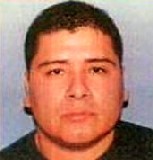
Gabriel Avila
Murderer Robert Martines Perez
Murderer · USA · 1994
Name: Robert Martines Perez · Other name used in proceedings: Robert Martinez P…
15 victims
Robert Martines Perez
Murderer · USA · 1994
Name: Robert Martines Perez · Other name used in proceedings: Robert Martinez P…
15 victims
 Billy Frank Vickers
Murderer · USA · 1993
Billy Frank Vickers Vickers was executed by lethal injection in Texas on Januar…
14 victims
Billy Frank Vickers
Murderer · USA · 1993
Billy Frank Vickers Vickers was executed by lethal injection in Texas on Januar…
14 victims
 Robert Glen Jones
Murderer · USA · 1996
Defendant: Robert Glenn Jones (ADC#070566) · Co-defendant: Scott Nordstrom (ADC…
7 victims
Robert Glen Jones
Murderer · USA · 1996
Defendant: Robert Glenn Jones (ADC#070566) · Co-defendant: Scott Nordstrom (ADC…
7 victims
 Jordan Linn Graham
Murderer · USA · 2013
Jordan Linn Graham was 22 years old and married to Cody Johnson, who was 25. Gr…
1 victim
Jordan Linn Graham
Murderer · USA · 2013
Jordan Linn Graham was 22 years old and married to Cody Johnson, who was 25. Gr…
1 victim
 Michelle Byrom
Murderer · USA · 1999
Name: Michelle Byrom · Offender data (as stated): White; age 43 at crime (DOB 1…
1 victim
Michelle Byrom
Murderer · USA · 1999
Name: Michelle Byrom · Offender data (as stated): White; age 43 at crime (DOB 1…
1 victim
 Harold McElmurry
Murderer · USA · 1999
Harold McElmurry was a convicted killer who was executed by lethal injection in…
2 victims
Harold McElmurry
Murderer · USA · 1999
Harold McElmurry was a convicted killer who was executed by lethal injection in…
2 victims
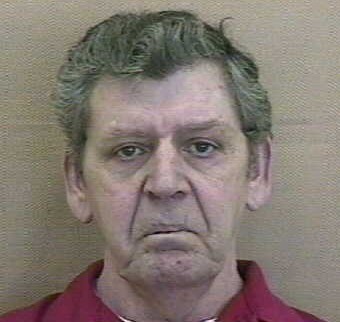 George Franklin Page
Homicide · USA · 1995
George Franklin Page was male, white, and aged 63. He served 16 years in the mi…
1 victim
George Franklin Page
Homicide · USA · 1995
George Franklin Page was male, white, and aged 63. He served 16 years in the mi…
1 victim
 Charles Butler
Murderer · USA · 1999
February (year not stated) — Charles M. Butler Jr. was asked to meet Billy Jack…
1 victim
Charles Butler
Murderer · USA · 1999
February (year not stated) — Charles M. Butler Jr. was asked to meet Billy Jack…
1 victim
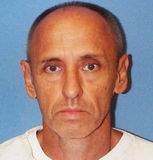 Thomas Whisenhant
Serial killer · USA · 1975
Name: Thomas Warren Whisenhant Gender: M Race: W DOB: 1/29/1947 Inmate: WHISENH…
3 victims
Thomas Whisenhant
Serial killer · USA · 1975
Name: Thomas Warren Whisenhant Gender: M Race: W DOB: 1/29/1947 Inmate: WHISENH…
3 victims
- Gender
- male
- Country
- USA
- Location
- Las Cruces, New Mexico, USA
- Date of birth
- December 14, 1969
- Age at first offence
- 34
- Characteristics
- kidnapping, rape
- Victim profile
- Kathryn "Katie" Sepich, 22
- Method of murder
- Strangulation
- Date(s) of murder
- August 31, 2003
- Years active
- 2003
- Date of arrest
- December 20, 2006
- Status
-
Imprisoned
Plead guilty. Sentenced to 69 years in prison on May 3, 2007
Background
Gabriel Avila was a 27-year-old Mexican national. Katie Sepich was 22 and from Carlsbad. She was a graduate student of business administration at New Mexico State University. Avila was serving a nine-year sentence on an unrelated 2004 conviction for aggravated burglary.
The offence
Katie Sepich was last seen leaving a party for a two-block walk to her home on Las Cruces’ east side. Her body was discovered later that day at the city’s former dump. Her body was discovered on Aug. 31, 2003. Avila confessed that he encountered Sepich as he drove in the Roadrunner Parkway area and almost struck her with his truck as she walked home. Avila said he followed Sepich home and approached her as she tried to get into her rented house through a bedroom window. She had left her keys at the party. Avila said he “lost it,” grabbed Sepich, raped her outside her bedroom window, and then strangled her with his hands. Avila then placed Sepich’s body in his truck, deposited her body at the old dump, and used alcohol to try to burn her body. Autopsy results revealed that Katie Sepich was strangled. Investigators said she had been raped and then her body was dumped sometime during the night after the assault.
Investigation
Avila was not identified as a suspect until mid-December 2006, when his DNA came up as a match to evidence collected from under Sepich’s fingernails and from her body. Investigators said DNA was taken from him and tested, and it came back as a match. Investigators questioned Avila after the match, and he provided details about the murder scene that only he could have known. Investigators located and seized the truck believed to have been used to transport Sepich’s body to the desert east of Las Cruces. The truck had been sold, and the new owner consented to its seizure. Investigators obtained a ring worn by Sepich on the night of the murder. The ring had been left in the truck. The ring and the truck were being processed for evidence. More than 100 people were interviewed during the course of the investigation, which attracted national media attention. On Aug. 29, 2004, investigators said there had been no arrests and very few leads in the case and they were looking for a person of interest. Investigators reported tens of thousands of dollars had been spent on DNA tests. New leads and ongoing investigation occurred even before the confession, with investigators still asking the public for help with any leads. The case was the impetus for a new state law requiring many suspects to provide DNA samples to authorities, and the matter was connected to the expansion that became known as Katie’s Law.
Arrest
Avila had been arrested for aggravated burglary and intent to commit aggravated assault in November 2003, about three months after Sepich was murdered. He was an inmate in the New Mexico Corrections System since November 2004. Avila’s DNA had been sampled and set aside for testing when he was processed into the corrections system; it was not tested until a few weeks before the match was announced.
Trial
Avila pleaded guilty to the 2003 rape and murder of New Mexico State University graduate student Katie Sepich. The sentencing took place before State District Judge Douglas Driggers.
Sentencing
On May 3, 2007, State District Judge Douglas Driggers ordered Avila to serve a sentence of 69 years in prison after Avila pleaded guilty. Avila would not be eligible for parole until after serving 30 years for his murder conviction. Avila asked to be able to apologize face-to-face to Sepich’s family. Public defender Mark Earnest urged the judge to be lenient and said Avila was remorseful. District Attorney Susana Martinez argued that Avila waited more than three years after the slaying to confess and did so only when detectives confronted him with DNA evidence. In addressing the judge, the victim’s father, David Sepich, told Driggers: “We do not get another chance to see her (Katie) in this life, and it is only right that the person who did this to her not get a chance to experience freedom again in his life,”
Appeals
No appeal information was provided.
Outcome
Avila confessed to the 2003 rape and murder of Katie Sepich after his DNA matched DNA evidence from Sepich’s body. Investigators said Avila raped and killed Sepich outside her bedroom window in the early-morning hours of Aug. 31, 2003. Avila would be formally charged with capital murder and rape. Avila was sentenced to 69 years in prison on May 3, 2007.
Aftermath
A state law expansion known as Katie’s Law required DNA samples to be taken from adults arrested for certain felonies, including murder, sex crimes, and robbery. Katie’s Law expanded requirements for DNA samples. It took effect Jan. 1, 2007 in New Mexico. The law required DNA samples to be collected at the time of arrest on violent felony charges, and samples were to be placed into a database for comparison to DNA samples associated with unsolved crimes. A sheriff and district attorney announcement described the role of the DNA sample in solving the case. Doña Ana County Sheriff Todd J. Garrison said: “It means everything to the family to finally have a name of the person that will be found hopefully responsible for the death of Katie,” and “Next Tuesday would have been Katie’s birthday,” said Jayann Sepich: “She would have been 26. This is a very fitting birthday present for our daughter, Katie.” Jayann Sepich said: “She was never forgotten. No one ever gave up,” Jayann Sepich said: “We’ve been healing we’ve been going forward with our lives. We have two other incredible children we love so much. But this will allow us to heal in a way we couldn’t have otherwise,” David Sepich described not wanting another death and said: “It was like, were we dreaming that this was actually happening. We had become pretty resolved with the fact that we may never know,” Dave Sepich also said: “It was like, were we dreaming that this was actually happening. Jayann Sepich vowed: “She would have been 26. Garrison said: “Without that sample, that was one of the things that led us to the suspect in the first place,” Martinez said: “DNA was taken from him two months ago because all prisoners have to submit to DNA. It was tested and came back as a match,” Martinez said: “If Katie’s Law had been in effect in 2003, Avila would have been brought to justice much sooner.” On Aug. 29, 2004, Susana Martinez said: “But we are also going to be following all other leads that come their way so they are not going to zero in on one individual definitely not, they will investigate every lead that comes their way,” Investigators previously said she had been last seen leaving a party after midnight, and her body was found later that day. Katie’s roommate was Tracee Waters; Waters and Waters’ mother were in Las Cruces to assemble gowns with fabric the roommates had bought for a friend’s wedding.
Timeline
- Aug. 30, 2003 — Katie Sepich spent a day with her roommate Tracee Waters at a Mesilla Valley Mall store looking at a turquoise ring.
- Aug. 31, 2003 — Katie Sepich was strangled and her body was discovered at the city’s former dump.
- November 2003 — Avila was arrested for aggravated burglary and intent to commit aggravated assault.
- Nov. 2004 — Avila was sentenced to nine years and became an inmate in the New Mexico Corrections System.
- mid-December 2006 — Avila’s DNA came up as a match to evidence collected from under Sepich’s fingernails and from her body.
- Dec. 11, 2006 — Investigators’ new DNA samples matched.
- December 22, 2006 — Authorities announced Avila’s confession from prison for the 2003 rape and murder of Katie Sepich.
- Aug. 29, 2004 — Investigators said there were no arrests and very few leads; they were looking for a person of interest.
- September 3, 2003 — Autopsy results were revealed as showing that Katie Sepich was strangled, and investigators said she had been raped.
- May 3, 2007 — Avila was sentenced to 69 years in prison after pleading guilty.
Other details
Avila’s confession included details that he followed Sepich home and approached her as she tried to get into her rented house through a bedroom window. Sepich’s parents were Jayann and Dave Sepich. On Sept. 3, 2003, Dave Sepich said: “Its just amazing now that were learning the breath of how many peoples lives she touched, much more than we ever imagined,” Valerie Ruiz said: “My heart just broke. I was driving in tears just thinking of the father coming up here-- having to identify the body,” Katie’s Law was also described as the Katie Sepich Enhanced DNA Collection Act of 2010 and as a proposed federal law to provide funding to states to implement minimum and enhanced DNA collection processes for felony arrests. Katie’s Law was described as being named after Katie Sepich, who was raped, strangled, her body set on fire, and abandoned at an old dump site. The narrative included that Katie Sepich’s attacker's skin and blood were found under her fingernails, and that DNA profiling was sent to CODIS for matching. It was stated that DNA profiling was not the same as full genome sequencing and contains no genetic information. It was stated that the collected samples were included in CODIS, which contains more than 5 million records, and used by law enforcement agencies. Additional legislative discussion included that Susana Martinez prosecuted and convicted the killer and worked to pass the legislation expanding Katie’s Law, with Martinez signing the expansion bill into law in April 2011. National discussion included that Congressman Harry Teague introduced H.R. 4614 on February 4, 2010, with 11 co-sponsors listed in the material. High-level discussion included criticism that DNA policy could be an invasion of privacy or violate civil rights, and discussion of court rulings that upheld collection prior to conviction against constitutional challenges.
“require a DNA sample for all felony arrests.” “This is where the national registry becomes so important, because what you have is individual states — they may have a database, but if they’re not sharing it with the state next door, you’ve got a guy from Illinois driving over into Indiana, and they’re not talking to each other.

Spotted an error, or have more information about this case?