
David Eugene Matthews
Murderer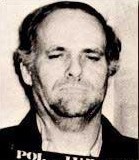 Ervil LeBaron
Murderer · USA · 1972
Ervil Morrell LeBaron (1925 to August 16, 1981) was the leader of a polygamous…
35 victims
Ervil LeBaron
Murderer · USA · 1972
Ervil Morrell LeBaron (1925 to August 16, 1981) was the leader of a polygamous…
35 victims
 Brian Kevin Rosenfeld
Murderer · USA · 1985
Brian Kevin Rosenfeld Brian Kevin Rosenfeld was sentenced to three concurrent l…
23 victims
Brian Kevin Rosenfeld
Murderer · USA · 1985
Brian Kevin Rosenfeld Brian Kevin Rosenfeld was sentenced to three concurrent l…
23 victims
 Marvin Gray
Murderer · USA · 1975
Marvin Gray was convicted killer who claimed responsibility for 23 slayings and…
23 victims
Marvin Gray
Murderer · USA · 1975
Marvin Gray was convicted killer who claimed responsibility for 23 slayings and…
23 victims
 Yahweh ben Yahweh
Murderer · USA · 1980
Yahweh ben Yahweh was born and legally named Hulon Mitchell Jr. (October 27, 19…
23 victims
Yahweh ben Yahweh
Murderer · USA · 1980
Yahweh ben Yahweh was born and legally named Hulon Mitchell Jr. (October 27, 19…
23 victims
 Russell Ellwood
Murderer · USA · 1991
Russell Ellwood was a former taxi driver. Authorities suspected him of killing…
20 victims
Russell Ellwood
Murderer · USA · 1991
Russell Ellwood was a former taxi driver. Authorities suspected him of killing…
20 victims
 Joe Leonard Lambright
Murderer · USA · 1980
Joe Leonard Lambright was a defendant in a joint trial with Robert Douglas Smit…
1 victim
Joe Leonard Lambright
Murderer · USA · 1980
Joe Leonard Lambright was a defendant in a joint trial with Robert Douglas Smit…
1 victim
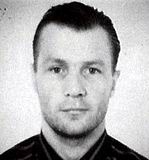 Alexander Solonik
Murderer · Russia · 1990
In February 1997, Greek newspapers published articles that claimed a Russian mo…
10 victims
Alexander Solonik
Murderer · Russia · 1990
In February 1997, Greek newspapers published articles that claimed a Russian mo…
10 victims
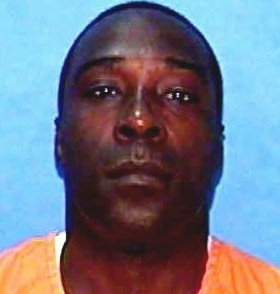 Raymond Morrison
Murderer · USA · 1997
Raymond Morrison was sentenced to death on 12/18/98 for the murder of 82-year-o…
1 victim
Raymond Morrison
Murderer · USA · 1997
Raymond Morrison was sentenced to death on 12/18/98 for the murder of 82-year-o…
1 victim
 The Bender family
Serial killers · USA · 1872
The Bender family was associated with serial killings in southeastern Kansas. T…
11 victims
The Bender family
Serial killers · USA · 1872
The Bender family was associated with serial killings in southeastern Kansas. T…
11 victims
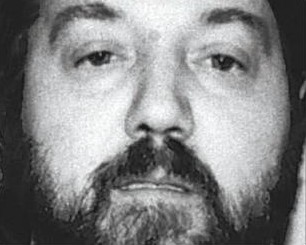 Danny Lee King
Murderer · USA · 1990
Danny Lee King was found guilty of the 1990 capital murder of Mrs. Carolyn Roge…
1 victim
Danny Lee King
Murderer · USA · 1990
Danny Lee King was found guilty of the 1990 capital murder of Mrs. Carolyn Roge…
1 victim
 Craig Michael Titus
Murderer · USA · 2005
Craig Michael Titus was an American former IFBB professional bodybuilder. He wa…
1 victim
Craig Michael Titus
Murderer · USA · 2005
Craig Michael Titus was an American former IFBB professional bodybuilder. He wa…
1 victim
- Gender
- male
- Country
- USA
- Location
- Louisville, Kentucky, USA
- Date of birth
- September 6, 1948
- Age at first offence
- 33
- Characteristics
- parricide, robbery, abuse
- Victim profile
- Mary "Marlene" Matthews (his estranged wife) and Magdalene Cruse (his mother-in-law)
- Method of murder
- Shooting
- Date(s) of murder
- June 29, 1981
- Years active
- 1981
- Date of arrest
- —
- Status
-
Sentenced to death on November 11, 1982 for the murders of Mary Matthews and Magdalene Cruse on June 29, 1981 in Louisville, Kentucky; federal magistrate James D. Moyer recommended overturning the death sentence and ordering a new trial in a recommendation issued April 22, 2008.
Case details
David Eugene Matthews was born on 9-6-48. He was sentenced to death on November 11, 1982 in Jefferson County for the murders of Mary Matthews and Magdalene Cruse on June 29, 1981 in Louisville, Kentucky.
Mary Matthews was his estranged wife, and Magdalene Cruse was his mother-in-law. In the process of committing these crimes, Matthews burglarized his wife’s home.
The offence
Matthews burglarized his estranged wife’s home in Jefferson County in 1981. He executed his mother-in-law by shooting her in the back of the head; she agonized and convulsed for 8 hours before dying.
Victims: Mary Matthews and Magdalene Cruse.
Trial
Matthews was tried and convicted on October 8, 1982.
He was convicted on the murder charges involving Mary “Marlene” Matthews and Magdalene Cruse.
Sentencing
Matthews was sentenced to death on November 11, 1982 in Louisville.
Appeals
In a federal proceeding, U.S. Magistrate James D. Moyer of Louisville issued a 220-page decision. The magistrate recommended overturning the death sentence even though the evidence of guilt was described as “quite clear.” Moyer concluded that although the evidence was substantial and clear that Matthews perpetrated the acts, prosecutors did not make the case that Matthews was not suffering from extreme emotional distress when he killed his wife and mother in law, and that the trial judge failed to order acquittals in response to that showing.
On April 22, 2008, the proceedings were described as follows:
“The evidence adduced by the Commonwealth at trial was substantial, and it is quite clear to this court that Matthews perpetrated the acts for which he stood trial,” Moyer wrote. “It is equally clear, however, that two of Matthews' many challenges to the constitutionality of his convictions and sentence present problems of such a constitutional magnitude that this court must recommend issuing the requested writ of habaes corpus.”
The recommendation stated that the U.S. District Judge John Heyburn II must review the opinion and either order Matthews retried or overturn Moyer's ruling.
Allison Martin, a spokeswoman for Attorney General Jack Conway, said prosecutors would petition Heyburn to set aside Moyer's recommendation and let the conviction stand:
“We are disappointed with the magistrate's report,” Martin said.
Alan Freedman, an attorney with the Midwest Center for Justice in Evanston, Ill., who represented Matthews, did not immediately return a message asking for comment.
Moyer rejected nearly all of Matthews’ claims but found constitutional error regarding how the trial judge handled Matthews’ claim of suffering from “extreme emotional disturbance” at the time of the killings.
Moyer wrote:
“Matthews made a sufficient showing of EED at the trial,” Moyer wrote.
Moyer also found that Matthews’ attorney failed to argue on appeal that jurors were not properly instructed about how to handle the extreme emotional distress defense.
The decision stated that Kentucky's law at the time required prosecutors to prove beyond a reasonable doubt that Matthews did not suffer from extreme emotional distress. Moyer wrote that prosecutors failed to put on any expert witnesses to rebut Matthews’ claim, and therefore the trial judge should have ordered Matthews acquitted on the murder charges and the jury should have been instructed about what prosecutors had to prove.
Moyer wrote:
“Because of that failure, the trial judge should have ordered Matthews acquitted on the murder charges, and the jury should have been instructed about what prosecutors had to prove, Moyer wrote.”
“Because the judge didn't do either, Matthews is entitled to a new trial, Moyer wrote.”
Matthews was 59 years old at the time of the April 22, 2008 description.
Outcome
A federal magistrate recommended on April 22, 2008 that the death sentence be overturned and that Matthews receive a new trial based on the handling of the extreme emotional distress defense and related instructional issues.
The U.S. District Judge John Heyburn II was stated to be required to review the opinion and either order a retrial or overturn Moyer's ruling.

Spotted an error, or have more information about this case?