
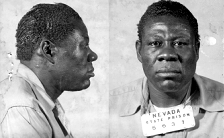
James T. Williams
Murderer Brian Kevin Rosenfeld
Murderer · USA · 1985
Brian Kevin Rosenfeld Brian Kevin Rosenfeld was sentenced to three concurrent l…
23 victims
Brian Kevin Rosenfeld
Murderer · USA · 1985
Brian Kevin Rosenfeld Brian Kevin Rosenfeld was sentenced to three concurrent l…
23 victims
 Russell Ellwood
Murderer · USA · 1991
Russell Ellwood was a former taxi driver. Authorities suspected him of killing…
20 victims
Russell Ellwood
Murderer · USA · 1991
Russell Ellwood was a former taxi driver. Authorities suspected him of killing…
20 victims
 Robert Martines Perez
Murderer · USA · 1994
Name: Robert Martines Perez · Other name used in proceedings: Robert Martinez P…
15 victims
Robert Martines Perez
Murderer · USA · 1994
Name: Robert Martines Perez · Other name used in proceedings: Robert Martinez P…
15 victims
 Billy Frank Vickers
Murderer · USA · 1993
Billy Frank Vickers Vickers was executed by lethal injection in Texas on Januar…
14 victims
Billy Frank Vickers
Murderer · USA · 1993
Billy Frank Vickers Vickers was executed by lethal injection in Texas on Januar…
14 victims
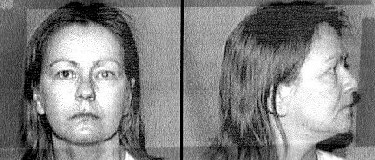 Cathy Lynn Henderson
Murderer · USA · 1994
Cathy Lynn Henderson was convicted of capital murder and sentenced to death for…
1 victim
Cathy Lynn Henderson
Murderer · USA · 1994
Cathy Lynn Henderson was convicted of capital murder and sentenced to death for…
1 victim
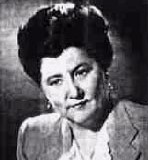 Maria Lee
Murderer · South Africa · 1947
Maria Helena Gertruida Lee (née van Niekerk), later known as Maria Lee, was bor…
1 victim
Maria Lee
Murderer · South Africa · 1947
Maria Helena Gertruida Lee (née van Niekerk), later known as Maria Lee, was bor…
1 victim
 Dennis Miller
Murderer · USA · 1995
Dennis "Chubb'' Miller Miller served jail time in 1995 for holding a gun to his…
1 victim
Dennis Miller
Murderer · USA · 1995
Dennis "Chubb'' Miller Miller served jail time in 1995 for holding a gun to his…
1 victim
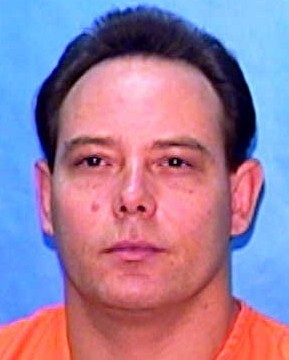 Kenneth Allen Stewart
Murderer · USA · 1984
Kenneth Allen Stewart was sentenced to death on October 3, 1986, and was resent…
2 victims
Kenneth Allen Stewart
Murderer · USA · 1984
Kenneth Allen Stewart was sentenced to death on October 3, 1986, and was resent…
2 victims
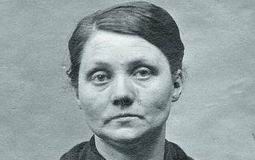 Hilda Nilsson
Serial killer · Sweden · 1915
Hilda Nilsson (1876 – 10 August 1917) was a Swedish serial killer from Helsingb…
8 victims
Hilda Nilsson
Serial killer · Sweden · 1915
Hilda Nilsson (1876 – 10 August 1917) was a Swedish serial killer from Helsingb…
8 victims
- Gender
- male
- Country
- USA
- Location
- Lehigh County, Pennsylvania, USA
- Date of birth
- ???
- Characteristics
- drugs
- Victim profile
- Richard White, a.k.a. “Pookie” (drug dealer)
- Method of murder
- Shooting ( MAC 10 automatic weapon)
- Date(s) of murder
- May 29, 1995
- Years active
- 1995
- Date of arrest
- —
- Status
-
Sentenced to death
Sentenced to death in 2001
Case identification
- Defendant: James T. Williams
- Supreme Court decision referenced: Supreme Court of Pennsylvania opinion J-105-2004
Timeline
- May 29, 1995 — Richard White, a.k.a. “Pookie,” telephoned Lamar Peterson, a friend of Williams, seeking to buy a large quantity of marijuana to replenish the inventory for his drug dealing operation.
- November, 1996 — Williams was convicted in federal court of robbery and sentenced to 687 months federal incarceration.
- 2001 — Williams was sentenced to death.
- 2004 — Supreme Court of Pennsylvania opinion J-105-2004 was issued.
Background
Richard White, a.k.a. “Pookie,” telephoned Lamar Peterson, a friend of Williams, on May 29, 1995, seeking to buy a large quantity of marijuana to replenish the inventory for his drug dealing operation. Peterson concluded that if White had sold all his marijuana, White would have a significant amount of cash on hand. Peterson suggested to Williams that they rob White through a “stinger”; Peterson would engage White in a drug transaction, during which Williams would suddenly appear and rob them both. Peterson and Williams would reconnect later and share in the pelf.
Peterson, Williams, and Curtis French set out to find White, but Peterson could not remember the exact location of White’s apartment. The three returned to Peterson’s apartment where they informed Ralph Logan, a.k.a. “Rah-Rah,” and Luis Avila, a.k.a. “TBone,” of the plan. The group decided to make another attempt to find White.
The offence
Avila called White and informed him he would soon drop by to purchase marijuana. Avila, Logan, and Williams set out on another robbery attempt; however, this too was unsuccessful after the trio went to the wrong apartment.
Williams and his cohorts returned to Peterson’s apartment. Giving the “stinger” one last try, Avila called White again and ascertained his apartment’s exact location; Williams, Avila, and Logan again set out to rob him.
White was on his balcony when he saw the trio approaching. White tucked a pistol in the rear of his shorts and headed to the street, where he encountered the group. Williams demanded White take him to his apartment and hand over his cash. When White refused, pleading with his arms in the air that his children were inside sleeping, Williams pulled out a MAC 10 automatic weapon and fired two bullets into White’s chest and a third into his thigh as he fell to the ground. With White lying in the street, the group fled back to Peterson’s apartment.
Upon their arrival, Williams informed Peterson that because White was uncooperative, he “wetted him lovely,” i.e., Williams shot him. The other robbers also testified that Williams bragged about shooting White.
Investigation
Later that summer, Peterson and Williams were arrested in Baltimore by the FBI for an unrelated bank robbery. Facing federal charges, Peterson told authorities of Williams' role in the robbery and murder of White. Avila, French, and Logan were also arrested and each corroborated Peterson’s account.
The three later testified Williams used the same weapon in many subsequent bank robberies. Photographs in Peterson’s possession at the time of his arrest depicted Williams, Peterson, French, and Logan; one showed Williams posing with the MAC 10 used to kill White.
Police came into possession of the murder weapon after a failed robbery attempt by Williams, Peterson, French, and another individual. As their typical strategy, the group tried to rob a drug dealer but were unsuccessful when the dealer brandished a weapon; French dropped the machine gun as the three fled for their lives.
Ballistics tests revealed the gun recovered was used in White’s murder. This same weapon was also linked to the bank robbery Williams was convicted of in federal court.
The car used in the perpetration of White’s murder was tracked down by police. It had been rented by an associate of Williams and had a dent in the fender consistent with the strike of a bullet. Testimony revealed that when Williams shot White, one of the bullets exited White’s body and ricocheted off the getaway car.
In addition to physical evidence, the Commonwealth offered expert medical testimony consistent with its other witnesses’ version of the killing, particularly that White was shot while his arms were raised.
Arrest and custody history
- Williams was transferred to a federal prison in Colorado after federal proceedings, while Lehigh prosecutors sought extradition and eventually transferred him to Lehigh County.
Trial
Federal conviction
Williams was convicted in federal court of robbery and sentenced to 687 months federal incarceration in November, 1996.
Lehigh County prosecutors monitored Williams' federal prosecution and attended portions of his federal trial while they had already filed first degree murder charges against him.
Pretrial and trial conduct
Despite repeated warnings and recommendations from the court to the contrary, Williams represented himself during pretrial hearings and at trial. Standby counsel assisted when Williams permitted. At trial, Williams attempted to undermine the credibility of his accusers, while also personally attacking Commonwealth prosecutors, officers, and criminal justice personnel.
Williams repeatedly slurred one black prosecutor as “house n****r” and called the lead prosecutor a conspirator and liar. Because many Commonwealth witnesses were co-conspirators in numerous robberies and were serving time for other crimes, Williams harangued each about the reduced sentences they received in exchange for their cooperation with the Commonwealth.
Williams suggested French was the triggerman in White’s murder and maintained a statewide conspiracy was afoot wherein the Lehigh County District Attorney’s Office, numerous police departments, prison staff employees, and even appointed standby defense counsel were acting in concert.
Inmate testimony and alleged admission
The Commonwealth presented David Miller, an inmate at Lehigh County Prison. Miller testified Williams admitted to him he had killed somebody and was seeking Miller’s legal advice concerning his case.
Williams spoke to another inmate, Louis Washington, about having one of Washington’s family members provide an alibi for Williams' whereabouts on the night of White’s murder. The testimony included:
“So then [Williams] offered me some money, and he offered my family some money to have my mother be his alibi ….”
Coached by Williams, this woman was to testify Williams was with her during the homicide, and because she had no criminal record or prior involvement with Williams, her story would be believed over Williams' criminal cohorts.
Washington, after being threatened by Williams, told the Commonwealth of Williams' fabrication plans. The Commonwealth then arranged a meeting to “go over” this testimony.
During the conversation, Williams orchestrated a time sequence placing him with Washington’s mother at the time of White’s murder, and informed her exactly what she was expected to say. At trial, Williams called Washington to authenticate an affidavit exonerating Williams which Washington had signed; Washington testified he signed the affidavit only after being threatened.
Williams attacked Washington’s credibility and the suggested alibi fabrication story. On cross-examination, the Commonwealth further explored the fabrication story. After Williams again tried to discredit Washington by alleging he invented the alibi story to curry favor with the Commonwealth, the prosecution was granted permission, in rebuttal, to verify Washington’s version of events.
Officer Stafford testified to the alibi plot, and the tape recording of the conversation was played for the jury.
Williams was convicted on all charges.
Sentencing
Williams represented himself during the penalty hearing. He asked the jury to consider his character and the circumstances surrounding the crime, and his allegedly minor criminal record. Williams argued he was not a violent person and made repeated attacks on the character of the victim, including claims that the victim was armed, a neglectful parent, and a notorious drug dealer.
The Commonwealth offered the jury two aggravating circumstances:
- Williams' history of violent felonies.
- Williams committed the murder while in the course of a felony.
The jury found the Commonwealth proved both aggravating circumstances and rejected all Williams' proposed mitigating evidence. Williams was sentenced to death.
Outcome
- Williams was sentenced to death in 2001.
Aftermath / appellate posture
- Supreme Court of Pennsylvania opinion J-105-2004 addressed the case.
Spotted an error, or have more information about this case?