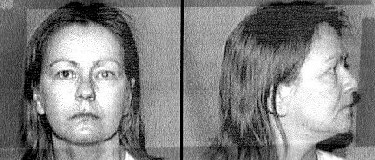
Cathy Lynn Henderson
Murderer Bobbie Sue Terrell
Murderer · USA · 1984
Bobbie Sue Dudley Terrell was a Pinellas County nurse and worked as the night s…
12 victims
Bobbie Sue Terrell
Murderer · USA · 1984
Bobbie Sue Dudley Terrell was a Pinellas County nurse and worked as the night s…
12 victims
 Megan Huntsman
Murderer · USA · 1996
Megan Huntsman was 40 at sentencing. She was a mother of three children who wer…
6 victims
Megan Huntsman
Murderer · USA · 1996
Megan Huntsman was 40 at sentencing. She was a mother of three children who wer…
6 victims
 Angela Johnson
Murderer · USA · 1993
Angela Jane Johnson was convicted in federal court of aiding and abetting the m…
5 victims
Angela Johnson
Murderer · USA · 1993
Angela Jane Johnson was convicted in federal court of aiding and abetting the m…
5 victims
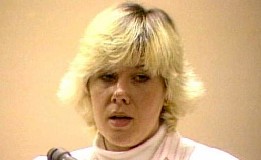 Catherine May Wood
Murderer · USA · 1987
Catherine May Wood was an American caregiver who worked at the Alpine Manor Nur…
5 victims
Catherine May Wood
Murderer · USA · 1987
Catherine May Wood was an American caregiver who worked at the Alpine Manor Nur…
5 victims
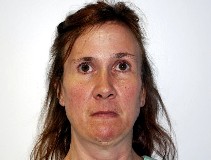 Michele Kalina
Murderer · USA · 1996
Michele Kalina pleaded guilty to murder for one of five infants she initially w…
5 victims
Michele Kalina
Murderer · USA · 1996
Michele Kalina pleaded guilty to murder for one of five infants she initially w…
5 victims
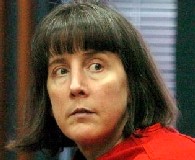 Amy Bishop
Murderer · USA · 1986
Amy Bishop — biology professor and perpetrator · James Anderson — Bishop’s husb…
4 victims
Amy Bishop
Murderer · USA · 1986
Amy Bishop — biology professor and perpetrator · James Anderson — Bishop’s husb…
4 victims
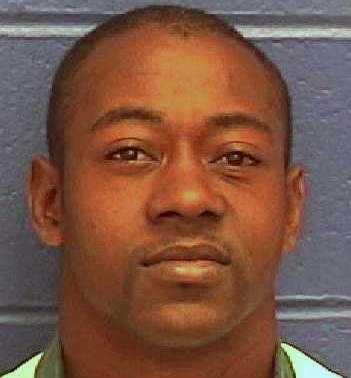 Timothy Tyrone Foster
Murderer · USA · 1986
Timothy Tyrone Foster was 29 when he was sentenced to death in Floyd County in…
1 victim
Timothy Tyrone Foster
Murderer · USA · 1986
Timothy Tyrone Foster was 29 when he was sentenced to death in Floyd County in…
1 victim
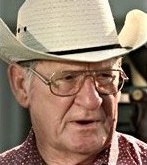 Bobby Frank Cherry
Mass murderer · USA · 1963
Bobby Frank Cherry was convicted in 2002 for the 16th Street Baptist Church bom…
4 victims
Bobby Frank Cherry
Mass murderer · USA · 1963
Bobby Frank Cherry was convicted in 2002 for the 16th Street Baptist Church bom…
4 victims
 Glennon Engleman
Serial killer · USA · 1954
Glennon Engleman was a dentist who was sentenced to life in prison and died in…
7 victims
Glennon Engleman
Serial killer · USA · 1954
Glennon Engleman was a dentist who was sentenced to life in prison and died in…
7 victims
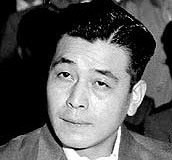 Masaru Okunishi
Mass murderer · Japan · 1961
Masaru Okunishi was a farmer from Kuzuo, a remote mountain village in Nabari ci…
5 victims
Masaru Okunishi
Mass murderer · Japan · 1961
Masaru Okunishi was a farmer from Kuzuo, a remote mountain village in Nabari ci…
5 victims
 Charles Sinclair
Serial killer? · USA / Canada · 1980
Charles Sinclair was described as having been sought for killings that were lin…
13 victims
Charles Sinclair
Serial killer? · USA / Canada · 1980
Charles Sinclair was described as having been sought for killings that were lin…
13 victims
- Gender
- female
- Country
- USA
- Location
- Austin, Travis County, Texas, USA
- Date of birth
- December 27, 1956
- Age at first offence
- 38
- Characteristics
- babysitter
- Victim profile
- Brandon Duane Baugh, 3-month-old
- Method of murder
- Beating
- Date(s) of murder
- January 21, 1994
- Years active
- 1994
- Date of arrest
- February 1, 1994
- Status
-
Sentenced to death
Sentenced to death on May 25, 1995
Case overview
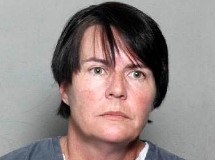
Cathy Lynn Henderson was convicted of capital murder and sentenced to death for the abduction and murder of Brandon Baugh, a white male who was three months old. Henderson was Brandon Baugh’s babysitter.
Henderson was born on 12-27-1956. She was 37 at the time of the crime and was later reported as 48 (and also as 50, 55, and 12 years old in a separate excerpt). She was described as white and as the only Travis County woman on Texas Death Row in one excerpt. Her prior prison record was stated as none.
Timeline
- January 21, 1994 — Eryn and Melissa Baugh left their infant son, Brandon Baugh, with their babysitter, Cathy Lynn Henderson; Brandon died later that day.
- February 1, 1994 — Henderson was arrested by the FBI in Kansas City, Missouri.
- February 7, 1994 — The grand jury issued another subpoena and the State filed a motion to compel production of maps drawn by Henderson in the possession of Nona Byington.
- February 8, 1994 — A grave site was found using maps and Brandon’s body was recovered.
- February 9, 1994 — The State charged Henderson with capital murder of Brandon Baugh.
- February 8, 1994 — Authorities found Brandon’s body “in a cardboard box in a shallow grave outside of Temple.”
- May 1995 — Trial was held; the jury convicted Henderson of capital murder of an infant.
- May 25, 1995 — Henderson was sentenced to death.
- December 03, 1997 — The Court of Criminal Appeals of Texas affirmed the judgment and overruled appellant’s points of error.
- May 24, 2012 — A Texas Judge Jon Wisser submitted a formal recommendation to toss Henderson’s conviction and allow a new trial.
- November 24, 2008 — A pathologist testified he could not be sure Henderson killed Brandon.
- May 27, 2007 — Associated Press reported Henderson sought a new trial and would be executed; her execution was postponed from April to June.
- 2007 — Henderson received a last-minute reprieve based on new scientific evidence and Dr. Bayardo’s change of opinion.
- June 13, 2007 — Henderson was scheduled to be executed (postponed from April 18).
Background
Cathy Lynn Henderson had been babysitting Brandon Baugh and his 2 1/2-year-old sister, Megan Baugh, for three months prior to Brandon’s death. She had nursing experience, and she claimed that she tried cardiopulmonary resuscitation after Brandon died.
Henderson lived near Austin, and the location of the crime was stated as Temple, Texas (Travis County). Henderson was described as originally from Missouri and later fled to Missouri after Brandon’s death.
Eryn Baugh and Melissa Baugh were Brandon’s parents. In one excerpt, a prior hearing involved Brandon’s parents walking into the 299th District Court at the Travis County Justice Complex for a pre-trial hearing on new evidence about head injuries in children. The Baugh family said they would return for the next hearing and attend scheduled court appearances throughout a new trial.
The offence
Brandon Baugh, a white male three-month-old infant, died while in Henderson’s care. Henderson’s account was that Brandon died after she dropped or fell him on his head. Henderson told police that Brandon died after she dropped him accidentally on his head; she said she panicked, buried the boy, and fled.
An autopsy determined Brandon died of a fractured skull. Henderson later told police that Brandon died after she dropped him accidentally on his head and that she buried the boy.
In one excerpt, Brandon Baugh’s body was described as being found buried 60 miles away and wrapped in his yellow-trimmed white blanket in a cardboard box.
Investigation and evidence
Discovery of the body and medical findings
A map drawn by Henderson was used to locate Brandon’s body. Authorities found Brandon’s body in a cardboard box in a shallow grave outside of Temple, Texas on Feb. 8, 1994.
In the Supreme Court of the United States petition excerpted material, it stated that Brandon died of a fractured skull and that an autopsy determined he died of head injuries.
Henderson’s statements to law enforcement
Henderson told Agent Napier that the baby’s grandmother picked up Brandon during the afternoon of January 21 and later stated she admitted to killing Brandon but claimed it was an accident. She told Agent Napier that she had buried the baby in a wooded area near Waco, used a spade to dig the grave, left the spade lying nearby, and could take an officer to the scene.
The record describes that Henderson refused to sign a written statement and refused to draw a map requested by Agent Napier, then requested an attorney. After meeting with Assistant Federal Public Defender Ronald Hall, Henderson privately told him where she had buried the body and drew a sketch-map to reduce her words to paper.
FBI agent interrogation excerpts included verbatim statements:
- Agent Napier asked: “When you say the whole thing, are you talking about that Brandon is dead, that you know where the body’s located, that it was an accident, that you’re sorry?”
- Henderson responded by nodding her head.
- Napier said: “Brandon’s dead. It was an accident.”
- Henderson replied: “Yes.”
- Napier asked: “Did you bury him?”
- Henderson responded: “Of course I did. He’s just a baby.”
Henderson was also described as giving several stories about the baby’s disappearance before finally saying he fell from her arms while she was answering the phone and hit his head on the floor.
A medical examiner testified that Henderson’s account was impossible because of the severity of Brandon’s fatal injuries, and another excerpt described that medical testing now showed Henderson’s claims could be true.
Map dispute and attorney-client privilege litigation
In the Court of Criminal Appeals opinion, Henderson made complaints relating to the trial court’s order compelling her attorneys to turn over maps of the victim’s location.
Henderson had been transferred from Missouri to Texas custody, and while confined in Texas she made various statements concerning Brandon’s whereabouts. At one point, she denied any knowledge of the child’s location and stated he had gone with his grandmother. At another point, she stated she could draw a map to a drop-off point in Missouri where the baby had been taken to Oklahoma.
A series of events occurred regarding maps:
- The assistant federal public defender Ronald Hall met with Henderson; Hall determined he needed a map.
- Hall obtained a Texas map in an effort to locate the baby; Hepperman later arranged delivery of a Texas map to Hall.
- Law enforcement asked Nona Byington for the map.
- On February 3, a Travis County grand jury issued a subpoena duces tecum for Byington to appear and produce any maps in her possession that were created by Henderson.
- Travis County Sheriff Terry Keel obtained an arrest warrant for Byington and a search warrant for her car and office.
- No maps were found in that search.
- On February 7, Judge Jon Wisser held a hearing; the State argued the maps were not privileged and that the crime-fraud exception applied.
- Judge Wisser granted the motion to compel and found that the maps were not privileged because they were made with intent to be turned over to law enforcement authorities.
- Copies of two maps were turned over, and the maps indicated a grave site.
- Using the maps, law enforcement recovered Brandon’s body.
Court reasoning on privilege and suppression
The Court of Criminal Appeals addressed points of error relating to maps, including whether the crime-fraud exception applied and whether Article 38.23 required suppression. The Court concluded that the crime-fraud exception did not apply and then addressed Article 38.23 in the context of privileged communications and evidence obtained as a result of those communications.
The opinion also stated that the maps were never introduced into evidence and that the State made no reference during trial to their existence; any reversible error concerning obtaining the maps would need to turn upon other evidence obtained as a result of the information contained in the maps.
The opinion included a statement of the crime-fraud exception and extensive analysis of whether Article 38.23 barred fruits. It held that the attorney-client privilege was legitimately required to yield to the strong public policy interest of protecting a child from death or serious bodily injury at the time production was compelled, and therefore evidence was not barred by Article 38.23.
Hearsay objection regarding Chief April Bacon
In one point of error, Henderson contended the trial court erred in overruling a running hearsay objection at the hearing on the State’s motion to compel. The Court overruled the point, explaining that the hearing was governed by Rule 104(a) and not a motion to suppress confessions or illegally obtained evidence under Article 38.23.
Arrest and custody
Henderson was arrested by the FBI in Kansas City, Missouri on February 1, 1994. Custodial interrogation began with Miranda warnings. FBI agents formed a subjective belief that the baby was dead at the conclusion of the interview.
The record described that Agent Napier persisted in interrogation and, through leading questions, obtained a confession that Henderson killed the baby.
After Henderson agreed to extradition to Texas, attorney Ronald Hall sent the map and confidential information to a Texas attorney, Nona Byington.
Trial
Charges and conviction
Henderson was convicted in a trial beginning in May 1995. The Court of Criminal Appeals opinion stated that the jury convicted Henderson of the capital murder of a three-and-a-half-month-old child, Brandon Baugh, committed on January 21, 1994 in Travis County. The jury answered punishment issues in the State’s favor and Henderson was sentenced to death.
The petition excerpt also stated that Henderson was convicted of capital murder of an infant in violation of TEXAS PENAL CODE § 19.03(a)(8).
Henderson’s defence position
Henderson maintained throughout trial that Brandon died after Henderson dropped him accidentally and that her decision to bury him and flee was made in panic rather than cold blood. Henderson claimed the child slipped from her arms and fell four feet to the concrete floor.
Evidence used at trial
The State’s chief evidence included Henderson’s flight to Missouri after the infant died, her burial of the body instead of informing authorities of the death, and the testimony of the County Medical Examiner about the head trauma being greater than what might be expected from a fall from Henderson’s arms.
Trial evidence challenged on appeal: confession and voluntariness
The Court of Criminal Appeals addressed Henderson’s confession to Agent Napier and arguments that it was involuntary in violation of Articles 38.21 and 38.22 and constitutional provisions. The Court held Henderson’s confession was voluntary, found no promise existed, and overruled the points of error concerning confession admissibility.
Trial evidence challenged: “extraneous” offense testimony
Henderson challenged testimony at trial that included an admission by Henderson that she had killed someone. The Court set out the relevant portion of the testimony and overruled Henderson’s argument that the testimony was evidence of an extraneous offense or unfairly prejudicial.
The challenged testimony included:
- “Because they kept f-ing with me.”
- “Male.”
- “That's what I used.”
The Court concluded the testimony could be viewed by a jury as an admission to committing the offense on trial and held the testimony was relevant and not unfairly prejudicial under Rule 403.
Sentencing
Henderson’s jury convicted her and answered punishment issues in the State’s favor. Henderson was sentenced to death, with sentencing stated as May 25, 1995.
Appeals
Texas Court of Criminal Appeals
The Court of Criminal Appeals of Texas affirmed the trial court’s judgment on December 03, 1997. The opinion stated that Henderson raised seventeen points of error on appeal and that the Court would affirm.
The Court overruled points of error, including:
- Points of error one through three regarding maps, privilege, suppression, and related issues.
- Point of error four regarding effective assistance of counsel related to assistant public defender Ronald Hall.
- Point of error five and six related to due process and self-incrimination claims.
- Point of error eight regarding the motion to recuse.
- Point of error nine and ten regarding equal protection challenges to TEXAS PENAL CODE § 19.03(a)(8).
- Points of error eleven and twelve regarding cruel/unusual punishment challenges.
- Points of error thirteen through fifteen related to voluntariness of Henderson’s confession.
- Point of error sixteen regarding testimony challenged as extraneous offense.
- Point of error seventeen regarding a hearsay objection.
The Court discussed the constitutionality of Texas Penal Code § 19.03(a)(8) as capital murder for murder of an individual under six years of age.
The opinion also described in detail the standard and analysis for equal protection and Eighth Amendment challenges, including holding that the child-murder provision met requirements regarding vagueness and application to a subclass.
Post-conviction proceedings and new evidence
Multiple excerpts described later proceedings and issues involving new scientific evidence about head injuries in children.
A 2007 Associated Press excerpt stated that Henderson insisted the death was an accidental fall and that her burial and flight were in panic. It reported that her lawyers pursued expert evidence about head injuries and that she received a last-minute reprieve in 2007 based on scientific evidence and Dr. Bayardo’s change of opinion.
A 2008 excerpt stated that a pathologist testified he could not be sure Henderson killed Brandon and that new science supported Henderson’s contention that Brandon’s death could have resulted from an accidental fall.
A 2012 excerpt stated that Texas Judge Jon Wisser recommended tossing Henderson’s conviction and allowing a new trial over the “dropped baby” evidence. The excerpt described that Wisser made a formal recommendation to the Texas Court of Criminal Appeals.
A 2013 excerpt described that lawyers for Henderson were back in court for a pre-trial hearing to seek a new trial, centering on new evidence about head injuries in children.
Outcome
Henderson was sentenced to death on May 25, 1995.
The Court of Criminal Appeals of Texas affirmed Henderson’s conviction and sentence in an opinion dated December 03, 1997.
Later proceedings described in excerpts included recommendations to toss the conviction and requests for a new trial, and hearings focused on new scientific evidence about head injuries in children.
Other details
Victim
Brandon Baugh was a white male and was described as three months old at the time of his death. Megan Baugh was also mentioned as Brandon’s 2 1/2-year-old sister.
Locations and distances
The body was recovered outside Temple, Texas. Another portion stated Brandon was found about 60 miles away and described a grave site outside of Temple and a burial location near Waco in Henderson’s statements.
Medical experts referenced in petition excerpt
Experts listed included Dr John Plunkett, Dr Peter Stephens, Dr Kenneth Monson, and Dr Janice Ophoven. The petition excerpt also mentioned an affidavit from Dr Bayardo and Dr Roberto Bayardo as a forensic pathologist.
Spotted an error, or have more information about this case?