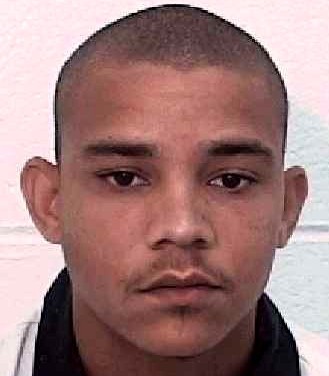
Marion Wilson
Murderer Russell Ellwood
Murderer · USA · 1991
Russell Ellwood was a former taxi driver. Authorities suspected him of killing…
20 victims
Russell Ellwood
Murderer · USA · 1991
Russell Ellwood was a former taxi driver. Authorities suspected him of killing…
20 victims
 Robert Martines Perez
Murderer · USA · 1994
Name: Robert Martines Perez · Other name used in proceedings: Robert Martinez P…
15 victims
Robert Martines Perez
Murderer · USA · 1994
Name: Robert Martines Perez · Other name used in proceedings: Robert Martinez P…
15 victims
 Billy Frank Vickers
Murderer · USA · 1993
Billy Frank Vickers Vickers was executed by lethal injection in Texas on Januar…
14 victims
Billy Frank Vickers
Murderer · USA · 1993
Billy Frank Vickers Vickers was executed by lethal injection in Texas on Januar…
14 victims
 Galareka Harrison
Murderer · USA · 2007
Galareka Harrison was a former University of Arizona student from Chinle. Mia H…
1 victim
Galareka Harrison
Murderer · USA · 2007
Galareka Harrison was a former University of Arizona student from Chinle. Mia H…
1 victim
 Suzuka Hatakeyama
Murderer · Japan · 2006
Suzuka Hatakeyama was an Akita Prefecture woman who was sentenced to life in pr…
2 victims
Suzuka Hatakeyama
Murderer · Japan · 2006
Suzuka Hatakeyama was an Akita Prefecture woman who was sentenced to life in pr…
2 victims
 Anzel Keon Jones
Homicide · USA · 1995
Anzel Keon Jones was a 17-year-old at the time of his arrest for the May 1995 m…
1 victim
Anzel Keon Jones
Homicide · USA · 1995
Anzel Keon Jones was a 17-year-old at the time of his arrest for the May 1995 m…
1 victim
 Marco Chapman
Murderer · USA · 2002
Marco Allen Chapman was executed by lethal injection in Kentucky on November 21…
2 victims
Marco Chapman
Murderer · USA · 2002
Marco Allen Chapman was executed by lethal injection in Kentucky on November 21…
2 victims
 Darrell Mease
Murderer · USA · 1988
Darrell Mease was prosecuted in the case of State of Missouri v. Darrell Mease,…
3 victims
Darrell Mease
Murderer · USA · 1988
Darrell Mease was prosecuted in the case of State of Missouri v. Darrell Mease,…
3 victims
 Alphonso Green
Murderer · USA · 1986
Alphonso Green (born 01/07/51) was tried in the Thirteenth Judicial Circuit, Hi…
2 victims
Alphonso Green
Murderer · USA · 1986
Alphonso Green (born 01/07/51) was tried in the Thirteenth Judicial Circuit, Hi…
2 victims
- Gender
- male
- Country
- USA
- Location
- Baldwin County, Georgia, USA
- Date of birth
- 1976
- Age at first offence
- 20
- Characteristics
- armed robbery, murder for hire, to collect insurance money, convicted rapist
- Victim profile
- Donovan Corey Parks
- Method of murder
- Shooting
- Date(s) of murder
- March 28, 1996
- Years active
- 1996
- Date of arrest
- —
- Status
-
Sentenced to death
Sentenced to death on November 7, 1997 (Wilson v. the State; affirmance of conviction and death sentence on appeal, decided November 1, 1999; reconsideration denied December 20, 1999)
Case information
Marion Wilson Jr. was convicted of malice murder, felony murder, armed robbery, hijacking a motor vehicle, possession of a firearm during the commission of a crime, and possession of a sawedoff shotgun.
Timeline
- March 28, 1996 — Donovan Corey Parks entered a local Wal-Mart to purchase cat food, leaving his 1992 Acura Vigor parked in the fire lane directly in front of the store; witnesses observed Wilson and Robert Earl Butts standing behind Parks in one of the store's checkout lines and speaking with Parks beside his automobile; witnesses observed Wilson and Butts entering Parks's automobile (Butts in the front passenger seat and Wilson in the back seat).
- Minutes later, March 28, 1996 — Parks's body was discovered lying face down on a residential street; nearby residents testified to hearing a loud noise they had assumed to be a backfiring engine and to seeing the headlights of a vehicle driving from the scene.
- November 7, 1997 — The jury recommended the death sentence for malice murder; the jury fixed the sentence for the murder at death, finding that Wilson committed the murder while engaged in the commission of an armed robbery.
- October 27, 1997 — Wilson's trial began; the jury found Wilson guilty on all counts.
- May 29, 1996 — Wilson was indicted by the Baldwin County Grand Jury for malice murder, felony murder, armed robbery, hijacking a motor vehicle, possession of a firearm during the commission of a crime, and possession of a sawed-off shotgun.
- July 22, 1996 — The State filed written notice of its intent to seek the death penalty.
- December 3, 1997 — Wilson filed a motion for a new trial.
- December 10, 1997 — Wilson supplemented his motion for a new trial.
- December 18, 1997 — The trial court denied the motion for a new trial.
- February 3, 1999 — The appeal was docketed with the Georgia Supreme Court.
- April 19, 1999 — The case was orally argued.
- November 1, 1999 — The appeal was decided.
- December 20, 1999 — Reconsideration was denied.
The offence
On the night of March 28, 1996, the victim, Donovan Corey Parks, entered a local Wal-Mart to purchase cat food. Parks left his 1992 Acura Vigor parked in the fire lane directly in front of the store.
Witnesses observed Wilson and Robert Earl Butts standing behind Parks in one of the store's checkout lines and, shortly thereafter, speaking with Parks beside his automobile. A witness overheard Butts ask Parks for a ride. Several witnesses observed Wilson and Butts entering Parks's automobile, Butts in the front passenger seat and Wilson in the back seat.
Minutes later, Parks's body was discovered lying face down on a residential street. Nearby residents testified to hearing a loud noise they had assumed to be a backfiring engine and to seeing the headlights of a vehicle driving from the scene.
After the murder, law enforcement officers took inventory of the vehicles in the Wal-Mart parking lot. Butts's automobile was among the vehicles remaining in the lot overnight. Based upon the statements of witnesses at the Wal-Mart, Wilson was arrested.
According to Wilson's statements, Butts had pulled out a sawed-off shotgun, had ordered Parks to drive to and then stop on Felton Drive, had ordered Parks to exit the automobile and lie on the ground, and had shot Parks once in the back of the head. Wilson and Butts then drove the victim's automobile to Gray where they stopped to purchase gasoline.
Wilson, who was wearing gloves, was observed by witnesses and videotaped by a security camera inside the service station. Wilson and Butts then drove to Atlanta where they contacted Wilson's cousin in an unsuccessful effort to locate a “chop shop” for disposal of the victim's automobile. Wilson and Butts purchased two gasoline cans at a convenience store in Atlanta and drove to Macon where the victim's automobile was set on fire.
Butts then called his uncle and arranged a ride back to the Milledgeville Wal-Mart where Butts and Wilson retrieved Butts's automobile.
Investigation and evidence
On the night of the murder, law enforcement officers inventoried the vehicles in the Wal-Mart parking lot, and Butts's automobile remained among those vehicles overnight.
A search of Wilson's residence yielded a sawed-off shotgun loaded with the type of ammunition used to kill Parks. The search also yielded three notebooks of handwritten gang “creeds,” secret alphabets, symbols, and lexicons, and a photo of a young man displaying a gang hand sign.
Wilson gave several statements to law enforcement officers and rode in an automobile with officers indicating stops he and Butts had made in the victim's automobile after the murder.
Arrest
Trial
Charges and convictions
At trial, a jury convicted Marion Wilson Jr. of malice murder, felony murder, armed robbery, hijacking a motor vehicle, possession of a firearm during the commission of a crime, and possession of a sawedoff shotgun.
Sentence recommendation and sentence
The jury fixed the sentence for the murder at death, finding as a statutory aggravating circumstance that Wilson committed the murder while engaged in the commission of an armed robbery (OCGA 17-10-30 (b) (2)).
In addition to the death sentence, the trial court imposed consecutive sentences of life imprisonment for armed robbery, twenty years in prison for hijacking a motor vehicle, five years in prison for possession of a firearm during the commission of a crime, and five years in prison for possession of a sawed-off shotgun.
Proof and sufficiency arguments
The Georgia Supreme Court found that the evidence introduced at trial was sufficient to enable a rational trier of fact to find beyond a reasonable doubt that Wilson was guilty of the crimes of which he was convicted and to find beyond a reasonable doubt the existence of a statutory aggravating circumstance.
The court stated that the State was not required to prove that Wilson was “the triggerman” in order to prove him guilty of malice murder. It found that even assuming Wilson did not shoot the victim, there was sufficient evidence that he intentionally aided or abetted the commission of the murder or that he intentionally advised, encouraged, or procured another to commit the murder to support a finding of guilt (OCGA 16-2-20 (b) (3), (4)).
Admission and exclusion issues during trial and sentencing
Wilson claimed that his rights to freedom of speech and freedom of association were violated during the penalty phase by the introduction of evidence showing his involvement with the Folks gang. The court found that evidence of Wilson's involvement with the Folks gang and of the violent nature of that gang was relevant to the issues to be decided by the jury during the sentencing phase of his trial. The State presented testimony that the Folks gang required its members to commit violent, criminal acts and that Wilson held a powerful position in the gang. The State also presented a tape-recorded statement of Wilson claiming to be the gang's “chief enforcer,” Wilson's handwritten notebooks regarding the gang, and a photograph found in Wilson's residence of a young man displaying a gang hand sign.
The court also held that Wilson was barred from challenging the introduction of this evidence on appeal because it was not objected to at trial.
Wilson contended that the trial court allowed improper expert testimony about gangs during the sentencing phase. The court stated that the testimony was not objected to at trial and could not now be complained of on appeal.
Wilson contended that self-inculpatory statements allegedly made by Robert Earl Butts to three of Butts's fellow inmates were made “during the pendency of the criminal project” (OCGA 24-3-5) and should have been admitted during the guilt/innocence phase. The trial court excluded the evidence on the basis that any conspiracy between Wilson and Butts ended when Wilson gave statements to law enforcement officers revealing details of the crime and seeking to place blame for the murder on Butts.
The Georgia Supreme Court agreed that any conspiracy between Butts and Wilson ended upon Wilson's statements to authorities. The court further stated that the statutory exception to the hearsay rule upon which Wilson relied made declarations of conspirators admissible only against other conspirators, and that declarations to third persons to the effect that the declarant and not the accused was the actual perpetrator were inadmissible as a rule. It also stated that despite general inadmissibility, exceptional circumstances could make the hearsay evidence sufficiently reliable and necessary to require its admission, but that Wilson did not utilize procedures set out in Turner and did not obtain a ruling showing consideration under the Turner standards; therefore the court held the trial court did not err in failing to address reliability, relevance, and necessity in the guilt/innocence phase.
Wilson contended that the trial court erred in not striking certain jurors for cause. The court found no reversible error in its rulings, including:
- Juror James Peugh: the court discussed that he stated during individual voir dire that he believed “99.9 percent of [criminal defendants] were guilty. . . .” and that he rehabilitated himself during responses; the trial court denied the defense motion; the Georgia Supreme Court found no manifest abuse of discretion.
- Juror John Mayzes: the court discussed that he had casually conversed with the victim about the Bible three times in his front yard but was otherwise unacquainted; Wilson did not move to strike; the court found no error in not striking him sua sponte.
- Juror Henry Craig: the court discussed that his son and daughter repeated statements of persons associated with the Sheriff's Department indicating the Sheriff was confident regarding the identity of the killer; the court found no error in denial after questioning showed he had not formed an opinion about guilt or innocence.
- Blanket motion regarding jurors connected to the Department of Corrections: the court rejected blanket disqualification and found adequate consideration of potential bias.
Wilson contended that the trial court erred by not being present while the jury viewed the crime scene. The court found the judge should have attended the jury view but held that absence during a brief jury view was not reversible error because no objection was made and no harm was demonstrated.
Wilson contended the charge about “a defendant's mere presence during the commission of a crime” was potentially misleading. The court held it was a correct statement of the law and, when read with other charges, would not have misled the jury.
Wilson contended the trial court erred by failing to provide opening statements at the beginning of the sentencing phase and by giving inadequate guidance. The court disagreed, stating that allowing opening statements was better practice but not required, and that instructions provided ample guidance.
Wilson contended the trial court's failure to charge the jury a second time on the credibility of witnesses during the penalty phase was reversible error. The court held the jury had been fully charged regarding credibility and that the charge would have applied to both phases, and thus found no reversible error.
Wilson contended the trial court was not required to charge on a burden of proof applicable to non-statutory aggravating circumstances. The court held accordingly.
Wilson contended the trial court erred in not instructing that findings as to mitigating circumstances need not be unanimous. The court held the trial court clearly charged that mitigating circumstances were not necessary to impose a life sentence instead of death.
Wilson contended the trial court erred by denying that a finding of an aggravating circumstance must be unanimous. The court held reversal was not required because the jury verdict as to the penalty must be unanimous and the court had so instructed.
Wilson contended the trial court erred by denying his motion for a mistrial when inadmissible hearsay suggested Wilson had shot the victim. The court held that the trial court gave sufficient curative instructions and did not abuse its discretion.
Wilson contended his right to a fair trial was abridged by a photograph of the victim in life and by the manner of introduction. The court discussed that it was not error to admit a photograph of the victim in life and that the photograph was later viewed and identified by a non-relative before being introduced into evidence; it found no denial of a fair trial under the circumstances.
Wilson contended the trial court erred in admitting certain photographs depicting the victim as he was found at the crime scene and as he appeared shortly before autopsy. The court found them material, relevant, and admissible.
The court addressed Wilson's complaints regarding prosecution characterization of the victim, invitation to place the jury in the place of the victim, the “reading the law” practice in closing argument, and statements during closing argument emphasizing Wilson's exercise of his right not to testify and the failure of Butts to give a statement after arrest. The court concluded there was no evidence of an objection or mistrial request and stated such allegedly improper statements warrant reversal only if they reasonably probability changed the result; it concluded they did not do so.
Wilson contended that certain portions of the State's opening statement during the guilt/innocence phase were inflammatory and improperly called into question the impact of the victim's death upon the victim's family. The court held there was no reasonable probability of change in the result and therefore it did not address impropriety.
Wilson contended his two statements to law enforcement officers (one tape-recorded and one written), and his statements regarding actions after the murder, were improperly admitted. The court disagreed. It addressed Wilson's claim that statements were induced by hope of benefit in violation of OCGA 24-3-50 and held the trial court did not err on hope of benefit, and it addressed Wilson's Miranda claim and denied error based on credibility determinations.
Wilson contended the trial court erred in denying his motion for a change of venue. The court held Wilson did not show the trial setting was inherently prejudicial from pretrial publicity or actual bias, and found no likelihood of prejudice. It also held that membership in a group associated with the victim was not disqualifying without a showing the jurors could not be fair and impartial.
Wilson contended the trial court erred by allowing evidence during the penalty phase of crimes committed by him as a juvenile, including shooting two persons and a dog, first degree arson, criminal trespass, felony obstruction of a law enforcement officer, assault of an officer in a youth detention facility, possession of cocaine, and making a death threat. The court disagreed and held such records were admissible in the penalty phase of a capital murder case (including OCGA 15-11-38 (b)).
Wilson also contended the prior juvenile crimes evidence was insufficiently reliable and the court disagreed. It stated it found the trial court did not err in admitting contested evidence and also found no merit to testimony that Wilson threatened to kill a man and his mother, holding it was admissible as evidence of bad character.
Wilson contended he was denied a fair trial because a judge who presided over many pretrial proceedings was replaced for health reasons. The court held the argument was waived because Wilson requested accommodation before and made no other objection to the substitution.
Wilson contended it was error for the trial court to deny his trial counsel's request to be discharged due to an alleged conflict involving counsel's wife working for the Department of Corrections and being casually acquainted with the victim. The court held the relationship between counsel and the victim was minimal and indirect, found no evidence counsel's loyalties were affected, and found no disqualifying conflict of interest.
Appeals and legal issues on appeal
Wilson appealed his conviction and death sentence.
The Georgia Supreme Court affirmed the convictions and the statutory aggravating circumstance supporting the death sentence, stating the evidence was sufficient to find guilt and the statutory aggravating circumstance beyond a reasonable doubt.
The court also addressed multiple claims regarding evidence and procedure during both the guilt/innocence and penalty phases, including juror challenges, jury view attendance, jury instructions, mistrial denial, admissibility of photographs, issues with hearsay, and evidentiary rulings about gang involvement.
The court found the sentence of death was not imposed under the influence of passion, prejudice, or any other arbitrary factor (OCGA 17-10-35 (c) (1)). It also found, considering both the crime and the defendant, that the sentence of death was neither excessive nor disproportionate to penalties imposed in similar cases (OCGA 17-10-35 (c) (3)). The court stated the similar cases listed in the Appendix supported the imposition of the death penalty because they involved intentional killing committed during the commission of an armed robbery or a motor vehicle hijacking.
Outcome
On appeal, the Georgia Supreme Court affirmed the jury’s verdicts of guilt and the death sentence.
Other details
Indictment and trial timing
Wilson was indicted on May 29, 1996 by the Baldwin County Grand Jury. The State filed written notice of its intent to seek the death penalty on July 22, 1996. Wilson's trial began on October 27, 1997, and the jury found Wilson guilty on all counts. The felony murder conviction was vacated by operation of law (Malcolm v. State, 263 Ga. 369 (4) (434 SE2d 479) (1993); OCGA 16-1-7).
Concurrence and dissent
SEARS, Justice, issued a concurring in part and dissenting in part opinion. The opinion stated that the justice concurred in the majority's affirmance of appellant's adjudication of guilt. The opinion then dissented regarding appellant's death sentence, focusing on Eighth Amendment concerns and the method of execution by electrocution in Georgia.
Counsel
The opinion listed counsel for appellee: Fredric D. Bright, District Attorney; Thurbert E. Baker, Attorney General; Susan V. Boleyn, Senior Assistant Attorney General; Beth A. Burton, Assistant Attorney General. The opinion listed counsel for appellant: Waddell, Emerson & Buice; John H. Bradley; Jon P. Carr.
Spotted an error, or have more information about this case?