
Suzuka Hatakeyama
Murderer Kayoko Nakai
Murderer · Japan · 2000
Kayoko Nakai was 66 and ran a rival telephone dating club in Kobe at the time o…
4 victims
Kayoko Nakai
Murderer · Japan · 2000
Kayoko Nakai was 66 and ran a rival telephone dating club in Kobe at the time o…
4 victims
 Zheng Yongshan
Murderer · Japan · 2006
Zheng Yongshan (鄭 永善, born 1972) also went by the name of Mie Taniguchi (谷口 充恵)…
2 victims
Zheng Yongshan
Murderer · Japan · 2006
Zheng Yongshan (鄭 永善, born 1972) also went by the name of Mie Taniguchi (谷口 充恵)…
2 victims
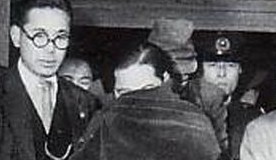 Miyuki Ishikawa
Murderer · Japan · 1944
Miyuki Ishikawa (石川 ミユキ, Ishikawa Miyuki; born 1897; date of death unknown) was…
169 victims
Miyuki Ishikawa
Murderer · Japan · 1944
Miyuki Ishikawa (石川 ミユキ, Ishikawa Miyuki; born 1897; date of death unknown) was…
169 victims
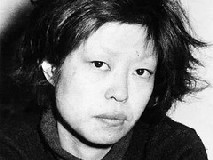 Hiroko Nagata
Murderer · Japan · 1972
Hiroko Nagata (Japanese leftist radical; also sometimes mistakenly referred to…
14 victims
Hiroko Nagata
Murderer · Japan · 1972
Hiroko Nagata (Japanese leftist radical; also sometimes mistakenly referred to…
14 victims
 Curtis Wilkie Beasley
Murderer · USA · 1995
Curtis Wilkie Beasley was charged with Robbery, Grand-Theft Auto, and the First…
1 victim
Curtis Wilkie Beasley
Murderer · USA · 1995
Curtis Wilkie Beasley was charged with Robbery, Grand-Theft Auto, and the First…
1 victim
 Conan Wayne Hale
Murderer · USA · 1995
Conan Wayne Hale was sentenced to death on May 29, 1998. On automatic and direc…
3 victims
Conan Wayne Hale
Murderer · USA · 1995
Conan Wayne Hale was sentenced to death on May 29, 1998. On automatic and direc…
3 victims
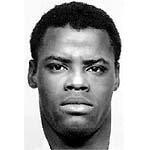 William Prince Davis
Murderer · USA · 1978
William Prince Davis (#614). Davis was 21 years old at the time of the offence…
1 victim
William Prince Davis
Murderer · USA · 1978
William Prince Davis (#614). Davis was 21 years old at the time of the offence…
1 victim
 Jack Owen Spillman
Murderer · USA · 1994
Jack Owen Spillman III was known as “The Werewolf Butcher.” Crimes evidence dev…
3 victims
Jack Owen Spillman
Murderer · USA · 1994
Jack Owen Spillman III was known as “The Werewolf Butcher.” Crimes evidence dev…
3 victims
 Mark Valera
Murderer · Australia · 1998
Mark Valera (previously known as Mark van Krevel) was born 24 April 1979. He wa…
2 victims
Mark Valera
Murderer · Australia · 1998
Mark Valera (previously known as Mark van Krevel) was born 24 April 1979. He wa…
2 victims
- Gender
- female
- Country
- Japan
- Location
- Fujisato, Akita Prefecture, Japan
- Date of birth
- 1973
- Age at first offence
- 33
- Characteristics
- parricide, kidnapping, abuse, torture
- Victim profile
- Ayaka Hatakeyama, 9 (her daughter) / Goken Yoneyama, 7 (neighbor boy)
- Method of murder
- Drowning (p ushing her off a bridge into a river ) / Strangulation
- Date(s) of murder
- April 19/May 17, 2006
- Years active
- 2006
- Date of arrest
- June 4, 2006
- Status
-
Life imprisonment
Sentenced to life in prison on March 19, 2008
Overview
Suzuka Hatakeyama was an Akita Prefecture woman who was sentenced to life in prison for murdering her 9-year-old daughter and a 7-year-old neighbor boy in Fujisato, Akita Prefecture.
Timeline
- April 9, 2006 — Ayaka, Hatakeyama’s 9-year-old daughter, went missing.
- April 10, 2006 — Ayaka was found dead in the nearby river.
- April 2006 — Hatakeyama was convicted of killing her daughter, Ayaka, 9, by pushing her off a bridge into a river.
- May 17, 2006 — A 7-year-old boy, Goken Yoneyama, went missing after being invited to Hatakeyama’s house.
- May 18, 2006 — Goken Yoneyama was found dead near the banks of the Yoneshiro River in Noshiro after going missing the previous day.
- June 4, 2006 — Hatakeyama was arrested.
- June 5, 2006 — Hatakeyama was arrested Sunday in Fujisato, Akita Prefecture, over the slaying of a 7-year-old boy; police conducted questioning and searches.
- June 6, 2006 — A report referred to Hatakeyama and the Daily Yomiuri, June 6.
- June 7, 2006 — Hatakeyama hinted she killed the boy as evidence mounted, and police detected traces they believed were the boy’s blood and urine.
- March 19, 2008 — Hatakeyama was sentenced to life in prison.
The offence
Hatakeyama was convicted of two killings in connection with the deaths of two children:
- She killed her daughter, Ayaka, 9, in April 2006 by pushing her off a bridge into a river.
- She killed neighbor boy Goken Yoneyama, 7, the following month at her home, by strangling him with a cord.
In the court’s reasoning, Hatakeyama felt her daughter was a nuisance. When Ayaka asked to see some fish, Hatakeyama’s irritation intensified and she pushed Ayaka off the bridge into the river.
For the boy’s slaying, prosecutors said Hatakeyama killed him to “divert suspicions from the public.” The judge said Hatakeyama initially came up with the idea to “abduct” Yoneyama to divert the police investigation from her daughter’s death. After the boy was invited to Hatakeyama’s house on May 17, 2006, the judge said Hatakeyama felt sudden jealousy and hatred toward him when she saw him happily playing and then decided to kill him. After strangling the boy with a cord, Hatakeyama later dumped his corpse on a river bank.
At the end of the court session, Hatakeyama turned toward Yoneyama’s parents and made a “dogeza” deep bow and said:
“I'm sorry I took your son.”
Yoneyama’s mother apparently ignored the apology by closing her eyes and turning her back.
Investigation
Police investigated whether the deaths of the children were connected.
Ayaka (daughter)
After Ayaka went missing on April 9, 2006, she was found dead in the nearby river on the next day. After a quick autopsy, police investigators concluded that Ayaka had accidentally fallen into the stream and drowned.
Hatakeyama disputed the accident theory, insisting it could not have been an accident because her daughter had never played at the riverside. She also described cold water in April and lingering snow.
Hatakeyama then launched her own investigation by asking neighbors for reports of sightings of Ayaka in the hope of getting a clue to the real cause of her death. Police initially ruled out foul play in Ayaka’s death, but after the Yoneyama slaying they reopened the case to investigate whether there was a connection.
Goken Yoneyama (neighbor boy)
Goken Yoneyama, a 7-year-old first-grader at Fujisato Elementary School, went missing on May 17, 2006 on his way home from school at around 3:30 p.m. He was found strangled by the river the following day.
Police later described traces they believed were the boy’s blood and urine in Hatakeyama’s home:
- at the entrance to and inside Hatakeyama’s deceased daughter’s room
- and in the trunk of Hatakeyama’s vehicle
The police thought it was likely the boy was killed outside the girl’s room based on evidence.
Police said they detected fibers and other materials connecting locations:
- they planned tests to determine if an obi confiscated from one of the places searched was used to strangle the boy
- they said hair collected from the victim’s body and the riverbank matched hair found in Hatakeyama’s house
- they said fibers collected from the boy’s clothes matched fibers detected in the carpet in Hatakeyama’s car trunk
- they obtained fibers from a piece of cloth believed to have been used to cover the boy’s body before it was dumped
About 70 police officers dusted for fingerprints at the entrance of Hatakeyama’s house and confiscated materials from her parents’ home, conducting DNA testing on hair provided by local residents. Police searched Hatakeyama’s house, her parents’ home in Noshiro, and some vehicles.
Arrest and questioning
On June 4, 2006, Hatakeyama was arrested.
Police said she confessed to investigators that she carried Goken Yoneyama’s body to her car, drove to the Yoneshiro River, and dumped the corpse in the grass along the riverbank.
The investigation described that Hatakeyama had admitted dumping the boy’s corpse but had denied strangling him at one stage of questioning, without elaborating on her changed stance during questioning.
She later added, through her court-appointed attorney, that she had also thought the police investigators would reopen the probe into the mysterious death of her daughter if she killed the boy.
During questioning reported on June 5, 2006, she denied she killed the boy and dumped his body, and police conducted questioning throughout the day.
Trial
Court and judge
The High-profile crimes led to a trial in Akita District Court. The presiding judge was Toshiro Fujii.
Verdict and legal findings on intent
The court sentenced Hatakeyama to life. Prosecutors had demanded the death sentence, but the court avoided it.
The judge said the crimes were “heinous,” but Hatakeyama avoided the death sentence because “the murder of the boy was not premeditated.”
The court applied the charge of murder to both killings, rejecting the defense argument that the charge of negligence resulting in death should be applied to the daughter’s death.
The defense argued that Hatakeyama had not intended to kill her daughter, but the court determined she had intended to kill Ayaka, rejecting counsel’s claim. The court said Hatakeyama initially confessed to investigators that she intended to kill her daughter. The prosecutors claimed her confession proved Hatakeyama’s intent. The court said her confession to investigators was trustworthy. It said Hatakeyama felt her daughter was a nuisance.
Mental competence
The court said Hatakeyama was mentally competent when she strangled Goken Yoneyama. The defense claimed she was in a state of diminished capacity, and the defendant’s mental competence at the time of the boy’s slaying was a focal point of the trial.
Defense and prosecution positions on the boy’s murder
Prosecutors said Hatakeyama killed the boy to “divert suspicions from the public.” The judge took up the prosecutors’ claim and described Hatakeyama’s initial idea to “abduct” Yoneyama to divert police investigation from her daughter’s death. The judge also described the decision as arising after the boy was invited to Hatakeyama’s house on May 17, 2006, when she felt sudden jealousy and hatred toward him after seeing him playing.
The judge said these circumstances made it difficult to say the murder was premeditated.
Confession and its credibility
The court said Hatakeyama initially confessed to investigators that she intended to kill her daughter, and that the confession was trustworthy.
In relation to the boy, Hatakeyama admitted killing the boy, with the mental competence issue being another focal point.
Apology to the victims’ family
As the court session ended, Hatakeyama made a “dogeza” deep bow and said:
Sentencing
Hatakeyama was sentenced to life in prison on March 19, 2008.
Judge Toshiro Fujii said the crimes were “heinous,” but she avoided the death sentence demanded by prosecutors because “the murder of the boy was not premeditated.”
Appeals
The defense immediately appealed the ruling to a higher court.
Outcome
Hatakeyama received a life sentence for murdering her daughter, Ayaka, 9, and the neighbor boy, Goken Yoneyama, 7.
Aftermath
Residents in Fujisato showed mixed reactions to the ruling. Some expressed anger and others accepted that Hatakeyama received life instead of death.
A 70-year-old farmer said:
“I wonder why (Hatakeyama) doesn't deserve death,”
and also:
“I believe the sentence is too lenient.”
An 80-year-old woman said:
“Execution takes only seconds, but a life term takes years. It's better to give (Hatakeyama) years to repent her crime,”
The trial session drew some 3,000 people who lined up outside the court hoping for one of just 26 seats allocated for observers.
Other details
Hatakeyama was described as:
- the 35-year-old mother of Ayaka, a 9-year-old girl
- the 33-year-old mother of Ayaka in other reporting
- living in a rural area of Noshiro City in Akita Prefecture
The Yoneyama family lived two doors down from Hatakeyama’s place. Neighbors described mixed reactions before and after the sentencing, and some residents placed flowers and food on the riverbank where Yoneyama’s body was found and offered prayers.
Police initially ruled out foul play in Ayaka’s death, but after the Yoneyama slaying they began looking for links between the two incidents.


Spotted an error, or have more information about this case?