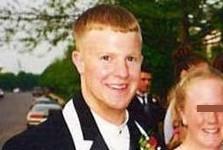
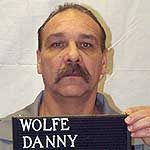
Justin Michael Wolfe
Murderer Russell Ellwood
Murderer · USA · 1991
Russell Ellwood was a former taxi driver. Authorities suspected him of killing…
20 victims
Russell Ellwood
Murderer · USA · 1991
Russell Ellwood was a former taxi driver. Authorities suspected him of killing…
20 victims
 Robert Martines Perez
Murderer · USA · 1994
Name: Robert Martines Perez · Other name used in proceedings: Robert Martinez P…
15 victims
Robert Martines Perez
Murderer · USA · 1994
Name: Robert Martines Perez · Other name used in proceedings: Robert Martinez P…
15 victims
 Billy Frank Vickers
Murderer · USA · 1993
Billy Frank Vickers Vickers was executed by lethal injection in Texas on Januar…
14 victims
Billy Frank Vickers
Murderer · USA · 1993
Billy Frank Vickers Vickers was executed by lethal injection in Texas on Januar…
14 victims
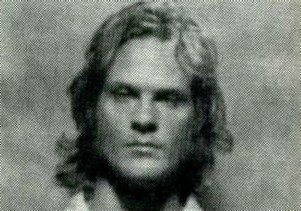 Michael Dee Mattson
Murderer · USA · 1978
Michael Dee Mattson was convicted of multiple offenses arising from the kidnapp…
3 victims
Michael Dee Mattson
Murderer · USA · 1978
Michael Dee Mattson was convicted of multiple offenses arising from the kidnapp…
3 victims
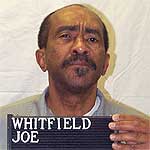 Joseph Whitfield
Murderer · USA · 1988
State of Missouri v. Joseph Whitfield, 939 S.W.2d 361 (Mo. banc 1997) · January…
1 victim
Joseph Whitfield
Murderer · USA · 1988
State of Missouri v. Joseph Whitfield, 939 S.W.2d 361 (Mo. banc 1997) · January…
1 victim
 David Chmiel
Murderer · USA · 1983
Mary Drake was a day nurse hired to attend to James Lunario. After the killings…
3 victims
David Chmiel
Murderer · USA · 1983
Mary Drake was a day nurse hired to attend to James Lunario. After the killings…
3 victims
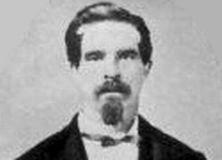 John Milliam
Murderer · USA · 1867
John Millian was convicted of murdering Julia Bulette and was hanged in Storey…
1 victim
John Milliam
Murderer · USA · 1867
John Millian was convicted of murdering Julia Bulette and was hanged in Storey…
1 victim
- Gender
- male
- Country
- USA
- Location
- Prince William County, Virginia, USA
- Date of birth
- March 17, 1982
- Age at first offence
- 19
- Characteristics
- murder for hire, drugs
- Victim profile
- Daniel Robert Petrole, Jr., 21 (his marijuana supplier)
- Method of murder
- Shooting
- Date(s) of murder
- March 15, 2001
- Years active
- 2001
- Date of arrest
- April 30, 2001 (surrenders)
- Status
-
Sentenced to death
Sentenced to death on June 26, 2002
Case identifiers and overview
Justin Michael Wolfe was a male, White defendant in a Virginia capital murder case in Prince William County involving murder for hire and related drug conduct. He was convicted of the capital murder of Daniel Robert Petrole, Jr., in violation of Code 18.2-31(2), willful, deliberate, and premeditated killing of any person by another for hire; use of a firearm in the commission of a felony in violation of Code 18.2-53.1; and conspiracy to distribute marijuana in violation of Code 18.2-248.1 and 18.2-256. The jury fixed Wolfe’s punishment at death. After considering a report prepared by a probation officer pursuant to Code 19.2-299, the circuit court sentenced Wolfe in accordance with the jury verdicts. The Supreme Court of Virginia affirmed the judgment, upholding the death sentence. Wolfe later sought post-conviction relief, including habeas corpus relief, and obtained a stay in federal court during a scheduled execution that did not take place as scheduled.
Timeline
- October 10, 1997 — Wolfe was adjudicated guilty for possession of less than five pounds of marijuana.
- November 2000 — Daniel Robert Petrole, Jr. began supplying marijuana to Wolfe seven months before Petrole was murdered.
- March 15, 2001 — Petrole was killed; Wolfe arranged for the murder of his supplier.
- April 30, 2001 — Wolfe turned himself in to authorities.
- January 22, 2002 — A jury convicted Wolfe of capital murder after deliberating for five hours.
- June 26, 2002 — Circuit Judge Herman A. Whisenant, Jr. imposed the death sentence; Barber later received a prison sentence.
- February 28, 2003 — The Supreme Court of Virginia upheld Wolfe’s death sentence.
- March 2004 — Wolfe filed a habeas corpus appeal with the Supreme Court of Virginia.
- 2004 — Whisenant retired from the bench.
- July 16, 2005 — A report indicated that an execution date had been set and that the execution was not expected to take place as scheduled due to pending proceedings.
- Wednesday (scheduled) — The execution was scheduled but did not take place as scheduled; a federal stay issued after the U.S. Supreme Court rejected Wolfe’s petition for a stay.
- Friday (after scheduled date) — The U.S. District Court for the Eastern District of Virginia issued a stay of execution for Wolfe.
The offence
Capital murder: murder for hire
The Supreme Court opinion described Wolfe as a major drug dealer in Northern Virginia. The opinion described regular sales of high-grade marijuana by Wolfe, including “kind bud” or “chronic,” and described Petrole as Wolfe’s marijuana supplier.
Wolfe’s supplier was Daniel Robert Petrole, Jr., who began supplying marijuana to Wolfe in November 2000, seven months before Petrole was murdered. Petrole purchased about 100 pounds of marijuana per month at a price of $360,000 and usually sold Wolfe between eight and 18 pounds every two weeks. The opinion described an informal system of credit between Wolfe and Petrole called “fronting,” and that debts were recorded on documents known as “owe sheets.”
A record discovered on Petrole’s body the night he was murdered indicated Wolfe owed Petrole more than $60,000. The opinion also stated that on one occasion Wolfe and his friends discussed robbing drug dealers and that they purchased ski masks and duct tape in connection with a plan.
The Supreme Court opinion described conversations in which Wolfe and drug dealer Owen M. Barber, IV discussed robbing and shooting Petrole because Petrole “knows too many people.” In the opinion, Barber testified:
Q: [D]id there come a point in time when you had a discussion concerning [the defendant's] supplier of chronic or kind bud [marijuana]?
A: Yeah. It was one day when we were at [a restaurant] just drinking and [the defendant] asked me if I wanted to get his chronic man.
Q: Get the chronic man?
A: Yeah. And I was like, yeah, you know, we'll just rob him or whatever. And I was like, all right, you know and then he said, no, no you can't rob him. He was like, we got to shoot him because he knows too many people.
Barber: He knows too many people?
A: Yeah.
Q: At that point in time, did he tell you who his chronic man was?
Q: Who was it?
A: He said Danny Petrole.
Q: Had you known Danny Petrole prior to that time?
A: No. I knew the name. I didn't know him like personally.
The opinion stated that after these conversations, Wolfe and Barber planned how they could find Petrole and that they made attempts to locate and kill him before March 15, 2001.
March 15, 2001 murder sequence
On March 15, 2001, the opinion described Wolfe placing a telephone call to Barber, directing Barber to meet him at a restaurant in Fairfax County. Petrole had agreed to bring a large quantity of high-grade marijuana to an apartment shared by Wolfe with his girlfriend, Regina A. Zuener.
The opinion described Wolfe and Barber planning for Barber to follow Petrole once Petrole left Zuener’s apartment. An hour later, Wolfe used a cellular telephone to call Barber and inform Barber that Petrole was “on his way” to Zuener’s apartment. The opinion described Barber being armed with a Smith & Wesson nine millimeter pistol purchased from Coleman. The opinion stated Barber drove to a cul-de-sac near Zuener’s apartment, got out of Martin’s car, and killed Petrole.
The opinion stated Barber shot Petrole 10 times from close range. Petrole was later found with nine gunshot wounds. Dr. Frances P. Field, an assistant medical examiner, testified in the opinion that one bullet penetrated Petrole’s spinal column and severed the spinal cord and that death was caused by multiple gunshot wounds.
The opinion described that police officers responded to the scene of the murder and found $965 on Petrole’s body and $17,460 in United States currency in Petrole’s duffel bag located in the trunk of his vehicle. The opinion also described a search of Petrole’s house and finding approximately $120,000 cash, 46 pounds of high-grade marijuana “vacuum packed” in plastic bags, 4,000 tablets of metholanedioxine, an amphetamine also known as Ecstasy, and an “owe sheet.”
Immediately after the murder and meeting at the nightclub
The opinion described Barber returning to his apartment after the murder, telling Martin that he had killed Petrole, and calling Wolfe. Barber and Martin went to the nightclub to meet Wolfe. The opinion described Wolfe giving Barber “like a pound and a half hug” and ordering drinks for himself, Barber, and Martin.
The opinion stated Wolfe commented that “we got to have a made cake now - or like a rack of cake,” described as a slang expression meaning “we made a lot of money,” and that the toast celebrated their “rack of money.” The opinion described Wolfe telling Barber that in return for killing Petrole, Barber did not have to pay for four pounds of marijuana previously sold. Wolfe also described as giving Barber a half pound of “chronic” marijuana, forgiving Barber’s $3,000 debt, and promising to pay Barber $10,000 in cash.
The opinion described additional admissions and testimony in which Martin testified that after the murder, defendant gave Martin an alcoholic beverage and told him “right there you can't say nothing about this and I'm about to make a lot of money,” and that the defendant gave Martin a discount and forgave a past drug debt.
Investigation and pre-arrest events
The Supreme Court opinion described police officers finding evidence at the scene and in Petrole’s home, including cash, high-grade marijuana, and Ecstasy.
Another narrative portion in the case summary described police calling Wolfe and telling him he could turn himself in or authorities would get him, and describing Wolfe asking a friend to take him to a police station, with the friend offering to put him in the trunk and drive him across the border.
The narrative also described that after Wolfe was accused of a “conspiracy to commit murder,” his charges changed to murder for hire, a capital offense for which the death penalty could be applied. The narrative described the trial being set for the following January.
Arrest and custody
The narrative portion described that Prince William County issued an arrest warrant after the murder of Petrole, and that on April 30, 2001, Wolfe turned himself in to authorities. The narrative described that shortly after his arrest, charges were changed from conspiracy to commit murder to murder for hire.
Trial
Charges tried
The Supreme Court opinion stated that Wolfe was tried before a jury on indictments for:
- the capital murder of Daniel Robert Petrole, Jr., in violation of Code 18.2-31(2), “willful, deliberate, and premeditated killing of any person by another for hire,”
- use of a firearm in the commission of a felony in violation of Code 18.2-53.1,
- conspiracy to distribute marijuana in violation of Code 18.2-248.1 and -256.
The opinion also stated that the jury found Wolfe guilty and fixed punishment at 30 years imprisonment for the drug charges and three years imprisonment for the use of a firearm.
Guilty phase
The Supreme Court opinion described testimony and evidence relating to the planned robbery and killing of Petrole, including:
- testimony by Janelle E. Johnson about discussions about burglary or stealing money from a marijuana dealer in winter 2000 and the purchase of ski masks and duct tape,
- testimony by Chad E. Hough and Jason Coleman about robbery discussions connected to drugs,
- testimony by Barber about planning with Wolfe to shoot Petrole because Petrole knew too many people,
- testimony and events on March 15, 2001 described above.
The opinion also described that during trial Wolfe admitted various aspects of his drug dealing and involvement in discussions about robbing drug dealers, and admitted that he was the last person Barber called before Barber killed Petrole and the first person Barber called after Petrole’s death.
Penalty phase
The Supreme Court opinion stated that in the penalty phase, the jury fixed Wolfe’s punishment at death, finding that Wolfe represented a continuing serious threat to society and that his offense was “outrageously or wantonly vile, horrible, or inhuman” because it involved an aggravated battery to the victim.
The opinion also described penalty phase evidence:
- Daniel Petrole, Sr. and Jane Alison Petrole, the victim’s parents, discussed the impact of Petrole’s death upon their family.
- Wolfe’s juvenile records were introduced, including an order dated October 10, 1997 adjudicating guilt for possession of less than five pounds of marijuana.
- The opinion stated Wolfe committed numerous probation violations as a juvenile by breaking into his mother’s home, purchasing alcoholic beverages, possessing a false identification card, assuming a false name, and testing positive for amphetamines and cannabinoids.
- The opinion stated Wolfe had been convicted in Florida for possession of a false identification card.
- Dr. William Ling, a clinical psychologist, testified for Wolfe, including statements:
“the best predictor of future behavior is past behavior,” and
“[s]ubstance abuse has been shown to have a high incidence or a high correlation with risk of future violence.”
Jury deliberations and recommendation to execute
The narrative portion of the case summary described that on January 22, 2002, a jury of nine women and three men disagreed with the defense and convicted Wolfe of capital murder. It stated that after deliberating for five hours, the jury recommended that Wolfe be executed.
Sentencing
Death sentence imposed by the trial court
Circuit Judge Herman A. Whisenant, Jr. imposed the death sentence on June 26, 2002 after the jury fixed punishment at death.
The Supreme Court opinion stated the circuit court sentenced Wolfe in accordance with the jury verdicts after considering a report prepared by a probation officer pursuant to Code 19.2-299.
Sentencing of Owen Merton Barber IV
The narrative portion described that after the trial, Barber, the sworn killer, received 38 years in prison, with Barber later described as serving at Wallens Ridge State Prison in Big Stone Gap. Another portion stated that Barber was sentenced in June to 60 years in prison, with 22 years of his sentence suspended.
Appeals
Supreme Court of Virginia
The Supreme Court of Virginia reviewed Wolfe’s capital murder conviction and death sentence and related convictions. In the Supreme Court opinion, the court affirmed.
The case identifiers included:
- JUSTIN MICHAEL WOLFE v. COMMONWEALTH OF VIRGINIA, Record No. 021872, opinion by Chief Justice Leroy R. Hassell, Sr., February 28, 2003.
- JUSTIN MICHAEL WOLFE v. 022194, from the Circuit Court of Prince William County, Herman A. Whisenant, Jr., Judge.
The Supreme Court opinion addressed, among other issues:
- juror exposure to media coverage and denial of motions to remove jurors Patricia Grisham and Leo Green for cause,
- issues in the guilt phase related to evidence of planning robberies of drug dealers,
- motions for mistrial related to witness exclusion order violations and refusal to strike Hough’s testimony,
- sufficiency of evidence for capital murder rather than felony murder,
- evidentiary rulings about proposed expert testimony concerning federal sentencing guidelines,
- sufficiency of evidence supporting future dangerousness and vileness predicates in the penalty phase,
- jury questions about “imprisonment for life” and the court’s responses regarding parole and the definition of life,
- waiver of certain assignments of error for not being briefed,
- other arguments including indictment challenges and passion and prejudice.
The Supreme Court opinion’s conclusion stated that the court found no reversible error in the record and perceived no reason to commute the death sentence, and it affirmed.
Attorney discipline and request for financial assistance
The narrative portion stated that less than a month after the Supreme Court of Virginia upheld the death sentence, the state’s disciplinary board suspended the law license of John H. Partridge, Wolfe’s lead counsel, for repeatedly mishandling client cases. It stated that Wolfe asked the district court to financially assist him with his death sentence appeal due to the disciplinary action, and Whisenant denied Wolfe’s request. It also stated Whisenant retired from the bench in 2004.
The narrative included a quote attributed to Whisenant:
“I feel you’re just imposing your own personal feelings when you go contrary to a jury recommendation.”
Habeas corpus and federal proceedings
The narrative portion stated that Wolfe’s attorneys filed a habeas corpus appeal with the Virginia Supreme Court in March 2004, and that it was dismissed. It also described that Wolfe’s former attorney William Douglas Wham said Wolfe’s team were no longer able to represent Wolfe and that new counsel would continue appeals in federal courts.
The narrative also described a scheduled execution date and a stay issued by the U.S. District Court for the Eastern District of Virginia in Norfolk after the U.S. It stated the execution did not take place as scheduled and that Wolfe’s attorneys planned to file a federal habeas corpus petition.
Outcome
Wolfe was sentenced to death on June 26, 2002. The Supreme Court of Virginia upheld the death sentence on February 28, 2003. During a scheduled execution set for July 27, 2005, a stay of execution issued from the U.S. Supreme Court rejected Wolfe’s petition for a stay; the execution did not take place as scheduled.
Other details
Relationship with co-defendant and plea agreement
The narrative portion described that Owen Barber IV, 21, his high school friend, pled guilty to first-degree murder and agreed to testify against Wolfe at trial. Despite the plea agreement, it stated Barber faced life in prison for his role. It also described that Barber agreed to plead guilty in exchange for a life sentence and that his girlfriend would not face any charges.
Persons mentioned in connection with the murder and investigation
The Supreme Court opinion and narrative included the following people:
- Daniel Robert Petrole, Jr. (victim; described as 21 in some portions and 21-year-old in the narrative)
- Owen M. Barber, IV (sworn killer; described in narrative portions as gunman and as having pled guilty to first-degree murder)
- Owen Barber’s girlfriend (referred to in narrative portion without a name in the provided text)
- Regina A. Zuener (Wolfe’s girlfriend at the time the apartment was described)
- T. Jason Coleman and Chad E. Hough (mentioned in the Supreme Court opinion as friends who discussed robbing drug dealers and in testimony described in the opinion)
- Robert H. Martin, Jr. (accompanied Barber; testified in the opinion)
- Jennifer E. Pascquierllo (described as Barber’s former girlfriend and as providing testimony; described as mother of Wolfe’s girlfriend’s involvement in narrative portion)
- Issa Hassan, Walter P. Gunning, Jr., and Jeanette Lorentzen (described as present in Petrole’s townhouse when they heard noises and ran to the window)
- Dr. Frances P. Field (assistant medical examiner who conducted the autopsy)
- Dr. William Ling (clinical psychologist expert witness)
- Judge Herman A. Whisenant, Jr. (sentenced Wolfe)
- Chief Justice Leroy R. Hassell, Sr. (author of the Supreme Court opinion)
- Chief Justice Carrico (mentioned as presiding and participating in the hearing and decision of this case prior to the effective date of his retirement on January 31, 2003)
- John H. Partridge (lead counsel whose law license was suspended)
- Owen Merton Barber IV (named in the narrative and in the Supreme Court opinion)
- Emily Lucier (spokeswoman for the Attorney General’s office, mentioned in narrative about comment)
- Larry Traylor (Department of Corrections spokesman, mentioned in narrative about transfers and access on deathwatch)
- Robert Marsh (Circuit Court Administrator, mentioned in narrative)
- Paul B. Ebert (Commonwealth’s Attorney, mentioned in narrative)
- Jerry C. Lyell and Douglas Wham (mentioned in narrative as counsel)
- Jane Luxton (one of Wolfe’s attorneys, quoted about unanswered questions)
Quantities and payments described
The Supreme Court opinion described:
- Wolfe regularly sold about eight to 18 pounds of marijuana to Petrole every two weeks.
- Petrole purchased about 100 pounds of marijuana per month at $360,000.
- An “owe sheet” discovered on Petrole’s body indicated Wolfe owed Petrole more than $60,000.
- The plan and robbery discussions described the possibility of robbing drug suppliers.
- Cash and drugs found included $965 on Petrole’s body, $17,460 in the duffel bag in the trunk, approximately $120,000 cash in Petrole’s house, 46 pounds of high-grade marijuana vacuum packed, and 4,000 tablets of metholanedioxine (Ecstasy). The narrative portion described:
- the drug debt as more than $80,000,
- Wolfe owing Petrole more than $80,000 at the time of Petrole’s death,
- Wolfe allegedly offered to excuse Owen’s debt of $3,000,
- Wolfe’s marijuana and Ecstasy drug ring described as a $10 million marijuana and Ecstasy drug ring,
- a large quantity discovered described as one of the largest ever seized in Prince William.
Verbatim quotes included in the Supreme Court opinion excerpts
The Supreme Court opinion excerpt included the quoted cross-examination testimony by Barber beginning: and Barber’s responses, and additional testimony and statements including Wolfe’s nightclub comments and other quoted statements as included above.
It also included a quotation attributed to the circuit court in response to jury questions about “life,” including responses that:
“The Court has not considered this a parole question because [the jury] didn't mention the word parole.” and a response including: “the instruction you received says 'The words 'imprisonment for life' mean imprisonment for life without possibility of parole.'” and explanations about executive clemency and geriatric parole in the court’s reasoning.
Finally, the narrative portion included the quote attributed to Whisenant:
Spotted an error, or have more information about this case?