
Danny Wolfe
Murderer Russell Ellwood
Murderer · USA · 1991
Russell Ellwood was a former taxi driver. Authorities suspected him of killing…
20 victims
Russell Ellwood
Murderer · USA · 1991
Russell Ellwood was a former taxi driver. Authorities suspected him of killing…
20 victims
 Robert Martines Perez
Murderer · USA · 1994
Name: Robert Martines Perez · Other name used in proceedings: Robert Martinez P…
15 victims
Robert Martines Perez
Murderer · USA · 1994
Name: Robert Martines Perez · Other name used in proceedings: Robert Martinez P…
15 victims
 Billy Frank Vickers
Murderer · USA · 1993
Billy Frank Vickers Vickers was executed by lethal injection in Texas on Januar…
14 victims
Billy Frank Vickers
Murderer · USA · 1993
Billy Frank Vickers Vickers was executed by lethal injection in Texas on Januar…
14 victims
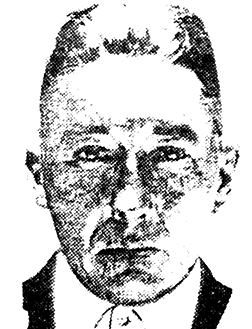 Arnold Sodeman
Serial killer · Australia · 1930
Arnold Karl Sodeman (12 December 1899 – 1 June 1936), also known as the School-…
4 victims
Arnold Sodeman
Serial killer · Australia · 1930
Arnold Karl Sodeman (12 December 1899 – 1 June 1936), also known as the School-…
4 victims
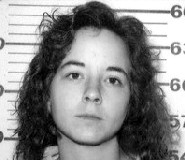 Susan Smith
Murderer · USA · 1994
Susan Vaughan Smith, also known as Susan Leigh Vaughan Smith, was an American w…
2 victims
Susan Smith
Murderer · USA · 1994
Susan Vaughan Smith, also known as Susan Leigh Vaughan Smith, was an American w…
2 victims
 Deidre Hunt
Murderer · USA · 1989
Deidre Michelle Hunt was born 2/9/69. She was sentenced from Volusia County on…
2 victims
Deidre Hunt
Murderer · USA · 1989
Deidre Michelle Hunt was born 2/9/69. She was sentenced from Volusia County on…
2 victims
 Kim Dae-Han
Mass murderer · South Korea · 2003
Name: Kim Dae-Han · Age: 56 · Occupation/background: He was an unemployed forme…
198 victims
Kim Dae-Han
Mass murderer · South Korea · 2003
Name: Kim Dae-Han · Age: 56 · Occupation/background: He was an unemployed forme…
198 victims
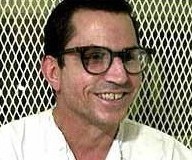 Johnny Paul Penry
Murderer · USA · 1979
Johnny Paul Penry (born May 5, 1956) was a Texas Death Row convict. He was sent…
1 victim
Johnny Paul Penry
Murderer · USA · 1979
Johnny Paul Penry (born May 5, 1956) was a Texas Death Row convict. He was sent…
1 victim
- Gender
- male
- Country
- USA
- Location
- Camden County, Missouri, USA
- Date of birth
- 1950
- Age at first offence
- 47
- Characteristics
- robbery, armed robbery, drug addict
- Victim profile
- Leonard and Lena Walters
- Method of murder
- Shooting / St abbing with knife
- Date(s) of murder
- February 20, 1997
- Years active
- 1997
- Date of arrest
- —
- Status
-
Resentenced to two terms of Life without Parole, plus 50 years on each of two counts of armed criminal action, and life for robbery in June 2006; sentence of death overturned in February 2003
Case Overview
Danny Wolfe was tried in the State of Missouri v. Danny R. Wolfe.
Background
On February 19, 1997, defendant went to the home of a co-worker in Camdenton and asked to leave a bag there. The co-worker placed the bag in the laundry room.
Another man staying at the house looked in the bag and saw what looked like a gray or white wig.
That evening, defendant went to a bar in Lake Ozark. He met Jessica Cox, introduced himself as “Danny,” and played a game of pool with her. Afterward, they sat at the bar and talked.
Defendant asked Cox if she was “into drags.” She said yes. Defendant asked if she could “get rid of' some drugs for him. She agreed.
When the bar closed, defendant and Cox left in his pick-up. Defendant said that he would give her a ride home and could get her the drugs.
The two then stopped by defendant’s room at a motel for about 20 minutes. Defendant said that they should go to Camdenton. He drove them to the co-worker’s house, where he retrieved the bag left earlier.
They then returned to the motel. Defendant told Cox that they would have to go to Greenview to “pick up some money,” but could not leave until 4:30 a.m. Cox asked defendant to take her home. Defendant replied that it would be worth her wait. Cox decided to stay.
Defendant took some silver handcuffs from the bag. Cox asked why he had them. Defendant said not to worry, he wasn’t going to use them on her.
The pair watched television and talked for about two hours.
Defendant was wearing black, shiny, parachute pants and a camouflage jacket, which he had changed into at the motel.
The offence
Around 4:30 a.m. on February 20, the two drove into Camdenton. Defendant stopped at a gas station and handed over $6. He told Cox to buy a pair of jersey gloves, which she bought.
They headed toward Greenview on Highway 7 by the home of Leonard and Lena Walters. After about a quarter mile, defendant pulled into a gravel road, turned the truck around, and parked facing the highway. It was about 5:15 a.m.
Defendant announced that he planned to rob the Walters, whom he described as “loaded.” Defendant had been to the house before and said that the Walters had a car for sale. He indicated that he would return with his girlfriend.
Defendant instructed Cox to test-drive the car with Mr. Walters for about 15 minutes, while he would stay behind, handcuff Mrs. Walters, and rob them.
Defendant told Cox to call him “Sam” around the Walters and to use “Jo-Jo” for herself.
After waiting in the truck for about two hours, defendant drove back to the Walters’ house and pulled into the driveway. He knocked on the front door. Mrs. Walters came to the door wearing what “looked like a nightgown.” Defendant entered the house and came back out with Mr. Walters. They walked to a red Cadillac in front of the house. Cox joined them at the Cadillac.
Mr. Walters invited Cox to test-drive it. Defendant asked Mr. Walters if he was going along. Mr. Walters replied there was no reason to. Cox said she would appreciate it, to tell about the car.
Mr. Walters got in the front passenger seat. As Cox put the car in drive, defendant jumped into the passenger side back seat, saying, “Let’s go, Jo-Jo.”
Cox drove toward Greenview. Mr. Walters and defendant discussed the car. After driving a while, Cox turned around, returning toward the Walters’ house.
Hearing a “loud bang,” Cox swerved and glanced over to see Mr. Walters’ head fall forward with blood coming out of his mouth. Defendant shot Mr. Walters in the back of the head. Cox then saw defendant pull what looked like a gun away from Mr. Walters’ head.
Defendant directed Cox to keep driving. He patted down Mr. Walters and pulled out his wallet. Opening it, he said, “This guy’s loaded.” Cox looked over and saw a large amount of cash.
As Cox pulled into the driveway, defendant told her to park the car where it had been earlier. Before the car fully stopped, defendant jumped out and walked straight to the house.
He told Mrs. Walters that he needed to use the phone because Mr. Walters had had a heart attack. Once in the house, defendant shot Mrs. Walters in the chest with a shotgun while she crouched in front of him. This wound did not kill her.
Defendant then stabbed Mrs. Walters once on the left side and four times on the right side while she begged. Cox heard her say: “Please God, no, no, no.”
The fatal stab was to the heart. Mrs. Walters did not die immediately, remaining conscious for another three minutes.
Cox heard a “loud bang,” “a bunch of ruckus” from the house, and then silence for about ten minutes.
Defendant left the house carrying a safe, which he loaded in the back of the truck. As they left, Cox asked if defendant was going to kill her. Defendant replied that she was his partner, so he was not going to kill her.
Defendant pulled off the road, unloaded the safe, opened it with some tools, and rummaged through it, discarding some contents but stuffing others in his pockets.
Defendant then climbed into the truck and drove away. Shortly, he turned the truck around and retrieved his tools.
Defendant then drove to a subdivision where he had worked as a painter. Defendant said he was going to get rid of the gun.
After getting a key from one house, defendant drove to another area and left the truck for about 10 or 15 minutes. When he returned, he was in painter’s clothes. Cox did not see the black, nylon pants he was wearing earlier.
Defendant told Cox he had thrown the gun into the lake.
Defendant then stopped by a cigarette store where he was painting later that day. The owner testified that defendant said he had to go get some paint.
After leaving the cigarette store, defendant handed Cox a large amount of cash. He said it was enough to keep her quiet; if she told the police, she would be charged as an accessory to murder; or if she got bail, she would be killed.
Cox asked to be dropped off at the hospital. There, Cox called her fiancé between 8:30 and 9:30 saying she had been kidnapped, the kidnapper had been caught, and it was all over.
Cox’s fiancé’s truck was broken, so he told her to call her friends. Two friends testified that they received phone calls from Cox around 9:00 asking them to pick her up.
After dropping Cox off, defendant purchased paint from a supply store at 9:12 a.m. (according to the invoice).
Cox claimed she lied about the kidnapping story because her life would be in danger if she told the truth. Cox told the kidnapping story to at least three other people. The story spread and became the “talk of the town.”
Later that week, a local bartender called Cox’s fiancé. He said that a man resembling Cox’s kidnapper had come in, and someone had recognized him and attacked him. The man attacked was, in fact, defendant.
Police were called, and Cox admitted to her fiancé that she fabricated the kidnapping story. Cox then told her fiancé that she had witnessed one, and maybe two, murders and feared for her life.
Cox consulted an attorney. Through negotiations with the prosecuting attorney, Cox received immunity in exchange for her testimony.
Investigation
Police examined the safe and found loose change including quarters and other contents strewn about the area. Cox took police to where defendant rummaged and left the safe.
Police examined defendant’s motel room and truck. Cox identified the house where they picked up the bag and confirmed a photograph of defendant.
Cox pointed out the subdivision where defendant changed clothes.
When defendant was arrested, three sets of silver handcuffs were found in his room.
Defendant waived his Miranda rights. At the beginning of the interview, defendant was calm and showed little emotion. As police related Cox’s details, defendant became nervous and apprehensive.
Police searched the subdivision where defendant changed clothes. In a storage area, police discovered a pair of black pants and tennis shoes with the same pattern as shoeprints on the floors of the Walters’ house.
From defendant’s truck, police seized a pair of jersey gloves and a pry bar.
In the dumpster at defendant’s motel, police retrieved a .25 caliber cartridge consistent with a misfire from a .25 caliber gun. Also in the dumpster were a bag with a camouflage jacket and a synthetic “wig or beard,” a bag containing two boxes of .25 caliber rounds, three ring boxes, and various papers with defendant’s name on them.
Mr. Walters was shot with a .25 caliber gun. A spent cartridge was found on Mr. Walters’ back collar and a live round was found on the back seat of the Cadillac.
The Walters’ bedroom was in shambles with drawers open, items littering the room, a shotgun on the floor, and a .22 rifle laying across the bed. A live .25 cartridge lay on the kitchen floor near a six- to eight-inch fillet knife. Footprints in dried dirt appeared on the kitchen floor.
Mrs. Walters’ body was face down in the hallway, with cuts consistent with the fillet knife. She also had a shotgun wound to the chest.
Arrest and Interrogation
Defendant was arrested. He waived his Miranda rights and was interviewed by police, who described Cox’s details, after which defendant became nervous and apprehensive.
Trial
At trial, in addition to Cox’s testimony, the State called Paul Hileman.
Paul Hileman was in the Camden County Jail at the same time as defendant. Hileman testified that defendant bragged to him about the murders, relating several details. At the time of trial, Hileman was in prison for first-degree property damage.
Hileman had two prior convictions of burglary and stealing, two prior forgery convictions, and two prior interference-with custody convictions.
The defense presented two impeachment witnesses against Hileman.
The local bartender testified that about a week before the murders, defendant offered to sell him a .25 caliber handgun.
The bartender also testified that about a week after the murders, defendant “sold” him a bag full of loose quarters.
After deliberating for 12 hours, the jury returned a guilty verdict.
The jury later returned two death sentences: finding five statutory aggravating circumstances as to Mr. Walters and six aggravators as to Mrs. Walters.
The Missouri Supreme Court later reversed both the guilt and penalty phases of the case.
Sentencing
Defendant was sentenced to death in 1998.
Later, after resentencing, the Missouri Supreme Court’s eventual post-conviction process resulted in life sentences and additional terms in June 2006.
Appeals
In February 2003, the Missouri Supreme Court reversed both the guilt and penalty phases.
On February 11, 2003, in a unanimous decision, the Missouri Supreme Court reversed both the guilt and penalty phases, an appeal from Camden County involving post-conviction relief in a death penalty case. The court ordered a new trial.
The Missouri Supreme Court stated that its confidence in the fairness of the trial and the reliability of Wolfe’s conviction was “seriously undermined,” and it reversed the convictions and ordered a new trial.
Judge Richard Teitelman wrote for the state’s highest court:
“This court’s confidence in the fairness of the trial and the reliability of Wolfe’s conviction is seriously undermined,”
The court said no physical evidence linked the killing to Wolfe, yet Wolfe’s attorneys failed to adequately pursue evidence placing the prosecution’s chief witness, Jessica Cox, at the murder scene.
The Supreme Court said it found hair fiber evidence showing Cox’s credibility issues.
The court stated:
“The results of the hair analysis would have likely cast doubt on Cox’s credibility,”
and:
“The evidence would have directly contradicted Cox’s testimony and supported Wolfe’s defense that Cox was framing him.”
The Missouri Supreme Court described that Wolfe’s two trial attorneys—public defenders Kimberly Shaw and Nancy McKerrow—did not arrange a scientific comparison of hair fibers before trial and did not follow up after trial. It also described that Wolfe’s trial attorneys asserted Cox was framing Wolfe, and that the Supreme Court said hair fibers matched Cox based on a post-trial comparison.
Attorney Melinda Pendergraph said Wolfe’s trial attorneys were led by prosecutors “to believe that the hair hadn’t really been seized, so they just dropped the ball on that and didn’t follow up.”
The Missouri Supreme Court’s reversal also included an order for a new trial in Camden County.
In February 2003, a reporter quoted judges Michael A. Wolff and Ronnie White dissenting earlier, stating there was “substantial doubt” about Wolfe’s guilt.
Outcome
A new trial was held in Camden County in June 2006.
On May 27, 2005, Platte County Judge Gary Witt ordered the retrial to begin June 5, 2006, with jury selection set for May 15. Judge Witt continued to consider a request to change confinement conditions.
On the retrial date process, attorneys for Wolfe discussed confinement conditions and possible effects during a penalty phase.
On June 2006, Wolfe was sentenced to two terms of Life without Parole, plus 50 years on each of two counts of armed criminal action, and life for robbery.
Aftermath
At the time of resentencing-related proceedings, Wolfe remained under death sentence for five years following conviction until the Missouri Supreme Court overturned the murder convictions and death sentences in February 2003.
Platte County Judge Gary Witt ordered a retrial and set related dates for jury questioning and trial.
At the May 27, 2005 hearing, attorneys discussed motions relating to use of Wolfe’s papers, witness access and federal investigation concerns regarding Jessica Cox, and motions about changes in confinement conditions.
Cyndy Short was appointed to represent Wolfe, and Shook, Hardy and Bacon agreed to assist in preparation for trial.
The hearing included discussions about:
- defense attorneys arguing that prosecutors having use of all of Wolfe’s papers would deny rights;
- a defense investigator approaching Jessica Cox in April, Cox mistakenly assuming the investigator was with the FBI before the investigator introduced himself;
- the assistant attorney general stating he had not specifically looked into the matter;
- a state agreement to find out whether the FBI was investigating the witness and make the defense aware of findings;
- contention by prosecutors about requiring appointments and state presence for meeting witnesses, and defense requests for a letter stating witnesses’ right to talk to defense attorneys and investigators with or without the state’s presence;
- a motion to quash requests for changes in confinement, and arguments that federal court should address living conditions issues;
- arguments that Wolfe’s confinement could impact the penalty phase, with defense asserting solidarity confinement could be used as proof of dangerousness to society.
At the hearing, Tim Rieman argued for changes in Wolfe’s confinement conditions and said Wolfe was locked in his cell for 23 hours each day with one hour out of the cell. During that hour, Wolfe could access a shower, an exercise yard, the telephone for collect calls, and/or access to the law library and his legal papers.
Bruce Tepekian described attempting to mediate with the Platte County Sheriff and stated the Camden County counterpart claimed Wolfe was an escape risk.
Another attorney for the defense described five other individuals in solitary confinement in the Platte County Jail, four for disciplinary reasons, and stated that murder defendants awaiting trial were not automatically assigned to be locked down in the same way.
A. Poe and J. Stack appeared as bylines in the materials about the hearing.
Other details
Wolfe was described as a house painter in a narrative discussing the case and as having a 20-year criminal record.
The narrative stated Leonard and Lena Walters were found dead on Feb. 23, 1997.
In the narrative, Jessica Cox testified during the 1998 trial that Walters was shot during a test-drive of a red Cadillac offering for sale, and that Cox was driving the car and Walters was in the passenger seat when Wolfe shot him from the back seat. The narrative stated Cox testified that she waited outside while Wolfe went into the couple’s home and killed Lena Walters.
A post-trial comparison in that narrative described hair fiber issues matching Cox, and stated a defense attorney could have arranged a scientific comparison before trial. The narrative also described that a roommate filed an affidavit stating that Cox told her that two men, Brian and Eric, had committed the murder, and stated that the roommate did not show up at trial. The narrative also stated Judge Mary A. Dickerson denied a recess to find her.
The narrative described that Cox’s kidnapping claim was fabricated and later admitted involvement in the Walters murder and received immunity for testimony.
Spotted an error, or have more information about this case?