Thomas Lee Ward
Murderer Brian Kevin Rosenfeld
Murderer · USA · 1985
Brian Kevin Rosenfeld Brian Kevin Rosenfeld was sentenced to three concurrent l…
23 victims
Brian Kevin Rosenfeld
Murderer · USA · 1985
Brian Kevin Rosenfeld Brian Kevin Rosenfeld was sentenced to three concurrent l…
23 victims
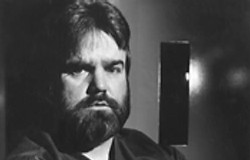 Marvin Gray
Murderer · USA · 1975
Marvin Gray was convicted killer who claimed responsibility for 23 slayings and…
23 victims
Marvin Gray
Murderer · USA · 1975
Marvin Gray was convicted killer who claimed responsibility for 23 slayings and…
23 victims
 Yahweh ben Yahweh
Murderer · USA · 1980
Yahweh ben Yahweh was born and legally named Hulon Mitchell Jr. (October 27, 19…
23 victims
Yahweh ben Yahweh
Murderer · USA · 1980
Yahweh ben Yahweh was born and legally named Hulon Mitchell Jr. (October 27, 19…
23 victims
 Russell Ellwood
Murderer · USA · 1991
Russell Ellwood was a former taxi driver. Authorities suspected him of killing…
20 victims
Russell Ellwood
Murderer · USA · 1991
Russell Ellwood was a former taxi driver. Authorities suspected him of killing…
20 victims
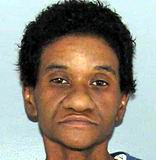 Nikole Flagg
Murderer · USA · 2003
Nikole Flagg (defendant) Myrvinia Lowe (victim; 61-year-old; employee at Cincin…
2 victims
Nikole Flagg
Murderer · USA · 2003
Nikole Flagg (defendant) Myrvinia Lowe (victim; 61-year-old; employee at Cincin…
2 victims
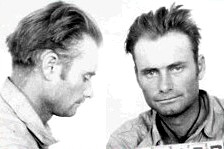 Elvin Jack Odom
Murderer · USA · 1937
Elvin Jack Odom was charged with Murder, a felony, in the Superior Court of the…
1 victim
Elvin Jack Odom
Murderer · USA · 1937
Elvin Jack Odom was charged with Murder, a felony, in the Superior Court of the…
1 victim
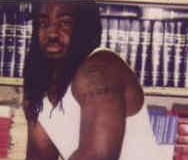 Shawnfatee Bridges
Murderer · USA · 1996
Shawnfatee M. Bridges was sentenced to death on February 23, 1998. On Saturday,…
2 victims
Shawnfatee Bridges
Murderer · USA · 1996
Shawnfatee M. Bridges was sentenced to death on February 23, 1998. On Saturday,…
2 victims
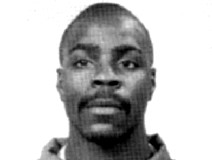 Eric Holmes
Murderer · USA · 1989
Eric D. Holmes was 21 years old at the time of the murders. He had no prior cri…
2 victims
Eric Holmes
Murderer · USA · 1989
Eric D. Holmes was 21 years old at the time of the murders. He had no prior cri…
2 victims
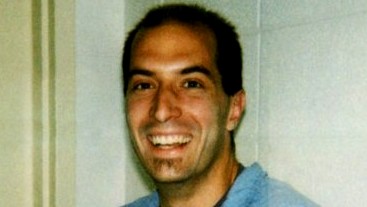 David Lynn Simonsen
Murderer · USA · 1988
David Lynn Simonsen was sentenced to death on February 24, 1989. The judgment o…
2 victims
David Lynn Simonsen
Murderer · USA · 1988
David Lynn Simonsen was sentenced to death on February 24, 1989. The judgment o…
2 victims
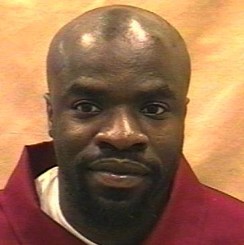 Marcus Robinson
Murderer · USA · 1991
Name: Marcus Reymond Robinson · Also known as: Marcus Robinson · Court proceedi…
1 victim
Marcus Robinson
Murderer · USA · 1991
Name: Marcus Reymond Robinson · Also known as: Marcus Robinson · Court proceedi…
1 victim
- Gender
- male
- Country
- USA
- Location
- Orleans Parish, Louisiana, USA
- Date of birth
- 1936
- Age at first offence
- 47
- Characteristics
- revenge, sexual abuse, paedophile
- Victim profile
- John Spencer ( his stepfather-in-law )
- Method of murder
- Shooting
- Date(s) of murder
- June 23, 1983
- Years active
- 1983
- Date of arrest
- Same day
- Status
-
Executed
Executed by lethal injection in Louisiana on March 16, 1996
Case overview
Thomas Lee Ward died on March 16, 1996. He was an American convicted murderer. He was tried, convicted, and executed by lethal injection in Louisiana for the murder of his stepfather-in-law John Spencer.
Ward’s trial included testimony that he sexually abused many children, including the woman who later married him and his own 10-year-old daughter.
Timeline
- June 22, 1983 — Ward arrived in New Orleans from California by bus and went to the residence of Lydia and John Spencer.
- June 23, 1983 — Ward was convicted of first degree murder of John Spencer in New Orleans; Ward also shot Lydia Spencer. (The habeas decision later refers to arguments “on the morning of June 23.”)
- August 15, 1984 — A jury found Ward guilty as charged.
- May 17, 1994 — The United States Court of Appeals, Fifth Circuit issued an opinion affirming the denial of Ward’s petition for a writ of habeas corpus.
- May 15, 1995 — The United States Court of Appeals, Fifth Circuit denied a certificate of probable cause and a motion for a stay.
- March 16, 1996 — Ward was executed by lethal injection in Louisiana at the Louisiana State Penitentiary.
Background
Ward claimed that on the night of June 22, 1983, he arrived in New Orleans from California by bus. He went to the residence of Lydia Spencer and John Spencer, the mother and stepfather of his wife. Ward’s wife and children were also staying at the house.
Ward explained that he wanted to see his children and was admitted to the house. He was allowed to bathe and freshen up. Ward learned that his wife had begun receiving welfare and that the family was having some trouble with one of the daughters.
Ward later claimed that this upset him, but that rather than saying or doing anything rash, he left the house. He then went to a local bar, drank vodka and beer, and “hit up” with cocaine.
Ward testified and claimed that he arrived and spent the night drinking vodka and beer and injecting cocaine, and that he returned at about 5:30 a.m. asking to see his children again. He was admitted a second time.
At about 5:30 a.m., Ward returned to the Hagan Street house asking to see his children again. He then went to the bedroom of his wife’s mother and stepfather, pulled out a gun, and told John Spencer: “John, I’m sorry I have to shoot you” and fired once at close range, killing John Spencer.
As Lydia Spencer reached for her husband, Ward shot her in the stomach. When she turned around, he shot her in the back. Lydia Spencer ran for the door to try to get out of the house. Ward followed her, striking her with three more shots.
Ward reportedly left an address and phone number in New York for his wife.
Investigation and arrest
When police arrived, Ward walked up to police officers, ostensibly to turn himself in. Police did not at first seize Ward because they did not yet know he was the alleged murderer.
Ward claims the police shooed him away because he was drunk. After further investigation at the scene, the police realized who Ward was and arrested him.
The offence
Ward was convicted of the first degree murder of John Spencer. He also shot Lydia Spencer, and she survived.
The event was described as occurring at the Hagan Street residence where Lydia and John Spencer lived with Ward’s wife and their children.
Trial
Ward was indicted by the Orleans Parish Grand Jury with first degree murder.
On August 15, 1984, the jury at Ward’s trial found him guilty as charged.
Sentencing
At the sentencing hearing, in which Ward testified, the jury unanimously recommended a sentence of death.
The jury found two statutory aggravating factors:
- knowing creation of a risk of death or great bodily harm to more than one person
- a significant prior history of criminal activity
At the penalty phase, Linda Ward testified that she first had sexual relations with Ward when she was ten years old. She testified that Ward had sexual relations with her sister Ramona, aged 14 at the time, and with their daughter Tasha, then aged nine.
Ernest Scott, Linda Ward’s brother, testified to witnessing a sexual encounter between Ward and his sister Lorraine when she was seven.
The prosecution introduced a 1975 complaint charging sexual relations with the minor Linda and two of her minor sisters, and Ward pleaded guilty to having relations with Linda.
The prosecution also offered a 1983 complaint charging Ward with sexual abuse of his daughter Tasha, and Ward pleaded guilty to the misdemeanor of cruelty to a minor.
The jury sentenced Ward to death under Article 905.3 of the Louisiana Code of Criminal Procedure.
Ward declined to make a formal statement before he was executed, but dictated last words to his attorney.
“I am leaving the world at peace with myself and with the Almighty. I feel remorse for the things that I did. I hope that young people today will learn that violence is not an answer. I hope the legal system learns that lesson, too. The death penalty is not a solution.”
Appeals
Direct habeas corpus proceedings and Fifth Circuit analysis (May 17, 1994)
Ward appealed the denial of his petition for a writ of habeas corpus. The Fifth Circuit affirmed the denial.
Ward asked the appellate court to remand so he could amend his petition to add a claim that the “reasonable doubt” instruction given to his jury was invalid under Cage v. Louisiana, but the court denied the motion to remand.
Ward sought habeas relief on six grounds:
- the state withheld Brady material
- he did not receive effective assistance of counsel
- the prosecutor made improper argument
- one of the two aggravating circumstances found by the jury has been invalidated
- the prosecution eliminated African-American jurors because of their race
- racial discrimination infected the selection of the jury pool and venire
The Fifth Circuit addressed these contentions serially and affirmed the district court’s denial.
Brady material
Ward contended that due process rights were violated by the prosecution’s failure to produce police documents tending to show that he killed John Spencer and shot Lydia Spencer under emotional stress of an argument about whether his wife and children would accompany him to New York. The court held that Ward did not show a reasonable probability that the suppressed material would have changed the outcome.
The court stated that the police reports reflected Ward argued with the Spencers when he returned to the Hagan Street residence on the morning of June 23 and that he believed they were preventing a reconciliation with his wife, and held that this was not sufficient provocation for a manslaughter outcome.
The court also held that Ward’s other Brady assertion relating to possibly missing portions of the prosecutor’s files failed because Ward did not show that any of those documents contained Brady material or that they were outcome-determinative.
Ineffective assistance of counsel
The court held Ward failed to succeed on either prong of his ineffective assistance claim.
It discussed trial counsel’s decision not to present good character evidence at the penalty phase as trial strategy connected to concerns about admissibility of unadjudicated misconduct at the time of Ward’s trial in August 1984.
The Fifth Circuit also discussed counsel’s investigation and cross-examination decisions, including:
- the inability to locate Lydia Spencer, Linda Ward, or Ernest Scott before trial and its effect on cross-examination
- trial counsel’s decision not to investigate employees at Champs after Ward said he did not see anyone there he knew
- issues related to consultation for toxicology and a forensic psychiatrist
- Ward’s refusal to speak with counsel and decision-making about testifying
The court also addressed the claim about failure to obtain a transcript of the 1975 sexual misconduct charges and found no showing of prejudice.
Improper prosecutorial argument
The Fifth Circuit addressed challenges to multiple aspects of the prosecution’s closing argument.
It discussed an argument related to prior sexual offenses and stated it did not interpret the challenged comments as urging the jury to impose the death penalty partly as punishment for prior sexual offenses in a manner that would trigger double jeopardy concerns.
The court also found that an argument about intoxication as a mitigating factor was improper. It quoted the prosecutor’s remarks:
“(E)ven if he was high on cocaine and he had been drinking booze, [defense counsel] says that because of that, that's mitigation. You shouldn't feel as badly towards him because of that; that makes this better. Think of the message you send to this community if you are going to buy that theory and buy that line of nonsense. It makes it pretty convenient that if I want to go kill somebody the best thing for me to do is go out and get a pint of booze first, drink it down and then I can come to Court and say I was drunk. Don't put me in the electric chair because I had a pint of booze before I did it, or I did a line of cocaine before I did it. That's absolutely absurd. No one pinned him down and poured booze down his throat, no one pinned him down and stuffed cocaine up his nose, he did it to himself. Y'all shouldn't feel bad about that, not one bit, not one bit.”
The court held that, although improper, Ward had not shown the improper argument rendered the proceedings fundamentally unfair in a manner sufficient for habeas relief.
The court also discussed a claim that the prosecutor violated privilege against self-incrimination by commenting on Ward’s failure to testify at the guilt phase during sentencing.
“You know what ought to be the most offensive thing of all this, you know what ought to infuriate you and I'm sure it does, he's a stinking liar 'cause he gets up here on the witness stand [during the sentencing phase] and he lies to you. He lies, he is not going to be a man and get up here and say, alright, you found me guilty. I didn't testify at my trial because of that criminal record that I knew would come out under cross examination by the D.A., y'all know that's why he didn't take the stand at the trial, 'cause all that would have come out. He doesn't say you found me guilty, I did it. Please, don't sentence me to death. Please have mercy on me. Does he do that? No, he gets up there and he is indignant, he is a horrible man, and he is going to get up there and he defies you to sentence him to death.”
The court held that any improper comments did not warrant relief because it did not find a substantial and injurious effect.
Invalid aggravating circumstance
Ward argued prejudice because one aggravating factor had been invalidated as unconstitutionally vague. The court described that Ward’s jury found two aggravating circumstances and that the Louisiana Supreme Court later invalidated the “significant prior history of criminal activity” aggravating circumstance as unconstitutionally vague, but affirmed the sentence anyway.
The court discussed arguments about weighing of aggravating and mitigating circumstances and held that the trial court correctly instructed the jury.
It quoted the trial court’s instructions:
“You are required to consider the existence of aggravating and mitigating circumstances in deciding which sentence should be imposed.... Before you decide that a sentence of death should be imposed, you must unanimously find beyond a reasonable doubt that at least one aggravating circumstance exists. If you find beyond a reasonable doubt that any of the statutory aggravating circumstances existed you are authorized to consider imposing a sentence of death.... Even if you find the existence of an aggravating circumstance, you must also consider any mitigating circumstances before you decide a sentence of death should be imposed.”
The Fifth Circuit held there was no reasonable likelihood that the jury disregarded or misconstrued those instructions.
Batson claim
Ward contended the state used peremptory challenges against African-American venirepersons because of race. The court held Ward did not satisfy the requirements because he did not object at trial.
Jury pool and venire racial discrimination
Ward argued Orleans Parish jury commissioners excluded blacks from his jury pool and venire in violation of his constitutional rights. The Fifth Circuit discussed the standard for discovery and evidentiary hearings in federal habeas proceedings and stated that Ward could not prove underrepresentation because he informed that his venire was half black and half white and did not dispute that eligible population had essentially the same racial composition.
The court also addressed Ward’s allegations that the commission knew the race of each member of the venire before directing them to criminal or civil district court, and held the allegations did not constitute a specific factual claim of intentional discrimination.
The court affirmed the district court’s judgment.
Certificate of probable cause and motion for stay (May 15, 1995)
On May 15, 1995, the Fifth Circuit considered an application for certificate of probable cause and a motion for a stay. The opinion stated Ward was scheduled for execution between midnight and 3:00 a.m. on May 16, 1995.
The Fifth Circuit denied the application for a certificate of probable cause and denied the motion for a stay.
The concurring opinion by POLITZ, Chief Judge stated concern about execution when there effectively appears to be “no jury verdict of guilty-beyond-a-reasonable-doubt,” quoting Justice Scalia as “no jury verdict of guilty-beyond-a-reasonable-doubt.”
Outcome
Ward was executed by lethal injection in Louisiana. The case records in the provided material include:
- March 16, 1996 execution by lethal injection in Louisiana at the Louisiana State Penitentiary
- a statement that Ward was executed on May 16, 1995 (appearing within the case narrative text)
The provided record also reflects that Ward’s habeas petitions and appeals were denied and stayed proceedings were not granted.
Other details
Prior proceedings and petitions mentioned in the record
The material describes that early habeas efforts began, including:
- a trial court denial of a first petition and a Louisiana Supreme Court remand for an evidentiary hearing
- subsequent denials in state proceedings, then federal habeas petitions under 28 U.S.C. § 2254
- dismissal of one petition for failure to exhaust state remedies on a mental retardation claim
- another application for post-conviction relief with a second evidentiary hearing at the direction of the Louisiana Supreme Court
- later federal habeas petitions
Specific persons mentioned
- Lydia Spencer — mother of Ward’s wife and stepmother’s household member; she survived the shooting.
- John Spencer — stepfather-in-law; he was murdered.
- Linda Ward — Ward’s wife; testified at the penalty phase.
- Ernest Scott — Linda Ward’s brother; testified at the penalty phase.
- Ramona — Linda Ward’s sister; described as aged 14 at the time of sexual relations with Ward.
- Tasha — Ward’s daughter; described as aged nine at the time of sexual abuse complaint.
- Lorraine — Ernest Scott’s sister; described as aged seven when Ernest Scott testified to witnessing a sexual encounter.
- Charles Washington — store clerk at Champs (Champs employees testimony was discussed regarding whether Ward bought vodka and beer).
- Dr. Robert Guthrie — a California psychologist who testified at post-conviction proceedings.
- Llewellyn Gedge — attorney who represented Ward in efforts to regain custody of his children from the state; submitted affidavits.
- Dennis Burden — friend who submitted affidavits.
- Cecil Travis — named as a wealthy friend whose call counsel attempted; Travis died before the habeas hearing (as described).
Statements and quoted material beyond last words
The record includes repeated verbatim quotations already set out above:
- Ward’s statement to John Spencer: “John, I’m sorry I have to shoot you”
- the prosecutor’s remarks on intoxication as mitigation (quoted)
- the prosecutor’s remarks during sentencing phase about Ward’s failure to testify at the guilt phase (quoted)
- Ward’s dictated last words (quoted)
- the POLITZ concurrence quote: “no jury verdict of guilty-beyond-a-reasonable-doubt”
Spotted an error, or have more information about this case?