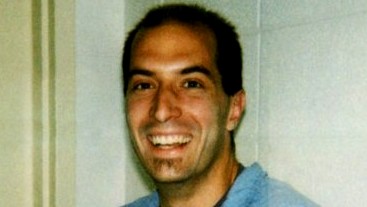
David Lynn Simonsen
Murderer Brian Kevin Rosenfeld
Murderer · USA · 1985
Brian Kevin Rosenfeld Brian Kevin Rosenfeld was sentenced to three concurrent l…
23 victims
Brian Kevin Rosenfeld
Murderer · USA · 1985
Brian Kevin Rosenfeld Brian Kevin Rosenfeld was sentenced to three concurrent l…
23 victims
 Yahweh ben Yahweh
Murderer · USA · 1980
Yahweh ben Yahweh was born and legally named Hulon Mitchell Jr. (October 27, 19…
23 victims
Yahweh ben Yahweh
Murderer · USA · 1980
Yahweh ben Yahweh was born and legally named Hulon Mitchell Jr. (October 27, 19…
23 victims
 Russell Ellwood
Murderer · USA · 1991
Russell Ellwood was a former taxi driver. Authorities suspected him of killing…
20 victims
Russell Ellwood
Murderer · USA · 1991
Russell Ellwood was a former taxi driver. Authorities suspected him of killing…
20 victims
 Robert Martines Perez
Murderer · USA · 1994
Name: Robert Martines Perez · Other name used in proceedings: Robert Martinez P…
15 victims
Robert Martines Perez
Murderer · USA · 1994
Name: Robert Martines Perez · Other name used in proceedings: Robert Martinez P…
15 victims
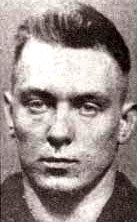 Anthony Chebatoris
Murderer · USA · 1937
Anthony Chebatoris Anthony Chebatoris (1898–1938) was executed by hanging at Mi…
1 victim
Anthony Chebatoris
Murderer · USA · 1937
Anthony Chebatoris Anthony Chebatoris (1898–1938) was executed by hanging at Mi…
1 victim
 Dorothea Waddingham
Murderer · United Kingdom · 1935
Dorothea Waddingham (also referred to as Dorothea Nancy Waddingham) was born in…
2 victims
Dorothea Waddingham
Murderer · United Kingdom · 1935
Dorothea Waddingham (also referred to as Dorothea Nancy Waddingham) was born in…
2 victims
 Frances Newton
Murderer · USA · 1987
Frances Elaine Newton (April 12, 1965 – September 14, 2005) was executed by let…
3 victims
Frances Newton
Murderer · USA · 1987
Frances Elaine Newton (April 12, 1965 – September 14, 2005) was executed by let…
3 victims
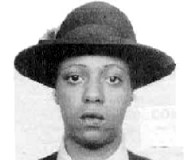 Corrine Sykes
Murderer · USA · 1944
Corrine Sykes was 20 years old when she worked as a housemaid for Mrs. Wodlinge…
1 victim
Corrine Sykes
Murderer · USA · 1944
Corrine Sykes was 20 years old when she worked as a housemaid for Mrs. Wodlinge…
1 victim
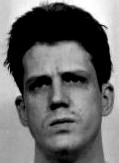 David Earl Gibbs
Murderer · USA · 1985
David Earl Gibbs was convicted and sentenced to death for the July 1985 murder…
3 victims
David Earl Gibbs
Murderer · USA · 1985
David Earl Gibbs was convicted and sentenced to death for the July 1985 murder…
3 victims
- Gender
- male
- Country
- USA
- Location
- Coos County, Oregon, USA
- Date of birth
- January 27, 1968
- Age at first offence
- 20
- Characteristics
- rape, hitchhiking
- Victim profile
- Unna Tuxen, 24, and Kathrin Reith, 22 (German tourists)
- Method of murder
- Shooting
- Date(s) of murder
- September 1, 1988
- Years active
- 1988
- Date of arrest
- 10 days after
- Status
-
Sentenced to death
Sentenced to death on February 24, 1989
Status and procedural posture
David Lynn Simonsen was sentenced to death on February 24, 1989.
Outcome
The judgment of conviction and sentence of death were affirmed. The court concluded that none of Simonsen’s assignments of error provided a basis for reversal, and it affirmed his judgment of conviction and sentence of death.
Timeline
- September 1994 — Johnson was called to serve as a juror in an unrelated case, about 21 months before the voir dire questioning described in the decision.
- February 24, 1989 — Simonsen was sentenced to death.
- 1995 — Simonsen moved to withdraw his guilty pleas entered more than six years earlier; the trial court denied the motion.
Background
In 1995, David Lynn Simonsen moved to withdraw guilty pleas that had been entered more than six years earlier. The trial court denied the motion.
The offence
The appeal record discussed a videotaped re-enactment of the crime and a “fourth question” that had not yet been added to ORS 163.150 (1989). The record also discussed an escape attempt while Simonsen was held pending trial in the Coos County Jail.
Investigation
During voir dire, the court addressed whether prospective jurors had heard about Simonsen’s previous death sentences.
Arrest
The record did not include arrest details.
Trial
Withdrawal of guilty pleas
Simonsen argued that the trial court should have allowed him to withdraw his guilty pleas because “the circumstances were so different when he pleaded.” He argued that the circumstances were different because, when he pleaded guilty, the “fourth question” had not yet been added to ORS 163.150 (1989) and because he mistakenly believed that a videotaped re-enactment of the crime could be used against him in court.
Under ORS 135.365, the trial court “may at any time before judgment , upon a plea of guilty or no contest, permit [a plea of guilty] to be withdrawn and a plea of not guilty substituted therefor.” (Emphasis added.) The court explained that, at the time of Simonsen’s motion, the trial court had already entered judgment. The court also stated that, although it later vacated and remanded Simonsen’s sentence in Simonsen I, it affirmed the trial court’s judgment with regard to Simonsen’s guilt. The court concluded that Simonsen was not entitled to withdraw his guilty plea because judgment already had been entered with regard to his guilt at the time of his motion.
Denial of motion to exclude prospective jurors who had heard about prior death sentences
Simonsen challenged the trial court’s denial of a motion to dismiss prospective jurors who had heard about his previous death sentences. During voir dire, after 10 jurors had been selected, the trial court questioned another potential juror, Denton. Denton stated that he had heard about Simonsen’s case on the radio “back when they had just overturned * * * the death sentence.” Simonsen objected to Denton’s statement and moved to “excuse the entire jury panel and the rest of the room for cause,” because they had heard excludable information. The trial court denied the motion, reasoning that a cautionary jury instruction would be a sufficient remedy.
Before excusing the jury for the day, the trial court instructed the jury as follows:
“We've had to excuse different people -- some for cause it's called, where they stated they've had a specific opinion or feeling, and others on the preemptory [ sic ]. What those people say, of course, we wanted to hear because that's why we're asking for information.
"But, I want to make sure everybody knows that what anybody says has got to be disregarded by the jury. You can't consider what any juror has said when they have been excused, or why they've been excused. All of that is irrelevant, and not for consideration. It's not for you to take into your mind and remember. You're to disregard what any other juror has basically said.”
The appeal described Simonsen’s argument as contending that knowledge of his prior death sentences made jurors biased and unable to try the case impartially.
The court stated that a trial court’s determination whether a juror must be excluded for actual bias is governed by ORCP 57 D(1)(g), and that ORS 136.210(1) applied. The court quoted the definition of actual bias under ORCP 57 D(1)(g) as “the existence of a state of mind on the part of a juror that satisfies the court, in the exercise of sound discretion, that the juror cannot try the issue impartially and without prejudice to the substantial rights of the party challenging the juror.”
The court said that it reviewed trial court determinations regarding actual bias under ORCP 57 D(1)(g) for abuse of discretion. It cited State v. Montez, 309 Or 564, 575, 789 P2d 1352 (1990) (Montez I), and noted that in Montez I the court said the trial court had the advantage of seeing the challenged prospective juror and observing demeanor, intelligence, and candor, and that “The trial court's judgment as to a prospective juror's ultimate qualifications is entitled to great weight.”
The court stated it had not addressed whether an inadvertent and passing reference to an earlier death sentence during voir dire would require dismissal of a jury panel. It concluded that decisions on denial of motions for mistrial suggested an answer because the central issue was substantially similar: whether the juror’s knowledge would prejudice the defendant, i.e., whether the juror could try the issue “impartially and without prejudice to the substantial rights of the party challenging the juror.” It referenced State v. Pratt, 316 Or 561, 583, 853 P2d 827 (1993), stating that the trial court did not abuse its discretion by denying a motion for mistrial after a witness had referred to the defendant’s presence on death row. It quoted that Pratt said the statement was “isolated and made in passing” and that the state “did not capitalize on the disclosure in any way.” It also cited State v. Farrar, 309 Or 132, 164, 786 P2d 161 (1990), stating mistrial was not required where an improper statement was made in passing and the state did not capitalize.
The court concluded that Denton’s statement was brief and inadvertent to the point that the trial court had to refer to the transcript to confirm its contents. It also concluded that the prosecutor did not attempt to capitalize on the disclosure. The court said the trial court, having heard the statement in context, concluded it did not require dismissing the jury panel. It found no abuse of discretion.
Service by a juror who had been dismissed from prior service within two years
During voir dire, the trial court questioned a prospective juror, Johnson. Johnson stated that, in September 1994—21 months earlier—she had been called to serve as a juror in an unrelated case. During questioning by defense counsel, Johnson stated that she had been a member of a jury panel “two years ago,” but had not been selected to serve at trial. Defense counsel did not challenge Johnson for cause.
Simonsen argued on appeal that the trial court erred by allowing Johnson to serve because she was ineligible under ORS 10.030(4) (1993), which provided:
“No person is eligible to act as a juror in any circuit or district court of this state within 24 months after being discharged from jury service in a federal court in this state or circuit or district court of this state unless that person's service as a juror is required because of a need for additional jurors.”
The court held Simonsen’s failure to object to Johnson’s eligibility during voir dire precluded consideration. It cited State v. Benson, 235 Or 291, 293-94, 384 P2d 208 (1963) for the proposition that failure to object during voir dire waived the right to appeal based on the juror’s service. It quoted State v. Powers, 10 Or 145, 151, 45 Am Rep 138 (1882), explaining:
“Were a defendant allowed to take his challenge to the jurors after the trial, he never would do it before, but would always rather depend upon moving it to the court after the trial -- for if he should be acquitted he would say nothing about the disqualification of the juror, and if convicted, he could avoid judgment by offering his objection. This in fact would be placing him in a situation totally exempt from danger and from punishment, so long as he could get a juror sworn against whom he could offer any legal objection, and would give him the additional advantage of several chances for his acquittal.”
The court stated that Simonsen conceded the preservation rule prevented him from challenging Johnson’s presence on his own behalf, but he asserted his case was distinguishable because he raised the issue on Johnson’s behalf, asserting “subtle” damage of infringement on her right to be required to serve only once every two years. The court concluded that even if it decided a defendant could raise the issue on a juror’s behalf, the risk of improper manipulation would remain the same. It concluded that preservation required a defendant to object to juror eligibility during voir dire, regardless of whether the juror’s presence was challenged in the defendant’s or the juror’s behalf. It said raising it on a juror’s behalf would not circumvent the requirements. The court held the argument was not preserved and declined to consider it.
Refusal to allow evidence or instruct the jury that life sentences “would” be consecutive
Before the third sentencing proceeding, Simonsen submitted an “omnibus motion” that included the following request:
“Defendant moves that the court allow evidence, or otherwise instruct the jury, on the full nature of the potential sentences which defendant could receive as an alternative to death; including the fact that the court would be required to impose life sentences with 30-year minimums on each count, with possible parole consideration under very limited circumstances after 20 or 40 years; and that the sentences could, and would , be consecutive.”
(Emphasis in original.)
The court noted that the trial court neither allowed nor denied the motion, and instead took it under advisement after the state requested additional time to conduct research.
Simonsen assigned error to the trial court’s refusal to allow evidence that, if given life sentences, they would be served consecutively, and to the refusal to provide jury instructions to the same effect. The court stated that although Simonsen based many arguments on the state and federal constitutions, he did not make constitutional arguments to the trial court, so those were not preserved for appeal. It then addressed the non-constitutional arguments.
The court concluded Simonsen failed to direct it to any part of the record showing an attempt to introduce evidence that consecutive sentences would be imposed. It held the trial court did not err in denying the opportunity to introduce evidence about consecutive sentences because Simonsen did not attempt to introduce such evidence.
Regarding the requested jury instruction, the court said the requested instruction was legally inaccurate because ORS 137.123(5) gave the trial court discretion to impose consecutive sentences, making it inaccurate to instruct the jury that Simonsen would receive consecutive sentences. It cited State v. Williams, 322 Or 620, 627-28, 912 P2d 364 (1996) for the holding that a trial court did not err in preventing arguments about consecutive sentences because the decision was reserved to the trial court’s discretion. It also cited Simonsen I, 310 Or at 417, stating no error occurred by refusing an instruction that was not a correct statement of law. The court concluded the trial court did not err by refusing the requested instruction.
Admission of statement that Simonsen could be managed on the “outside”
Simonsen argued that the prosecutor made statements during closing argument suggesting the jury that if he received a life sentence, he could be sent to a lower-security facility than the Oregon State Penitentiary. The court explained Simonsen’s point as asserting the prosecutor’s closing argument “affirmatively” misled the jury and denied him a fair trial.
The court stated the statements occurred during closing arguments and contained information already introduced as evidence by the state. It held Simonsen did not challenge that evidence on review. It further concluded that even if the prosecutor’s statements were improper, Simonsen failed to demonstrate prejudice because the statements referred to evidence already before the jury, citing State v. Hayward, 327 Or 397, 408, 963 P2d 667 (1998). The court stated it found no prejudice in the prosecutor’s closing argument.
Prosecutor’s statement during closing argument about witnesses and “snitch jacket”
During the penalty phase, the state called three witnesses to testify about Simonsen’s attempt to escape from the Coos County Jail while held pending trial in this case. One witness was McCall. The record stated that McCall initially agreed to help Simonsen escape, but changed his mind at the last minute and reported the escape attempt to prison officials.
Simonsen sought to impeach testimony of each witness by suggesting they testified to avoid prosecution on other charges.
During closing arguments, the prosecutor made the following argument:
“They make something with Mr. McCall. You know, we talked about him a little bit. You've heard us mention snitch jacket. I think the guy that talked about that, was an informant's jacket -- Mr. [Pinnell], the aggravated murderer that came and testified and said that's not a good thing. That's not good to have one of those.
"McCall comes in here. Basically he helps foil the escape. And yet he was an accomplice in that, but he basically helps stop the thing. I'm grateful, as a District Attorney, that somebody bothered to tell us. Because if the jailers hadn't been alert, Mr. Simonsen would be gone. So, I'm grateful for that. I'm grateful to Mr. McCall. His motives may not have been the best. He might have been scared. But he also comes in here and testifies under oath.
"That was a long time ago that that happened. He's got a snitch jacket. If he goes to prison, or if Vanessa Mason goes to prison, or if Robert Brown goes to prison, they are marked people. And they came in here and testified under oath. Nobody else in the courtroom had to do that -- to expose themselves to any real danger.
"You've got to give those people a little bit of credit. * * *”
Simonsen objected to that statement. Outside the presence of the jury, the record described the following colloquy:
“[DEFENSE COUNSEL:] * * * I thought that counsel alluded to Mr. Simonsen's failure to testify by saying, 'No one else has been forced to come in here and testify,' et cetera. I move for a mistrial.
"* * * *
“Okay. He was talking about Ms. Mason and Mr. McCall. They've come in and they had to testify, they've been subpoenaed and they had to testify under oath. Then he made a comment, 'No one else in the Courtroom has been forced to come in and do that.'
"I heard it, and it's an inadvertent, perhaps, reference to Mr. Simonsen not taking the stand. I move for a mistrial on that basis.
"[THE COURT]: Well, I'll deny that. I think that's a stretch because I think the comments were, no one else has a snitch jacket or has something to lose, like these people; and that was the context it was in, not the Defendant failing to testify.
"So, I don't think that anybody could even draw that inference from that comment. So I'll deny the Motion for Mistrial."
The court reviewed the denial of a motion for mistrial for abuse of discretion and said it agreed with the trial court that the statement, taken in context, was designed to rehabilitate the credibility of the three witnesses after they were impeached by the defense, and it was not a comment on Simonsen’s silence. The court concluded the trial court did not abuse its discretion in denying the motion for mistrial.
Other allegedly inflammatory statements during closing arguments
Simonsen also assigned error to other statements the prosecutor made during closing argument. The court listed four statements Simonsen objected to:
- “a life sentence would "laugh [defendant's] crime off";”
- “[a]ll [the prosecutor wants] in this case is justice, a punishment that fits the crime according to the law";”
- Simonsen should not “walk away” from the crime and go to the Oregon State Penitentiary, which “sounds kind of like a racquetball club, to [the prosecutor]”; and
- the jurors’ “duty” was to sentence Simonsen to death.
The court stated Simonsen admitted he failed to object to any of those statements before the trial court, and he argued that the trial court had a duty to declare a mistrial sua sponte due to prejudice.
The court stated it was not. It explained that it reviewed a trial court’s failure to grant an ordinary motion for mistrial for abuse of discretion, and in such cases, even if remarks were improper, tasteless, or inappropriate, it would not find an abuse of discretion unless the effect denied Simonsen a fair trial, citing State v. Smith, 310 Or 1, 24, 791 P2d 836 (1990). It concluded the prosecutor’s remarks did not violate that standard.
The court then addressed Simonsen’s reliance on Viereck v. United States, 318 US 236, 63 S Ct 561, 87 L Ed 734 (1943), which included the following statements:
“This is war. It is a fight to the death. The American people are relying upon you ladies and gentlemen for their protection against this sort of a crime, just as much as they are relying upon the protection of the men who man the guns in Bataan Peninsula, and everywhere else. They are relying upon you ladies and gentlemen for their protection. We are at war. You have a duty to perform here.
"As a representative of your Government I am calling upon every one of you to do your duty.”
The court stated Simonsen did not object in Viereck, and after reversing on other grounds, the United States Supreme Court stated in dictum that the prosecutor’s statements “prejudiced petitioner's right to a fair trial, and * * * might well have placed the judgment of conviction in jeopardy.” The court distinguished Viereck as involving a blatant appeal to jurors’ sense of patriotism during wartime and equating convicting the defendants with contributing to the war effort, concluding the situation here differed.
The court also said Simonsen’s reliance on State v. Blodgett was misplaced because, unlike in Simonsen’s case, the defendant in Blodgett objected to the statements. The court said that in Blodgett the dispute centered on the trial court’s failure to respond to a timely objection, whereas Simonsen did not raise objections before the trial court. It rejected Simonsen’s argument under this assignment of error.
Constitutionality of Oregon’s death penalty scheme
Simonsen assigned error to the trial court’s denial of his omnibus motion to dismiss the penalty phase proceeding on grounds that Oregon’s death penalty scheme was unconstitutional for various reasons. The court stated that many arguments in the motion had been addressed in Simonsen I and were therefore the law of the case, citing Koch, 274 Or at 512 (discussing the doctrine). The court stated the remaining arguments either were not preserved or had been rejected in Montez I, Wagner, State v. Cunningham, Moore, State v. Montez, State ex rel Huddleston v. Sawyer, State v. Moen, and State v. Guzek.
Appeals
The court’s analysis referenced Simonsen I and stated it later vacated and remanded Simonsen’s sentence in Simonsen I, while affirming the trial court’s judgment with regard to Simonsen’s guilt. The court also affirmed the judgment of conviction and sentence of death in the decision described here.
Other details
The court referenced Denton’s radio statement about a prior overturning of the death sentence. It referenced prior death sentences being known to prospective jurors during voir dire, the cautionary instruction given, and that Denton’s statement was confirmed by reference to the transcript. The court also referenced juror Johnson’s eligibility under ORS 10.030(4) (1993) and that defense counsel did not challenge Johnson for cause. It referenced the prosecutor’s comments in closing argument about “snitch jacket,” including mention of Vanessa Mason and Robert Brown, and mention of Mr. [Pinnell].
Spotted an error, or have more information about this case?