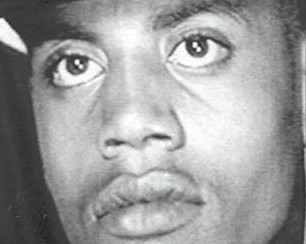
Alton Waye
Murderer Ervil LeBaron
Murderer · USA · 1972
Ervil Morrell LeBaron (1925 to August 16, 1981) was the leader of a polygamous…
35 victims
Ervil LeBaron
Murderer · USA · 1972
Ervil Morrell LeBaron (1925 to August 16, 1981) was the leader of a polygamous…
35 victims
 Brian Kevin Rosenfeld
Murderer · USA · 1985
Brian Kevin Rosenfeld Brian Kevin Rosenfeld was sentenced to three concurrent l…
23 victims
Brian Kevin Rosenfeld
Murderer · USA · 1985
Brian Kevin Rosenfeld Brian Kevin Rosenfeld was sentenced to three concurrent l…
23 victims
 Marvin Gray
Murderer · USA · 1975
Marvin Gray was convicted killer who claimed responsibility for 23 slayings and…
23 victims
Marvin Gray
Murderer · USA · 1975
Marvin Gray was convicted killer who claimed responsibility for 23 slayings and…
23 victims
 Yahweh ben Yahweh
Murderer · USA · 1980
Yahweh ben Yahweh was born and legally named Hulon Mitchell Jr. (October 27, 19…
23 victims
Yahweh ben Yahweh
Murderer · USA · 1980
Yahweh ben Yahweh was born and legally named Hulon Mitchell Jr. (October 27, 19…
23 victims
 Vincenzo Campanella
Homicide · Italy · 1990
Vincenzo Campanella was a 17-year-old cousin of Santina Renda. He had mental pr…
2 victims
Vincenzo Campanella
Homicide · Italy · 1990
Vincenzo Campanella was a 17-year-old cousin of Santina Renda. He had mental pr…
2 victims
 Dale Shackelford
Murderer · USA · 1999
Dale Carter Shackelford was convicted for the 1999 slayings of Donna Fontaine a…
2 victims
Dale Shackelford
Murderer · USA · 1999
Dale Carter Shackelford was convicted for the 1999 slayings of Donna Fontaine a…
2 victims
 Dana Sue Gray
Serial killer · USA · 1994
Dana Sue Gray (born December 6, 1957) was an American serial killer who murdere…
3 victims
Dana Sue Gray
Serial killer · USA · 1994
Dana Sue Gray (born December 6, 1957) was an American serial killer who murdere…
3 victims
 Steve Henley
Murderer · USA · 1985
Steve Henley was convicted in Tennessee of the 1985 murders of Fred Stafford an…
2 victims
Steve Henley
Murderer · USA · 1985
Steve Henley was convicted in Tennessee of the 1985 murders of Fred Stafford an…
2 victims
 Roger Wayne Murray
Murderer · USA · 1991
Roger Wayne Murray was sentenced to death on October 26, 1992. The case involve…
2 victims
Roger Wayne Murray
Murderer · USA · 1991
Roger Wayne Murray was sentenced to death on October 26, 1992. The case involve…
2 victims
 Martin Link
Murderer · USA · 1991
Martin Link was convicted by a jury in the Circuit Court of the City of St. Lou…
1 victim
Martin Link
Murderer · USA · 1991
Martin Link was convicted by a jury in the Circuit Court of the City of St. Lou…
1 victim
- Gender
- male
- Country
- USA
- Location
- Lunenburg County, Virginia, USA
- Date of birth
- 1943
- Age at first offence
- 34
- Characteristics
- rape, robbery
- Victim profile
- Lavergne B. Marshall (female, 61)
- Method of murder
- Stabbing 42 times with a butcher knife
- Date(s) of murder
- October 14, 1977
- Years active
- 1977
- Date of arrest
- Same day (surrenders)
- Status
-
Executed
Executed by electrocution in Virginia on August 30, 1989
Case details
Alton Waye was convicted of raping and killing Lavergne B. Marshall, a 61-year-old widow, in Lunenburg County, Virginia. Waye stabbed her 42 times with a butcher knife, raped her, poured bleach (Clorox) over her nude body, and beat her face beyond recognition. After the killing, he called the police to tell them he had killed a woman, and he led authorities to the victim’s house, where the police found the victim beaten beyond recognition with bite marks on her body. In a separate sentencing hearing, the jury sentenced Waye to death.
Background
Lavergne B. Marshall was a 61-year-old widow. Alton Waye drove to her residence requesting permission to use her telephone. After gaining entry to the home, Waye forced the victim upstairs where he raped and beat her.
The offence
On October 14, 1977, Waye forced the victim upstairs, raped her, and beat her. He retrieved a knife from the kitchen downstairs and returned upstairs where he stabbed her 42 times, killing her. After placing the body in a bathtub and pouring Clorox over her, Waye ransacked the house, took the telephone off the hook, switched on the television, and wiped the knife clean. The victim’s nude body was found in a bathtub and her face was beaten beyond recognition.
Investigation
Waye turned himself in and led authorities to the victim’s house. The police found the victim beaten beyond recognition with bite marks on her body. Waye provided authorities with both written and oral statements detailing his involvement in the homicide. Shortly after the killing, a man who identified himself as Mr. Waye called the police to tell them he had killed a woman.
Arrest
Waye turned himself in to the authorities and led them to the victim’s house.
Trial
Waye was convicted in 1978 of capital murder. During the trial, Waye’s trial counsel did not object to a jury instruction regarding intent that was later treated as violating the rule announced after Waye’s conviction in Sandstrom v. Montana. The instruction at issue was:
"The Court instructs the jury that a man is presumed to intend that which he does, or which is the immediate or necessary consequences [ sic] of his act." The jury deliberated 10 minutes before rendering Waye guilty and about 25 minutes before sentencing him to die.
Evidence and witness issues raised in later proceedings
Claims were raised that the Commonwealth fostered false impressions from the evidence. Claims were also raised that evidence could have cast doubt on Waye’s guilt, including that semen removed from the victim’s body could have come from either Len Gooden or Waye, and that hairs found at the scene “were similar in all characteristics” to Waye, while forensic notes reflected nothing more than that the hairs were from a black person. It was also asserted that the jury did not know the whole story regarding testimony about Waye’s intoxication and the amount of beer and moonshine. It was claimed that prosecutors made no effort to correct an inconsistency in the record about how much alcohol Waye consumed, and that a police officer said Gooden never told him about “the six pitchers of beer and moonshine,” while it was also asserted that court papers showed Gooden did tell him about the drinking and that the officer considered Waye to be impaired when he first questioned him.
Sentencing
After Waye’s conviction for capital murder, the jury sentenced him to death in a separate sentencing hearing. The jury sentenced him to death and the sentence remained in effect.
Appeals
Supreme Court of Virginia
The Virginia Supreme Court affirmed Waye’s conviction and sentence of death on January 12, 1979. Waye v. Commonwealth, 219 Va. 683, 251 S.E.2d 202.
Waye later filed a petition for a writ of habeas corpus in state court contending that the trial judge’s instruction regarding intent was a burden-shifting instruction that violated Sandstrom v. Montana. Waye’s trial counsel did not object to the instruction at trial and the issue was not raised on Waye’s direct appeal. The state court held that Waye was not entitled to be heard on the issue because he failed to make a contemporaneous objection at trial or to raise the issue on direct appeal. The Virginia Supreme Court affirmed the denial of the writ of habeas corpus on April 27, 1984.
A later Virginia Supreme Court ruling entered on August 28, 1989 dismissed a state habeas petition for reasons of procedural default, finding that the allegations were “procedurally barred,” and also finding under Virginia Code Sec. 8.01-654(B)(2) that the petitioner had knowledge of the facts on which the present petition was based at the time he had filed a previous petition.
United States Supreme Court
Waye’s petition for a writ of certiorari was denied:
- Waye v. Commonwealth, 219 Va. 683, 251 S.E.2d 202, cert. denied, 442 U.S. 924, 99 S.Ct. 2850, 61 L.Ed.2d 292 (1979).
- Waye v. Morris, 469 U.S. 908, 105 S.Ct. 282, 83 L.Ed.2d 218 (1984).
- Waye v. Townley, --- U.S. ----, 109 S.Ct. 3202, 105 L.Ed.2d 710 (1989).
The Supreme Court of the United States docket entry in Alton WAYE v. Edward C. MORRIS, Superintendent, Mecklenburg Correctional Center (No. 84-5303) showed:
- On petition for writ of certiorari to the Supreme Court of Virginia.
- October 9, 1984.
- “The petition for a writ of certiorari is denied.” Justice BRENNAN and Justice MARSHALL dissented, and Justice MARSHALL’s dissent included detailed discussion of the Sandstrom-related instructional issue and arguments about ineffective assistance of trial counsel.
Federal habeas corpus proceedings
Waye filed a petition for a writ of habeas corpus in federal court. The federal court reviewed the claim and held that, even assuming Strickland deficiency, Waye could not overcome the procedural bar because he failed to show cause for his noncompliance under Wainwright v. Sykes. The court further held that even if Waye could show cause and actual prejudice, the presumption instruction was harmless beyond a reasonable doubt under Rose v. Clark. The Supreme Court denied certiorari for a third time in 1989.
Waye began collateral attack on July 18, 1989 by filing a pro se petition for a writ of habeas corpus. On August 25, 1989, Waye filed a habeas petition with the Virginia Supreme Court. He then filed a motion under Rule 60(b) and a motion for a stay of execution in the district court.
Fourth Circuit (Rule 60(b) and stay of execution)
- Waye moved for a stay of execution pending his appeal of the denial by the district court of his motion under Federal Rule of Civil Procedure 60(b) for relief from the judgment denying his petition for a writ of habeas corpus. The Fourth Circuit denied the motion for a stay of execution and affirmed the denial of the Rule 60(b) motion.
- The Fourth Circuit treated the oral opinion delivered in open court as such because the district court did not enter a formal written order.
The Fourth Circuit case was:
- Alton Waye, Petitioner-Appellant, v. Sherman L. TOWNLEY, Warden, Respondent-Appellee. No. 89-4007. Argued Aug. 30, 1989. Decided Aug. 30, 1989.
Fourth Circuit (companion case)
A second Fourth Circuit decision was:
- Edward Murray, Director, Virginia Department of Corrections, Respondent-Appellee. Docket number: 89-4008. Decided Aug. 30, 1989.
The court summarized the points raised in the petition for habeas corpus: A. The Commonwealth fostered false impressions from the evidence. B. The psychiatrist testifying for Waye at his trial was incompetent in that he did not put enough emphasis on any diminished capacity of Waye, who, it is now claimed, has an I.Q. of about 78. C. There was an impermissible risk that race was a factor in Waye's sentencing. D. The sentencing instructions concerning mitigating evidence were erroneous. E. The sentencing report contains improper material. F. There was evidence in the case, or remarks were made, regarding the character of the victim. G. The Commonwealth withheld material evidence that Waye was under the influence of drugs or alcohol at the time of the offense.
The Fourth Circuit concluded that Waye’s required cause and prejudice to overcome procedural default was not shown and affirmed the judgment of the district court appealed from. The motion for a stay of execution was denied.
Other details
Execution details and final statement
On August 30, 1989, Alton Waye was executed by electrocution in Virginia. He was pronounced dead at 11:05 P.M. after receiving two 55-second jolts of almost 2,500 volts of electricity. In a final statement, Waye said:
''I would express that what is about to take place is a murder. I don't hate anyone. I forgive everyone involved.'' The Department of Corrections spokesman Wayne J. Farrar stated that Waye sought a stay of execution earlier in the day from the Supreme Court, but the Court refused, 7 to 2, to postpone the execution and consider his case. Waye was also denied clemency on that day by Gov. Gerald L. Baliles. John Coble, operations officer at the State Penitentiary, said Waye was baptized Tuesday night and: ''He said to tell the people, 'I am blessed,' '' Coble also said Waye told people he was blessed.
Scheduling and representation in late-stage proceedings
On June 5, 1989, the state trial court set Waye’s execution for August 30, 1989. On July 18, 1989, Waye filed pro se the present petition. After advising the district court of his intent to file no more papers, the district court appointed Waye’s present counsel on August 17, 1989. The amended petition for habeas corpus was filed on August 28, 1989, two days prior to the scheduled execution date. The district court heard the case at about 8:00 p.m. on August 29, 1989, announced its decision at about 8:30 a.m. on August 30, 1989, and the order was received about 3 hours later, followed by scheduling oral argument by telephone conference call immediately.
Statements attributed to counsel and claims about evidence
J. Lloyd Snook III, who represented Waye, said:
"I think by the time it got to the jury, they were so mad at Alton Waye because they saw the bloody photographs that they wanted to put him away,'' and: "For whatever it's worth, you had a young black man accused of raping and killing an elderly white woman.'' A quoted statement in later proceedings also addressed the nature of disputed evidence and the role of Len Gooden, including a quotation attributed to Richard A. Neaton: "He came very close to confessing to breaking into the victim's house and to committing the rape,''
and:
"I am convinced based on my experience as a prosecutor and as a criminal defense lawyer that Gooden was in the house that evening, and was not in the car asleep as he testified at trial.''
Evidence about other individuals mentioned in later proceedings
Len Gooden was described in later proceedings as Waye’s cousin and as the state’s main witness against Waye. It was claimed Gooden asserted he was at the scene during the murder but asleep in the car after a night of drinking, while later evidence was asserted to show he probably was inside the house when the rape and murder occurred. It was also stated that Gooden had a record of breaking and entering, had been arrested for a similar offense between the murder and Waye’s trial, and later was convicted in Michigan of raping a white woman, becoming a suspect in a series of similar violent rapes there; the rapes were asserted to have ceased once Gooden was jailed.
Outcome
Alton Waye’s execution proceeded. The Fourth Circuit denied his motion for a stay of execution and affirmed the denial of his Rule 60(b) motion. He was executed by electrocution in Virginia on August 30, 1989.
Spotted an error, or have more information about this case?