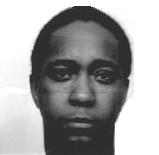
Freddie Lee Webb
Murderer Brian Kevin Rosenfeld
Murderer · USA · 1985
Brian Kevin Rosenfeld Brian Kevin Rosenfeld was sentenced to three concurrent l…
23 victims
Brian Kevin Rosenfeld
Murderer · USA · 1985
Brian Kevin Rosenfeld Brian Kevin Rosenfeld was sentenced to three concurrent l…
23 victims
 Marvin Gray
Murderer · USA · 1975
Marvin Gray was convicted killer who claimed responsibility for 23 slayings and…
23 victims
Marvin Gray
Murderer · USA · 1975
Marvin Gray was convicted killer who claimed responsibility for 23 slayings and…
23 victims
 Yahweh ben Yahweh
Murderer · USA · 1980
Yahweh ben Yahweh was born and legally named Hulon Mitchell Jr. (October 27, 19…
23 victims
Yahweh ben Yahweh
Murderer · USA · 1980
Yahweh ben Yahweh was born and legally named Hulon Mitchell Jr. (October 27, 19…
23 victims
 Russell Ellwood
Murderer · USA · 1991
Russell Ellwood was a former taxi driver. Authorities suspected him of killing…
20 victims
Russell Ellwood
Murderer · USA · 1991
Russell Ellwood was a former taxi driver. Authorities suspected him of killing…
20 victims
 Preston Hughes
Murderer · USA · 1988
Preston Hughes III was convicted of capital murder for the killing of fifteen-y…
2 victims
Preston Hughes
Murderer · USA · 1988
Preston Hughes III was convicted of capital murder for the killing of fifteen-y…
2 victims
 Brandy Holmes
Murderer · USA · 2003
Brandy Aileen Holmes was convicted of first-degree murder and sentenced to deat…
1 victim
Brandy Holmes
Murderer · USA · 2003
Brandy Aileen Holmes was convicted of first-degree murder and sentenced to deat…
1 victim
 Thomas Henry Allaway
Murderer · United Kingdom · 1921
On 22 December 1921, an advertisement appeared in the “Morning Post” from Miss…
1 victim
Thomas Henry Allaway
Murderer · United Kingdom · 1921
On 22 December 1921, an advertisement appeared in the “Morning Post” from Miss…
1 victim
 Andrew Aston
Murderer · United Kingdom · 2001
Andrew Aston was born 22 November 1972 in Birmingham, England. He attacked elde…
2 victims
Andrew Aston
Murderer · United Kingdom · 2001
Andrew Aston was born 22 November 1972 in Birmingham, England. He attacked elde…
2 victims
 Carherine Thompson
Murderer · USA · 1990
Carherine Thompson was a widow whose husband, Melvin Thompson, was killed in We…
1 victim
Carherine Thompson
Murderer · USA · 1990
Carherine Thompson was a widow whose husband, Melvin Thompson, was killed in We…
1 victim
 Richard Barry Randolph
Murderer · USA · 1988
Richard Barry Randolph was sentenced to death on April 5, 1989. He was identifi…
1 victim
Richard Barry Randolph
Murderer · USA · 1988
Richard Barry Randolph was sentenced to death on April 5, 1989. He was identifi…
1 victim
- Gender
- male
- Country
- USA
- Location
- Nueces County, Texas, USA
- Date of birth
- August 17, 1960
- Age at first offence
- 25
- Characteristics
- kidnapping, rape, robbery
- Victim profile
- Leopoldo Cantu (male, 26)
- Method of murder
- Shooting (.45 caliber pistol)
- Date(s) of murder
- December 8, 1985
- Years active
- 1985
- Date of arrest
- March 29, 1986
- Status
-
Executed
Executed by lethal injection in Texas on March 31, 1994
Case record: Freddie Lee Webb
Outcome
Freddie Lee Webb was executed by lethal injection in Texas on March 31, 1994.
Webb’s conviction and sentence were affirmed, and the stay of execution granted by the district court was lifted. The federal appellate court affirmed the district court’s denial of Webb’s petition for a writ of habeas corpus and stated “AFFIRMED, STAY LIFTED.”
Timeline
- December 8, 1985 — Freddie Lee Webb and an accomplice seized Leo Cantu and his wife, Elizabeth, after she closed the Shrimp Ahoy Restaurant in Corpus Christi, Texas, where she was the night manager.
- December 8, 1985 — Webb and his accomplice returned the Cantus to the restaurant so Webb could open the safe and steal its contents; Webb instructed his accomplice to remain with Leo Cantu in the car while he took Elizabeth Cantu into the restaurant, forced her to open the safe, bound her, and took the money; Webb and his accomplice fled in the Cantus’ car with Leo Cantu as a prisoner; Elizabeth Cantu freed herself and alerted the authorities; Leo Cantu was murdered in a remote area of Corpus Christi.
- June 19, 1989 — The Supreme Court denied Webb’s petition for certiorari, rendering his conviction final.
- August 31, 1993 — The United States Court of Appeals for the Fifth Circuit issued its decision in Freddie Lee Webb, Petitioner-Appellant, v. James A. Collins, Director, Texas Department of Criminal Justice, Institutional Division, Respondent-Appellee, No. 92-7655.
- March 31, 1994 — Webb was executed by lethal injection in Texas.
The offence
On December 8, 1985, Webb and his accomplice seized Leo Cantu and his wife, Elizabeth, after she closed the Shrimp Ahoy Restaurant in Corpus Christi, Texas, where she was the night manager.
Webb and his accomplice returned the Cantus to the restaurant for purposes of opening the safe and stealing its contents. Once at the restaurant, Webb instructed his accomplice to remain with Leo Cantu in the car while he took Elizabeth Cantu into the restaurant. Webb forced Elizabeth Cantu to open the safe, bound her, and took the money.
Webb and his accomplice fled in the Cantus’ car with Leo Cantu as a prisoner. Elizabeth Cantu freed herself and alerted the authorities, while her husband was murdered in a remote area of Corpus Christi.
In addition to this murder, Webb was arrested about three months later after robbing a convenience store. Several months later, Webb was arrested with the murder weapon while fleeing authorities from the scene of another armed robbery.
During sentencing related testimony, Leo Cantu’s former wife, Olga Cantu, testified that she knew Webb because they had attended high school together. The material describes that while married to Cantu, Olga Cantu worked in a store called the Maverick Mart, where she and her husband saw Webb at least on one occasion.
Investigation
The material describes that Elizabeth Cantu freed herself and alerted authorities after Webb and his accomplice fled with Leo Cantu as a prisoner.
It also describes that Webb was arrested about three months later after robbing a convenience store, and that he was arrested with the murder weapon while fleeing authorities from the scene of another armed robbery.
Arrest
Webb was arrested about three months later after robbing a convenience store.
At the time of the murder, Webb had only been out of prison for 11 months after spending less than four years of a 10-year sentence for the rape of a child, aggravated robbery and theft.
Trial
In October 1986, a jury found Webb guilty for the capital offense of murder of Leo Cantu in the course of committing and attempting to commit kidnapping.
In a separate proceeding, the jury answered affirmatively to special questions submitted pursuant to article 37.071(2) of the Texas Code of Criminal Procedure, and Webb was sentenced to death.
The material further states that Leo Cantu’s former wife, Olga Cantu, testified and that the jury could likely have drawn the conclusion that Webb recognized Leo Cantu during the robbery and was afraid he would be able to identify him. It also states that, after realizing this, Webb and his assailant left Elizabeth Cantu tied up in the restaurant and drove Leo Cantu to a remote area in Corsicana where he was shot five times and left to die.
Webb v. State, 760 S.W.2d 263 (Tex. Crim.App. 1988) (en banc), was cited as the state appellate decision. The Supreme Court denied certiorari, described as occurring on June 19, 1989, rendering Webb’s conviction final.
The material also describes that Webb filed a state habeas corpus application and that the state trial court entered findings of fact and conclusions of law without recommending disposition. It further states that the Court of Criminal Appeals found the trial court’s findings and conclusions supported by the record and denied relief.
Webb later filed a second application for a state writ of habeas corpus alleging the jury in his case had been unable to consider various types of mitigating evidence in determining his punishment; the Court of Criminal Appeals denied relief, noting that none of the evidence had been introduced at trial.
Sentencing
Webb was sentenced to death following the jury’s affirmative answers to special questions submitted under article 37.071(2) of the Texas Code of Criminal Procedure. The material states that Webb was number 73 on the list of executions in Texas since the Supreme Court allowed capital punishment to resume.
Appeals
State appeals
The Court of Criminal Appeals affirmed Webb’s conviction and sentence in Webb v. State, 760 S.W.2d 263 (Tex. Crim.App. 1988) (en banc). The Supreme Court denied Webb’s petition for certiorari on June 19, 1989, rendering Webb’s conviction final.
Federal habeas proceedings
Webb appealed the district court’s denial of his petition for a writ of habeas corpus.
The appellate court described the procedural posture: the district court granted a certificate of probable cause and left its previously granted stay of execution in effect pending appeal.
The appellate court described the issue raised: “whether the jury instructions given pursuant to article 37.071(2) of the Texas Code of Criminal Procedure violated his rights under the Eighth and Fourteenth Amendments.”
The material then sets out Webb’s argument. Webb argued that his rights under the Eighth and Fourteenth Amendments were violated by a statutory prohibition against informing jurors of the effect of the failure to agree on a punishment phase issue. It described the Texas sentencing statute as providing that if the jury unanimously answers “yes” to each punishment question, the defendant will be sentenced to death, but if ten or more jurors answer one or more issues “no,” or if the jury is unable to agree on an answer to any issue, the defendant will be sentenced to life imprisonment. The material stated that the statute prohibits the court or the attorneys from informing the jury of the effect of the failure to agree on an issue.
The appellate court described Webb’s claim that, without knowledge of the effect of failure to agree on an issue, a juror might be misled into believing that he or she could not vote “no” without a consensus of ten jurors and would feel compelled to vote “yes.” The material described Webb’s reliance on principles announced in Andres v. United States, 333 U.S. 740 (1948) and Mills v. Maryland, 486 U.S. 367 (1988). It also described that Webb asked the court to create a “new rule” within the meaning of Teague v. Lane, 489 U.S. 288 (1989), and cited related precedent including Nethery v. Collins, 993 F.2d 1154 (5th Cir. 1993).
The appellate court concluded that because Webb did not suggest his claim came within an exception, Teague foreclosed consideration, and it affirmed the district court and lifted the stay of execution. It stated: “AFFIRMED, STAY LIFTED.”
Other details
Identity and case designation (federal appeal)
The federal appellate case is styled:
- Freddie Lee Webb, Petitioner-Appellant, v. James A. Collins, Director, Texas Department of Criminal Justice, Institutional Division, Respondent-Appellee.
- No. 92-7655.
- Federal Circuits, 5th Cir. August 31, 1993.
- Before JOLLY, DUHE, and BARKSDALE, Circuit Judges.
- Disposition: AFFIRMED, STAY LIFTED.
The material also included Webb’s last statement: “Peace.”
Victim
Leo Cantu was murdered. The material also identifies Elizabeth Cantu, Leo Cantu’s wife, as the person with whom Webb’s accomplice and Webb accosted and who freed herself and alerted the authorities.
Weapon and injuries
The material stated that Leo Cantu was shot five times and left to die.
Prior imprisonment described in the material
Spotted an error, or have more information about this case?