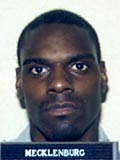
Lonnie Weeks
Murderer Brian Kevin Rosenfeld
Murderer · USA · 1985
Brian Kevin Rosenfeld Brian Kevin Rosenfeld was sentenced to three concurrent l…
23 victims
Brian Kevin Rosenfeld
Murderer · USA · 1985
Brian Kevin Rosenfeld Brian Kevin Rosenfeld was sentenced to three concurrent l…
23 victims
 Russell Ellwood
Murderer · USA · 1991
Russell Ellwood was a former taxi driver. Authorities suspected him of killing…
20 victims
Russell Ellwood
Murderer · USA · 1991
Russell Ellwood was a former taxi driver. Authorities suspected him of killing…
20 victims
 Robert Martines Perez
Murderer · USA · 1994
Name: Robert Martines Perez · Other name used in proceedings: Robert Martinez P…
15 victims
Robert Martines Perez
Murderer · USA · 1994
Name: Robert Martines Perez · Other name used in proceedings: Robert Martinez P…
15 victims
 Billy Frank Vickers
Murderer · USA · 1993
Billy Frank Vickers Vickers was executed by lethal injection in Texas on Januar…
14 victims
Billy Frank Vickers
Murderer · USA · 1993
Billy Frank Vickers Vickers was executed by lethal injection in Texas on Januar…
14 victims
 Billy Kearse
Murderer · USA · 1991
Billy Leon Kearse (DOB: 10/26/72) was tried in the Nineteenth Judicial Circuit,…
1 victim
Billy Kearse
Murderer · USA · 1991
Billy Leon Kearse (DOB: 10/26/72) was tried in the Nineteenth Judicial Circuit,…
1 victim
 Marco Antonio Montez
Murderer · USA · 1987
Marco Antonio Montez was convicted of aggravated murder and sentenced to death,…
1 victim
Marco Antonio Montez
Murderer · USA · 1987
Marco Antonio Montez was convicted of aggravated murder and sentenced to death,…
1 victim
 Reginald Brooks
Murderer · USA · 1982
Reginald Brooks was a 66-year-old Black man. His legal outcome was the executio…
3 victims
Reginald Brooks
Murderer · USA · 1982
Reginald Brooks was a 66-year-old Black man. His legal outcome was the executio…
3 victims
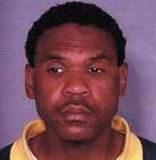 Mac Minister
Murderer · USA · 2005
Mac Minister was an American rapper. His real name was Andre Dow. He was 37 yea…
2 victims
Mac Minister
Murderer · USA · 2005
Mac Minister was an American rapper. His real name was Andre Dow. He was 37 yea…
2 victims
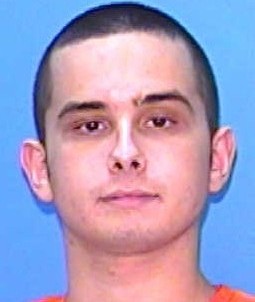 Randy Schoenwetter
Murderer · USA · 2000
Name: Randy Schoenwetter Date of birth: 10/27/81 Eighteenth Judicial Circuit: B…
2 victims
Randy Schoenwetter
Murderer · USA · 2000
Name: Randy Schoenwetter Date of birth: 10/27/81 Eighteenth Judicial Circuit: B…
2 victims
- Gender
- male
- Country
- USA
- Location
- Prince William County, Virginia, USA
- Date of birth
- 1972
- Age at first offence
- 21
- Characteristics
- to avoid arrest, history of mental illness, drug addict, mentally ill
- Victim profile
- Jose Cavazos, 50 (Virginia State Trooper)
- Method of murder
- Shooting ( Glock 9 mm handgun)
- Date(s) of murder
- February 23, 1993
- Years active
- 1993
- Date of arrest
- Same day
- Status
-
Executed
Executed by lethal injection in Virginia on March 16, 2000
Case identification
Lonnie Weeks was convicted of murdering a state trooper during a 1993 traffic stop in Dale City, Virginia.
Timeline
- February 23, 1993 — Virginia State Trooper Jose Cavazos was assigned to traffic patrol in the Dale City area; Cavazos pulled over a speeding 1987 Volkswagen Jetta travelling from Washington, D.C., to North Carolina.
- Late evening of February 23, 1993 — Cavazos operated radar from a marked police vehicle parked in the highway medium monitoring southbound traffic on Interstate 95.
- Around midnight (February 23, 1993) — Cavazos activated his vehicle’s emergency lights and pursued the Volkswagen; Dukes brought the car to a stop on the Dale City exit ramp; Cavazos approached on foot; Weeks stepped out and fired at least six bullets, killing Cavazos within minutes.
- February 24, 1993 — Weeks was found guilty for the murder following the 1993 traffic stop; Weeks confessed hours later.
- April 1992 — Lonnie Weeks was arrested for selling marijuana and placed on probation.
- July 18, 1986 — Jose Cavazos began patrolling Prince William County.
- 1985 — Jose Cavazos entered trooper training.
- 1969 — Jose Cavazos began working for the state with the Department of Motor Vehicles.
- 1993 — Weeks received a death sentence for the shooting; Cavazos was killed at age 50.
Background
Lonnie Weeks grew up in South East Washington D.C. His father died when he was 10 years old. Shortly thereafter, his mother became addicted to drugs and began to steal. When Lonnie was 14 years old, his mother abandoned her children, leaving them with their grandmother in Fayetteville, North Carolina.
In Fayetteville, Lonnie grew up in an area described as notorious from crime and drugs. His grandmother, Ms. Evelyn Leach, influenced his life. Lonnie stayed out of trouble and was described as a well-behaved student. He was described as an active and enthusiastic member of his church. He held a part-time job and was captain of his high school basketball team and was well liked by other students, his teachers and his coach. His talent at basketball earned him a scholarship to Mount Olive College.
The summer before Lonnie was to begin college, he fathered a child and gave up his scholarship so he could work to support his new family. He moved from one low-paying job to the next and described becoming increasingly frustrated by working long hours in dead-end jobs while observing the nice lifestyles of others.
In his own words, he “took the easy way out.”
In April 1992, Lonnie was arrested for selling marijuana. Because it was his first offense, he was put on probation.
After Lonnie was assaulted and threatened by a local drug dealer, a neighbor gave him a handgun to carry for protection. In February 1993, Lonnie and a long-time friend broke into the house of an acquaintance who was serving time in jail. Lonnie helped himself to the occupant’s car and decided to drive to Washington D.C. for a family gathering.
Lonnie had a scholarship to Mount Olive College; he dropped out of school to support a son he had fathered the summer before his freshman year. In less than a year there was a second son. He began selling drugs and carrying a handgun.
Weeks was described as a former basketball star at Seventy-First High School and as “devout Christian.” His counsel and clemency materials described him as having taken responsibility and remorse and as having renewed his faith.
The offence
Weeks was a passenger in a vehicle driven by his uncle, Lewis Dukes. The vehicle was a 1987 Volkswagen Jetta travelling from Washington, D.C., to North Carolina. Cavazos pulled over the speeding Volkswagen on Interstate 95 and the car stopped on the Dale City exit ramp in Prince William County just off the interstate.
When Cavazos approached the Jetta, he asked Weeks to get out and the North Carolina man complied. Weeks was carrying a Glock handgun loaded with armor piercing ammunition known as “man-stoppers.” Weeks fired at least six bullets at Cavazos, and two of the bullets entered Cavazos’s body beside the right and left shoulder straps of the protective vest Cavazos was wearing.
Cavazos was immediately rendered unconscious and fell to the pavement. He died within minutes at the scene. The police vehicle and the officer’s weapon were described in the holster as “snapped.”
The car stopped by Cavazos was a stolen car. Weeks and Dukes then drove the Volkswagen away from the scene, later parking it on the lot of a nearby service station. Weeks returned to retrieve Dukes’ District of Columbia driver’s license that had been dropped on the pavement. Weeks and Dukes were found shortly thereafter in the parking lot of a nearby motel.
The bullet type was described as hollow-point bullets known on the street as “man-stoppers,” designed for police use rather than target practice or hunting.
Investigation and evidence
Police tracked Weeks and Dukes within an hour of the crime, using dogs to a nearby motel.
The stolen vehicle and firearms were part of the investigation. The gun used in the slaying was described as having been linked to the killing of a soldier in Cumberland County a month earlier. The account included that Norman Fletcher Howell Jr. pleaded guilty to the killing of George Mallet Jr. and an unrelated sexual assault, received two concurrent life sentences, and gave the murder weapon to his cousin before his arrest. The cousin didn’t want it and gave it to Weeks.
Arrest and custody
Weeks and Dukes were captured within an hour of the crime, tracked by dogs to a nearby motel.
Weeks confessed hours later. Weeks’ minister, Rev. Bob West, was with him at Greensville Correctional Center in Jarratt, Va., when he got word of the stay of execution.
Trial
Following several pretrial hearings, including a hearing on defendant’s motion to suppress his confession, Weeks was tried by a single jury during five days in October 1993.
As the trial began, Weeks pled guilty to the grand larceny and firearm charges. The court sentenced him to imprisonment for ten-year and three-year terms respectively on those charges.
The jury found Weeks guilty of the capital murder charge. During the second phase of the bifurcated capital proceeding, the jury fixed Weeks’s punishment at death for the capital offense based upon the vileness predicate of the capital murder sentencing statute.
After the trial court considered a probation officer’s report and heard testimony from the officer relevant to punishment, the court sentenced Weeks to death for the capital murder.
Weeks testified during the trial mitigation phase. He described what happened as follows:
“And as I stepped out the car, it was like something had just took over me that I couldn't understand. . . well, to me, I felt like it was an evil - evil spirit or something.”
Weeks also testified in later descriptions of his feelings:
“I apologize for what I have done. I feel that I took an innocent man's life.”
He also testified:
“I also know that what I have done, it was very – it's very wrong, is hurting, because I know what it has feels like to lose somebody that you love.”
He testified:
“I've hurt my own family, as well as his family. Sometimes I actually feel like I can't live with myself, but that, now that I'm back with the Lord, He give me the strength.”
He testified:
“I pray for my family and his family every night.”
He testified:
“I feel very ashamed and low. . . . , every time I hear someone talk about Mr. Cavazos, I begin to cry because it hurts me. It hurts me so bad into my heart that sometimes I actually feel like I could die from that pain.”
He also testified:
“I guess I felt like I didn't need [the Lord] any more, and so, to myself I say, well, I'm paying for – by my turning my back on Him, I obviously have an indecent mind.”
The account included that Weeks said it was as if an “evil spirit” willed him, and included a statement attributed by Ebert:
“He basically said, 'The devil made me do it,'”
Sentencing
Weeks was sentenced to death for the capital murder and was sentenced for grand larceny and use of a firearm in the commission of murder.
At age 21, he was sentenced to death for the crime described.
Appeals
The death sentence was subject to automatic review under Code § 17-110.1(A). The decision states the process required consideration of whether the sentence of death was imposed under the influence of passion, prejudice, or any other arbitrary factor and whether it was excessive or disproportionate in similar cases.
In January of an appeal period described, the U.S. Supreme Court upheld Weeks’s ability to be executed in a 5-4 decision. The justification included that the instructions were clear and that Weeks could be executed. It was also described that the Prince William County jury had asked for further instructions and that a juror said after the verdict that she didn’t know she could opt for a lesser sentence.
In September 1999, the U.S. Supreme Court stayed Weeks’s execution less than two hours before he was to be put to death. The stay followed the court granting review of one question raised by Weeks relating to whether the Constitution required clarification that a death sentence is not mandatory and that mitigating factors should be considered when jurors asked about instructions.
The stay resulted in a later execution date being set.
Outcome
Weeks was scheduled to be executed on March 16, 2000.
Final AP report language described Weeks’s execution as having been carried out by injection.
Weeks was executed by lethal injection in Virginia on March 16, 2000.
Aftermath and related statements
Virginians for Alternatives to the Death Penalty included material regarding Lonnie Weeks.
Two surviving children of Trooper Jose Cavazos requested clemency from Governor James Gilmore to spare Weeks’s life. The request included letters from Leslie Susan Cavazos-Almagia and Trevor Virgilio Cavazos.
Leslie Cavazos-Almagia wrote to the governor:
“Please take into consideration the feelings my brother and I have in this matter. We have thought about this very carefully. In our hearts, we have forgiven all that has been done to our family. We want to set an example for society. We do not condone the act of taking the life of another human being in any way, or for any reason. It is below the level of an intelligent human being. This is not (capital punishment) the band aid that will heal society. It only creates a higher level of animosity in our lives.”
Trevor Cavazos wrote:
“. . . I know what it [is] like to live with a tragic, violent death of a loved one. At the time of my father's death I personally would have loved to harm Lonnie Weeks, but that was pure hate, and I've grown up a lot since then. Now I know forgiveness is better than vengeance, and that love is better than hate. I never want to see anyone in my lifetime ever go through what I have, and currently the state is about to make another child fatherless. Yes, I mean Lonnie Weeks' children will never have the chance to make contact with their dad later in life, and later in life is when its so necessary. Take it from someone who knows. . . . Please, breakthis cycle of violence by sparing Lonnie Weeks' life.”
A statement attributed to Lonnie Weeks Jr. described remorse in a final statement:
“for everything I've done to the Cavazos family, my family, to everyone around the world -- and I just thank the Cavazos family for what they've tried to do for me. I love them.”
Linda Cavazos, the trooper’s widow, expressed her desire for the state’s punishment to be carried out, and was described as wanting the punishment to continue.
The National Law Enforcement Officers Memorial Fund chairman Craig W. Floyd described the case’s impact and the hope for closure.
Other details
Weeks had admitted shooting Cavazos after he stopped the stolen car he was riding in on Interstate 95.
Weeks was described as having two jurors who did not want to sentence him to death and who believed the jury misunderstood the instructions.
Weeks was described as having a part in the burglary of a residence in the Fayetteville, North Carolina area in early February 1993, including obtaining keys to a 1987 Volkswagen Jetta and stealing the vehicle. He drove the vehicle to Washington, D.C., intending to sell it or trade it for drugs.
In the account of the incident, Dukes was described as having been age 21 and a resident of the District of Columbia. Dukes was sentenced to life in prison plus 12 years and described as becoming eligible for yearly parole review in 2005, according to the state Department of Corrections.
In trial proceedings described, weeks’s appeal matter included Weeks’s age and residency as age 20 and a North Carolina resident in early February 1993, and that he was on probation for a 1992 drug conviction.
The capital murder charge was described as felonious, willful, deliberate, and premeditated homicide of a law enforcement officer for the purpose of interfering with the performance of the trooper’s official duties under Code § 18.2-31(6). Grand larceny of a motor vehicle under Code § 18.2-95 and use of a firearm in the commission of murder under Code § 18.2-53.1 were also charged.
Weeks’s death sentence was before the appellate court for automatic review under Code § 17-110.1(A), and the court cited consideration required by Code § 17-110.1(C). The opinion states there was no conflict about any relevant fact in the case.
A reference case name appeared: “Weeks v. Com., 450 S.E.2d 379 (Va. 1994) (Direct Appeal).”
In one letter attached to clemency materials, Leslie Cavazos-Almagia wrote:
“Lonnie, I forgive you for what you have done. Unfortunately, your fate is out of my hands.”
In a 1998 letter to Mrs. Cavazos, Weeks wrote:
“I am very sorry for all the pain I caused you and your family. I know sorry will not bring your husband back, but I truly am sorry and remorseful. (I) pray for you and your family every night.”
Weeks had a minister, Rev. Bob West.
Weeks had two children described as ages 8 and 9, named as D’Angelo and Jamaiz in clemency material; a relationship to his younger brother D’Angelo was also described, and a statement described that he remained close to family and was a source of encouragement to his younger brother and his two sons.
A National Black Police Association description appeared calling for Weeks’s life to be spared.
Spotted an error, or have more information about this case?