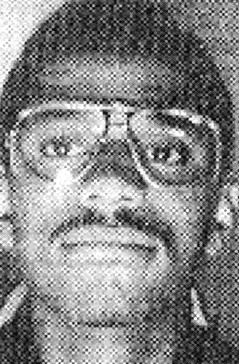
Dwayne Weeks
Murderer Brian Kevin Rosenfeld
Murderer · USA · 1985
Brian Kevin Rosenfeld Brian Kevin Rosenfeld was sentenced to three concurrent l…
23 victims
Brian Kevin Rosenfeld
Murderer · USA · 1985
Brian Kevin Rosenfeld Brian Kevin Rosenfeld was sentenced to three concurrent l…
23 victims
 Russell Ellwood
Murderer · USA · 1991
Russell Ellwood was a former taxi driver. Authorities suspected him of killing…
20 victims
Russell Ellwood
Murderer · USA · 1991
Russell Ellwood was a former taxi driver. Authorities suspected him of killing…
20 victims
 Robert Martines Perez
Murderer · USA · 1994
Name: Robert Martines Perez · Other name used in proceedings: Robert Martinez P…
15 victims
Robert Martines Perez
Murderer · USA · 1994
Name: Robert Martines Perez · Other name used in proceedings: Robert Martinez P…
15 victims
 Billy Frank Vickers
Murderer · USA · 1993
Billy Frank Vickers Vickers was executed by lethal injection in Texas on Januar…
14 victims
Billy Frank Vickers
Murderer · USA · 1993
Billy Frank Vickers Vickers was executed by lethal injection in Texas on Januar…
14 victims
 Robert Blake
Murderer? · USA · 2001
Robert Blake, an American actor most famous for starring in the U.S. television…
1 victim
Robert Blake
Murderer? · USA · 2001
Robert Blake, an American actor most famous for starring in the U.S. television…
1 victim
 Duncan McKenzie
Murderer · USA · 1974
Duncan Peder McKenzie Jr. was convicted of the murder of Conrad, Montana school…
1 victim
Duncan McKenzie
Murderer · USA · 1974
Duncan Peder McKenzie Jr. was convicted of the murder of Conrad, Montana school…
1 victim
 Joel Escobedo
Murderer · USA · 1998
Joel Escobedo (TDCJ Number 999305) · Date of Birth: 02/06/1962 · Race: Hispanic…
1 victim
Joel Escobedo
Murderer · USA · 1998
Joel Escobedo (TDCJ Number 999305) · Date of Birth: 02/06/1962 · Race: Hispanic…
1 victim
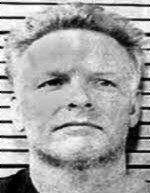 James Hicks
Serial killer · USA · 1977
James Hicks pled guilty to two counts of murder. He was sentenced to 10 years i…
3 victims
James Hicks
Serial killer · USA · 1977
James Hicks pled guilty to two counts of murder. He was sentenced to 10 years i…
3 victims
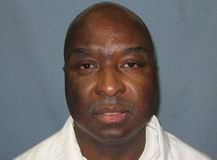 Holly Wood
Murderer · USA · 1993
Holly Wood (DOC# 00Z573) was sentenced to death in Alabama and was executed on…
1 victim
Holly Wood
Murderer · USA · 1993
Holly Wood (DOC# 00Z573) was sentenced to death in Alabama and was executed on…
1 victim
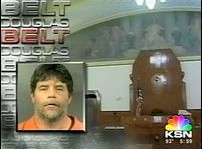 Douglas Belt
Murderer · USA · 2002
Name: Douglas Belt Douglas Belt was sentenced to death in 2004. The appeal resu…
1 victim
Douglas Belt
Murderer · USA · 2002
Name: Douglas Belt Douglas Belt was sentenced to death in 2004. The appeal resu…
1 victim
- Gender
- male
- Country
- USA
- Location
- New Castle County, Delaware, USA
- Date of birth
- August 19, 1963
- Age at first offence
- 29
- Characteristics
- domestic violence, rape, motive unclear, murder-for-hire
- Victim profile
- Gwendolyn Weeks, 27 (his estranged wife) and Craig Williams, 33 (her boyfriend)
- Method of murder
- Shooting
- Date(s) of murder
- April 10, 1992
- Years active
- 1992
- Date of arrest
- Same day
- Status
-
Executed
Executed by lethal injection in Delaware on November 17, 2000
Case details
Dwayne Weeks was convicted in Delaware of the 1992 murder of his estranged wife, Gwendolyn Weeks, and the murder of her friend and co-worker, Craig Williams. Weeks pleaded guilty to the first degree murder charges and was sentenced to death. His accomplice, Arthur Govan, was convicted of first degree murder and was sentenced to life in prison without parole.
Timeline
- April 10, 1992 — Gwendolyn Weeks called the 911 center of the New Castle County Police reporting forced entry and stating that her estranged husband was trying to get into her apartment; she later cried out "He's in here. He has a gun. A gun." Officers arrived too late to prevent the murders.
- September 7, 1993 — The trial judge sentenced Weeks to death and Govan to consecutive life terms.
- January 26, 2000 — The United States Court of Appeals for the Third Circuit considered Weeks’s appeal from the denial of his petition for a writ of habeas corpus.
- November 17, 2000 — Weeks was executed by lethal injection in Delaware.
The offence
Murders of Gwendolyn Weeks and Craig Williams
At 8:36 p.m. on April 10, 1992, the 911 center of the New Castle County Police received a call from Gwendolyn Weeks. She requested police come immediately to her apartment and said that someone was trying to get into her apartment and that she believed it was her estranged husband, Darryl Weeks. She explained she lived in a high-security apartment complex where all visitors were announced by security guards and that she had not authorized any visitors.
The 911 tapes captured the events that followed. Approximately four minutes after calling the 911 operator, Gwendolyn Weeks became alarmed and frightened and cried out "He's in here. He has a gun. A gun." Several gunshots and screams were heard over the open line. Police arrived too late to prevent the murders. The police found evidence of forced entry and the bodies of Gwendolyn Weeks and Craig Williams lying face down in the living room in a pool of blood. The police later determined both victims were killed while they were huddled on the floor of her apartment.
Gwendolyn Weeks was shot twice in the head, and Craig Williams sustained defensive gunshot wounds to his right hand and upper extremity, two wounds to his face, and a fatal wound to his head. Both victims died virtually instantaneously.
How the murders were described at sentencing
During Weeks’s penalty hearing, Govan testified about Weeks’s plot and involvement. Govan testified that Weeks learned Gwendolyn Weeks was going to divorce him, and that Weeks did not want to divide property or pay alimony. Govan described Weeks devising a plot to murder his wife, stating: "[h]e [was] not going to let her take all he worked for, cars, stuff like that."
Govan testified that three days before the killings, Weeks tried to hire him to kill his wife and offered to pay him $500 or $250 and a gun, an offer Govan claimed he turned down. Govan testified Weeks wanted him to murder her rather than Weeks doing it himself so Weeks could pass a polygraph test if asked if he killed his wife.
On the day of the murders, Weeks drove Govan to St. Francis Hospital to case the area and familiarize himself with where Gwendolyn Weeks worked, the exit she used, and where she parked her car. Weeks and Govan then returned to St. Francis Hospital in the early evening to catch Gwendolyn Weeks after she was scheduled to get off work at 8:30 p.m. After unsuccessfully searching for her car, Weeks telephoned one of her co-workers and learned she was not at work. Weeks and Govan then sped to Gwendolyn Weeks’s high-security apartment.
Govan testified that Weeks told him, "he going to get the same thing she get." Weeks parked in a nearby church parking lot to avoid detection by apartment complex security, proceeded to the apartment, and gave Govan a .32 caliber gun with instructions to knock, ask for a cup of sugar, and pretend to be a neighbor. When no one answered, Govan began to walk away; Weeks then pulled out a .38 caliber handgun, forced the door open, and entered the apartment with Govan.
Govan testified Weeks ran straight at Gwendolyn Weeks, wrestled with her while she was on the phone as she tried to move the gun away from her head, and then shot her twice in the head. Govan testified he fired two shots into the floor to make Weeks think he had shot Williams. Govan also testified Weeks turned and shot Williams several times in the head.
Govan testified that hoping to conceal the nature of the murders, Weeks took Gwendolyn Weeks’s purse so the murders would look like a robbery, and the two fled as police sirens approached. Govan testified Weeks drove to a lot owned by his father, hid the purse and murder weapons in one of the trucks, dropped Govan off at the train station, and told him, "I got her like I wanted to get her. I got her good. Got both of them good." Weeks then returned home to Weeks’s girlfriend Robinson.
Govan testified that part of the master plan was for Robinson to provide Weeks an alibi by pretending Weeks was with her in Philadelphia during the time of the murders. Govan testified he admitted lying to police to appear more innocent.
In testimony about the scene’s arrangement, the trial court asked Govan how Gwendolyn Weeks was found lying on top of Williams if she was shot first; Govan said he did not know but acknowledged that when he left the apartment that night, Gwendolyn Weeks was lying on top of Williams.
Physical evidence and number of shootings
Police determined two guns were fired in Gwendolyn Weeks’s apartment that night: a .38 caliber gun with copper jacketed slugs and a .32 caliber gun using lead bullets. Two weapons were recovered from a junk yard owned by Weeks’s father: a .38 caliber handgun and a .32 caliber handgun.
The forensic evidence revealed the .38 caliber gun was used to shoot Gwendolyn Weeks and fired one shot into the head of Williams. The .32 caliber gun was shot six times, twice into the floor and four times into Williams.
In the account of police evidence described during Weeks’s later proceedings, police said Mrs. Weeks was shot twice in the head and Craig Williams was shot three times in the head, with additional wounds to his arm and chest; the arm wound was described as coming as he raised his arm in an attempt to defend himself.
Police also said Weeks stole Gwendolyn Weeks’s purse to make it appear the murder had been part of a robbery.
Investigation
Focus on Dwayne Weeks and domestic violence history
The police investigation focused immediately on Dwayne Weeks, the husband of Gwendolyn Weeks since 1983. Police discovered that during their marriage, Dwayne Weeks subjected Gwendolyn Weeks to possessiveness, irresponsible behavior, and abuse. In September 1991, Gwendolyn Weeks left her husband and moved into a high-security apartment complex selected to protect her from her abusive husband. After separation and moving into her own apartment, she contacted an attorney to discuss possible divorce proceedings.
Soon after the murders, a police broadcast listed Weeks as a suspect. That same evening, police stopped a vehicle leaving Dwayne Weeks’s residence with Weeks, his girlfriend Tammy Robinson, and her daughter. Weeks and Robinson were transported to police headquarters.
Statements by Tammy Robinson and Arthur Govan
Robinson gave three statements on the night of the arrests. Initially, she told police Weeks had been with her the entire day. She later told police Weeks returned home at around 9 o’clock that evening and she had seen a gun in a brown case on the kitchen table while she was at Weeks’s house. Eventually, Robinson confessed that Weeks said he was out with his friend Arthur Govan and told her to lie if asked about his whereabouts that evening.
Late that evening, Govan learned Weeks and Robinson had been taken into custody and police wanted to speak with him about the murders. Govan decided to go to police and tell his side. The next day, after Miranda warnings, Govan confessed that he was present during the murders but claimed Weeks was the only shooter. Govan explained Weeks called him and tried to hire him to kill his wife after Weeks received divorce papers earlier that week. Govan said he refused Weeks’s offer but accompanied Weeks to his wife’s apartment and was present during the murders.
Govan explained that after the murders, Weeks took his wife’s pocketbook and the two men drove to a junk yard owned by Weeks’s father to hide the gun and the pocketbook. Govan then said Weeks drove him to the train station and returned home to pick up Robinson and her daughter. Govan repeated these statements two days later when police asked more specific questions.
Search warrant and weapon identification
The police obtained a search warrant. When they searched Weeks’s home, they found a gun box for a .38 caliber pistol on a bookshelf in Weeks’s living room. The serial number on the gun box matched one of the murder weapons recovered later at Weeks’s father’s junk yard. Police determined two guns were fired in the apartment that night and connected them to the weapons recovered from the junk yard.
Police recovered from the junk yard a partially used box of .38 caliber copper jacketed bullets, a make-up kit, a purse, a wallet, a checkbook, an address book, and various cards and papers. Gwendolyn Weeks’s name appeared on the address book and the checkbook.
Arrest
That same evening, a police officer stopped a vehicle leaving Dwayne Weeks’s residence with Weeks, his girlfriend Tammy Robinson, and her daughter. Weeks was arrested and both Weeks and Robinson were transported to police headquarters.
Trial
Joint indictment and severance
Weeks and Arthur Govan were jointly indicted in Delaware for, among other charges, two counts of first degree murder for the deaths of Gwendolyn Weeks and Craig Williams. The case was listed before the Delaware Superior Court, where Judge John E. Babiarz presided throughout. The trial court granted the State’s motion to sever the trials and scheduled Weeks’s trial after Govan’s.
Govan’s trial
Govan’s trial proceeded before a jury. The court admitted Govan’s earlier statements as well as his confession after attempts to suppress three statements to police. The jury convicted Govan on all counts of the indictment. The jury in the penalty hearing recommended that the judge sentence Govan to death. The trial judge reserved making a decision so that he could sentence Govan and Weeks together.
Events leading to Weeks’s guilty plea
On June 15, 1993, attorneys for the State, Weeks, and Govan met with the trial judge to discuss a potential plea of guilty by Weeks. Counsel for Weeks, John Willard, told the judge that Weeks intended to plead guilty and described the parents’ views that it was in Weeks’s best interest to plead and face a jury rather than try the case. Willard informed the judge that Weeks was extremely deeply religious and that this was part of Weeks’s motivation for the plea. Willard said Weeks was physically ill about it and discussed the State’s continued intent to seek the death penalty.
After advising that if Weeks chose to plead, he should do so the next day, the judge discussed uncertainty around whether Govan would testify and how that could affect the proceeding. The judge stated that if Govan agreed to testify voluntarily he would testify, but if Govan asserted the Fifth Amendment he would not testify unless the privilege was eliminated by conviction. The judge also stated he would not allow the State to call him simply to have him assert the Fifth Amendment.
During the June 15, 1993 conference, the trial judge explained: [A]s far as I'm concerned, as of now, Govan is not going to testify, and if the State plans to call him, they either have to supply me with a document that says that he will testify voluntarily, or present argument as to how I could compel him to testify. (emphasis in original)
Guilty plea hearing
On June 16, 1993, Weeks and his counsel appeared in court to enter his guilty plea. At the beginning of the plea hearing, Willard told the court that a doctor briefly examined Weeks and found him competent to stand trial and to assist at trial. Willard advised that the State agreed to drop other charges if Weeks pled guilty to first degree murder and felony murder, while the plea would not affect the State’s right to aggressively seek the death penalty.
Willard stated Weeks was extremely religious and at peace with God and described Weeks praying with him about the decision. Willard said he had advised Weeks there would be no trial record for purposes of an appeal and that the Supreme Court would only review the penalty. Willard also said he advised Weeks of aggravating factors and reviewed the evidence to be submitted.
Weeks was sworn in and questioned by the trial judge at length. Weeks admitted to having shot and killed Gwendolyn Weeks and Craig Williams on April 10, 1992. The judge asked about Govan’s possible refusal to testify and how it could affect Weeks’s decision to plead guilty. The judge asked Weeks: Q: [Judge] One other matter that I meant to mention to you and I'll ask you about it now. I was advised yesterday that Mr. Govan may elect not to testify against you; were you aware of that fact? A: [Weeks] No, I wasn't, Your Honor. Q: [Judge] Let me be more specific about it. I know there have been discussions between Mr. Govan's lawyers, one of whom is present in the courtroom right now, Mr. Pankowski, and the State about whether he would testify in your trial against you, either in the guilt part of the trial or in the penalty part of the trial. They have been talking about whether that would happen. One of Mr. Govan's lawyers was present at the conference that occurred yesterday between your lawyer and the State's lawyers, and I was advised then and the State was advised then, that Mr. Govan would assert his Fifth Amendment Right, that is, the right to remain silent, if he were called as a witness in your case. It's an open question as to whether I could then compel him to testify or let the State use his statements against you and not decide it. There was uncertainty about whether that could be used against you, but as of yesterday afternoon, Mr. Govan was going to stand on that Fifth Amendment Right and call into question the State's ability to use any of that material against you. Now, were you aware of that? A: [Weeks] Yes, sir. Q: [Judge] Have you understood what I've said? If you have any questions, please ask me and I'll try to explain further. A: [Weeks] No, sir. Thank you, sir, I understand. Q: [Judge] You do understand that? A: [Weeks] Yes. Q: [Judge] Would that have made a difference in your decision to plead guilty? If it does -- A: [Weeks] No, sir. THE COURT: Very well. I will accept the plea as being freely, voluntarily and intelligently entered and judgments of guilt are entered, and we'll proceed to jury selection on the penalty phase forthwith. (App. at 43-44)
The trial judge accepted the plea as freely, voluntarily, and intelligently entered and entered judgments of guilt.
Sentencing
Penalty hearing
During Weeks’s penalty hearing, the State presented evidence including testimony from friends, relatives, and co-workers of Gwendolyn Weeks and Craig Williams. Officers and detectives testified about guns, bullets, and shell casings, and an FBI agent testified regarding forensic evidence. An attorney testified that she met with Gwendolyn Weeks regarding divorce and the legal implications of her husband’s recent request to refinance their home.
Robinson testified that she saw a gun in a brown case on Weeks’s kitchen table and that on the night of the murders Weeks left after 6 p.m. and did not return until around 9 p.m. Robinson testified Weeks instructed her to lie to the police that he was with her the entire evening.
Govan testified under an agreement. In exchange for his testimony, the prosecution agreed not to use his testimony against him in any other proceeding. The prosecution also agreed to recommend that the court consider Govan’s testimony a mitigating factor in sentencing.
At the conclusion of Weeks’s penalty hearing, the jury deliberated for two days before finding that the aggravating circumstances outweighed the mitigating circumstances on each count.
Sentence
On September 7, 1993, the trial judge sentenced Weeks to death and Govan to consecutive life terms. In another described account, the judge sentenced Weeks to death and cited his previous criminal record and that he masterminded the attack. In accounts of Govan’s sentencing, the judge sentenced him to life in prison, with descriptions including compliant personality and limited mental capacity.
Appeals
State proceedings
Weeks exhausted his direct appeal to the Delaware Supreme Court, which rejected his claims of error and affirmed. After that, Weeks filed a motion for state post-conviction relief in which he argued ineffective assistance of counsel for multiple reasons including:
- his attorney did not advise him that Govan would refuse to testify against him prior to the guilty plea,
- his attorney did not advise him that if Govan persisted in refusing to testify then Govan’s out-of-court statement to the police would not be admissible against Weeks,
- his attorney failed to tell him the State would present the same evidence in the penalty hearing that it would have presented at trial on guilt.
Weeks’s post-conviction petition included an assertion that Weeks told Willard that he supported pleading guilty because he believed it would spare the victims’ family and his family additional trauma from having details and circumstances of the crimes brought out in court.
Judge Babiarz held an evidentiary hearing on September 8, 1995 at which both Weeks and his counsel testified. The written opinion denying post-conviction relief stated the resolution of Weeks’s claims rested primarily on the credibility of Weeks and his counsel and found that Weeks was informed of Govan’s indecision. The court dismissed Weeks’s claims as unsubstantiated. The Delaware Supreme Court affirmed in a brief table opinion, and Weeks was scheduled for execution.
Federal habeas corpus appeal
On December 20, 1996, Weeks filed a federal habeas corpus petition under 28 U.S.C. § 2254. The district court denied the petition and certified the ineffective assistance claim for appeal and granted a stay of execution pending appeal.
Weeks’s appeal was heard by the United States Court of Appeals for the Third Circuit. The court addressed Weeks’s claim of ineffective assistance connected to his guilty plea and affirmed denial of the writ of habeas corpus.
The Third Circuit considered the Strickland standards for ineffective assistance and the Hill v. Lockhart prejudice standard in guilty plea cases. The Third Circuit concluded Weeks failed to show counsel’s performance was objectively deficient and also concluded that Weeks failed to demonstrate prejudice.
The Third Circuit described the guilty plea colloquy and stated that the trial judge told Weeks it was an open question whether Govan’s prior statements could be compelled or used against him. The Third Circuit concluded this colloquy belied Weeks’s assertion that he would have insisted on going to trial if he had known the legal ramifications of Govan’s refusal to testify.
Outcome
Weeks pleaded guilty to first degree murder for the April 10, 1992 killings of his estranged wife, Gwendolyn Weeks, and her friend and co-worker, Craig Williams. The jury recommended death, and the trial judge sentenced Weeks to death. Weeks’s appeals and post-conviction proceedings were unsuccessful, and the U.S. Supreme Court declined to act on his application for relief, while lifting a stay issued by the federal Third Circuit. Weeks was executed by lethal injection in Delaware on November 17, 2000.
Aftermath
Execution
Weeks died early on November 17, 2000. Witnesses observed through windows from a separated room as Weeks was strapped to a gurney and wheeled into the Delaware Correctional Center execution chamber. An intravenous bag and tubing were inserted into his arm and lethal substances began flowing.
Weeks made a final statement. Weeks said: "Over eight years ago, I asked the Lord into my life and make me a new creature in here," "I say to all who hear my voice: I hope and pray that you, too, ask the Lord to come into your heart and that you are saved."
Moments after his statement, Weeks gasped audibly, and he was pronounced dead after the curtains were pulled. A representative from the Delaware Department of Corrections informed protesters outside that Weeks had been put to death, and protesters remained outside singing hymns of hope and mourning.
Witnesses and officials present
Official witnesses for the execution included Howard Wilson (representing the Violent Crimes Compensation Board); Delaware State Police Sgt. John R. Evans; Smyrna Police Chief Richard Baldwin; Martin W. Johnson III of the Delaware Police Chiefs Council; deputy attorneys general Marsha Epstein and Cynthia Kelsey; Sen. James T. Vaughn Sr., Rep. Bruce C. Ennis, Rep. George R. "Bobby" Quillen, and Clifford G. "Biff" Lee. Alternate witnesses included DOC staffers Joyce A. Talley and Linda A. Riddagh.
Protest activity
Around 100 protesters gathered outside the prison gates, praying, waving signs, and ringing bells opposing capital punishment. Protesters later remained outside after they did not immediately receive word of Weeks’s death.
Other details
People and relationships
- Dwayne Weeks was the husband of Gwendolyn Weeks and an estranged husband at the time of the killings.
- Gwendolyn Weeks was 27.
- Craig Williams was 33 and was Gwendolyn Weeks’s friend and co-worker.
- Arthur Govan was Weeks’s accomplice.
- Tammy Robinson was Weeks’s girlfriend at the time of the arrest.
Religion and statements during proceedings
During the June 15, 1993 discussion, Willard described Weeks as extremely deeply religious and praying about his decision. In the plea hearing, Weeks admitted his crimes and answered the trial judge’s questions about Govan’s possible refusal to testify and whether that would change his decision to plead guilty, stating it would not.
In his post-conviction testimony, Weeks testified he pled guilty to avoid putting the victims’ family and his family through trauma of re-living the events of the killings. Weeks also testified that if anyone had explained the legal ramifications of Arthur Govan not testifying, and Weeks knew pleading guilty would not spare anyone, Weeks would not have pled guilty and would have gone to trial.
Search materials recovered
During the investigation, officers recovered from the junk yard a partially used box of .38 caliber copper jacketed bullets, a make-up kit, a purse, a wallet, a checkbook, an address book, and various cards and papers, including documents with Gwendolyn Weeks’s name.
Spotted an error, or have more information about this case?