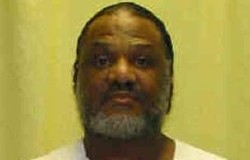
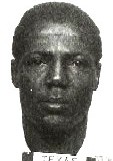
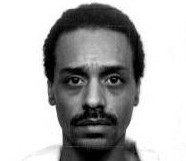
Reginald Brooks
Murderer Ervil LeBaron
Murderer · USA · 1972
Ervil Morrell LeBaron (1925 to August 16, 1981) was the leader of a polygamous…
35 victims
Ervil LeBaron
Murderer · USA · 1972
Ervil Morrell LeBaron (1925 to August 16, 1981) was the leader of a polygamous…
35 victims
 Brian Kevin Rosenfeld
Murderer · USA · 1985
Brian Kevin Rosenfeld Brian Kevin Rosenfeld was sentenced to three concurrent l…
23 victims
Brian Kevin Rosenfeld
Murderer · USA · 1985
Brian Kevin Rosenfeld Brian Kevin Rosenfeld was sentenced to three concurrent l…
23 victims
 Marvin Gray
Murderer · USA · 1975
Marvin Gray was convicted killer who claimed responsibility for 23 slayings and…
23 victims
Marvin Gray
Murderer · USA · 1975
Marvin Gray was convicted killer who claimed responsibility for 23 slayings and…
23 victims
 Yahweh ben Yahweh
Murderer · USA · 1980
Yahweh ben Yahweh was born and legally named Hulon Mitchell Jr. (October 27, 19…
23 victims
Yahweh ben Yahweh
Murderer · USA · 1980
Yahweh ben Yahweh was born and legally named Hulon Mitchell Jr. (October 27, 19…
23 victims
 Russell Ellwood
Murderer · USA · 1991
Russell Ellwood was a former taxi driver. Authorities suspected him of killing…
20 victims
Russell Ellwood
Murderer · USA · 1991
Russell Ellwood was a former taxi driver. Authorities suspected him of killing…
20 victims
 Jimmy Lee Dill
Murderer · USA · 1988
Jimmy Lee Dill was the defendant and death row inmate. · Leon Shaw was the vict…
1 victim
Jimmy Lee Dill
Murderer · USA · 1988
Jimmy Lee Dill was the defendant and death row inmate. · Leon Shaw was the vict…
1 victim
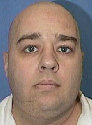 Ivan Ray Murphy
Murderer · USA · 1989
January 9, 1989 — Ivan Ray Murphy and Douglas Stoff went to Lula Mae Denning’s…
1 victim
Ivan Ray Murphy
Murderer · USA · 1989
January 9, 1989 — Ivan Ray Murphy and Douglas Stoff went to Lula Mae Denning’s…
1 victim
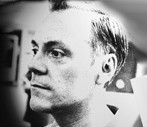 Charles William Yukl
Murderer · USA · 1966
Charles William Yukl was a piano teacher in New York City and also worked in mu…
2 victims
Charles William Yukl
Murderer · USA · 1966
Charles William Yukl was a piano teacher in New York City and also worked in mu…
2 victims
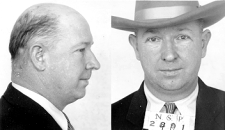 Robert H. White
Murderer · USA · 1928
Robert H. White was born in Texas in 1889 and was 39 at the time of his convict…
1 victim
Robert H. White
Murderer · USA · 1928
Robert H. White was born in Texas in 1889 and was 39 at the time of his convict…
1 victim
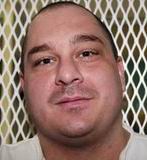 Lee Andrew Taylor
Murderer · USA · 1999
Name: Lee Andrew Taylor · Prison number: #765153 · Other identifiers mentioned:…
1 victim
Lee Andrew Taylor
Murderer · USA · 1999
Name: Lee Andrew Taylor · Prison number: #765153 · Other identifiers mentioned:…
1 victim
- Gender
- male
- Country
- USA
- Location
- Cuyahoga County, Ohio, USA
- Date of birth
- March 20, 1945
- Age at first offence
- 37
- Characteristics
- parricide, history of mental illness, domestic violence, jealousy
- Victim profile
- His three sons, Reginald Jr. (17), Vaughn (15), and Niarchos (11)
- Method of murder
- Shooting ( .38-caliber handgun)
- Date(s) of murder
- March 6, 1982
- Years active
- 1982
- Date of arrest
- Same
- Status
-
Executed
Executed by lethal injection in Ohio on November 15, 2011
Other details
Reginald Brooks was a 66-year-old Black man. His legal outcome was the execution of three death sentences for aggravated murders.
Brooks lived with his wife, Beverly, and their three sons, Reginald Jr (17), Vaughn (15), and Niarchos (11).
His execution took place at the Southern Ohio Correctional Facility near Lucasville. The lethal injection execution began at 1:30 p.m. and he was declared dead at 2:04 p.m.
Before being pronounced dead, Brooks extended the middle fingers of both hands while strapped to the lethal-injection table. Beverly Brooks watched from behind a glass window about 10 feet away. She and witnesses wore matching white T-shirts with pictures of the three boys: Reginald Jr., 17; Vaughn, 15; and Niarchos, 11. Brooks had no final words. The women who witnessed the execution declined to answer questions and did not mention the gesture.
Monica Stephens, Beverly Brooks’ sister and the slain boys’ aunt, spoke after the execution. She said: “We did everything together, good and bad.” She said “I don’t really want to use the word closure,” and: “We’ve been dealing with this every day since 1982. This is another chapter in our lives.” She also said: “Something needs to be done” about the long period between a murder and execution, and: “Something needs to be done about the length of time for a death row inmate to live -- something needs to be done about that,” and: “I wouldn’t want to wish what we witnessed today on anyone under any circumstances.”
After the execution, Sister Helen Prejean joined a gathering of mostly Democratic lawmakers at the Statehouse to urge an end to capital punishment. Prejean said: “The states that practiced slavery, the states that lynched the most people, the states that quote the Bible the most are the big executing states,” and: “I don’t know where Ohio fits in this, but you all are really in there among the top executors in the country.” Prejean later said: “We can be safe without the killing.”
Brooks requested a “last meal” that included lasagna, chili-cheese fries, garlic bread, moose-tracks ice cream, chocolate cake, caramel candy, beef jerky, cashews, almonds, and root beer. A prisons spokesman said Brooks slept from about 11 p.m. Monday to about 5:30 a.m. Tuesday, made no phone calls, and did not write any letters.
Timeline
- March 6, 1982 — Beverly Brooks left home to go to work, leaving behind her three sons who were asleep, and her husband Reginald Brooks, who was awake and upon whom she had served divorce papers two days earlier; at roughly 8:00 a.m. Brooks shot each son in the head while they were asleep; Beverly returned home and discovered the dead children; Brooks boarded a bus to Las Vegas, Nevada; Brooks was apprehended in Utah on March 8.
- February 24, 1982 — Brooks obtained a cash advance in the amount of $140 on his VISA card.
- February 25, 1982 — Brooks traveled to North Olmsted and purchased the murder weapon and ammunition.
- March 8, 1982 — Police took Brooks into custody in Utah after tracing the credit card used to purchase his bus ticket.
- March 10, 1982 — A grand jury indicted Brooks on three counts of aggravated murder.
- May 9, 1983 — A psychiatric hearing was held to determine if Brooks was competent to stand trial.
- September 23, 1983 — A three-judge panel found Brooks guilty of the aggravated murders of his sons.
- November 29–30, 1983 — A mitigation hearing was held; the three-judge panel found aggravating circumstances outweighed mitigating factors; Brooks was sentenced to death for each of the murders.
- August 15, 1985 — The court of appeals affirmed the sentence of the trial court.
- November 15, 2011 — Brooks was executed by lethal injection; he was declared dead at 2:04 p.m.
Background
Brooks’ family relationship deteriorated after 1976. He quit his job in 1976 and stayed at home, leaving Beverly Brooks as the sole support for the family. Weeks before the killings, an argument over schoolwork escalated into a physical altercation between Brooks and two of his sons; once the boys subdued their father, Brooks was heard telling his eldest son, “you're dead.”
In his household, Brooks’ mental illness was raised as an explanation for his actions. Brooks’ legal and factual proceedings included arguments that his paranoid schizophrenia affected his capacity. Beverly Brooks stated she did not believe mental illness drove Brooks to kill the boys and said Brooks killed the boys to get back at her for the divorce.
Investigation
Beverly returned from work and discovered that at least one or two sons were still in bed. She heard the stereo playing and tried to locate her husband, who was not to be found. She saw that Niarchos had been shot in the head. She then discovered the other two sons had also been shot in the head. She screamed and left the house, and shortly thereafter called the police.
Three East Cleveland police officers responded and found three deceased males, each with a gunshot wound to the head. Niarchos had been shot through the covers pulled up over his head. There was no evidence the house had been ransacked and no indication of a struggle.
The police discovered Brooks purchased a Continental Trailways bus ticket on the morning of the murders to travel from Cleveland to Las Vegas. The bus departed at approximately 10:40 or 10:55 a.m. Authorities notified the bus route in Utah.
Arrest
On March 8, 1982, Brooks was apprehended in a Continental Trailways bus en route to Las Vegas by police in Beaver City, Utah. After reading Brooks’ Miranda rights, police said he indicated he understood his rights; he refused to talk. Police inquired about his luggage; Brooks responded he had only one small maroon bag. Police confiscated the bag and took him into custody. An officer present recalled seeing two baggage claim tickets in Brooks’ left breast pocket.
Forensic evidence and recovery
On March 18, 1982, an officer asked a Continental Trailways bus driver to check the baggage claim area at the Las Vegas station for a bag that had originated in Cleveland. On March 19, 1982, the driver reported finding a red suitcase in the Las Vegas bus station originating in Cleveland.
On March 20, 1982, the red American Tourister suitcase with a combination lock was delivered to officers in Beaver City. Beverly Brooks had noticed her suitcase was missing following the murders; it matched the description of the suitcase found in Las Vegas. She gave the East Cleveland police the combination and permission to open the suitcase. Brooks was present when officers opened the suitcase.
Upon opening, police found personal items and a black box with a .38 Special RG Model 40 revolver fully loaded with six live rounds, and a box of ammunition. Latent fingerprints on the gun box and two cartridges matched Brooks’ fingerprints. Ballistics experts reported that two of the three slugs recovered from the scene were fired from the same .38 Special. The third slug had been so mutilated that no absolute conclusion could be drawn.
Authorities traced the gun to one Brooks had purchased on February 25, 1982. Gun-powder nitrate was found on the right sleeve of Brooks’ coat.
The offence
Brooks was convicted for the 1982 aggravated murders of his three sons: Reginald Jr (17), Vaughn (15), and Niarchos (11), in their beds in East Cleveland in 1982. Prosecutors said the murders followed years of tension in the Brooks household that began to surface after Brooks quit his job in 1976.
Brooks had planned the crime about 10 days before the murders. He obtained an advance on his credit card and traveled to North Olmsted to buy a .38-caliber handgun and ammunition. A few days later, Beverly Brooks filed for divorce. After Beverly left for work on March 6, 1982, Brooks used the gun to kill all three sons in their beds. He turned up the stereo so neighbors would not hear the gunshots. He packed the gun in a suitcase, bought a Continental Trailways bus ticket, and left for Las Vegas.
At trial, the record included a neighbor’s testimony that Brooks walked his dog at approximately 7:30 a.m. A witness, Vicki Hayes, testified she heard a “loud sound” around 8:00 a.m. and heard a stereo playing loudly the remainder of the day. A friend, Vonda Jackson, called the home sometime after 9:00 a.m.; Brooks answered and when asked if she might speak with Reginald Jr., Brooks responded, “I am afraid not.” Vonda called three more times until 11:00 a.m., and no one answered.
Brooks’ defense included arguments that the killings were related to his mental illness. Beverly said Brooks killed the boys to get back at her for the divorce. She stated she did not believe mental illness drove Brooks to kill the boys, and that this was a belief Brooks’ defense lawyers had put forth to appeal the death sentence.
Trial
Brooks pleaded not guilty to the three counts of aggravated murder. The trial court referred him for a pre-trial competency hearing.
At the competency hearing, court-appointed psychiatrist Dr. Aaron Billowitz testified Brooks suffered from schizophrenia, and the court found Brooks “competent to stand trial,” reasoning that he had the “ability to understand the charge against him and work and cooperate with his attorneys in his defense.”
Brooks waived his right to a jury trial and proceeded to trial before a three-judge panel.
During the guilt phase, Brooks prohibited his lawyers from presenting an opening or closing statement, putting on any witnesses, or cross-examining certain witnesses.
On September 23, 1983, the three-judge panel found Brooks guilty of the aggravated murders and referred him for a presentence investigation and psychiatric evaluation.
At the mitigation hearing on November 29–30, 1983, Brooks presented three witnesses: Dr. Stanley Althof, Dr. Kurt Bertschinger, and Paul Hrisko. Dr. Althof testified Brooks suffered from paranoid schizophrenia and that it “impair[s] a person,” “reduce[s] his judgment, . . . reduce[s] his control, and likely did contribute to the commission of some crime.” Dr. Bertschinger testified Brooks suffered from psychogenic amnesia, preventing him from having “conscious recall of the alleged criminal activities in which he was involved.” Because of the amnesia and lack of collateral information, Bertschinger testified he could “make no opinion as to mitigating circumstances.” Hrisko indicated Brooks refused to testify at both phases and refused to submit to a sodium-amytal test.
The State presented witnesses including James Hughey, Brooks’ wife Beverly, and Dr. Billowitz. The State called Hughey, described as a Cleveland police officer, and Beverly Brooks to testify that in the early 1970s Brooks took college-level psychology courses and that psychology-related books were recovered from Brooks’ residence after the murders. Billowitz testified Brooks “was legally sane at the time of the act.” On cross-examination, Billowitz conceded Brooks “was schizophrenic at the time of this act” and “may have experienced paranoid delusions” at that time but nonetheless concluded Brooks “maintained the capacity to appreciate that killing was wrong and ... had the capacity to conform his conduct to the requirements of the law (as indicated by the great amount of circumstantial evidence showing detailed planning and awareness of escaping detection[)].”
On November 30, 1983, the three-judge panel sentenced Brooks to death for each of the murders. In its written opinion, the panel recognized Brooks “suffered from a mental illness—schizophrenia—” “before, during, and after commission of the [murders],” but concluded the “mental illness or defect did not cause him to lack substantial capacity to appreciate the criminality of his conduct or conform his conduct to the requirements of the law.” The panel acknowledged Brooks’ “family relationship [had] steadily deteriorated” since 1976 and that it was “entirely conceivable” Brooks was under “extreme stress” due to the deteriorated relationship, lack of employment, and the threat of divorce, including being served with divorce papers two days before the murders. The panel found Brooks’ “free will was not impaired by” these events or his mental illness.
The panel stated: “in a single course of conduct, with prior calculation and design, chose to take a gun to the heads of his three sons and execute them through a twisted sense of jealousy, hatred, or despair. He had the ability to refrain from commission of those heinous acts.”
The panel “rejected [Brooks’] claim of psychogenic amnesia,” reasoning that his amnesia was “only about those things that were incriminating,” and that he remembered non-incriminating incidents, with the court stating: “his denials were lies, not memory lapses, and . . . he clearly was not a victim of psychogenic amnesia.” The court “conclude[d] beyond a reasonable doubt that the aggravating circumstances outweigh all of the mitigating factors.”
Appeals
Brooks appealed to the court of appeals. A motion to withdraw his appeal was denied, and on August 15, 1985, the court of appeals affirmed and issued a separate opinion as required by R.C. 2929.05(A).
Brooks appealed further. The Supreme Court case discussed included issues raised by Brooks, including ineffective assistance claims related to competency and sentencing. The decision reflected that the Supreme Court affirmed the judgments and upheld the death sentence.
The legal discussions included claims that defense counsel’s failure to introduce testimony and report at the competency hearing constituted ineffective assistance, including discussion of Strickland standards and R.C. 2945.37. The Supreme Court also addressed arguments about failure to secure an opinion by an independent psychiatrist prior to the competency hearing.
The Supreme Court also addressed Brooks’ challenge to the weighing of aggravating circumstances against mitigating factors and rejected arguments about uncertainty regarding state of mind on the morning of the murders, mental illness, prior criminal record, and proof of deliberate, predetermined planning. The court included its independent weighting under R.C. 2929.05(A) and held the death sentence was not excessive or disproportionate, and affirmed the convictions and sentence.
Brooks later pursued federal habeas corpus relief. The Court of Appeals held that the district court’s denial was affirmed and addressed ineffective assistance during the penalty phase, concluding it was without merit under AEDPA standards.
Outcome
On November 15, 2011, Reginald Brooks was executed by lethal injection in Ohio at the Southern Ohio Correctional Facility. He died at 2:04 p.m. Brooks received a death sentence for each of the three murders, to be carried out concurrently, which was affirmed through direct appeal and subsequent habeas proceedings.
Spotted an error, or have more information about this case?