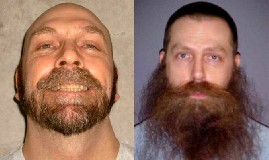
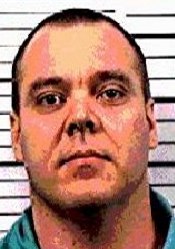
Gary Roland Welch
Murderer Brian Kevin Rosenfeld
Murderer · USA · 1985
Brian Kevin Rosenfeld Brian Kevin Rosenfeld was sentenced to three concurrent l…
23 victims
Brian Kevin Rosenfeld
Murderer · USA · 1985
Brian Kevin Rosenfeld Brian Kevin Rosenfeld was sentenced to three concurrent l…
23 victims
 Russell Ellwood
Murderer · USA · 1991
Russell Ellwood was a former taxi driver. Authorities suspected him of killing…
20 victims
Russell Ellwood
Murderer · USA · 1991
Russell Ellwood was a former taxi driver. Authorities suspected him of killing…
20 victims
 Robert Martines Perez
Murderer · USA · 1994
Name: Robert Martines Perez · Other name used in proceedings: Robert Martinez P…
15 victims
Robert Martines Perez
Murderer · USA · 1994
Name: Robert Martines Perez · Other name used in proceedings: Robert Martinez P…
15 victims
 Billy Frank Vickers
Murderer · USA · 1993
Billy Frank Vickers Vickers was executed by lethal injection in Texas on Januar…
14 victims
Billy Frank Vickers
Murderer · USA · 1993
Billy Frank Vickers Vickers was executed by lethal injection in Texas on Januar…
14 victims
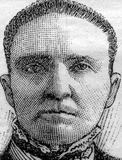 Emeline Meaker
Murderer · USA · 1880
Emeline Meaker (sometimes reported as Lucy Emeline Meaker) was convicted of mur…
1 victim
Emeline Meaker
Murderer · USA · 1880
Emeline Meaker (sometimes reported as Lucy Emeline Meaker) was convicted of mur…
1 victim
 Maninder Pal Singh Kohli
Murderer · United Kingdom · 2003
Maninder Pal Singh Kohli murdered Hannah Foster, a 17-year-old British student,…
1 victim
Maninder Pal Singh Kohli
Murderer · United Kingdom · 2003
Maninder Pal Singh Kohli murdered Hannah Foster, a 17-year-old British student,…
1 victim
 Mark Martin
Murderer · United Kingdom · 2004
Mark Martin (born 1981 in Nottingham, England) was a British murderer. He kille…
3 victims
Mark Martin
Murderer · United Kingdom · 2004
Mark Martin (born 1981 in Nottingham, England) was a British murderer. He kille…
3 victims
 David Aaron Martinez
Murderer · USA · 1997
David Aaron Martinez was convicted of capital murder in the rape, robbery and s…
1 victim
David Aaron Martinez
Murderer · USA · 1997
David Aaron Martinez was convicted of capital murder in the rape, robbery and s…
1 victim
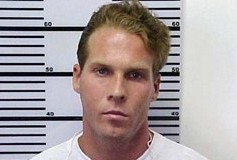 Jesse James Hollywood
Murderer · USA · 2000
Jesse James Hollywood, also known as Sean Michaels, was born January 28, 1980,…
1 victim
Jesse James Hollywood
Murderer · USA · 2000
Jesse James Hollywood, also known as Sean Michaels, was born January 28, 1980,…
1 victim
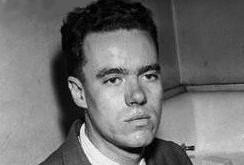 Howard Unruh
Mass murderer · USA · 1949
Howard Barton Unruh (born January 21, 1921, Camden, N.J.) carried out a shootin…
13 victims
Howard Unruh
Mass murderer · USA · 1949
Howard Barton Unruh (born January 21, 1921, Camden, N.J.) carried out a shootin…
13 victims
- Gender
- male
- Country
- USA
- Location
- Otta County, Oklahoma, USA
- Date of birth
- August 21, 1962
- Age at first offence
- 32
- Characteristics
- —
- Victim profile
- Robert Dean Hardcastle, 35
- Method of murder
- Slashing with bottle
- Date(s) of murder
- August 25, 1994
- Years active
- 1994
- Date of arrest
- Same day
- Status
-
Executed
Executed by lethal injection in Oklahoma on January 15, 2012
Case record — Gary Roland Welch
Parties
- Defendant: Gary Roland Welch (also referenced as Gary Welch and Gary Roland Welch)
- Co-defendant: Claudie Conover / Claudie Delbert Conover
- Victim: Robert Dean Hardcastle
Background
Gary Roland Welch was an Oklahoma death row inmate. He was convicted of first degree murder and sentenced to death for the killing of Robert Dean Hardcastle in Miami, Okla.
Welch maintained that he killed Hardcastle in self-defense. During a clemency hearing he appeared defiant and unrepentant.
Welch attempted suicide in his cell with a contraband razor blade after his clemency hearing. He recovered and was deemed competent for his execution.
The death sentence was affirmed on appeal and Welch’s appeals were denied.
The offence
Welch and his co-defendant Claudie Conover were convicted of the first degree murder of Robert Hardcastle. The killing occurred after disputes involving drugs.
Court findings and witness accounts described:
- Welch and Conover assaulted Hardcastle outside Hardcastle’s duplex and then continued assaulting him in a ditch at the end of the street.
- Witnesses said Welch punched and stabbed Hardcastle, and slashed him with a broken beer bottle.
- Forensic evidence at trial indicated Hardcastle died from stab wounds and other incision wounds.
- Investigators and witnesses described Hardcastle as being attacked with a knife and a broken bottle, with multiple wounds.
- Conover was described as holding Hardcastle down during parts of the assault while Welch stabbed and slashed him.
- Welch and Conover fled after the assault, and officers later arrested Welch and Conover.
Earlier on the same day as the killing, Welch pulled a knife on someone else in the Miami area and demanded drugs.
Prosecutors argued Welch killed Hardcastle to send a message about a shipment of drugs that had been sent to the wrong address and turned over to police.
Investigation and arrest
After the killing, Hardcastle died a few minutes after officers arrived. Officers reported identifying Welch as a suspect and that a vehicle and occupants matched descriptions over police dispatch.
Officers arrested Welch and Conover after stopping the car with a marked backup. Officers retrieved a broken knife thrown out of the vehicle prior to its stop. At booking:
- A knife scabbard was taken from Welch’s belt.
- Another knife was found in the car.
Welch was wounded, with a wound that totally penetrated his left forearm. He refused treatment that night. He passed out in his cell and the next day was transferred to a hospital for surgery.
A search of Hardcastle’s duplex revealed a major fight had taken place in the kitchen and inside the front door.
Trial
Charges and conviction
Welch was tried by jury and convicted of First Degree Murder (21 O.S.1991, 701.7).
The felony Information charged that, while acting in concert, Welch and the other defendant:
- did unlawfully, willfully, and feloniously,
- without authority of law,
- with a premeditated design to effect the death of Robert Hardcastle,
- did then and there kill Robert Hardcastle by means of a knife having a sharp and pointed blade and a broken bottle,
- causing mortal wounds from which Robert Hardcastle languished and died.
The jury found the existence of three aggravating circumstances and recommended the punishment of death. The trial court sentenced Welch accordingly.
Pre-trial and trial issues on appeal (direct appeal)
Welch’s direct appeal presented multiple assignments of error. The Court of Criminal Appeals addressed these issues, including:
Hearsay and co-conspirator statement
- At trial, Larry Davis testified that while he and Conover were visiting they heard “banging” noises from the victim’s half of a duplex.
- Davis testified he said he hoped the victim was “winning his wrestling match.”
- Conover responded in a manner the State sought to admit under a co-conspirator hearsay exception.
- On appeal, the Court found the trial court erred in admitting the statement under the co-conspirator exception because there was no evidence of an agreement or joint plan to kill the victim or that the statement was made during or in furtherance of a plan to kill.
- The Court held that the statement was admissible as a present sense impression, and found the error harmless beyond that admissibility.
Prosecutor inquiry into prior convictions; post-arrest silence
- The Court reviewed certain cross-examination inquiries for plain error because no objection had been raised.
- The Court addressed that inquiry into prior convictions was limited to impeach credibility and that prosecutor inquiry into details of convictions may be improper.
- The Court also addressed that referencing post-arrest silence violated due process but was subject to harmless error analysis; it found the error harmless.
Reenactment / demonstration
- The State used a witness and officers to demonstrate the assault events.
- The Court held the demonstration was relevant to illustrating the events in the ditch and was brief and not unfairly prejudicial compared to its probative value.
Jury instructions on lesser included offenses
- Welch challenged jury instructions and claimed the trial court should have instructed on lesser included offenses.
- The Court held that second degree depraved mind murder was not a lesser included offense of first degree malice murder.
- The Court held the record showed an instruction on first degree manslaughter by means of a dangerous weapon was given.
Victim impact evidence (admissibility issues)
- Welch challenged the admission of victim impact evidence.
- The Court found error in aspects of victim impact testimony and discussed that some statements went beyond permissible scope, while other portions were properly admitted.
- The Court stated the effect of improperly admitted victim impact evidence was addressed in mandatory sentence review.
Photographs and autopsy slides
- Welch challenged the admissibility of photographs of the victim and autopsy slides.
- The Court upheld admission, stating they were relevant to establishing the aggravating circumstance.
Ineffective assistance of counsel (trial counsel)
- Welch alleged ineffective assistance for failure to bring out victim’s involvement with drugs and for not cross-examining victim impact witnesses on aspects of the victim’s character, including drug dealing.
- The Court found counsel’s decisions were strategic and declined to find ineffective assistance.
- The Court also addressed allegations that counsel failed to object to improper cross-examination and instructions; it found no prejudice and denied the claim.
Accumulation of errors
- The Court rejected cumulative error because it had found any errors were harmless beyond a reasonable doubt.
Evidence of the offence (trial narrative as described in federal review of the record)
In federal habeas review, the trial evidence described the sequence as including:
- Welch and Conover driving to the home of Johnny Rogers; Welch asked for a “bump” and displayed a knife, demanding drugs.
- Welch continuing to demand drugs until Conover patted him on the back and said “let’s get out of here.”
- Conover going to a duplex owned by Hardcastle where Davis and his wife lived in the front portion and Hardcastle resided in the back.
- Davis and wife hearing banging noises; Conover joking about “someone’s probably getting a spanking over a deal.”
- Hardcastle running yelling he did not have any / did not do it; Hardcastle crouching in a ditch with blood on his hands and face.
- Patricia and Donnie Nading seeing Hardcastle crouched while Conover punched him and Welch stabbed and punched him; Donnie calling police.
- Continued beating and stabbing while another car arrived; Conover leaving the victim and walking back to a car; Conover telling the driver to leave.
- Welch retrieving a beer bottle, smashing it, and using it to stab and slash Hardcastle.
- Rachelle Campbell seeing Conover drive at high speed toward her and Hardcastle covered with blood coming out of the ditch.
- Officer Jim Gambill arriving and hearing Hardcastle say: “Jim, Gary Welch did this shit to me.” He collapsed; officers requested an ambulance; Hardcastle died a few minutes later.
- Officers stopping Welch and Conover in a car; retrieving a broken knife thrown out of the vehicle; finding knives on Welch and in the car.
- Welch sustaining a left forearm wound and undergoing surgery the next day.
Welch testified to self-defense, describing events involving a tattoo discussion and a knife in Hardcastle’s possession, and testified that Hardcastle thrust the knife, wounding Welch in his left arm.
The jury rejected Welch’s self-defense account and found him guilty of first degree murder.
Sentencing
Aggravating circumstances found by the jury
The jury found three aggravating circumstances:
- The murder was especially heinous, atrocious or cruel.
- The defendant was previously convicted of a felony or felonies involving the use or threat of violence to the person.
- There was a probability the defendant would commit criminal acts of violence that would constitute a continuing threat to society.
The aggravating circumstance involving prior violence was supported by prior convictions for:
- Aggravated Assault and Battery on a Police Officer
- Assault and Battery with a Dangerous Weapon, After Former Conviction of a Felony
Victim impact statements and proceedings
Family members presented victim impact statements at sentencing. The statements included descriptions of the impact on family members and included pleas for the death penalty.
In federal habeas review, Hardcastle’s older brother testified with a statement including:
Gary Welch, with the aid of Claudie Conover, in August of '94, ended the life of my younger brother, Bob. Their cruel and inhuman actions have totally altered and devastated the lives of my entire family. The very fact that they, in cold blood, without any remorse, stabbed and mutilated my only brother in broad daylight, in front of numerous witnesses, has caused myself and the remainder of my family unending pain and untold suffering is difficult into words [sic]. I think of my parents who have lovingly devoted their lives to raising two sons who would grow up to be men, married, and raise families of their own, only to have these dreams shattered. I think of myself and the love I've shared with my brother, the experiences growing up, and the interests we shared, and also the bitter disappointment that we won't be able to grow old together as brothers should. Most of all I think of his two little boys, Robert and James. They'll grow up to be men not knowing how much their daddy loved them, and what a kind and gentle person he really was. That, to me, is the biggest crime of all. The actions of Gary Welch and Claudie Conover have altered and changed and devastated the lives, hopes and dreams of my entire family. What is the price to be paid for the actions of these individuals, whose past criminal records and convictions clearly identify them as a menace to society. I've always had the philosophy of live and let live, but there has to be a point when we as a society have to say enough is enough. There are people in this world who are parasites, they feed on the common decent people who work, live and conduct themselves in a decent and responsible manner who do not deserve to be violated by these people that have no sense of right or wrong or just don't care. In this instance I tend to cry for revenge or vengeance. Sometimes it is hard to tell the difference. In the end I hope and pray justice will be served. Q. Mr. Hardcastle, do you have an opinion as to what punishment should Gary Welch have? (Objection and discussion at bench) Q. I know this is difficult for you, but I ask if you'll look at the jury and tell them what you would like to have happen to the man who murdered your brother? A. Gary Welch deserves the death penalty. Give it to him, please. (Vol. 9 at 2115–20.)
Hardcastle’s father, John Edwin Hardcastle, testified with a statement including:
Many repercussions to any crime, repercussions I have, my family has, and I would like to tell you about them. It is a very difficult thing worse, the loss of a son by a father. I was and am still completely devastated over the complete loss of my life will always be there. It will be there forever. I have loving memories of my son, as a baby. As a toddler, he was a little cotton top. He was a mama's baby. I watched him grow and I guided him the best I could growing up. Since he growed into manhood with all my hopes and my dreams for him. He brought into my life two beautiful twin grandsons. Now all the memories that I have of that is overshadowed by the horrible and inhumane way his life ended. My wife and I will never be the same. My son was a part of me and he was a part of her. It's as if that knife went into our hearts as well as his heart. I speak also for my grandsons, Robert and James, who are not old enough to speak for themselves. The loss they suffered and they suffer now, and will all of their lives growing up without their father and without having his love and his guidance for them. One of the hardest things I've ever had to do was to put my two grandsons on my lap, three and a half years old, and tell them that their daddy had been killed, and try to explain to them about death and where their daddy was now. I can't stop thinking of what my son must have suffered. The pain and stark terror when Gary Welch and Claudie Conover took his life. I have never seen and I hope to never see again such cruelty and complete disregard for the human life. Like bloodthirsty animals, they chased my son down and they butchered him with a knife, showing no pity, mercy or feeling. They had opportunities to stop but that wasn't in the plan. I heard the last lady's testimony that Gary Welch threatened her babies to kill them. And I wondered if my grandbabies had been there that day, would they—would he have butchered them, too? Gary Welch, as Pattie and Donnie Nading testified, stabbed and slashed Bobby over and over and over. Look at a man that shows no remorse for what he's done. And his lawyer is gonna to ask you for a reduced sentence, for mercy. And I can't help but thinking that as my son lay in the ditch covered up and was trying to protect himself if he wasn't crying for mercy. But all he got was a knife and a broken bottle. I don't believe it's justice that my son lies in a cold grave and that Gary Welch should live. And I would ask the jury for justice for Bobby and to give this man the justice that they both deserve and I'd ask for the death penalty. Thank you. (Vol. 9 at 2122–24.)
Hardcastle’s mother, Mary Gayle Hardcastle, read a statement including:
On July 17, 1959, God gave us a precious life, our son, Robert Hardcastle. On August the 25th, 1994, his life was taken from us, from his twin sons that were then three years old, from a family who loved him dearly, taken by a brutal, needless murder. We had no choice. We couldn't say goodbye, son, we love you. We couldn't touch his hand to let him know we were there with him. We had no choice at all. Words can never explain the pain it has put into our lives, the agony that we are enduring. The daily thoughts of this brutal day, the scene where he died and how he died. And not one night since his death have I gone to bed without dreaming of what he must have gone through, seeing his butchered body, knowing that he was crying out for help. His neighbor was there at the other side of the house, visiting with one of the murderers. Why? It's another question that we face daily. If we would have just gone by that evening, which wasn't unusual for us to do, maybe things would have been different today. And I've often wondered, too, if his babies were there would they have been dead? Needless to say that the pain has never let up. Twenty months later we cry, we ache each day. We go to the cemetery to find comfort or closeness to Bob. We come home and we pray to God for relief, for understanding. And like my husband just said, if you've ever tried to explain to three year old babies that their daddy is never coming back because he's dead, then maybe you have a real idea of what pain is. We've had to answer questions like: Why is daddy dead? Why did the mean men hurt him? Are they going to hurt us? Will daddy come back and take us on vacation when our piggy bank is full? Which is something Bob had told them they would do. Is daddy going to be back for Christmas? Can daddy see us from heaven? And the list goes on and on. We've nursed both boys through nightmares and we know the hurt and the pain they are having. These two little boys loved their daddy, but now because of two murderous animals, and I do mean animals, they'll have to face life without him. They will never be able to do all the things that fathers and sons do together and have the love that they once shared with him and know that he was there for them. His brother has had to face his pain alone, living so far away from our family. And we thank God every day that we still have him. Robert had a great love for life and for people. His greatest love was for his sons. Love and respect for his grandparents. He wasn't a church person. He had his faults, as we all do, but we loved him with all of our hearts. He loved God at one point in his life and lived and worked for God's cause, going to crusades with the youth of our church. And in his adult years he did stray from God, but we had always hoped that he would come back to what he was taught and what he believed and God does promise us that. No human being deserves to die the death that he did. It was violent, it was brutal and it was needless. And two men have been put on trial for his murder. And there is no doubt that they're the ones who killed him. They planned it. They went to his home in broad daylight and they completed in a very brutal way what they intended to do. And today one of them sits in this courtroom, smug and uncaring. They've never shown one sign of remorse. No shame. Their wives and friends visited with them. They're allowed to hug them, kiss them, touch them, visit with them every week, and we couldn't even say goodbye. Sometimes my husband and I can't even communicate because of this murder. A part of our lives is just one big void. It can't ever be filled or changed or replaced. Our hopes and dreams have been shattered forever. And not only has this been a vast emotional problem to us and his boys, it's placed a number of loads on us that we just don't know how to deal with. I would beg this court and this jury to see that justice is done. And justice to us is no less than the death penalty. Both Mr. Welch and Mr. Conover have a very long and long and vivid history of crimes of brutality. Mr. Conover already was convicted of another murder for which he served only a few years. And this was because he shot a woman for saying something that he just didn't like. Through the jury selection of this trial, Mr. Robertson [defense counsel] has tried to impress on us the unfortunate childhood that Gary had and asked each one of you do you think a person should be given a more lenient penalty. And if what we have been told is true, yes, he did have an undesirable early life. But does this give him the right to live above the laws of God and man, the right to brutally attack another human being, and the right to take a life? I don't believe it does. From the age of two until I was about nine I, too, had a very harsh childhood. My brother and I lived with a very brutal, drunken stepfather who physically abused our mother and both of us. But in spite of our unfortunate childhood, neither my brother [n]or I felt we had the right to disregard the law, to cause pain and suffering to other people through senseless means of brutal behavior. We've tried to live productive lives and raise our children to live the same way, respecting the rights and the laws of others. So, no, I can't believe that Mr. Welch's childhood should excuse him from the things that he has done as an adult, including the murderous act that took my son's life. We've tried to live productive lives and raise our children to live the same way, respecting the rights and the laws of others. So, no, I can't believe that Mr. Welch's childhood should excuse him from the things that he has done as an adult, including the murderous act that took my son's life. I don't believe it does. ... And, again, I say I feel that he should be imposed the death penalty. (Vol. 9, 2128–33.)
(Paragraphs were reproduced as written in the record excerpt, including any run-on or duplicated phrasing.)
Jury questions during sentencing deliberations
During sentencing deliberations, the jury sent two notes:
- “Can life without parole be reduced by appeal or pleas in the future?”
- “Has anybody ever be[en] released with the sentencing of life without parole?”
The trial court’s response to each question was:
- “I am not allowed to answer this question.”
Appeals
Direct appeal — OCCA
The Court of Criminal Appeals affirmed Welch’s conviction and sentence. It denied all assigned errors, including issues regarding:
- hearsay,
- prior convictions and post-arrest silence,
- reenactment,
- victim impact evidence,
- sentencing instructions and aggravators,
- ineffective assistance of counsel,
- and cumulative error.
The Court conducted mandatory sentence review and affirmed the death sentence.
Post-conviction relief (state)
After the OCCA affirmed the conviction and death sentence and denied post-conviction relief, Welch petitioned for post-conviction relief and sought an evidentiary hearing. The Court denied the application for post-conviction relief and denied the evidentiary hearing request.
The Court held that:
- ineffective assistance claims raised on direct appeal were barred by res judicata;
- other ineffective assistance claims were procedurally barred; and
- the requested evidentiary hearing did not meet the prerequisites for relevance and clear and convincing support.
An order withdrew an earlier opinion due to omission of analysis on the denial of evidentiary hearing and substituted a corrected opinion.
Federal habeas — U.S. Court of Appeals for the Tenth Circuit
Welch petitioned for federal habeas corpus under 28 U.S.C. § 2254. The district court denied the petition but granted a certificate of appealability. The Tenth Circuit affirmed and denied rehearing/en banc.
The appellate court addressed claims relating to:
- hearsay and confrontation,
- prosecutorial comments about post-arrest silence,
- instructional issues regarding second degree murder,
- victim impact statements,
- the trial court’s response to jury questions during sentencing,
- sufficiency and constitutional validity of aggravating circumstances,
- mitigation instructions,
- ineffective assistance of counsel (trial and appellate),
- and cumulative error.
Outcome
Welch’s death sentence remained affirmed through direct appeal and post-conviction review in the state courts and through federal habeas review. His requests were denied, and the execution proceeded.
Execution
Setting and procedure
Welch was executed by lethal injection in Oklahoma on January 15, 2012.
At the Oklahoma State Penitentiary in McAlester, lethal injection was administered at 6:05 p.m. Welch began to chant repeatedly: “Valhalla. Odin. Slay the beast!” He lost consciousness and was pronounced dead at 6:10 p.m.
An officer asked Welch if he had any last words. Welch said:
“Well sir, I was just going to ask everybody if they could hear my brothers out there,”
“I know it’s kind of quiet now. I want to acknowledge that my brothers are here with me to send me off on my journey. They are here on my behalf. They have already given me my little send off. So let’s get it on because that’s what we’re here for.”
“Valhalla, Odin, slay the beast.”
Welch continued chanting “Valhalla, Odin, slay the beast” as the execution began.
Last meal and witnesses
Welch was given fish filets from Long John Silver’s for his last meal.
Welch requested that nobody attend the execution on his behalf.
Several witnesses attended, including media witnesses and witnesses from the victim’s family and Oklahoma Department of Correction employees.
Clemency and competence
Welch was denied clemency. He was evaluated after his suicide attempt and was deemed competent for execution because he was aware of what was going to happen and why.
Spotted an error, or have more information about this case?