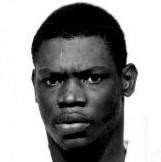
Anthony Ray Westley
Murderer Brian Kevin Rosenfeld
Murderer · USA · 1985
Brian Kevin Rosenfeld Brian Kevin Rosenfeld was sentenced to three concurrent l…
23 victims
Brian Kevin Rosenfeld
Murderer · USA · 1985
Brian Kevin Rosenfeld Brian Kevin Rosenfeld was sentenced to three concurrent l…
23 victims
 Marvin Gray
Murderer · USA · 1975
Marvin Gray was convicted killer who claimed responsibility for 23 slayings and…
23 victims
Marvin Gray
Murderer · USA · 1975
Marvin Gray was convicted killer who claimed responsibility for 23 slayings and…
23 victims
 Yahweh ben Yahweh
Murderer · USA · 1980
Yahweh ben Yahweh was born and legally named Hulon Mitchell Jr. (October 27, 19…
23 victims
Yahweh ben Yahweh
Murderer · USA · 1980
Yahweh ben Yahweh was born and legally named Hulon Mitchell Jr. (October 27, 19…
23 victims
 Russell Ellwood
Murderer · USA · 1991
Russell Ellwood was a former taxi driver. Authorities suspected him of killing…
20 victims
Russell Ellwood
Murderer · USA · 1991
Russell Ellwood was a former taxi driver. Authorities suspected him of killing…
20 victims
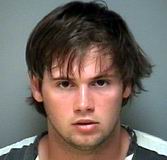 George Huguely
Murderer · USA · 2010
George Huguely was sentenced to 23 years in prison on August 30, 2012. · George…
1 victim
George Huguely
Murderer · USA · 2010
George Huguely was sentenced to 23 years in prison on August 30, 2012. · George…
1 victim
 Daniel Wayne Cook
Murderer · USA · 1987
Daniel Wayne Cook worked at a restaurant in Lake Havasu City, Arizona, and shar…
2 victims
Daniel Wayne Cook
Murderer · USA · 1987
Daniel Wayne Cook worked at a restaurant in Lake Havasu City, Arizona, and shar…
2 victims
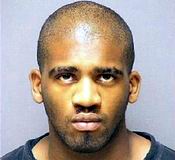 Alexander Kinyua
Homicide · USA · 2012
Alexander Kinyua was an engineering student at Morgan State University in Maryl…
1 victim
Alexander Kinyua
Homicide · USA · 2012
Alexander Kinyua was an engineering student at Morgan State University in Maryl…
1 victim
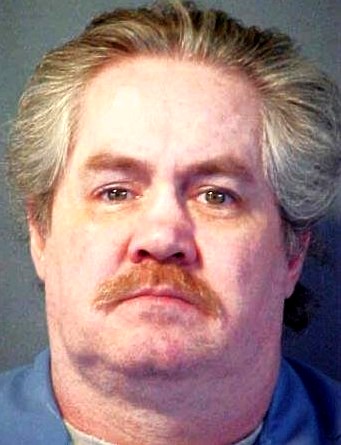 Donald Gilson
Murderer · USA · 1995
Name: Donald Gilson (Donald Lee Gilson) Victim: Shane Coffman (8-year-old) · Au…
1 victim
Donald Gilson
Murderer · USA · 1995
Name: Donald Gilson (Donald Lee Gilson) Victim: Shane Coffman (8-year-old) · Au…
1 victim
 Taylor Marks
Murderer · USA · 2009
Taylor Marks was an Akron woman who was accused of plotting to kill her mother,…
1 victim
Taylor Marks
Murderer · USA · 2009
Taylor Marks was an Akron woman who was accused of plotting to kill her mother,…
1 victim
- Gender
- male
- Country
- USA
- Location
- Harris County, Texas, USA
- Date of birth
- J uly 18, 1960
- Age at first offence
- 24
- Characteristics
- robbery, armed robbery
- Victim profile
- Chester Frank Hall, 35 (store owner)
- Method of murder
- Shooting (.22 caliber pistol)
- Date(s) of murder
- April 13, 1984
- Years active
- 1984
- Date of arrest
- Next day (surrenders)
- Status
-
Executed
Executed by lethal injection in Texas on May 13, 1997
Background
Anthony Ray Westley was executed by lethal injection in Texas on May 13, 1997. He was 36 years old. He had an education level of 8th grade.
Westley and two accomplices robbed the clerk at a northeast Harris County bait shop on April 13, 1984. The owner of the shop was Chester Frank Hall.
Two different prosecutors tried Westley and his accomplice separately. In each trial, prosecutors argued in separate trials that each man fired the fatal shot. The accomplice received 35 years in prison and was later paroled.
The offence
On the morning of April 13, 1984, Westley, along with two neighborhood acquaintances from Houston’s 5th ward, went for a car ride that ended in tragedy. After drinking and smoking marijuana, the three men stopped at Eileen’s Bait and Tackle store on the northeast side of Houston.
Brandishing pistols of three different calibers, the three men proceeded to rob the store clerk. The storeowner Chester Frank Hall, a volunteer fireman, appeared with his own small handgun, and a shootout commenced. When the shooting ended, Hall and one of the robbers were killed.
Young testified about the robbery and the ensuing shootout in detail. Debra Young was working in Eileen’s Bait and Tackle, owned by Chester Frank Hall and his wife, Eileen. At approximately 1:45 pm, Anthony Ray Westley, John Dale Henry, and Walter Dunbar entered the store. Hall had just walked out to go home.
Young testified that Westley went up to her at the counter and asked for fishing worms. While she was preparing the bait, Westley grabbed her and stuck a gun in her face. Young started screaming, and Westley threatened her:
"Shut up, or I will kill you." Westley then demanded money and struck her in the chest, knocking her against the wall. Young opened the cash register, and Westley ordered her to lie down behind the counter. Westley grabbed the money and then noticed a pistol case and money bag behind the counter, both empty. He patted Young’s pockets for the gun and demanded the rest of the money. Young testified that her boss had taken it.
Young testified that Westley told her to turn her face to the wall and put a gun in her back. At that point, the bell on the front door rang as Hall entered the shop. Westley stood, fired a shot toward the door, and ran out from behind the counter. Young testified that Westley fired the first shot, but then she heard a rapid succession of gunshots from both large and small caliber pistols, including Hall’s small derringer.
Young rose to a crouching position and peered over the counter. She saw Hall running toward the store’s office with Westley and Henry in pursuit. Westley caught Hall before he reached the office, and a struggle ensued. Young testified that Westley repeatedly hit Hall’s head against a concrete fish tank. She also heard three to five more gunshots that none of which sounded like Hall’s gun. Young then heard a final shot from the direction of Westley and Hall still scuffling and saw both men jerk.
Westley then ran from the store followed by Henry, who was wounded. Dunbar had been shot and was dying on the floor. Hall rose to his feet, came toward Young, collapsed, and died.
After the shootout, Westley fled the scene with his friend who was wounded in the stomach from Hall’s pistol. After evading a motorcycle rider intent on following the two, Westley dropped off his companion at the hospital.
Investigation
On the next day, April 14, 1984, Young positively identified Westley at a line-up as the assailant who had threatened her and fought with Hall.
Officers from the Harris County Sheriff’s Office arrived shortly after the shooting.
Two guns were found at the scene: a .25 caliber automatic by Dunbar’s body and a five shot .22 caliber derringer by Hall’s. Two .38 caliber slugs were recovered from the floor of the shop.
During the investigation, three women arrived to view Dunbar: Sefaneze Henry, Martha Walker, and Chrischilla Cousan. Officers later discovered that Dunbar lived at the same address as these three women. After questioning these women again, the police believed the other two robbers to be Westley and Henry.
During the interrogation conducted by detective Ron Phillips, Westley inadvertently admitted to the murder. Westley’s attorney, Barry Abrams, said Westley believed he had killed Hall with his .357 and may have tried to lie his way out of guilt by saying he carried the .22. Abrams said the .22 was actually the gun forensics experts said killed Hall. Abrams further said that it was common for a defendant to switch places with another defendant, and that since Westley disposed of the actual gun he carried, police were never able to recover it.
Abrams said that at the time of the interrogation, Westley was illiterate and could possibly not have understood what he signed. Abrams also said finding the gun could have cleared Westley of the capital murder charge.
Arrest
Westley turned himself in on April 14, 1984. He did so after receiving a phone call from his dead accomplice’s wife who was being held at the police station.
At 9:50 a.m. on April 14, 1984, Westley, accompanied by his father, turned himself in to the police. Westley gave a written confession admitting he carried a .22 caliber cowboy-style pistol and participating in the aggravated robbery. The statement also stated Henry carried a .38 caliber pistol and that Henry was the one who threatened Young during the robbery.
The confession was admitted as evidence at Westley’s trial after a hearing in which the court found that it was given voluntarily.
Trial
Both Westley and Henry were indicted for capital murder but tried separately.
At Henry’s trial, which concluded on January 24, 1985, the State dropped the murder charge and Henry was convicted of aggravated robbery.
Westley was tried and convicted of capital murder on May 10, 1985.
Guilt/innocence phase evidence
Two witnesses testified at Westley’s trial that they saw two men run from the bait shop and flee in the getaway car. The car was eventually found a few miles from the residence of Walter Dunbar. Inside the car, police found two rolls of pennies believed to have been taken from the office of the bait shop.
A security guard and nurse at Northeast Memorial Hospital identified Westley and Henry as the two men who came to the emergency room at about 2:00 p.m. on April 13, 1984, for treatment of Henry’s gunshot wound.
The medical examiner testified that Hall died from a gunshot wound fired within six inches of the victim.
C. E. Anderson, the state firearms examiner, testified that the fatal bullet was a .22 caliber long rifle, which could not be traced to either gun found at the scene. The firearms carried by Westley and Henry were never recovered.
Anderson identified State’s Exhibit No. 17, a picture of a cowboy-style handgun, as a long-barrel Ruger .22 caliber. Young and other witnesses identified the pistol depicted in Exhibit 17 as similar to the type of gun Westley carried.
On cross-examination, Anderson admitted that larger caliber handguns from the side looked like Exhibit 17 and that only an outside chance existed that this Ruger-style gun fired the fatal bullet. Anderson maintained that other manufacturers made this style .22 from which the fatal round could have been fired.
Chrischilla Cousan, Henry’s fifteen-year-old niece who lived in the same house as Westley, testified that she saw Westley, Henry, and Dunbar talking on the morning of the robbery and that she also saw Westley carrying a large black pistol similar to Exhibit 17.
Bertha Cousan, Henry’s sister and another resident of the house, saw Westley carrying a dark long-barreled pistol that looked like Exhibit 17. She also overheard Westley the night after the robbery relate that he had "wasted this white man," that Henry had been shot, and that Dunbar had died at the bait and tackle shop.
Young testified that she believed Westley was carrying a large caliber gun. At the time of trial, Young identified Exhibit 17’s pistol type as similar to Westley’s gun.
Punishment phase evidence
At the punishment phase, the State introduced evidence of two similar extraneous offenses.
On May 29, 1982, Westley tried to rob the owner of a jewelry store. The owner testified that Westley pointed the gun at his head and pulled the trigger, but the gun did not fire. Westley pulled the trigger a second time, shooting the owner in the chest and then fled.
On April 3, 1984, Westley and one accomplice robbed a real estate office. Three victims testified and identified Westley. Two of the witnesses stated Westley carried a large black pistol.
The State also introduced Westley’s conviction of burglary after a guilty plea on February 2, 1978. He was given probation, which was revoked when he committed a second burglary the day after his guilty plea.
Westley called five witnesses at the punishment phase who testified that he was a fun person and had a good reputation for being peaceful and law-abiding. Three of the witnesses emphasized that Westley had grown up in a poor neighborhood. Westley’s father, Ellis Miller, testified that Westley was sorry for what he had done. None of the five were aware of his two burglary convictions.
The trial court asked the jury the required special issues set out in Art. 37.071(b). The jury affirmatively answered them on May 14, 1985.
On May 14, 1985, after the jury affirmatively answered the required special issues, Westley was sentenced to death.
Sentencing
On May 14, 1985, Westley was sentenced to death.
The Texas Court of Criminal Appeals affirmed the conviction and sentence. Certiorari was denied by the Supreme Court.
Westley v. State, 754 S.W.2d 224 (Tex. Cr. App. 1988), cert. denied, 492 U.S. 911, 109 S.Ct. 3229 (1989).
Appeals
Westley v. Collins, in the United States Court of Appeals for the Fifth Circuit, addressed Westley’s appeal from the denial of his petition for a writ of habeas corpus.
Federal habeas corpus proceedings
On October 12, 1989, Westley filed an application for writ of habeas corpus in the state trial court. A special master was appointed to conduct an evidentiary hearing. The master filed proposed findings of fact and conclusions of law recommending that Westley be granted relief. The trial court adopted the facts and conclusions and also recommended Westley be granted habeas relief. The Texas Court of Criminal Appeals summarily denied Westley’s application. Ex Parte Westley, No. 22,911-01 (Tex. Crim. App. May 6, 1992) (unpublished).
Westley then filed a petition for writ of habeas corpus in federal district court. Both Westley and the State moved for summary judgment. The district court referred the case to a magistrate who reviewed the state court findings and supporting record and recommended that Westley be granted habeas relief. The district court rejected the magistrate’s recommendation and entered summary judgment for the State, denying habeas relief, on July 7, 1995.
Westley filed a timely notice of appeal, and the district court issued a certificate of probable cause. Westley appealed the district court’s finding on two claims: ineffective assistance of counsel and prosecutorial misconduct.
Ineffective assistance of counsel
Westley initially argued he was denied his Sixth Amendment right to effective counsel. He contended counsel was deficient during three phases: pretrial phase of investigation and case development, guilt/innocence phase, and punishment phase.
Westley argued counsel failed to adequately investigate a defense theory that he was not the “triggerman.” Westley argued counsel should have monitored Henry’s trial testimony and arguments and consulted an independent ballistics expert.
Westley conceded that triggerman status was not as prejudicial in the guilt/innocence phase, agreeing under Texas law that the jury was entitled to find him guilty of capital murder as a party to the offense which he admitted in his written statement, and that the jury was entitled to recommend the death sentence for this conviction.
Westley argued, however, that if he could cast sufficient doubt on triggerman status at the punishment phase, a reasonable probability existed that the jury would have sentenced him to life imprisonment rather than death.
Westley alleged counsel was deficient for failing to monitor Henry’s aggravated robbery trial or request a transcript. He argued that counsel should have been alerted to evidence suggesting Henry, not Westley, was the triggerman.
The discussion included the state habeas court’s comments on facets of Henry’s trial that could have been beneficial to Westley, including: assertions in opening and closing arguments regarding Westley possessing a .357 and firing .38 bullets, Young’s prior experience with guns and belief Westley carried a larger caliber gun, the testimony of a Harris County Sheriff’s Deputy that Young told him immediately after the robbery that Westley’s gun looked like a .357, Detective Ronnie Phillips’s testimony that Young said she thought Westley carried a .357, and the ballistics expert’s testimony about Exhibit 17 possibly representing a .22, .38, or .357 and that a .38 made more noise.
The majority concluded counsel was deficient in not at least reviewing transcripts of Henry’s trial but found the deficiency did not prejudice Westley.
Westley also argued counsel was deficient by failing to consult an independent ballistics expert. The discussion included testimony from the petitioner’s ballistics expert at the state habeas hearing about potential helpful conclusions and the view that such credibility determination is not based on physical scientific evidence.
Westley also argued that, at the guilt/innocence phase, counsel was deficient for failing to make a timely objection to admission of victim impact testimony and argument and for failing to effectively combat Westley’s written statement.
The discussion included victim impact evidence relating to Hall’s family and community good deeds by Eileen Hall, and the timing that victim impact testimony was admissible or not under then-existing law. The majority stated counsel was deficient in failing to object to victim impact testimony and argument at issue, and further addressed prejudice in terms of current law allowing punishment phase victim impact evidence and concluded Westley was unable to show prejudice.
Westley argued counsel should have developed a strategy to defuse Westley’s written admission about being armed with a .22. The majority stated that counsel objected to admission of the statement on grounds of coercion and denial of assistance of counsel, that the state court held the statement was voluntary with proper warnings, and that counsel was not deficient in failing to attack the substance given other evidence that Westley had stated he shot Hall while carrying a .22.
Westley also argued counsel at the punishment phase was deficient for failing to timely request an anti-parties charge and for an improper defense argument. The majority stated that Westley requested an anti-parties charge but it was not timely and the court denied it, and that under prior case law prejudice was not shown. The majority also concluded that counsel’s argument was within reasonable trial strategy, including remarks about Hall’s provocation and about Westley’s background, and the majority concluded counsel’s performance was not deficient regarding closing statements.
Prosecutorial misconduct
Westley alleged prosecutorial misconduct for Brady violations and for presenting false and misleading evidence. The legal discussion included the suppression of material evidence favorable to the accused under Brady v. Maryland.
Westley alleged the prosecution did not give counsel a copy of a supplemental offense report. The discussion included Young identifying Westley’s gun from a photo array and giving a statement that she still believed Westley carried a .357. The state habeas court found counsel was not provided with this report, and the majority accepted that suppression occurred but found it not material because it did not contain significant new evidence compared with exculpatory statements available from Young’s police statements and later trial testimony.
Westley contended there was a Brady violation for failing to disclose inconsistent testimony from Henry’s trial. The discussion concluded no Brady violation because Henry’s trial transcript was readily available.
Westley also alleged the prosecution presented false and misleading testimony violating due process. The discussion focused on Exhibit 17 and testimony about the side-view appearance of .22, .38, and .357 caliber pistols. The majority concluded that even if the state court had found misleading use of Exhibit 17, the claim failed because the testimony related to Exhibit 17 was not material given cross-examination admissions by Anderson and Westley’s own statement about carrying a .22.
Cumulative error
Westley argued cumulative error. The majority concluded there was no violation of Westley’s due process based on cumulative error.
Outcome in Fifth Circuit
For the reasons discussed, the Fifth Circuit affirmed the district court’s denial of Westley’s habeas petition. The judgment stated “AFFIRMED.”
There was a dissent by DeMOSS, Circuit Judge.
Other details
Westley’s last statement before execution was: “I want you to know that I did not kill anyone. I love you all. (Offender’s words were not clear)”
Westley’s attorney Barry Abrams made statements about the execution and about the state not delaying or granting further consideration. Abrams said:
“It’s highly improbable he would’ve been tried for capital murder,” and: “It’s common for a defendant to switch places with another defendant,” and: “The volume of cases is so high, participants become numbed to underlying facts of the case,” and: “I find it hard to justify every participant in the system not willing to delay the execution,” and: “I truly felt I was having an out of body experience those last couple of weeks. It seemed unreal to me.”
Abrams said that after the evidence from John Dale Henry’s admissions through contact with the slain gunman’s wife was developed, the state dismissed the evidence because the case was so far along.
The record also included references to the Fifth Circuit case identification: “UNITED STATES COURT OF APPEALS For the Fifth Circuit No. 95-20635 ANTHONY RAY WESTLEY, Petitioner-Appellant, V. GARY L. JOHNSON, DIRECTOR, TEXAS DEPARTMENT OF CRIMINAL JUSTICE, INSTITUTIONAL DIVISION, Respondent-Appellee.”
In the dissent, DeMOSS, Circuit Judge, described that a state trial judge appointed a special master for the first state habeas corpus proceeding, and that the Texas Court of Criminal Appeals summarily denied habeas corpus without conducting further hearing or making new factual findings; the dissent argued for deference to state factual findings and stated that the dissenting judge could not join the majority.
The dissent included no additional quotations beyond those contained in the main discussion of counsel and testimony.

Spotted an error, or have more information about this case?