Michael Lindsay
Murderer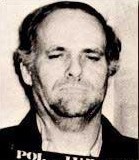 Ervil LeBaron
Murderer · USA · 1972
Ervil Morrell LeBaron (1925 to August 16, 1981) was the leader of a polygamous…
35 victims
Ervil LeBaron
Murderer · USA · 1972
Ervil Morrell LeBaron (1925 to August 16, 1981) was the leader of a polygamous…
35 victims
 Brian Kevin Rosenfeld
Murderer · USA · 1985
Brian Kevin Rosenfeld Brian Kevin Rosenfeld was sentenced to three concurrent l…
23 victims
Brian Kevin Rosenfeld
Murderer · USA · 1985
Brian Kevin Rosenfeld Brian Kevin Rosenfeld was sentenced to three concurrent l…
23 victims
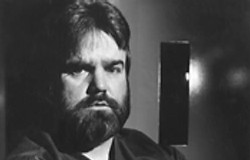 Marvin Gray
Murderer · USA · 1975
Marvin Gray was convicted killer who claimed responsibility for 23 slayings and…
23 victims
Marvin Gray
Murderer · USA · 1975
Marvin Gray was convicted killer who claimed responsibility for 23 slayings and…
23 victims
 Yahweh ben Yahweh
Murderer · USA · 1980
Yahweh ben Yahweh was born and legally named Hulon Mitchell Jr. (October 27, 19…
23 victims
Yahweh ben Yahweh
Murderer · USA · 1980
Yahweh ben Yahweh was born and legally named Hulon Mitchell Jr. (October 27, 19…
23 victims
 Russell Ellwood
Murderer · USA · 1991
Russell Ellwood was a former taxi driver. Authorities suspected him of killing…
20 victims
Russell Ellwood
Murderer · USA · 1991
Russell Ellwood was a former taxi driver. Authorities suspected him of killing…
20 victims
 Leslie Demeniuk
Murderer · USA · 2001
Leslie Demeniuk was a mother accused of murdering her twin 4-year-old sons, Jam…
2 victims
Leslie Demeniuk
Murderer · USA · 2001
Leslie Demeniuk was a mother accused of murdering her twin 4-year-old sons, Jam…
2 victims
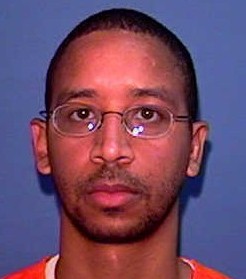 Jermaine Lebron
Murderer · USA · 1995
Jermaine “Bugsy” LeBron was sentenced to death for first-degree murder and to l…
1 victim
Jermaine Lebron
Murderer · USA · 1995
Jermaine “Bugsy” LeBron was sentenced to death for first-degree murder and to l…
1 victim
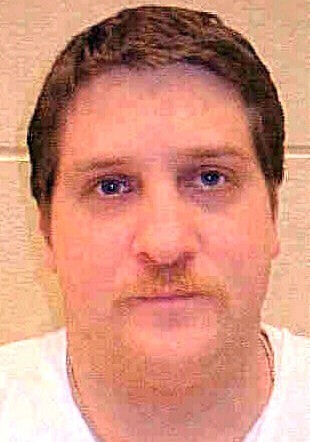 Clay King Smith
Mass murderer · USA · 1998
Clay King Smith was executed by the State of Arkansas for the March 25, 1998 mu…
5 victims
Clay King Smith
Mass murderer · USA · 1998
Clay King Smith was executed by the State of Arkansas for the March 25, 1998 mu…
5 victims
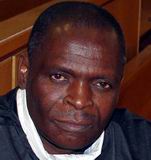 David Simelane
Serial killer · Swaziland · 2000
David Simelane — accused; serial killer convicted of murder. · Judge Jacobus An…
28 victims
David Simelane
Serial killer · Swaziland · 2000
David Simelane — accused; serial killer convicted of murder. · Judge Jacobus An…
28 victims
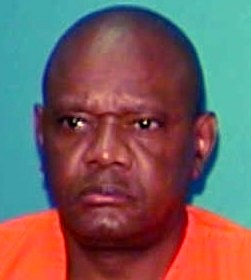 Leroy Pooler
Murderer · USA · 1995
Leroy Pooler (born 01/27/48) was tried in the Fifteenth Judicial Circuit, Palm…
1 victim
Leroy Pooler
Murderer · USA · 1995
Leroy Pooler (born 01/27/48) was tried in the Fifteenth Judicial Circuit, Palm…
1 victim
- Gender
- male
- Country
- USA
- Location
- Mobile County, Alabama, USA
- Date of birth
- August 20, 1960
- Age at first offence
- 21
- Characteristics
- robbery
- Victim profile
- Rosemary Zimlich Rutland (female, 64)
- Method of murder
- Shooting - St abbing with knife
- Date(s) of murder
- December 14, 1981
- Years active
- 1981
- Date of arrest
- Next day
- Status
-
Executed
Executed by electrocution in Alabama on May 26, 1989
Case name
Michael Lindsay
Status
Michael Lindsay was executed by electrocution in Alabama on May 26, 1989.
The offence
Michael Lindsey was convicted in 1982 for the December 1981 murder of Rosemary Rutland, a 63-year-old widow, in Mobile. Mrs. Rutland was killed in her home by stabbing and a pistol shot. She had been gagged and her hands were bound behind her, and her house was ransacked.
The conduct included the taking of Christmas presents from Mrs. Rutland’s home.
Police investigators said Michael Lindsey was captured at a shopping mall using the victim’s credit cards. He lived in a rental house directly behind Mrs. Rutland’s home. District Attorney Chris Galanos of Mobile County maintained that Michael Lindsey killed the woman because she recognized him.
Investigation
Trial
Michael Lindsey was arrested the morning following the murder after he attempted to use credit cards belonging to the victim.
His first trial was declared a mistrial after the jury twice informed the judge that it could not reach a verdict. On retrial, his wife and other members of his household testified that on the evening of the murder Michael Lindsey made a series of trips to bring household items into their home, but that he refused to state where he had obtained the merchandise. These items were identified at trial as belonging to the victim.
An eleven-year-old boy who lived in Michael Lindsey’s house testified also that he saw Michael Lindsey driving the victim’s car on the night of the murder and that he saw a pistol stuffed into Michael Lindsey’s pants.
The only evidence discovered inside the victim’s home to link Michael Lindsey to the crime was his palm print on an air pump found in an open suitcase in a bedroom.
The most significant evidence against him at the second trial was testimony by Officer Hubert Bell that Michael Lindsey had given an unrecorded statement in which he admitted killing Mrs. Rutland. Bell stated that Michael Lindsey confessed to him immediately following a recorded session during which Michael Lindsey was questioned by several officers. Bell testified that he and Michael Lindsey were awaiting the arrival of guards to transfer him back to the jail when Michael Lindsey admitted that he had killed the victim because she recognized him when she discovered him robbing the house.
In the recorded statement given only minutes before, Michael Lindsey told the officers that "Bob," a man who had given him a ride the day before, had burglarized Mrs. Rutland's home. He said that "Bob" had given him the victim's credit cards and had handed him stolen goods across the fence that separated the victim's yard from Michael Lindsey's.
In the recorded statement, Michael Lindsey denied any knowledge of the murder.
At Michael Lindsey’s first trial, the recorded statement was admitted into evidence, but Bell did not testify and the unrecorded murder confession was not otherwise introduced. At the second trial, the jury found Michael Lindsey guilty of capital murder and recommended by a vote of eleven to one that the judge sentence him to life in prison. The judge found that "aggravating factors far outweigh[ed] any mitigating factors," and imposed the death penalty.
Michael Lindsey’s counsel also challenged the prosecution’s use of peremptory strikes. Michael Lindsey contended that the trial court improperly dismissed one juror who expressed feelings in principle against the death penalty.
During voir dire questioning, Michael Lindsey’s counsel asked the juror, "[I]f the evidence came out and it looked like you were supposed to vote one way or another as to the guilt or the innocence of [appellant] would you be able to do that?" She replied, "I would have to vote against the chair." "Under any circumstances, no matter how serious the crime might be?" asked Michael Lindsey’s counsel. The juror responded: "Yes."
Sentencing
After the sentencing hearing in Michael Lindsey’s trial, the jury, by a vote of eleven to one, recommended a sentence of life in prison, but the judge imposed the death penalty.
The judge found the presence of four statutory aggravating circumstances:
- that the capital offense was committed by a person under sentence of imprisonment;
- that the defendant was previously convicted of a felony involving the use or threat of violence;
- that the offense was committed during the commission of a burglary; and
- that the offense was especially heinous, atrocious or cruel compared to other capital offenses.
The judge imposed the death penalty.
In the sentencing discussion reproduced in later proceedings, the trial judge stated:
The Court finds the facts to be that the body of the victim, Rosemary Rutland, an elderly woman, was found in her home, face down, gagged and her hands bound behind her. It was proved that the victim had been stabbed in the back and shot in the head with a .38 caliber pistol, and that she died as a result of either the stabbing or the shooting, or both. The Court finds that the killing of Rosemary Rutland was outrageously wicked, vile and shockingly evil. The Court finds from the evidence that the capital offense was especially heinous, atrocious or cruel as compared to other capital offenses.
Appellate history
Direct appeal
The verdict and sentence were upheld on appeal. Lindsey v. State, 456 So.2d 383 (Ala. Crim. App. 1983), aff’d sub nom. Ex parte Lindsey, 456 So.2d 393 (Ala. 1984), cert. denied, 470 U.S. 1023, 105 S.Ct. 1384, 84 L.Ed.2d 403 (1985).
Federal habeas proceedings
Michael Lindsey appealed the denial of his petition for habeas corpus.
The United States Court of Appeals for the Eleventh Circuit addressed Michael Lindsey’s appeal as: Michael LINDSEY, Petitioner-Appellant, v. Fred SMITH, Commissioner, Alabama Department of Corrections, J.D. White, Warden Holman Unit, Respondents-Appellees. No. 86-7162. United States Court of Appeals, Eleventh Circuit. June 12, 1987.
The court stated that Michael Lindsey, an Alabama prisoner under sentence of death, appealed the denial by the district court of his petition for habeas corpus. The district court denied relief on grounds that several of Michael Lindsey’s claims were procedurally barred and that the remaining claims were without merit. The Eleventh Circuit concluded that Michael Lindsey had not demonstrated that he was entitled to habeas relief and accordingly affirmed.
The Eleventh Circuit discussed procedural bar issues, jury composition challenges, the transcript claim, and confession-related claims, and also addressed ineffective assistance of counsel and sentencing claims, concluding that relief was not warranted and that the judgment denying habeas relief was affirmed.
Later habeas and related motions in the federal courts
In May 1989, Michael Lindsey sought a certificate of probable cause to appeal the district court’s denial of his second petition for habeas corpus. The Eleventh Circuit denied the certificate of probable cause. He also moved to expedite the appeal and to stay his execution, which currently was scheduled for May 26, 1989. The Eleventh Circuit denied the motion for a stay of execution and the motion to expedite the appeal.
In May 1989, the Eleventh Circuit also addressed Michael Lindsey’s request for multiple forms of relief, including:
- a stay of execution,
- an order appointing new counsel,
- a certificate of probable cause to appeal the district court’s denial of his motion to reopen the 1986 judgment denying his first petition for habeas corpus,
- an order recalling the mandate by which the Eleventh Circuit affirmed the district court’s 1986 judgment, and
- a certificate of probable cause to appeal the district court’s denial of his third petition for habeas corpus. The Eleventh Circuit denied all relief.
Supreme Court proceedings
The high court rejected Michael Lindsey’s appeal despite dissents by Justices William J. Brennan Jr. and Thurgood Marshall, a court spokeswoman, Toni House, said. Both Justices opposed capital punishment.
Clemency
Earlier, Gov. Guy Hunt refused to grant clemency. Stacey Rimer, Mr. Hunt's assistant press secretary, said: "The Governor declines to alter the decision of the jury and the courts."
Execution
Michael Lindsey stared at Warden Charlie Jones as the death warrant was read. Asked whether he wanted to say anything, Michael Lindsey shook his head.
Michael Lindsey was declared dead at 12:10 A.M., prison officials said.
Alabama’s last electrocution was Aug. 28, 1987, when Wayne Eugene Ritter was put to death for his role in the robbery and killing of a Mobile pawn shop owner.
Michael Lindsey was described as the fourth person executed in Alabama and the 111th in the nation since the 1976 Supreme Court ruling allowing states to resume capital punishment.
Spotted an error, or have more information about this case?