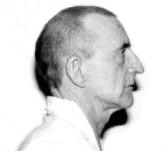
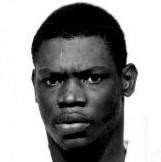
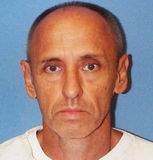
John Wheat
Murderer Brian Kevin Rosenfeld
Murderer · USA · 1985
Brian Kevin Rosenfeld Brian Kevin Rosenfeld was sentenced to three concurrent l…
23 victims
Brian Kevin Rosenfeld
Murderer · USA · 1985
Brian Kevin Rosenfeld Brian Kevin Rosenfeld was sentenced to three concurrent l…
23 victims
 Russell Ellwood
Murderer · USA · 1991
Russell Ellwood was a former taxi driver. Authorities suspected him of killing…
20 victims
Russell Ellwood
Murderer · USA · 1991
Russell Ellwood was a former taxi driver. Authorities suspected him of killing…
20 victims
 Robert Martines Perez
Murderer · USA · 1994
Name: Robert Martines Perez · Other name used in proceedings: Robert Martinez P…
15 victims
Robert Martines Perez
Murderer · USA · 1994
Name: Robert Martines Perez · Other name used in proceedings: Robert Martinez P…
15 victims
 Billy Frank Vickers
Murderer · USA · 1993
Billy Frank Vickers Vickers was executed by lethal injection in Texas on Januar…
14 victims
Billy Frank Vickers
Murderer · USA · 1993
Billy Frank Vickers Vickers was executed by lethal injection in Texas on Januar…
14 victims
 Brenda Bratschi
Murderer · USA · 2004
Brenda Bratschi was convicted of murder in the 2004 death of Randy Bratschi and…
1 victim
Brenda Bratschi
Murderer · USA · 2004
Brenda Bratschi was convicted of murder in the 2004 death of Randy Bratschi and…
1 victim
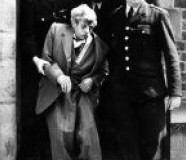 Tom Lionel Burns
Homicide · 1958
Tom Lionel Burns was a retired driver and played the piano. He was 71 years old…
2 victims
Tom Lionel Burns
Homicide · 1958
Tom Lionel Burns was a retired driver and played the piano. He was 71 years old…
2 victims
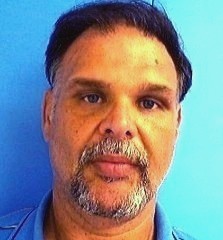 Patrick Burris
Spree killer · USA · 2009
Patrick Tracy Burris (August 8, 1967 – July 6, 2009) was an American spree kill…
5 victims
Patrick Burris
Spree killer · USA · 2009
Patrick Tracy Burris (August 8, 1967 – July 6, 2009) was an American spree kill…
5 victims
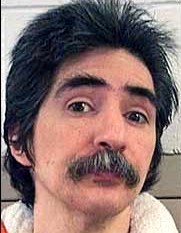 Roberto Arguelles
Serial killer · USA · 1992
Roberto Arguelles was serving a sentence for child molestation when he confesse…
4 victims
Roberto Arguelles
Serial killer · USA · 1992
Roberto Arguelles was serving a sentence for child molestation when he confesse…
4 victims
- Gender
- male
- Country
- USA
- Location
- Tarrant County, Texas, USA
- Date of birth
- May 22, 1944
- Age at first offence
- 51
- Characteristics
- revenge, shooting rampage, child killer, rape, convicted rapist, mentally ill
- Victim profile
- Edwardo Ochoa (8), Ashley Ochoa (6), and Lacey Anderson (19 months)
- Method of murder
- Shooting (.45 caliber pistol)
- Date(s) of murder
- July 3, 1995
- Years active
- 1995
- Date of arrest
- Same day
- Status
-
Executed
Executed by lethal injection in Texas on June 13, 2001
Parties and defendant
John Wheat was a church maintenance man who lived in the same apartment complex as Angela Anderson and her children in Fort Worth, Texas.
Victims and ages
Angela Anderson lived with her three children: Edwardo Ochoa (8), Ashley Ochoa (6), and Lacey Anderson (19 months).
Timeline
- July 30, 1995 — Lacey Anderson was murdered during a shooting rampage in Fort Worth by John Wheat; Ashley Ochoa and Edwardo Ochoa were also killed, Angela Anderson was injured, and three other people were shot and wounded.
- October 29, 1995 — John Wheat was indicted in Tarrant County, Texas, for the capital offense of murdering Lacey Anderson, a child less than six years of age, on or about July 30, 1995.
- February 24, 1997 — A jury found John Wheat guilty of the capital offense.
- February 26, 1997 — John Wheat received the death penalty after a separate punishment hearing.
- April 21, 1999 — The Texas Court of Criminal Appeals affirmed the trial court’s decision.
- May 26, 1999 — The Texas Court of Criminal Appeals denied John Wheat’s initial state application for writ of habeas corpus.
- June 23, 1999 — The Texas Court of Criminal Appeals dismissed Wheat’s supplemental application as an abuse of the writ.
- March 21, 2000 — The United States District Court for the Northern District of Texas, Fort Worth Division, entered judgment denying Wheat’s federal petition for writ of habeas corpus after an evidentiary hearing.
- January 5, 2001 — The United States Court of Appeals for the Fifth Circuit denied Wheat’s request for a certificate of appealability.
- June 4, 2001 — The United States Supreme Court denied Wheat’s petition for writ of certiorari and application for stay of execution.
- June 13, 2001 — John Wheat was executed by lethal injection in Texas; he was pronounced dead at 6:19 p.m.
Background
Angela Anderson lived in an apartment with her 3 children: Edwardo Ochoa (8), Ashley Ochoa (6), and Lacey Anderson (19 months). Wheat lived in the same apartment complex and was a church maintenance man. Wheat often babysat for Angela while she was at work. Another neighbor took care of Lacey.
Wheat was 51 at the time of the offense in July 1995, and later was described as 57 at the execution.
At the time of Wheat’s trial, Angela Anderson still had bullet fragments lodged within her brain tissue because it would have been too risky to attempt to remove them.
There was no evidence of prior criminal history presented by the State at the punishment phase of trial. John Wheat had no prior criminal history.
Wheat’s trial counsel argued that Wheat suffered brain damage weeks earlier from inhaling glue fumes while installing insulation. Wheat also claimed his actions were influenced by his service in Vietnam, although no record of that service was produced. In the habeas proceedings, Wheat argued for an insanity defense at the guilt-or-innocence phase.
At the punishment phase, a court-appointed psychiatrist, Dr. Mills, testified that Wheat was delusional shortly after his arrest and that magnetic resonance imaging revealed a large empty pocket in the base of his brain. Dr. Mills testified that Wheat suffered from Subcortical White Matter Disease, possibly caused by workplace exposure to toluene, and that the brain damage was in a region that regulates impulsiveness, aggression, and violence. A licensed psychologist determined that Wheat was competent to stand trial, that his abnormal mental condition did not grossly and demonstrably impair his perception of reality, and that there was no indication of a severe mental illness or emotional disturbance that would preclude his ability to understand right and wrong. Wheat’s supervisor at work testified at the punishment phase that Wheat’s exposure to toluene had been minimal.
The offence
On the evening before the shooting rampage, Wheat babysat Eddie and Ashley while Angela Anderson was at work; another neighbor took care of Lacey.
The next morning, Ashley told her mother that Wheat had kissed her on the lips and touched her in the genital area. Angela wrote a note, which Eddie delivered to Wheat. In one version of the note’s content, Angela wrote: “Ashley said you put your hand on her private (in her shorts) part. What the fuck? I will be calling the police! (emphasis in original).”
Immediately after receiving the note, Wheat left his apartment with a loaded .22 pistol, a loaded .45 semiautomatic pistol, and extra clips, and went to Angela’s apartment.
Angela fled upstairs to call the police as Wheat started firing. Wheat fired multiple times with the .45, hitting her at least twice. A security guard, Jesse Cranfield, was shot during the rampage; Cranfield lived in the apartment above Angela’s. Wheat shot Cranfield, wounding him in the back and leg.
Angela fled to another apartment at the far end of the complex. Wheat chased her into that apartment and tried to shoot another resident who was blocking the door, but the .45 was out of ammunition. Wheat entered the apartment and found Angela in the closet of a back bedroom, and shot her twice in the head with the .22 pistol.
Wheat left the apartment, reloading his .45 as he went, and walked back to the apartment where Angela’s three children remained. He found them in a back bedroom and shot each child in the head.
After shooting the children, Wheat returned to his apartment, retrieved a .30 caliber rifle, and started taking potshots at people standing in the common areas of the apartment complex. Wheat shot a police officer who responded to the police dispatch, causing a life-threatening injury. Police officers also responded as other shots were fired; one version describes another person living in the complex as wounded by shots fired at random by Wheat, and describes police officer Angela Jay being shot several times in the chest and stomach.
Hearing gunfire, the apartment security officer went outside to investigate, and Wheat shot at him, grazing his head. The security officer went back inside, but Wheat shot through the door three times, further injuring the officer.
Shortly after the police arrived, Wheat surrendered his weapons and asked them not to hurt him.
The mother survived her wounds but suffered brain damage.
Investigation and scene facts
The children’s bodies were discovered after a neighbor told police officers at the scene that they were still in the apartment. Eddie was found kneeling next to a bed, his head lying on the bed in a pool of blood. He had been shot in the head. Police found Ashley in a corner of the same bedroom, curled up and shot in the head. Lacey was found on the floor in a back room of the apartment, also shot in the head. Lacey was still breathing when she was found, but subsequently died after efforts to revive her were unsuccessful.
Autopsies revealed that all three children died as a result of gunshot wounds to the forehead.
Arrest
Wheat surrendered his weapons to police after laying them down during the response to the rampage. He asked the police not to hurt him.
Trial
Wheat was tried before a jury following his plea of not guilty.
The indictment charged the capital offense of murdering Lacey Anderson, a child less than six years of age, on or about July 30, 1995. Under Texas law as described, murder of a child less than six years old was a capital offense.
On February 24, 1997, the jury found John Wheat guilty of the capital offense.
On February 26, 1997, after a jury finding in a separate punishment hearing, Wheat received the death penalty.
The jury took only 17 minutes to find Wheat guilty and 2 hours to sentence him to death. Prosecutors had rejected a plea bargain for life offered by his attorneys.
Wheat was convicted of the murder of Lacey Anderson, and the jury sentenced him to death. One account states that he was not tried for the other murders.
Sentencing
Wheat received the death penalty in February 1997 following the punishment hearing.
Appeals
Wheat’s conviction and sentence were automatically appealed to the Texas Court of Criminal Appeals. The Texas Court of Criminal Appeals affirmed the trial court’s decision on April 21, 1999.
The United States Supreme Court denied hearing the case.
The Texas Court of Criminal Appeals denied Wheat’s initial state application for writ of habeas corpus on May 26, 1999, and dismissed his supplemental application as an abuse of the writ on June 23, 1999.
On March 21, 2000, the United States District Court for the Northern District of Texas, Fort Worth Division, entered judgment denying Wheat’s federal petition for writ of habeas corpus after an evidentiary hearing.
On January 5, 2001, the United States Court of Appeals for the Fifth Circuit denied Wheat’s request for a certificate of appealability to allow the appeal to proceed.
Wheat v. Johnson (No. 00-10433, January 5, 2001) described Wheat as seeking a certificate of appealability to challenge the district court’s denial of his 28 U.S.C. § 2254 petition for a writ of habeas corpus. The Fifth Circuit denied the motion for a COA.
In the appeal, Wheat presented seven arguments:
- that the Texas death penalty scheme was unconstitutional by preventing defendants from offering evidence of parole ineligibility to juries considering the factor of future dangerousness;
- that the trial court erred by excluding expert testimony that Wheat would probably not live long enough to qualify for release on parole;
- that the trial court erred by disallowing Wheat to voir dire potential jurors regarding the forty-year parole ineligibility in Texas for life sentences for capital murder;
- that there was insufficient evidence to support the jury finding of future dangerousness;
- that the trial court erred by granting the State’s challenge for cause to a venire member for professed aversion to the death penalty;
- that Wheat was deprived of effective assistance of counsel when his lawyer failed to present an insanity defense at the guilt-or-innocence phase of his trial;
- that the Texas Court of Criminal Appeals erred in state habeas proceedings by refusing to consider a supplement to Wheat’s original state writ application.
The Fifth Circuit described several of Wheat’s claims as procedurally barred, and denied the request for a certificate of appealability. It also discussed the parole eligibility argument as Teague-barred and discussed the voir dire claim as inconsistent with King v. Lynaugh.
Outcome
John Wheat was executed in Texas on June 13, 2001 by lethal injection. Wheat was pronounced dead at 6:19 p.m.
Wheat stated: “I deeply regret what happened. I did not intentionally or knowingly harm anyone. I did not do anything deliberately. That's it.”
He then uttered a Vietnamese word: “didimau,”
Prison officials translated this word as meaning: “Let's get out of here.”
Wheat coughed twice, sputtered and gasped before he stopped moving.
Aftermath
Angie Anderson, the children’s mother, survived with brain damage. Her aunt, Cynthia Bolin, stated that Angela Anderson still had nightmares about the shootings and that Wheat had taken “the only thing that mattered to her.” Bolin also said in a written statement: “Mr. Wheat has taken the only joy of her life and left her with severe brain damage for the rest of her life,” she said in a written statement. “The execution will not bring closure to Angie, but it may comfort her to know that he is dead and will not kill or harm anyone else.”
Bolin was quoted as responding to a question about whether she accepted Wheat’s explanation that the killings were unintentional, saying: “That’s a bunch of bull.”
Five friends and relatives of Wheat watched him die, and one remarked in the chamber following his death that the three children now had someone to care for them in heaven. Angela Jay, the police officer who was shot during the spree and was among victim witnesses in the chamber, remarked: “I think he'll never have a chance to see them in hell,” added Angela Jay.
Wheat declined to speak with reporters in the weeks leading up to his execution and made no moves seeking clemency.
Spotted an error, or have more information about this case?