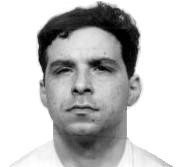
James Joseph Wilkens
Murderer Brian Kevin Rosenfeld
Murderer · USA · 1985
Brian Kevin Rosenfeld Brian Kevin Rosenfeld was sentenced to three concurrent l…
23 victims
Brian Kevin Rosenfeld
Murderer · USA · 1985
Brian Kevin Rosenfeld Brian Kevin Rosenfeld was sentenced to three concurrent l…
23 victims
 Yahweh ben Yahweh
Murderer · USA · 1980
Yahweh ben Yahweh was born and legally named Hulon Mitchell Jr. (October 27, 19…
23 victims
Yahweh ben Yahweh
Murderer · USA · 1980
Yahweh ben Yahweh was born and legally named Hulon Mitchell Jr. (October 27, 19…
23 victims
 Russell Ellwood
Murderer · USA · 1991
Russell Ellwood was a former taxi driver. Authorities suspected him of killing…
20 victims
Russell Ellwood
Murderer · USA · 1991
Russell Ellwood was a former taxi driver. Authorities suspected him of killing…
20 victims
 Storm Brooke
Murderer · Australia · 1990
Storm Brooke was an Australian prisoner who stabbed fellow prisoner Debbie Dick…
1 victim
Storm Brooke
Murderer · Australia · 1990
Storm Brooke was an Australian prisoner who stabbed fellow prisoner Debbie Dick…
1 victim
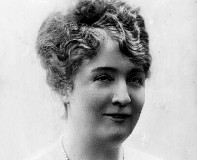 Henriette Caillaux
Murderer · France · 1914
Henriette Caillaux was the wife of France's minister of finance, Joseph Caillau…
1 victim
Henriette Caillaux
Murderer · France · 1914
Henriette Caillaux was the wife of France's minister of finance, Joseph Caillau…
1 victim
 Danny Joe Bradley
Murderer · USA · 1983
Danny Joe Bradley was tried in Alabama and convicted of capital murder in conne…
1 victim
Danny Joe Bradley
Murderer · USA · 1983
Danny Joe Bradley was tried in Alabama and convicted of capital murder in conne…
1 victim
 Roger Mark Scott
Murderer · USA · 1989
Roger Mark Scott was convicted and sentenced to death on April 22, 1991. On Dec…
1 victim
Roger Mark Scott
Murderer · USA · 1989
Roger Mark Scott was convicted and sentenced to death on April 22, 1991. On Dec…
1 victim
 Deidra Lane
Murderer · USA · 2000
Deidra Lane pleaded guilty to voluntary manslaughter in 2003 after her estrange…
1 victim
Deidra Lane
Murderer · USA · 2000
Deidra Lane pleaded guilty to voluntary manslaughter in 2003 after her estrange…
1 victim
- Gender
- male
- Country
- USA
- Location
- Smith County, Texas, USA
- Date of birth
- J uly 29, 1961
- Age at first offence
- 25
- Characteristics
- revenge, jealousy
- Victim profile
- Richard Allan Wood, 28 (his former girlfriend's current boyfriend) and Larry McMillan, Jr., 4 (the former girlfriend's son)
- Method of murder
- Shooting (.22 caliber rifle)
- Date(s) of murder
- December 27, 1986
- Years active
- 1986
- Date of arrest
- —
- Status
-
Executed
Executed by lethal injection in Texas on July 11, 2001
Case information
Name: James Joseph Wilkens (also given as James Joseph Wilkens Jr.)
Timeline
- December 27, 1986 — James Joseph Wilkens shot Richard Wood and Larry McMillan Jr. during the same criminal transaction in Tyler, Texas.
- February 5, 1987 — Wilkens was indicted in the 7th Judicial District Court of Smith County, Texas, for the capital offense of murdering Richard Wood and Larry McMillan, Jr. during the same criminal transaction on December 27, 1986.
- February 18, 1988 — A jury found Wilkens guilty of capital murder; after a separate punishment hearing, the court assessed punishment at death.
- June 10, 1992 — The Court of Criminal Appeals reversed Wilkens’s conviction and sentence on psychological testimony improperly admitted during the punishment phase.
- November 4, 1992 — The rehearing was denied.
- March 29, 1993 — The United States Supreme Court denied the State’s petition for certiorari.
- October 12, 1993 — Wilkens was again convicted of capital murder in the 7th Judicial District Court of Smith County, Texas.
- October 15, 1993 — The jury answered affirmatively the two special issues on deliberateness and future dangerousness, and answered negatively the third special issue on mitigation; the trial court then assessed punishment at death.
- November 15, 1995 — Wilkens’s conviction was affirmed by the Court of Criminal Appeals in an unpublished opinion.
- April 20, 1997 — Wilkens filed an application for state writ of habeas corpus.
- January 12, 1998 — The Court of Criminal Appeals denied relief in an unpublished order.
- October 5, 1998 — The United States Supreme Court denied certiorari review.
- January 16, 1998 — Wilkens filed a federal writ of habeas corpus petition.
- February 2, 1999 — United States Magistrate Judge Robert Faulkner issued a report and recommendation that habeas relief be denied.
- June 17, 1999 — United States District Judge Paul Brown overruled Wilkens’s objections, adopted the magistrate’s report and recommendation, and issued final judgment denying habeas relief.
- January 4, 2001 — The Court of Appeals for the Fifth Circuit issued an opinion dismissing the appeal for lack of jurisdiction because Wilkens filed a notice of appeal in an untimely manner.
- January 31, 2001 — Wilkens’s petition for rehearing was denied.
- February 9, 2001 — The 114th Judicial District Court of Smith County scheduled Wilkens’s execution for July 9, 2001, more than 150 days after the appellate court’s January 31, 2001 denial of rehearing.
- May 2, 2001 — Wilkens filed a petition for writ of certiorari in the United States Supreme Court challenging the dismissal of his appeal.
- June 19, 2001 — Wilkens filed a request for clemency and a reprieve with the Texas Board of Pardons and Paroles.
- June 29, 2001 — The Supreme Court denied certiorari review.
- July 3, 2001 — Wilkens filed a writ of habeas corpus with the United States Supreme Court accompanied with a request for stay of execution.
- July 6, 2001 — Wilkens filed with the Fifth Circuit Court of Appeals a motion asking leave to file an out-of-time petition for rehearing en banc.
- July 11, 2001 — Wilkens was executed by lethal injection in Texas.
Background
James Joseph Wilkens Jr. was executed by lethal injection in Texas on July 11, 2001. He was 39. He was executed in Huntsville, Texas.
Wilkens was on parole for robbery at the time of the shooting.
Evidence was introduced that Wilkens had previously been convicted of robbery on October 4, 1982, and was sentenced to five years imprisonment.
The offence
In the summer of 1986, Wilkens and Sandra Williams began dating. Both were employed at the Pit Grill restaurant. Wilkens moved in with Williams and her four-year-old son.
By October 1986, problems began to develop between Wilkens and Williams. Wilkens moved out shortly thereafter. Wilkens had become very jealous of the time Williams spent with her son. Richard Wood, Wilkens’s ex-roommate, began taking Williams to her chiropractor. As the relationship between Williams and Wood became closer, Wilkens became jealous of Wood. By December, Williams and Wood had begun dating.
On December 27, 1986, Williams, her son, and Richard Wood were returning from Oklahoma after spending Christmas with Wood’s family. They returned to Wood’s mobile home at the South Point Mobile Home Park.
Williams carried her son inside and placed him on the couch next to the front door. While Wood was still outside, Williams went into the bathroom. There she was confronted by Wilkens, who had broken in and waited for their return with a .22 semiautomatic rifle.
Williams began screaming and ran towards the front door. Wood, who was coming inside just at that time, told her to run for help. As she left the trailer, Williams heard a shot and saw Wood drop to the floor.
Williams continued down the stairs but fell to the ground when she was shot in the back. Williams heard her son crying and screaming, and turned to see Wilkens leveling the gun at the child. Williams managed to rise and start running back towards the trailer when Wilkens turned the rifle on her and fired two or three more times. Williams fell to the ground.
After hearing Wilkens descending the stairs and coming closer, Williams began holding her breath and closed her eyes, hoping that Wilkens would leave. Williams then felt her legs being lifted; she pretended to be dead and continued to hear her son screaming. After her legs were dropped, Williams heard seven or eight shots from inside the mobile home after which she no longer heard the screams.
Williams blacked out and later awoke in the hospital where she learned that her son and Wood had been killed.
Investigators picked up seven spent casings from the floor. Richard Wood was dead at the scene. The four-year-old, Larry McMillan was dead at the scene. Wood died quickly from a single shot to the head. McMillan had numerous bullet holes; he was shot thirteen times, and there was testimony described as several bullet holes at point-blank range.
The accounts of the victim’s pregnancy status differed across the material: one account stated Williams was two months pregnant when she was shot and survived her injury; another stated Williams and her son went to Oklahoma to spend Christmas and returned.
Williams survived and later identified Wilkens as the assailant. At trial, she testified that she heard Wilkens shoot Wood and saw him drop to the floor, that she was shot numerous times as she ran out of the trailer, and again as she tried to go back to save her son. She testified she pretended to be dead by closing her eyes and holding her breath as Wilkens lifted her legs. She testified she heard her son screaming, then heard seven or eight shots from inside the trailer, and the screaming stopped. She testified she blacked out and later awoke in the hospital.
Investigation
After the shootings, Wilkens was arrested the day after the child, Larry McMillan Jr., was shot repeatedly as he cried on a couch.
Arrest
Wilkens was arrested after the shooting.
Trial
Wilkens pleaded not guilty by reason of insanity at trial. During the trial, he contended he was insane at the time of the attack and that he had voices and envisioned Richard Wood as his abusive father at the second trial.
At the first trial, a jury found Wilkens guilty of capital murder on February 18, 1988. Following a separate punishment hearing, the court assessed his punishment at death.
On direct appeal, the Court of Criminal Appeals reversed his conviction and sentence on June 10, 1992 because psychological testimony was improperly admitted during the punishment phase of trial. The rehearing was denied November 4, 1992. The United States Supreme Court denied the State’s petition for certiorari on March 29, 1993.
On retrial, on October 12, 1993, Wilkens was again convicted of capital murder in the 7th Judicial District Court of Smith County, Texas. After a separate punishment hearing, on October 15, 1993, the jury answered affirmatively the two special issues on deliberateness and future dangerousness, and answered negatively the third special issue on mitigation. The trial court then assessed Wilkens’s punishment at death.
A Smith County jury in 1988 convicted Wilkens of capital murder and decided he should be put to death. The second jury in 1993 was not swayed and convicted him and decided he should be executed.
Quotations
Smith County District Attorney Jack Skeen said:
“The first thing that goes through my mind is the picture of Larry McMillan Jr. sitting on the couch with a toothbrush in his mouth with several bullet holes in him that Wilkens had fired at point-blank range. I can still see him slumped over with the bullet holes in him. A 4-year-old boy. It was just horrible.”
Smith County District Attorney Jack Skeen also said:
“There was no question about his competency. It was just a story. He was sitting there and waiting. He just ambushed them. It was like: bang! bang! He just waited and executed.”
James Joseph Wilkens said in a 1992 death row interview:
“In all honesty, as God as my witness, I do not remember. I went nuts, to tell you the truth. I remember some, not all. It's very bizarre. I had killed them so many times in my mind, it was a dream. I didn't know reality.”
Sentencing
After the first punishment hearing, the court assessed Wilkens’s punishment at death.
After the second punishment hearing, on October 15, 1993, the jury answered affirmatively the two special issues on deliberateness and future dangerousness and answered negatively the third special issue on mitigation; the trial court then assessed his punishment at death.
Appeals
Wilkens’s conviction was affirmed by the Court of Criminal Appeals on November 15, 1995 in an unpublished opinion.
Wilkens did not seek certiorari review to the United States Supreme Court after that affirmation.
Wilkens filed an application for state writ of habeas corpus on April 20, 1997. After an evidentiary hearing, the state habeas court entered detailed findings of fact and conclusions of law recommending that habeas relief be denied. The Court of Criminal Appeals later denied relief in an unpublished order on January 12, 1998 based on the trial court’s findings and the court’s own review.
The United States Supreme Court denied certiorari review on October 5, 1998.
Wilkens filed a federal writ of habeas corpus petition on January 16, 1998. On February 2, 1999, United States Magistrate Judge Robert Faulkner issued a report and recommendation that the writ be denied. Wilkens objected. On June 17, 1999, United States District Judge Paul Brown overruled Wilkens’s objections, adopted the magistrate’s report and recommendation, and issued final judgment denying habeas relief.
Appeal to the United States Court of Appeals for the Fifth Circuit followed. On January 4, 2001, the appellate court issued an opinion dismissing the appeal for lack of jurisdiction because Wilkens filed his notice of appeal in an untimely manner. Wilkens’s petition for rehearing was denied on January 31, 2001.
Wilkens filed a petition for writ of certiorari in the United States Supreme Court on May 2, 2001, challenging the dismissal of his appeal. The Supreme Court denied certiorari review on June 29, 2001.
Wilkens filed a writ of habeas corpus with the United States Supreme Court on July 3, 2001 accompanied with a request for stay of execution. The petition was pending in that court.
Wilkens also filed with the Fifth Circuit Court of Appeals on July 6, 2001 a motion asking leave to file an out-of-time petition for rehearing en banc, which asked the entire court to reconsider the January 4, 2001 dismissal of the appeal as untimely filed.
Fifth Circuit appellate disposition and quotations
The Fifth Circuit’s opinion included a question about whether the seven-day filing window of Rule 4(a)(6) is opened when a party receives fax notice of entry of judgment. It stated:
“This case raises the question whether the seven-day filing window of Rule 4(a)(6) is opened when a party receives [fax] notice of the entry of a judgment or order from [the district court].”
The Fifth Circuit concluded:
“For the reasons hereafter set forth, we answer that question in the affirmative and dismiss this appeal.”
The dissent stated the issue was whether fax transmission of a copy of the court’s judgment to the fax number of Wilkens’s counsel constituted receipt of notice of the entry of judgment required by Federal Rule of Appellate Procedure 4(a)(6)(A). The dissent stated:
“Since Rule 4(a)(6)(A) requires that an appellant file a motion to reopen the time to file an appeal within 180 days after the judgment or ‘within 7 days after the moving party receives notice of the entry,’ we must look to Federal Rule of Civil Procedure 77(d) as it provides the rule that directs the clerk to serve the notice.”
The dissent concluded:
“Thus, the motion he finally did file, several weeks after receiving the written notice via fax ---- and the order that the district court signed and entered another eight days after that, purporting to grant that motion ---- were without any legal effect whatsoever.”
Outcome
Wilkens was executed by lethal injection in Texas on July 11, 2001.
Parole and execution scheduling actions were described: an execution date was scheduled for July 9, 2001 by order dated February 9, 2001, and the execution occurred on July 11, 2001.
Quotations (apology and execution)
Wilkens apologized to Sandra Williams and others. Wilkens said:
“I am sorry. Please hear me. Please understand. In the name of God, please forgive me,”
Wilkens also said:
“Find peace and comfort. I am sorry. For your sake, forgive me, all of you,”
He thanked his own family for support and expressed love to witnesses, thanking them for “giving me more than I deserve.” Wilkens prayed, asking God to forgive “the horror I have committed.”
After telling the warden he was ready to go and urging that “God be with all of you,’“ Wilkens exhaled, gasped a couple of times, and slipped into unconsciousness as the drugs took effect.
In one account, Wilkens was pronounced dead at 6:23 p.m. CDT, eight minutes after the lethal dose began.
Aftermath
Sandra Williams survived the shooting and later married and was now Sandra Carpenter.
One account stated Williams refused to accept Wilkens’s apology and said:
“It was a tremendous weight lifted. But I can never forgive him.”
It also stated Williams continued to suffer from post-traumatic stress syndrome and had to have a section of her intestine removed because of her injuries. Williams said:
“It doesn't let you forget. I wish it did. I hate him for it.”
At his execution, Wilkens apologized to Carpenter and the other witnesses including Larry McMillan’s two grandfathers.
Other details
Persons
- James Joseph Wilkens (also given as James Joseph Wilkens Jr.) — defendant; executed.
- Sandra Darlene Williams — former girlfriend; victim/survivor; later described as Sandra Carpenter.
- Richard Allan Wood — victim; 28.
- Larry Wayne McMillan Jr. — victim; four-year-old son.
Weapon and injuries described
Wilkens waited with a .22 semiautomatic rifle. Richard Wood was shot at the front door; Wood died quickly from a single shot to the head in one account. Larry McMillan Jr. was shot thirteen times and had numerous bullet holes in another account. Sandra Williams was shot in the back and survived.
Jury findings described
In the second trial, the jury answered affirmatively on deliberateness and future dangerousness, and negatively on mitigation.
Prior criminal history and parole timing described
One account stated he served 14 months of a five-year sentence for robbery and was paroled in 1983. Wilkens was on parole at the time of the shooting.
Mentions of mental condition and testimony
During the first trial and on direct appeal issues, psychological testimony was improperly admitted during punishment phase, leading to reversal. Wilkens pleaded not guilty by reason of insanity and claimed he was temporarily insane at the time of the attack. During the second trial, he told the jury that he heard voices and envisioned Wood as his abusive father.

Spotted an error, or have more information about this case?