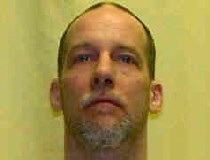
Mark Wiles
Murderer Brian Kevin Rosenfeld
Murderer · USA · 1985
Brian Kevin Rosenfeld Brian Kevin Rosenfeld was sentenced to three concurrent l…
23 victims
Brian Kevin Rosenfeld
Murderer · USA · 1985
Brian Kevin Rosenfeld Brian Kevin Rosenfeld was sentenced to three concurrent l…
23 victims
 Marvin Gray
Murderer · USA · 1975
Marvin Gray was convicted killer who claimed responsibility for 23 slayings and…
23 victims
Marvin Gray
Murderer · USA · 1975
Marvin Gray was convicted killer who claimed responsibility for 23 slayings and…
23 victims
 Yahweh ben Yahweh
Murderer · USA · 1980
Yahweh ben Yahweh was born and legally named Hulon Mitchell Jr. (October 27, 19…
23 victims
Yahweh ben Yahweh
Murderer · USA · 1980
Yahweh ben Yahweh was born and legally named Hulon Mitchell Jr. (October 27, 19…
23 victims
 Russell Ellwood
Murderer · USA · 1991
Russell Ellwood was a former taxi driver. Authorities suspected him of killing…
20 victims
Russell Ellwood
Murderer · USA · 1991
Russell Ellwood was a former taxi driver. Authorities suspected him of killing…
20 victims
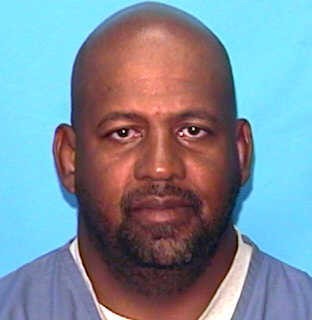 Michael Tyrone Crump
Murderer · USA · 1985
Defendant (Appellant): Michael Tyrone Crump · Plaintiff/Respondent (Appellee):…
2 victims
Michael Tyrone Crump
Murderer · USA · 1985
Defendant (Appellant): Michael Tyrone Crump · Plaintiff/Respondent (Appellee):…
2 victims
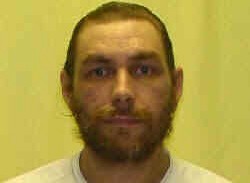 Lawrence Reynolds
Murderer · USA · 1994
Lawrence Reynolds Jr. was an alcoholic who was out of work and needed money for…
1 victim
Lawrence Reynolds
Murderer · USA · 1994
Lawrence Reynolds Jr. was an alcoholic who was out of work and needed money for…
1 victim
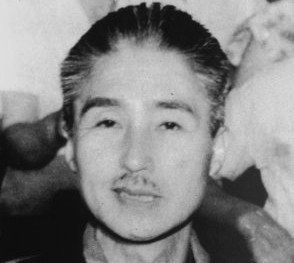 Sadamichi Hirasawa
Mass murderer · Japan · 1948
Sadamichi Hirasawa was a Japanese painter. He was also known as a tempera paint…
12 victims
Sadamichi Hirasawa
Mass murderer · Japan · 1948
Sadamichi Hirasawa was a Japanese painter. He was also known as a tempera paint…
12 victims
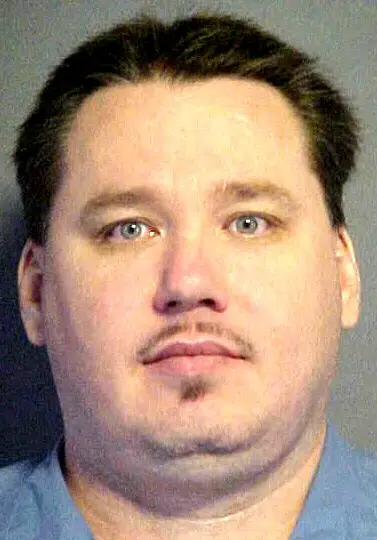 Norman Richard Cleary
Murderer · USA · 1991
Name: Norman Richard Cleary · Jurisdiction (trial): Tulsa County District Court…
1 victim
Norman Richard Cleary
Murderer · USA · 1991
Name: Norman Richard Cleary · Jurisdiction (trial): Tulsa County District Court…
1 victim
 Edward Lagrone
Murderer · USA · 1977
Edward Lewis Lagrone was involved in a relationship with Pamela Lloyd in 1985,…
4 victims
Edward Lagrone
Murderer · USA · 1977
Edward Lewis Lagrone was involved in a relationship with Pamela Lloyd in 1985,…
4 victims
 Brian Alpress Hunt
Murderer · USA · 1992
Brian Alpress Hunt (defendant; homeless drifter; 49-year-old at the time of the…
2 victims
Brian Alpress Hunt
Murderer · USA · 1992
Brian Alpress Hunt (defendant; homeless drifter; 49-year-old at the time of the…
2 victims
- Gender
- male
- Country
- USA
- Location
- Portage County, Ohio, USA
- Date of birth
- March 11, 1963
- Age at first offence
- 22
- Characteristics
- burglary
- Victim profile
- Mark Klima, 15
- Method of murder
- Stabbing with knife
- Date(s) of murder
- August 7, 1985
- Years active
- 1985
- Date of arrest
- 5 days after (surrenders)
- Status
-
Executed
Executed by lethal injection in Ohio on April 18, 2012
Case details
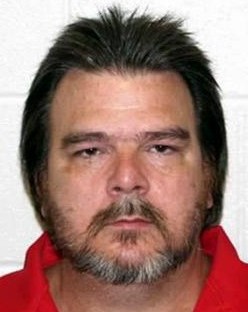
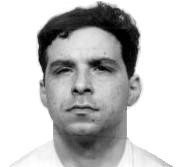
Mark Wiles was a White male convicted in Portage County of an aggravated murder related to a farmhouse burglary. He was executed by lethal injection in Ohio on April 18, 2012.
Background
Charles and Carol Klima owned Shakespeare Acres, a horse farm in Rootstown, Ohio, where they had resided since 1969. Their only child, Mark, was born on June 22, 1970.
Beginning in 1982, the Klimas employed Mark Wiles as a part-time laborer on the farm. In late 1982 or early 1983, Wiles was discovered by Mrs. Klima departing from her home. When asked about his presence in the house, Wiles told Mrs. Klima that he was cold and had entered the home to get warm. He was instructed to turn up the heat in the tack room and use it for that purpose in the future. On another occasion, he was found in the garage of the house slumped below an open exterior window. On both occasions, he had not been given permission to enter the residence.
On the morning of January 19, 1983, Wiles reported for work at Shakespeare Acres. Approximately 1:30 p.m. that day, Carol Klima returned to the residence after tending to the horses. When she entered the kitchen she felt a draft but was uncertain from where it originated. After eating lunch, she proceeded to her bedroom where she discovered an open window and the screen thereto on the ground below. The doors to the bedroom closet and the drawers to the dresser had been opened. Subsequent investigation revealed that approximately $200 in coin and currency were missing from the residence. Only Carol Klima and Wiles were present on the grounds of the farm at the time of the thefts. Despite being owed money for work performed for the Klimas, he never returned to the farm to collect his paycheck or to work again.
On August 5, 1985, Mark Klima remarked to his mother that he had seen Wiles in the main barn of the estate. Mark Klima mentioned he had spoken with Wiles and that Wiles asked Mark whether he recognized him. Mark Klima reportedly stated: “Yes, you're Mark Wiles.” When Wiles said he wished to speak to Carol Klima, Mark directed him to the residence. When the family dog began to bark, Wiles turned around and left.
In the spring of that year, Wiles began serving a 4-to-25 year sentence in an Ohio prison for an unrelated burglary he committed the previous year.
The offence
August 7, 1985 farmhouse burglary and killing of Mark Klima
At approximately 4:30 or 5:00 a.m. on August 7, 1985, Wiles arrived at the Klima farm. While obscured in an adjacent field, he watched for any activity at the home.
Carol, Charles and Mark Klima, Anne Marie O'Brien, and Susie and Laura Kerper were present in the Klima residence. Anne Marie and the Kerper girls stayed on the farm to assist in maintenance of the horses and to receive horseback riding lessons. At approximately 6:00 a.m., Charles Klima left for work. Early that morning, Ms. O'Brien departed for her place of employment. The remaining household rose around 8:00 a.m. and had breakfast. Thereafter, Susie and Laura left the residence to feed the horses. At approximately 10:15 a.m., Carol Klima also left the residence. Prior to departing, she instructed her son to close the windows in the house if it began to rain. The doors to the house were left unlocked. Mark Klima apparently left the house shortly thereafter.
After Wiles observed the Klimas and the others leave, he entered the house and locked the door. He rummaged through the bedroom closet and dresser of Carol and Charles Klima and a desk in the living room. As he continued searching a china cabinet in the living room for valuables, he was confronted by Mark Klima who re-entered the house. In an ensuing scuffle, Wiles stabbed Mark Klima repeatedly with a kitchen knife. Wiles departed the residence with approximately $260 and returned to his home.
Meanwhile, after leaving the residence, Carol Klima proceeded to an outdoor exercising area and began providing horseback riding instruction to Judy Campbell, who had arrived for a lesson. When it began raining, the lesson moved inside a barn. During instruction, Susie Kerper approached Carol Klima and informed her that the attempt to retrieve raincoats from the house was unsuccessful because the house was locked.
When the rain ceased, the instruction continued outside. At this time, Susie and Laura Kerper were instructed to return to the house and prepare for an upcoming horse show. They were instructed where to find a key to the house. Shortly thereafter, Laura Kerper returned from the house and informed Carol Klima that Mark was unconscious on the floor covered in blood. Carol Klima ran to the house, called medics, and attempted to administer artificial respiration to Mark. During her attempt to revive him, she discovered a kitchen knife buried in his back. When medics arrived, they pulled up Mark’s shirt revealing multiple stab wounds in his back.
It was later determined by the coroner that two of the twenty-four total wounds were lethal and another two were “possibly lethal.” Mark Klima was transported to the emergency room and pronounced dead.
Investigation and surrender
Police visit and initial denial
At approximately 4:00 p.m. on August 7, 1985, Chief Detective Duane Kaley and Detective Donald Doak of the Portage County Sheriff’s office, and Officer Larry Hanks of the Akron Police Department visited the house Wiles shared with Gary Benden and Valerie Marshall. The police encountered Gary Benden outside the residence and asked to speak with Wiles. Benden replied that Wiles was inside the residence and, at the request of the officers, returned to the home to notify Wiles of their presence.
Wiles responded by requesting Benden tell the officers he was not home. When Wiles was informed the officers were already aware he was inside, he initially attempted to hide in the basement. At Benden’s urging, he eventually left the house and approached the police officers. After being apprised of his rights, Wiles spoke with Chief Detective Kaley. During the conversation, Wiles denied that he had been to the Klima residence earlier in the day. Wiles remained outside with the officers for approximately forty-five minutes to one hour. After the officers departed, Wiles paid Benden $150 for rent and fled Akron.
Contacting Savannah police and confession
On August 12, 1985, Wiles contacted the Savannah, Georgia police department. He announced that he was wanted for murder in Ohio and wished to surrender to authorities.
At approximately 10:25 a.m., Officer Joe Johnson was dispatched to 35010 Ogeechee Road, where he was approached by Wiles, who stated he was the person for whom the officer was looking. Wiles identified himself. After the dispatcher confirmed Wiles’ identity, Officer Johnson resumed conversation with him. Wiles stated again he wished to surrender to face charges for murder. Officer Johnson requested proof of identification; Wiles produced his driver’s license. The information was relayed to the police dispatcher confirming a warrant for Wiles’ arrest was outstanding. Wiles was informed of his rights, handcuffed, and placed in the police cruiser for transportation to the station. No conversation occurred during the trip.
At approximately 11:48 a.m. on August 12, 1985, Wiles was taken to a conference room at the police station and informed of his rights by Detective J.E. Brinson. Using a form listing these rights, Brinson placed a check mark next to each enumerated right as he read it to Wiles and as Wiles responded that he understood that right. Wiles indicated his affirmative response by placing check marks and his initials in the blanks and then signing the form. After again being asked if he understood his rights and still wished to answer questions, Wiles initialed and signed in the appropriate manner to indicate he wished to proceed.
Wiles initially denied involvement. He then described his commission of the homicide and his activities before, during and after the act to Detective Brinson and Detective Everett Ragan. He repeated his recollections in the presence of a stenographer, who prepared a transcript of the statement. Wiles reviewed the statement and acknowledged its accuracy by affixing his signature.
At approximately 7:40 p.m. on August 12, 1985, Portage County Detectives Kaley and Doak arrived in Savannah and were transported to the police station by Savannah Police Detective Bob Scott. The three officers proceeded to a police interview room where Wiles was waiting. Prior to any questioning, Wiles was advised of his rights and presented with a form apprising him of his rights. He again indicated in writing that he understood them but wished to speak with the detectives without presence of counsel. Wiles repeated the substance of his earlier statements implicating himself in the crime. The conversation was taped and transcribed.
Wiles waived extradition and was returned to Ohio.
Arrest and extradition
After Officer Joe Johnson verified a warrant for Wiles’ arrest, Wiles was transported to the police station, informed of his rights, and questioned. He later waived extradition and was returned to Ohio.
Charges and indictment
On August 16, 1985, Wiles was indicted by the Portage County Grand Jury on one count of aggravated murder and two counts of aggravated burglary.
Count One, aggravated murder, included two specifications:
- Wiles was the principal offender in the commission of the murder while committing aggravated burglary in violation of R.C. 2929.04(A)(7).
- Wiles committed the murder on August 7, 1985 for the purpose of escaping detection, apprehension, trial or punishment for another crime.
Count Two, aggravated burglary, contained a specification that Wiles had been previously convicted of an aggravated felony.
Count Three charged Wiles with aggravated burglary on or about January 19, 1983.
Pretrial motions and jury waiver
On August 23, 1985, Wiles filed a motion to sever Count Three of the indictment.
On September 27, 1985, he filed a motion to suppress any oral or written statements made by him. He also filed a motion to increase the burden of proof to a “beyond all doubt” standard.
A hearing on the motion to suppress was held on October 23, 1985. The motion was amended to encompass statements about which the defense had become aware after filing.
On December 2, 1985, Wiles filed a motion for waiver of jury trial. A three-judge panel was appointed on December 19, 1985.
At a pretrial conference on December 30, 1985, the court asked the prosecutor whether discovery had been completed. The prosecuting attorney responded: “There are—apparently there were some statements made by the defendant in jail within the last week or two which we're going to provide to them today.” The court then made an exchange with the prosecuting attorney about discovery completion, including:
- “THE COURT: It's then complete and you will not offer anything into evidence that has not been given to them as of today? ”
- “MR. PLOUGH: As far as I know, your Honor, unless we accidently [ sic ] overlooked something. ”
- “THE COURT: No, we're going to go along, we're going to say that as of today you tell me that you have given them discovery. ”
- “MR. PLOUGH: That is correct, your Honor. ”
- “THE COURT: I don't want you to find something as of tomorrow, because you won't be permitted to use it. That is why I'm asking what you've provided. ”
- “MR. PLOUGH: As far as I know, your Honor, we have provided them everything. They have seen everything. * * * ”
On January 2, 1986, the state filed a supplemental disclosure statement identifying evidence requested by the defense and a notice of intent to use such evidence at trial. Among the witnesses disclosed was Portage County Corrections Officer Keith Jirousek. On January 2, 1986, the trial court denied Wiles’ motion to suppress, motion to increase the burden of proof, and motion to sever Count Three.
Trial
Three-judge panel and phases
Trial commenced on January 6, 1986 before the three-judge panel of the Portage County Common Pleas Court. Carol Klima testified for the state. She stated that two days before his death, her son related to her how he had spoken to Wiles and was able to identify him as Mark Wiles.
On January 8, 1986, the state sought to have Keith Jirousek testify. Wiles objected due to the failure of the prosecution to provide the witness identity prior to the discovery deadline. The objection was overruled and Officer Jirousek testified that during incarceration Wiles remarked:
“ ‘I want transferred out of this fucking jail before I fucking kill someone else.’ ”
Wiles objected again on relevancy grounds, and the objection was overruled. Jirousek further testified Wiles stated:
“ ‘How come you're treating me like a kid or that? Is it because I killed one of your boys?’ ”
After the state completed its case, Wiles advanced a motion to dismiss Count Three due to insufficient evidence. The court granted that motion.
After closings, on January 9, 1986, Wiles was found guilty of Counts One and Two and the specifications relative thereto.
Closing argument and sentencing determinations
During the prosecuting attorney’s argument to the bench, the prosecutor said:
“I know that this has been a rather lengthy trial for a trial to Court and I ask you to bear with me for just a few more minutes, not for myself, but for Mark Klima, a 15 year old boy. A boy, a son that every parent would dream about having. A four-point student and an accomplished writer. A shy and quiet boy. A boy who liked computers, who hated violence. To sum it up, just an ordinary kid. ”
“A child whose life was snuffed out by an ogre. Ogre. Just like the book he was reading, a man-eating monster, a hideous, brutish person who turned him from this (indicating exhibit), into this.”
The penalty phase commenced on January 27, 1986. Following mitigation submissions, on January 29, 1986, the court rendered determinations, including:
“The Court in accordance with Section 2929.03, Subsection F, makes the following specific findings: ”
“A. We find that the Defendant has established the following mitigating factors: One, the youth of the offender, specifically 22 years of age: two, the confessions of the offender after he surrendered to police was [ sic ] mostly truthful and sincere. ”
“We find that the defendant has not established as mitigating factors the following, paragraphs 1, 2, 3, 5, 6, as set forth in Revised Code Section 2929.04, paragraph B. ”
The court found that aggravating circumstances outweighed mitigating factors beyond a reasonable doubt and provided reasons, including findings that Wiles was the principal offender, entered for aggravated burglary, stabbed the victim repeatedly and brutally with the purpose to kill, killed for the purpose of escaping detection or apprehension or trial or punishment for aggravated burglary, fled with stolen money, and that the victim was 15 years old and in his own home at the time, and referenced prior convictions and conduct. The court stated:
“The Court finds beyond a reasonable doubt that the aggravating circumstances of the offense far outweigh the mitigating factors for the following reasons: ”
“One, we find the defendant was the principal offender; two, we find that the defendant entered the private home of the victim for the purpose of committing aggravated burglary; three, we find that the defendant also planned the burglary and had planned the burglary for several days prior to making an unlawful entry and previously had made an attempt to commit the offense; four, the defendant stabbed the 15 year old victim repeatedly and brutally with the purpose to kill; five, the defendant killed the victim for the purpose of escaping detection and apprehension for the aggravated burglary; six, the defendant gave no aid or assistance to the victim, fled the residence with money stolen from the Klima residence; seven, the victim was only 15 years of age and in his own home at the time of the stabbing and killing and; eight, the defendant, while relatively youthful, had been previously convicted of aggravated burglary, refused drug and alcohol treatment, displayed defiance of authority and participated in other criminal activity for which he was not apprehended or convicted. ”
The court imposed the death sentence.
Appeal and post-conviction proceedings
Direct appeal (Ohio Supreme Court)
In State v. Wiles, 59 Ohio St.3d 71, 571 N.E.2d 97 (Ohio 1991), the Supreme Court held the judgment of the court of appeals be affirmed. It addressed issues including discovery compliance and other trial and sentencing arguments, and concluded: “Affirmed.”
Among the direct appeal matters described, the court addressed that corrections officer’s awareness of statements made by Wiles while confined in jail was imputable to the State and prosecuting attorney discovery noncompliance did not amount to reversible error; an indictment irregularity did not warrant reversal; and extreme violence employed in commission of murder and perpetration in home supported conclusion that aggravating circumstance outweighed mitigating factors beyond reasonable doubt.
Post-conviction appeal (Ohio Court of Appeals) and remand
In State v. Wiles, 126 Ohio App.3d 71, 709 N.E.2d 898 (Ohio App. 11 Dist. 1998), a post-conviction petition appeal was reversed and remanded with instructions. The court held multiple rulings including entitlement to have state’s response stricken as untimely and that findings and conclusions were insufficient for effective appellate review.
Federal habeas
In Wiles v. Bagley, 561 F.3d 636 (6th Cir. 2009), the United States Court of Appeals for the Sixth Circuit affirmed denial of federal habeas relief. The court held that trial counsel’s failure to uncover certain evidence while preparing for mitigation hearing did not prejudice Wiles, and that trial counsel’s failure to adequately prepare psychologist for mitigation hearing did not prejudice Wiles.
Execution litigation and clemency
Wiles dropped his final appeal “last week.” Both the parole board and Gov. John Kasich denied Wiles’ request for clemency.
A parole board statement described in connection with rejection of clemency stated:
“While Wiles does express remorse and admits to committing the offense, that remorse and acceptance of responsibility does not mitigate nor outweigh the brutal attack on a defenseless young man who was beaten and stabbed repeatedly in his own home. Wiles’ remorse, acceptance of responsibility and good institutional conduct do not equate to a substantial enough reason to recommend clemency.”
Wiles’ defense team argued for clemency based on confession, remorse, and good prison record, and said Wiles was not “the worst of the worst.”
Sentencing
Wiles was sentenced to death for the fatal stabbing of Mark Klima, 15, connected to the August 7, 1985 farmhouse burglary. The trial court found two mitigating factors: youth (22 years of age) and confessions after surrender to police being mostly truthful and sincere. The court found that the aggravating circumstances outweighed the mitigating factors beyond a reasonable doubt.
Execution
Method and time
Wiles died by lethal injection at 10:42 a.m. on April 18, 2012, at the Southern Ohio Correctional Facility.
Wiles’ statements at execution
Wiles entered the death chamber and stared at witnesses. He then said:
“Since this needs to be happening, truly I pray that my dying brings some solace and closure to the Klima family and their loved ones,”
He also thanked his family for their love and support and concluded, reading a statement that the warden held over his head:
“Finally, the state of Ohio should not be in the business of killing its citizens,”
and:
“May God bless us all that fall short.”
A witness to the execution, John Craig, a cousin of Wiles’ victim Mark Klima, responded to Wiles’ last words, stating:
“It's my opinion that Mark Wiles gave up his citizenship to Ohio when he murdered my cousin and became an inmate, more or less a condemned man,”
Warden-held statement and last meal
For his special meal Tuesday night before the execution, Wiles requested: a large pizza with pepperoni and extra cheese, hot sauce, a garden salad with ranch dressing, a large bag of Cheetos, a whole cheesecake, fresh strawberries, vanilla wafers and Sprite.
Conduct immediately prior to execution
Wiles paced back and forth and was emotional and anxious in his last minutes in his cell a few steps from the death chamber. He spent the night on the phone, listening to the radio and writing letters. He and two sisters and a brother-in-law cried during emotional visits Wednesday morning. He also said the rosary with his spiritual adviser, a Roman Catholic priest who worked at Ohio’s death row in Chillicothe. Wiles did not sleep since arriving at the death house Tuesday morning about 9:45 a.m.
During the execution process, as the lethal sedative began flowing, Wiles nodded, appeared to be speaking, swallowed, spoke again, then gasped a few moments later. His stomach rose and fell several times and his head moved slightly, then his mouth fell open and he lay still for several minutes before being pronounced dead.
Other details
People and roles mentioned
- Mark Klima, 15, was the victim.
- Charles and Carol Klima were owners of Shakespeare Acres and parents of Mark Klima.
- John Craig was described as a cousin of Mark Klima and a witness of the execution.
- Charlie Klima, father of Mark Klima, made statements in a taped statement to the parole board.
- Virginia Klima Petrie was identified as Mark Klima’s aunt and spoke to the parole board.
- Victor Vigluicci was Portage County Prosecutor and spoke to the parole board.
- Gov. John Kasich denied clemency.
- JoEllen Smith was described as a prisons spokeswoman.
- Gary C. Mohr was director of the state Department of Rehabilitation and Correction and spoke about documentation of the execution procedure.
- U.S. District Court Judge Gregory Frost was involved in execution delays due to lethal injection procedures.
Case chronology and dates appearing in the record
- Mark Wiles was executed on April 18, 2012.
- The aggravated murder and stabbing occurred during a farmhouse burglary on August 7, 1985.
- The aggravated burglary charge at issue in Count Three was described as on or about January 19, 1983.
- Trial commenced on January 6, 1986 and Wiles was found guilty on January 9, 1986.
- The penalty phase commenced on January 27, 1986 and sentencing determinations were rendered on January 29, 1986.
- Wiles’ contact with Savannah police and surrender occurred on August 12, 1985.
- Wiles was indicted on August 16, 1985.
- Wiles filed the motion to sever on August 23, 1985.
- Wiles filed the motion to suppress and motion to increase burden of proof on September 27, 1985.
- Discovery exchange at pretrial conference occurred on December 30, 1985 and supplemental disclosure was filed January 2, 1986.
- The Florida-? (not present) — no additional places are asserted beyond those contained in the record.
Quotes from parole hearing materials and other statements included in the record
Charlie Klima, in a taped statement to the parole board, said:
“He said he did it and he didn’t want to appeal it. I just don’t understand what the purpose of delaying it any longer or delaying it as long as it was. It just doesn’t make sense.”
He also said:
“I believe in the death penalty, and I think that he murdered our son and I think he should be executed....”
Virginia Klima Petrie told the parole board:
“We are a small family,” Virginia Klima Petrie, the murdered teen’s aunt, told the parole board in their place. “We don’t make a lot of noise. We live within our means and pay our taxes. We abide by the law. We are working members of our community. And we are the victims of a heinous murder of the only heir to the Klima family name.”
She added:
“Enough is enough. ... I beg you, let the parents of this murdered child have a moment of closure now before one of them dies. The family asks — no, we demand — justice now. Mark Wiles’ execution needs to be carried out as scheduled. Nothing else is acceptable.”
Wiles’ apology statement directed at Mark Klima’s parents included:
“All these years, I’ve wanted to say to you that I’ve always been sorry for what I did to your son Mark (Klima),”
and:
“He was an innocent victim of my selfish needs. I truly am sorry for taking his life and causing you and so many others so much pain and loss.”
In the same material, Wiles said:
“When I’m executed, honestly, I hope that in some way it eases some of the pain that I’ve caused.”
Spotted an error, or have more information about this case?