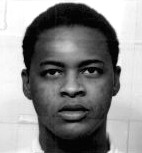
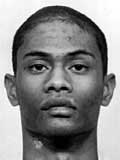
Richard James Wilkerson
Mass murderer Julio Gonzalez
Mass murderer · USA · 1990
Julio Gonzalez was sentenced to 174 twenty-five-year sentences (a total of 4,35…
87 victims
Julio Gonzalez
Mass murderer · USA · 1990
Julio Gonzalez was sentenced to 174 twenty-five-year sentences (a total of 4,35…
87 victims
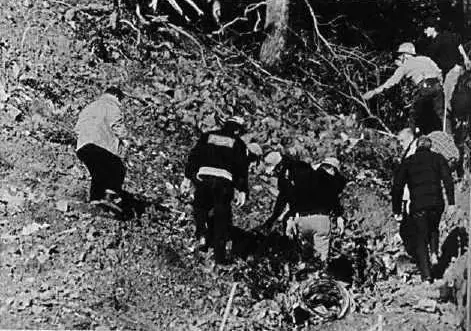 David Burke
Mass murderer · USA · 1987
David Augustus Burke (May 18, 1952–December 7, 1987) was an employee of USAir,…
43 victims
David Burke
Mass murderer · USA · 1987
David Augustus Burke (May 18, 1952–December 7, 1987) was an employee of USAir,…
43 victims
 George Jo Hennard
Mass murderer · USA · 1991
George Jo Hennard carried out a mass killing at a Luby’s Cafeteria in Killeen,…
23 victims
George Jo Hennard
Mass murderer · USA · 1991
George Jo Hennard carried out a mass killing at a Luby’s Cafeteria in Killeen,…
23 victims
 James Huberty
Mass murderer · USA · 1984
James Oliver Huberty was a 41-year-old unemployed security guard. He was born i…
21 victims
James Huberty
Mass murderer · USA · 1984
James Oliver Huberty was a 41-year-old unemployed security guard. He was born i…
21 victims
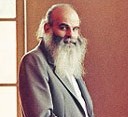 Ronald Gene Simmons
Mass murderer · USA · 1987
Ronald Gene Simmons was a retired United States Air Force sergeant. Over the Ch…
16 victims
Ronald Gene Simmons
Mass murderer · USA · 1987
Ronald Gene Simmons was a retired United States Air Force sergeant. Over the Ch…
16 victims
 Albert Foulcher
Murderer · France · 1993
Albert Foulcher was described as a former insurance agent and a gun enthusiast.…
5 victims
Albert Foulcher
Murderer · France · 1993
Albert Foulcher was described as a former insurance agent and a gun enthusiast.…
5 victims
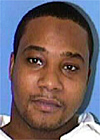 Jeffery Lynn Williams
Murderer · USA · 1994
Jeffery Lynn Williams was convicted of capital murder for killing Barbara Jacks…
1 victim
Jeffery Lynn Williams
Murderer · USA · 1994
Jeffery Lynn Williams was convicted of capital murder for killing Barbara Jacks…
1 victim
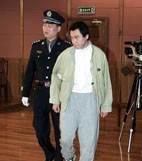 Chen Zhaofeng
Murderer · China · 2001
Chen Zhaofeng was born in Mudanjiang, a city in Northeast China’s Heilongjiang…
2 victims
Chen Zhaofeng
Murderer · China · 2001
Chen Zhaofeng was born in Mudanjiang, a city in Northeast China’s Heilongjiang…
2 victims
 Vanessa Williamson
Murderer · USA · 2010
Vanessa Kay Williamson was convicted by a Shasta County jury and was sentenced…
1 victim
Vanessa Williamson
Murderer · USA · 2010
Vanessa Kay Williamson was convicted by a Shasta County jury and was sentenced…
1 victim
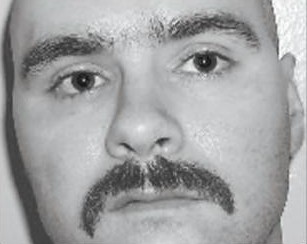 Thomas Wayne Akers
Murderer · USA · 1998
December 18, 1998 — Thomas Wayne Akers and his cousin, Timothy Martin, robbed a…
1 victim
Thomas Wayne Akers
Murderer · USA · 1998
December 18, 1998 — Thomas Wayne Akers and his cousin, Timothy Martin, robbed a…
1 victim
 Olaf Däter
Serial killer · Germany · 2001
Olaf Däter (born September 25, 1969 in Bremerhaven) was a German serial killer…
5 victims
Olaf Däter
Serial killer · Germany · 2001
Olaf Däter (born September 25, 1969 in Bremerhaven) was a German serial killer…
5 victims
- Gender
- male
- Country
- USA
- Location
- Harris County, Texas, USA
- Date of birth
- April 18, 1964
- Age at first offence
- 19
- Characteristics
- robbery, revenge
- Victim profile
- Anil Varughese, 18, Rod Harris, 22, Arnold Pequeno, 19, and his brother Joerene Pequeno, 18 ( Malibu Grand Prix Race Center employees)
- Method of murder
- St abbing with knife
- Date(s) of murder
- July 1, 1983
- Years active
- 1983
- Date of arrest
- Same day
- Status
-
Executed
Executed by lethal injection in Texas on August 31, 1993
Case name
Richard James Wilkerson (#756)
Status / outcome
Richard James Wilkerson was executed by lethal injection in Texas on August 31, 1993.
Timeline
- June 20, 1983 — Wilkerson’s employment at the Malibu Grand Prix Race Center was terminated.
- June 30, 1983 — Wilkerson, James Randle, and Kenneth Ransom entered the Malibu Grand Prix Raceway (after closing time); they demanded Wilkerson’s final paycheck from shift supervisor Anil Varughese. Wilkerson later cashed his final payroll check.
- Late that evening on the day that the bodies were discovered — Ransom was with Phillips, watching television; after a news story about the murders was broadcast, Ransom was visibly upset.
- Around seven o'clock p.m. — Ransom told Phillips that he was going to Wharton, Texas.
- Before midnight — Jessie, Ransom’s younger brother, saw Ransom leave with Randle and Wilkerson at some time before midnight.
- Around eight o'clock a.m. on July 1, 1983 — The bodies of Anil Varughese, Rod Harris, Joerene Pequeno, and Arnold Pequeno were discovered at the race center by a friend of Varughese.
- July 1, 1983 — Ransom, with Randle and Wilkerson, returned to Phillips’ home at three o'clock a.m.; Wilkerson was carrying a black satchel.
- July 1983 — Wilkerson was indicted for the offense of capital murder.
- August 12, 1991 — A Texas trial court issued findings in Ex Parte Wilkerson, No. 383749-B (Harris County, Tex. August 12, 1991), including a finding about counsel’s psychological investigation.
- August 14, 1991 — Wilkerson v. Collins, No. H-91-2252 (S.D.Tex. August 14, 1991) (Memorandum Opinion), formed part of the recitation of facts.
- Jan. 6, 1992 — The United States Court of Appeals for the Fifth Circuit affirmed the district court’s denial of Wilkerson’s petition for writ of habeas corpus and vacated the stay of execution.
- January 6, 1984 — Following trial, a verdict was returned finding Wilkerson guilty of the capital offense.
- January 7, 1984 — The jury returned affirmative answers to the special issues submitted under Texas death penalty statute; Wilkerson was sentenced to death.
- May 15, 1989 — Ex Parte Wilkerson, No. 17,443-02 (Tex.Cr.App. May 15, 1989) denied habeas corpus relief.
- 1987 — Wilkerson filed his first application for a post-conviction writ of habeas corpus in state court.
- 1989 — Wilkerson filed a pro se motion seeking an emergency stay from the United States District Court and requested appointment of counsel; the district court granted the stay and appointed counsel.
- 1984 — Wilkerson was convicted and sentenced by an all-white jury.
People involved
Richard James Wilkerson
Richard James Wilkerson was the petitioner-appellant, #756. He was age 29 (19) and executed on August 31, 1993. He had been fired two weeks before the crimes, and his employment was terminated on June 20, 1983.
In the federal appellate proceedings, he appealed denial of his petition for writ of habeas corpus and sought relief based on claims related to the operation of the Texas capital punishment sentencing statute, the prosecutor’s peremptory challenges of jurors, and ineffective assistance of counsel.
Victims and employees at the Malibu Grand Prix Race Center
- Anil Varughese (18) — stabbed at least eight times (five times in the chest and three times in the abdomen); his body was discovered in the manager’s office.
- Roddy Harris (22) / Rod Harris — stabbed at least seven times in the chest; his body was found in one of the stalls.
- Arnold Pequeno (19) — stabbed and cut twenty-two times in the neck, chest, abdomen, back and right hand; one cut severed his jugular vein; his head was under one of the urinals; his watch and class ring were missing along with a black satchel containing school books.
- Joerene Pequeno (18) — stabbed eleven times (once in the chest, once in the neck, once in the back, and once in the right hand) and stabbed seven times in the neck area with one cut severing his jugular vein; his body was found in the other stall.
Co-defendant
- Kenneth Ray Ransom — co-defendant; his blood was genetically compatible with blood found that did not match the victims or either Randle or Wilkerson. Kenneth Ray Ransom was executed in 1997.
- James Randle — co-defendant (described as “another man” in one account); Randle’s fingerprint was lifted from the inside of the door to the bathroom stall where Joerene Pequeno’s body was found.
Family and witnesses
- Wanda Phillips — Ransom’s girlfriend; saw events at her home during the day and evening; Phillips estimated Ransom’s share to be around three hundred and twenty-five dollars.
- James Randle’s mother — borrowed a butcher knife from a neighbor earlier that day and was later unable to find it; between nine thirty and nine forty-five p.m., she saw Randle with Richard James Wilkerson, Randle’s cousin, and “another boy.”
- Randle’s younger brother, Jessie — saw Ransom leave with Randle and Wilkerson at some time before midnight.
- Wilkerson’s sister — saw Ransom standing outside her home when she unlocked the screendoor to let her brother inside; saw Wilkerson rummage through the drawer of butcher knives and saw Ransom speaking with Wilkerson and Randle.
- Wilkerson’s sister Michelle Winn — wrote Richard James Wilkerson’s last statement: “Written through his sister Michelle Winn.”
The offence
On June 30, 1983 and into the early morning hours of July 1, 1983, Wilkerson and co-defendants entered the Malibu Grand Prix Raceway (Malibu) after closing time and committed a capital murder.
Wilkerson demanded his final paycheck from shift supervisor Anil Varughese. Varughese accompanied Wilkerson to the manager’s office while Randle and Ransom remained outside with three Malibu employees. Wilkerson struck Varughese, threatened him with a knife, directed him to open the safe, and killed him with the knife by stabbing him approximately forty-two times. Randle and Ransom killed the other three Malibu employees.
The killers left the Malibu with money taken from the safe and Wilkerson’s final payroll check, which he eventually cashed. They made off with about $1,800 and spent much of it on clothing just hours after the killings.
After the killings, Wilkerson, Randle, and Ransom returned to Phillips’ home. Wilkerson carried a black satchel; Ransom tended to a severe cut on the inside of his right hand while in the bathroom. Inside the bedroom, Wilkerson poured the contents of the black satchel onto the bed, including currency, a wallet, a calculator, and a watch. Some money was bloody. The three men counted the money and watched television. They discussed having “slashed” somebody’s throat and “put the knife in someone['s] temple.”
Phillips cleaning the kitchen discovered that a billfold, some credit cards, and a driver’s license had been discarded in the garbage; the driver’s license had the name “Roddy Harris” on it. Randle took the billfold, the credit cards, and the license away from Phillips and threw them into the dumpster.
At around eight o'clock a.m. the next morning, the bodies were discovered at the race center by a friend of Varughese. The bodies showed extensive stabbing and cutting injuries as set out above. A black satchel containing Arnold Pequeno’s school books and items including Arnold’s watch and class ring were missing. Over thirteen hundred dollars was missing from the race center’s safe and petty cash drawers. Wilkerson’s last paycheck was also missing; his time card had been signed and was found laying on the manager’s desk.
Investigation
Crime scene and forensic findings
There was blood not matching that of the victims on the sink’s counter, on a paper towel and on the bathroom door. A trail of blood led out of the bathroom, through the race center and into the parking lot area. Analysis revealed that this blood could not have come from any of the victims or from either Randle or Wilkerson; only Ransom’s blood was genetically compatible to it.
The fingerprint to Ransom’s left index finger was lifted from the door to the bathroom stall where Harris’ body was found, discovered on the inside of the door at the top. Randle’s fingerprint was lifted from the inside of the door to the bathroom stall where Joerene Pequeno’s body was found.
The knife taken from Phillips’ home was discovered near the racetrack area and was broken into pieces.
Other physical and circumstantial evidence
The fingerprint and blood evidence were connected to Ransom and the bathroom stall doors as described. Wilkerson’s time card was signed and found on the manager’s desk. Wilkerson’s last paycheck was missing, as was the safe/petty cash money amount specified.
Wilkerson had been employed by the race center until his termination on June 20, 1983, and could not pick up his last paycheck until June 30, 1983, the day Ransom told Phillips he was going to pick up Randle’s cousin’s paycheck. A calculator that was in the satchel along with the satchel itself was identified at trial as belonging to Arnold Pequeno.
Arrest and statements
Shortly after Wilkerson was arrested, he gave a statement to police officers admitting his involvement in the robbery and the murder. He directed and accompanied police to locations where evidence of the crime was found. The officers who took his statement believed that he was forthright and honest.
Trial
Indictment and verdict
In July 1983, Wilkerson was indicted for the offense of capital murder. On January 6, 1984, following trial, a verdict was returned finding Wilkerson guilty of the capital offense.
On the following day, the jury returned affirmative answers to the special issues submitted under the Texas death penalty statute, Texas Code of Criminal Procedure article 37.071.
Sentencing jury findings
Pursuant to the jury’s findings and the Texas statute, Wilkerson was sentenced to death. The Texas Court of Criminal Appeals affirmed Wilkerson’s conviction and death sentence and denied rehearing (Wilkerson v. State, 726 S.W.2d 542 (Tex.Cr.App.1986)). Certiorari was denied by the United States Supreme Court (Wilkerson v. Texas, 480 U.S. 940, 107 S.Ct. 1590, 94 L.Ed.2d 779 (1987)).
Jury instructions and special issues
The appellate opinion set out the Texas death penalty statute provisions and the punishment phase charge given to the jury, including:
- the three special issues: deliberate conduct with reasonable expectation of death; probability of future violent criminal acts constituting a continuing threat; and, if raised by the evidence, whether the killing was unreasonable in response to provocation by the deceased;
- unanimity and threshold requirements for “yes” and “no” answers, including that the court instructed that it may not answer any issue “yes” unless unanimously, and may not answer any issue “no” unless 10 or more jurors agree;
- that if the jury returned affirmative findings on each submitted issue, the court would sentence the defendant to death, and if the jury returned a negative finding on or was unable to answer any issue submitted, the court would sentence the defendant to life confinement in the Texas Department of Corrections.
The charge also instructed the jury on the burden of proof and the effect of juror votes on each special issue, including that if any juror had a reasonable doubt as to whether the answer should be “Yes,” then the juror should vote “No.”
No objections were made to the court’s instructions.
Sentencing
Wilkerson was sentenced to death after the jury returned affirmative answers to the special issues. The Texas Court of Criminal Appeals affirmed the conviction and death sentence and denied rehearing (Wilkerson v.
Appeals
State appellate review (Texas Court of Criminal Appeals)
- Wilkerson v. State, 726 S.W.2d 542 (Tex.Cr.App.1986) — affirmed conviction and death sentence; rehearing denied.
United States Supreme Court (certiorari)
- Wilkerson v. Texas, 480 U.S. 940, 107 S.Ct. 1590, 94 L.Ed.2d 779 (1987) — certiorari was denied.
Post-conviction habeas corpus (state)
Wilkerson filed his first application for post-conviction writ of habeas corpus in state court, raising claims including ineffective assistance of trial counsel and a constitutional challenge to the state’s use of peremptory jury challenges under Batson v. Kentucky.
The state trial court recommended denial without conducting a hearing; the Texas Court of Criminal Appeals remanded for an evidentiary hearing on the Batson claim. After an evidentiary hearing, the trial court found that Wilkerson had made a prima facie showing of purposeful discrimination, but ultimately concluded Wilkerson had not proven a Batson claim because of the prosecutor’s race-neutral explanations. The Texas Court of Criminal Appeals denied relief in Ex Parte Wilkerson, No. 17,443-02 (Tex.Cr.App. May 15, 1989). The United States Supreme Court denied certiorari in Wilkerson v. Texas, 493 U.S. 924, 110 S.Ct. 292, 107 L.Ed.2d 272 (1989). Two justices dissented, stating that a mixed-motives case was established and that, under Batson, race should not play any part in a prosecutor’s use of peremptory challenges (Marshall, J., dissenting; joined by Brennan, J.).
Federal habeas corpus proceedings
Wilkerson filed a pro se motion seeking an emergency stay and requested appointment of counsel; the district court granted the stay and appointed counsel. Wilkerson filed an amended petition. The district court granted the state’s motion for summary judgment. On appeal, the Fifth Circuit remanded with directions to dismiss without prejudice because Wilkerson failed to exhaust all habeas corpus claims in state court. After further state court proceedings, Wilkerson’s motion for stay of execution and for an evidentiary hearing was denied by the Texas Court of Criminal Appeals. Wilkerson petitioned again in federal court; the state moved for summary judgment; the district court found state remedies exhausted, granted summary judgment, and denied Wilkerson’s application for a stay of execution.
The Fifth Circuit granted a stay of execution to enable appellate review and heard oral argument by counsel.
Fifth Circuit decision (present appeal)
On Jan. 6, 1992, the Fifth Circuit:
- affirmed the district court’s denial of Wilkerson’s petition for writ of habeas corpus; and
- vacated the stay of execution.
Legal claims and court analysis (federal appeal)
A. Jury discretion / Eighth Amendment challenge
Wilkerson asserted an Eighth Amendment challenge to sentencing procedures Texas imposed for the sentencing phase, claiming the jury could not give full consideration to evidence in deciding whether to impose the death penalty and arguing that Penry v. Lynaugh established that the statute precluded the jury from considering mitigating value of young age and cooperation with authorities. He further attacked whether the jury could exercise guided discretion.
The appellate opinion addressed the Texas statutory sentencing framework and referenced Furman, Gregg, Caldwell, Penry, and other cases discussing guided discretion and reliability requirements.
The opinion concluded that the Texas special issues had previously been recognized as sufficient guides to jury discretion and that they were sufficient in Wilkerson’s case also.
B. Penry claim: youth and acceptance of responsibility
Wilkerson alleged the sentencing statute did not allow the jury to consider or give full effect to mitigating evidence of youth and acceptance of responsibility.
The appellate opinion addressed:
- procedural bar arguments tied to special instructions and objections, and it stated that Wilkerson’s failure to object or request special instructions did not bar his claim.
- “Penry factors” regarding:
- Youth: Wilkerson claimed he had impairments affecting his mental age and quality of youth, and alleged borderline mental retardation and brain dysfunction with cognitive impairments including severely impaired auditory processing and that he was functionally illiterate. The state argued Wilkerson’s school report showed low intelligence but did not show mental retardation. The appellate opinion reasoned that Penry-type severe mental impairments were established in Penry’s record while Wilkerson’s problems were more conjectural. It noted there was no psychiatric testimony offered at trial and that Wilkerson referred to a later psychological evaluation first tendered in state habeas proceedings.
- Acceptance of responsibility: Wilkerson argued the jury instructions prevented the jury from giving full mitigating effect to his acceptance of responsibility through cooperation. The appellate opinion described that Wilkerson gave a statement admitting involvement and directed police to evidence locations, with officers believing he was forthright and honest. It also described that counsel made an uninterrupted argument to the jury that Wilkerson’s acceptance of responsibility could and should be considered under the special issues. The opinion concluded additional instructions were not required and agreed with the district court’s view that acceptance of responsibility and cooperation could be considered in mitigation under the special issues.
The appellate opinion further described a handwritten jury note asking:
- “What is the effect if one of the Special Issues is not answered?”
- “How is the word 'probability' in Special Issue No. 2 defined?” and noted that the trial court responded it could not answer the first question under the law and could not define the word “probability.”
C. Batson claim: peremptory challenges and jury composition
Wilkerson alleged the jury selection process was tainted under Batson v. Kentucky; he claimed racial considerations formed an impermissible part of the prosecutor’s use of peremptory challenges to strike two potential jurors who were black. The appellate opinion addressed timeliness and procedural default, including that Batson’s evidentiary rule required a timely objection when strikes were made and that failure to timely object at trial was a constitutional bar to the Batson challenge. The Fifth Circuit declined to address the district court’s merits ruling on the Batson claim because review was barred.
D. Ineffective assistance of counsel claim
Wilkerson asserted ineffective assistance based on presumed correctness of state court findings under 28 U.S.C. § 2254(d) and argued he was entitled to a federal evidentiary hearing. The Fifth Circuit adopted the district court’s analysis of counsel claims.
The opinion applied the Strickland v. Washington standard and evaluated:
- Deficient performance:
- Reasonable investigation: Wilkerson argued counsel failed to reasonably investigate mental condition and sought expert evaluation. The appellate opinion recounted a trial court finding that counsel conducted reasonable inquiry into psychological history and made a decision to forego further inquiry. It noted counsel retained an investigator, talked with and observed Wilkerson, and interviewed family; it concluded these procedures did not show unreasonable assistance.
- Development of mitigating evidence: Wilkerson claimed counsel failed to investigate factors in background and mental competency that would produce mitigating evidence. The appellate opinion described the mitigating evidence Wilkerson asserted (school records of a psychologist or psychiatrist interviewed Wilkerson as a child; alleged present mental impairment; alleged deprived family background; asserted past good behavior and lack of criminal record) and concluded the allegations did not demonstrate ineffective assistance. It noted counsel interviewed Wilkerson and his mother and other relatives; relatives could not supply names of potential witnesses; and investigation did not reveal reason to suspect mental capacity impaired.
- Prejudice:
- The opinion stated Wilkerson failed to affirmatively prove prejudice and failed to show sufficient quality and force such that a life sentence would have resulted.
- Chilled effect / strategy:
- Wilkerson asserted the Texas statute chilled counsel from developing mitigating evidence or that counsel lacked knowledge of mitigating evidence. The appellate opinion rejected these claims, stating trial counsel argued Wilkerson’s age and acceptance of responsibility as if they could be considered under the special issues and concluding no chilling effect was shown.
Other details
Crime scene details and missing items
At the Malibu Grand Prix, multiple items were missing and/or discarded:
- Wilkerson’s last paycheck was missing.
- Wilkerson’s time card had been signed and was found laying on the manager’s desk.
- Arnold Pequeno’s watch and class ring were missing.
- A black satchel was missing that carried Arnold Pequeno’s school books.
- Phillips discovered a billfold, credit cards, and a driver’s license discarded in garbage; the driver’s license bore the name “Roddy Harris.”
- The calculator in the satchel and the satchel were identified at trial as belonging to Arnold Pequeno.
Richard James Wilkerson’s last statement
Richard James Wilkerson’s last statement was:
“This execution is not justice. This execution is an act of revenge! If this is justice, then justice is blind. Take a borderline retarded young male who for the 1 st time ever in his life committed a felony then contaminate his TRUE tell all confession add a judge who discriminates plus an ALL-WHITE JURY pile on an ineffective assistance of counsel and execute the option of rehabilitation persecute the witnesses and you have created a death sentence for a family lasting over 10 years. I will say once again…..This execution isn’t justice – but an act of revenge. Killing R.J. will not bring Anil back, it only justifies "an eye for an eye and a tooth for a tooth." It’s too late to help R.J., but maybe this poem will help someone else out there. "Seeing Through the Eyes of a Death Row Inmate" Sometime I wonder why, why he? Why did he go out into the world to see? To be out there and see what really did exist, now his name is written down on the Death Row list. I can only imagine how lonesome he was all by himself. We both knew he had no future left! His hopes and dreams became a fantasy. He often said, "There’s nothing left of me." I have asked myself, why did he get involved with drugs? He could never explain why he hung around with thugs? Did it really make him feel like a king – Did he actually think he was capable of getting away with anything? He knew the thought of life wasn’t ticking in his head. There’s nothing left but the memory of those who lay dead. What was did, cannot be undone. He was confessed, he was one of the guilty ones. What would he say to the victim’s family? – I’m sorry and my head wasn’t on straight. I hope you will accept my apology, even though it’s too late. I never knew I would take a life and commit a crime. I regret it because now I have to face the lethal injection while doing death row time. I knew I would pay with struggle and strife, but I never thought the cost would be me losing my life. Richard J. Wilkerson Written through his sister Michelle Winn”
Education
Richard James Wilkerson’s education level was stated as 10th grade.
Counts of victims
The Malibu Grand Prix murders involved four employees: Anil Varughese, Rod Harris, Joerene Pequeno, and Arnold Pequeno.
Spotted an error, or have more information about this case?