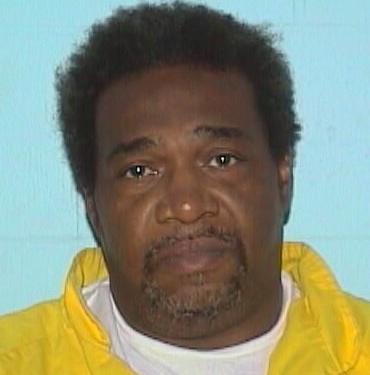
Milton Johnson
Serial killer Carl Eugene Watts
Serial killer · USA · 1974
Carl Eugene Watts (born November 7, 1953; died September 21, 2007), also known…
100 victims
Carl Eugene Watts
Serial killer · USA · 1974
Carl Eugene Watts (born November 7, 1953; died September 21, 2007), also known…
100 victims
 Rodney Alcala
Serial killer · USA · 1977
Rodney James Alcala (born August 23, 1943) was also known as Rodrigo Jacques Al…
100 victims
Rodney Alcala
Serial killer · USA · 1977
Rodney James Alcala (born August 23, 1943) was also known as Rodrigo Jacques Al…
100 victims
 Glen Edward Rogers
Serial killer · USA · 1993
Glen Edward Rogers was a spree killer whose cross-country rampage in 1994-95 le…
70 victims
Glen Edward Rogers
Serial killer · USA · 1993
Glen Edward Rogers was a spree killer whose cross-country rampage in 1994-95 le…
70 victims
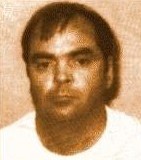 Donald Leroy Evans
Serial killer · USA · 1975
Donald Leroy Evans (born July 5, 1957) was an American serial killer who murder…
60 victims
Donald Leroy Evans
Serial killer · USA · 1975
Donald Leroy Evans (born July 5, 1957) was an American serial killer who murder…
60 victims
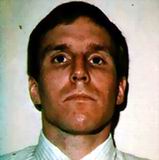 Michael Swango
Serial killer · USA · 1981
Michael Swango (Joseph Michael Swango) was a physician and American serial kill…
60 victims
Michael Swango
Serial killer · USA · 1981
Michael Swango (Joseph Michael Swango) was a physician and American serial kill…
60 victims
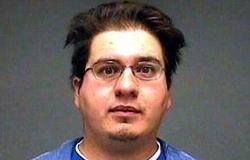 Efren Saldivar
Serial killer · USA · 1989
Efren Saldivar (born 30 September 1969) was an American serial killer who murde…
50 victims
Efren Saldivar
Serial killer · USA · 1989
Efren Saldivar (born 30 September 1969) was an American serial killer who murde…
50 victims
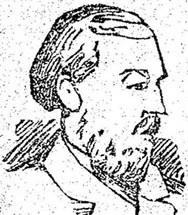 William Henry Bury
Murderer · United Kingdom · 1888
William Henry Bury was executed by hanging in Dundee on April 24, 1889. He was…
2 victims
William Henry Bury
Murderer · United Kingdom · 1888
William Henry Bury was executed by hanging in Dundee on April 24, 1889. He was…
2 victims
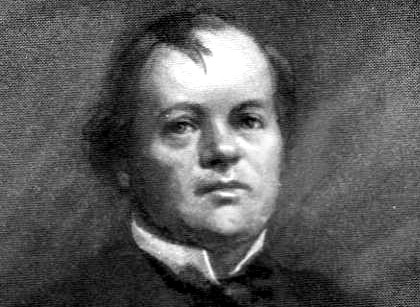 William Palmer
Serial killer · United Kingdom · 1846
William Palmer (August 6, 1824 – June 14, 1856) was an English doctor who was c…
13 victims
William Palmer
Serial killer · United Kingdom · 1846
William Palmer (August 6, 1824 – June 14, 1856) was an English doctor who was c…
13 victims
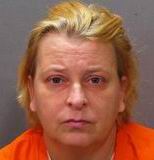 Patty Michelle White
Murderer · USA · 2011
Patty Michelle White killed her former roommate, Michele O'Dowd, and later plea…
1 victim
Patty Michelle White
Murderer · USA · 2011
Patty Michelle White killed her former roommate, Michele O'Dowd, and later plea…
1 victim
 Angelo Colalillo
Murderer · Canada · 1993
Angelo Colalillo was suspected of committing serial sexual assaults and murders…
3 victims
Angelo Colalillo
Murderer · Canada · 1993
Angelo Colalillo was suspected of committing serial sexual assaults and murders…
3 victims
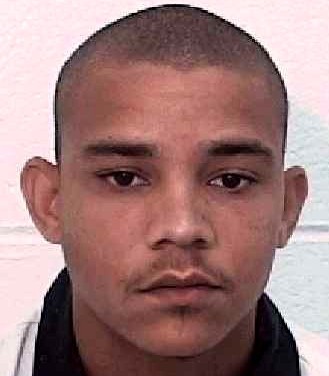 Marion Wilson
Murderer · USA · 1996
Marion Wilson Jr. was convicted of malice murder, felony murder, armed robbery,…
1 victim
Marion Wilson
Murderer · USA · 1996
Marion Wilson Jr. was convicted of malice murder, felony murder, armed robbery,…
1 victim
 Ronald Eric Salazar
Homicide · USA · 2005
Ronald Eric Salazar was 14 when police said he killed his 11-year-old sister in…
1 victim
Ronald Eric Salazar
Homicide · USA · 2005
Ronald Eric Salazar was 14 when police said he killed his 11-year-old sister in…
1 victim
- Gender
- male
- Country
- USA
- Location
- Cook/Will Counties, Illinois, USA
- Date of birth
- May 15, 1950
- Age at first offence
- 33
- Characteristics
- rape, serial rapist
- Victim profile
- Men and women (including two deputy sheriffs)
- Method of murder
- Shooting - St abbing with knife
- Date(s) of murder
- June-August 1983
- Years active
- 1983
- Date of arrest
- March 9, 1984
- Status
-
Sentenced to death
Sentenced to death on January 28, 1986
Case record: Milton Johnson
Background
Milton Johnson was an Illinois native born in 1951. He was convicted at age 19 of raping a Joliet woman and torturing his victim with a cigarette lighter.
The offence
Johnson raped Patricia Payne and also assaulted her multiple times. She survived. He:
- ordered Patricia Payne to give him Hackett's wallet and her purse,
- ordered Payne to crawl from the car and into a pickup truck parked nearby,
- sexually assaulted Payne while driving,
- raped her after exiting the interstate and stopping the truck,
- stabbed Payne in the chest after stopping again on the shoulder of the road 10 minutes later,
- dumped her from the truck.
The record also described the “weekend murders” spree in Joliet and surrounding communities, marked by savage violence. The violence included shootings, stabbings, and killings of multiple victims over a period that ran from June 25 to August 25, 1983.
Victims and incidents mentioned
- June 25: two Will County sisters were killed in Will County.
- July 2: Kenneth and Terri Johnson were shot to death; the woman’s body was discarded in southwestern Cook County.
- July 16: five persons—including two deputy sheriffs—were killed in what authorities termed a “random wholesale slaughter.”
- July 17: Anthony Hackett was shot to death; his fiancée Patricia Payne was raped and stabbed.
- August 20: in a Joliet pottery shop, four women were shot and stabbed to death; their handbags were dumped nearby with money still inside.
- August 20: proprietor Marilyn Baers, 46, and her three customers—Anna Ryan, 75, Pamela Ryan, 29, and Barbara Dunbar, 39—were described as slain.
- August 21: in Park Forest, in Cook County, 40-year-old Ralph Dixon and 25-year-old Crystal Knight were bound; the throat slashing and stabbing were described as occurring in Dixon’s apartment.
- August 25: 82-year-old Anna Johnson was killed; a suspect was swiftly apprehended in that case, leaving seventeen murders unsolved.
Investigation
The record described investigative steps linking Johnson to multiple murders, including physical and forensic material and witness identification issues.
Patricia Payne identification and hypnosis
Special Agent John Meduga of the Illinois Department of Law Enforcement (now known as the Illinois State Police) spoke with Patricia Payne after Hackett was killed and Payne was injured. Payne indicated to Meduga that her assailant was an African American man with no observable facial hair.
Eight days later, Payne selected 42 photographs from approximately 1,500 mugshots, with 34 of those photographs showing facial hair. The record did not reveal whether Johnson’s photograph was chosen by Payne.
More than a month later, Payne selected four photographs from 137 mugshots, including one of Johnson. Payne did not choose Johnson’s photograph.
On March 9, Payne viewed a six-person lineup. Payne identified Johnson as her assailant after each person in the lineup repeated commands that the assailant had given Payne on the night of her ordeal. Payne unmistakably identified the defendant as her assailant.
The post-conviction appeal also addressed a due process claim connected to “a hypnotic interview session with Payne.” The discussion included that the State informed the public defenders about Payne’s hypnosis session, and that assistant public defenders informed the trial court they discussed filing a motion to suppress Payne’s identification. A quotation in the record attributed to Swano appeared during the appeal analysis:
“I received no information regarding hypnosis of the victim Patricia Payne,”
The appeal also included a quotation attributed to Swano in the same analysis:
“To my knowledge, [the public defenders] turned over everything they had”
The record stated that Payne’s hypnosis session focused only on identification of her assailant’s truck, not on identification of her assailant. It further stated that the State did not inquire into her identification of the truck, and that Payne’s testimony was admissible, citing the rule that “a witness’ hypnotically induced testimony” was not admissible in Illinois courts.
Receipt and truck evidence; physical evidence
The record described that Ann Shoemaker telephoned the Will County sheriff’s office in February 1984. Shoemaker described an incident in which a dark pickup truck had passed her several times while she was driving one night in July 1983. Shoemaker and a friend followed the truck and recorded its license plate number.
On March 6, 1984, Shoemaker’s recorded number was traced to a truck owned by Sam Myers, Johnson’s stepfather. After Myers signed a consent form, the police searched the truck and found:
- Caucasian head hairs similar to Payne’s hair,
- bloodstains,
- a steak knife,
- reddish brown fibers,
- and a sales receipt for a Tasmanian Devil stuffed doll.
Based on these items, the police obtained a search warrant for Myers’ residence, where Johnson lived.
The police seized three .357 Magnum cartridges from a dresser in Myers’ bedroom.
The record also stated that Swano later referenced a Great America Amusement Park receipt in the assailant’s truck and described it as evidence recovered during the investigation.
The narrative earlier in the case summary also stated that evidence collected at various murder scenes—including fibers and fingerprints—and a sales receipt bearing the name of Johnson’s step-father linked Johnson to ten of the Will County murders, including Hackett’s, the pottery shop massacre, and the carnage of July 16. It stated that the receipt was found beneath one of the murdered officers.
Evidence receipt: Vitullo evidence kit
The record included forms connected to a Vitullo rape kit and evidence handling:
- An authorization form dated July 17, 1983 authorized St. Joseph Hospital in Joliet, Illinois, to release:
- “One sealed evidence kit,”
- “Medical records,”
- Slides/Smears/Specimens,”
- “Sealed clothing bag(s)” to Special Agent Meduga.
The record included a verbatim label from an “EVIDENCE RECEIPT” form, signed by Illinois Department of Law Enforcement crime scene technician Melvin Trojanowski:
“Vitullo Evidence Kit, marked Patricia Earl Payne, Received from S/A John Meduga”
At trial, the State stipulated that defense exhibit 14 was the kit and it was admitted into evidence. The record stated that the court could not discern the condition of the Vitullo kit and did not know whether the kit contained any testable genetic material.
DNA testing discussion in post-conviction analysis
In the post-conviction analysis, Johnson contended that DNA testing of the Vitullo rape kit would cast doubt on whether he raped Payne and therefore whether he murdered Hackett. The petition alleged that a vaginal swab taken during Payne’s July 17, 1983 hospital examination was delivered to and retained by the State Police Crime Lab and that it was never tested.
The defendant claimed:
“[This swab] will have been maintained by the lab or evidence section in an acceptably preserved and uncontaminated state for DNA testing. Said swab would never be stored in a manner that would allow it to come into contact with foreign DNA. The swab has been subject to a chain of custody sufficient to establish that is has not been substituted, tampered with, replaced, or altered in any material respect.”
The appeal discussed section 116-3 of the Code of Criminal Procedure of 1963 and included the statute text as quoted in the opinion:
“(a) A defendant may make a motion before the trial court that entered the judgment of conviction in his or her case for the performance of fingerprint or forensic DNA testing on evidence that was secured in relation to the trial which resulted in his or her conviction, but which was not subject to the testing which is now requested because the technology for the testing was not available at the time of trial. Reasonable notice of the motion shall be served upon the State.
(b) The defendant must present a prima facie case that: (1) identity was the issue in the trial which resulted in his or her conviction; and (2) the evidence to be tested has been subject to a chain of custody sufficient to establish that it has not been substituted, tampered with, replaced, or altered in any material aspect.
(c) The trial court shall allow the testing under reasonable conditions designed to protect the State's interests in the integrity of the evidence and the testing process upon a determination that: (1) the result of the testing has the scientific potential to produce new, noncumulative evidence materially relevant to the defendant's assertion of actual innocence; (2) the testing requested employs a scientific method generally accepted within the relevant scientific community.”
Arrest
On March 9, 1984, Milton Johnson was arrested while visiting his parole officer. He was charged with aggravated battery and deviate sexual assault in the rape of Anthony Hackett’s fiancée.
The record also described police focusing on Johnson after repeated complaints of a black pickup driver harassing Joliet women over the past two weeks, ending when one of the victim’s memorized Johnson’s license number.
Trial
Venue change; jury trial and sentencing jury waiver
The trial court granted a change of venue due to negative pretrial publicity in Will County, transferring the case to Iroquois County.
Johnson waived his right to a trial by jury in the Hackett case.
Following a jury trial, Johnson was convicted of:
- first degree murder of Hackett,
- aggravated kidnapping,
- deviate sexual assault,
- rape,
- and attempted murder of Payne.
Johnson waived his right to a sentencing jury. The trial court found him eligible for the death penalty and found no mitigating circumstances sufficient to preclude the death penalty.
The trial court sentenced him:
- to death for Hackett’s murder,
- and to concurrent terms of 40 years’ imprisonment for deviate sexual assault, rape, and attempted murder.
Representation and continuances
Initially, the Will County public defender was appointed to represent Johnson. On June 1, 1984, William Swano entered his appearance as retained attorney.
The trial court granted Swano three continuances totaling 55 days, with the trial date set for July 26, 1984.
In the appeal analysis, the opinion included the following quoted statements by Swano to the trial court:
“He apparently was out of town last week, and I have not even personally spoken with him. It's not one forensic person, Judge. There are many experts to be retained. *** I'm not sure [how many] at this time. I have to interview the State forensic people to determine what their testimony will be.”
“[W]e have been collating, organizing, researching all the material received as well as the continued discovery that we receive in our office every day. Every day I get another piece of discovery, another piece of police reports in my office, and what we have been doing is organizing the case and putting it together to see what we are up against.”
“There are hundreds of other pages of scientific evidence, specific ballistics, fingerprints, hair, blood, other types of evidence that has [ sic ] to be digested by the Defense and has [ sic ] to be explored to be retained by the Defense ***.”
At the continuance stage, one quoted warning attributed to Swano included:
“an unfair, ill-prepared, ineffective assistance of counsel.”
Also at continuance proceedings, the opinion included another Swano quotation:
“At this point in time, it is-it is our contention that we need more time. And I can't specifically point to the things that have to be done, because there's a lot of things that have to be done. There's more witnesses to interview. There's physical evidence that has yet to have been seen by the staff. There is further discovery matters that have to be resolved between [State's Attorney's office representatives] and our staff here. There is a lot more research to be done for issues that we have identified, that willcome [ sic ] up during the course of the trial. Quite frankly, what we are asking for is some more time to-to more adequately prepare, more time to more adequately research the various legal issues involved in this case.”
The record described that on June 19, 1991—almost seven years after Johnson’s conviction—Swano was indicted on federal racketeering charges relating to his representation of various gang members, specifying repeated bribery of judges, perjured evidence, and receiving cocaine in exchange for legal services. Swano pleaded guilty and was reindicted for explicit judicial corruption between 1980 and 1990. The record stated Swano was currently incarcerated (as of the time of the opinion).
Sentencing
Johnson was sentenced to death for Hackett’s murder.
The case summary further described that:
- On January 23, 1986, Johnson was convicted of quadruple murder in the ceramic shop massacre in the pottery shop.
- A second death sentence was pronounced five days later.
The current case status specified in the prompt stated that Johnson was “Sentenced to death on January 28, 1986.”
Appeals
Direct appeal
On direct appeal, convictions and sentences were affirmed. The opinion referenced:
- “People v. Johnson, 114 Ill. 2d 170 (1986).”
Post-conviction history
The defendant then filed a pro se post-conviction petition in the Will County circuit court alleging ineffective assistance of counsel on direct appeal and in post-conviction proceedings. The trial court dismissed the petition.
On appeal, the reviewing court affirmed in part, reversed in part, and remanded, holding ineffective assistance appellate counsel claim was properly dismissed, but the claim relating to post-conviction attorney performance was improperly dismissed. The opinion referenced:
- “People v. Johnson, 154 Ill. 2d 227 (1993).”
On remand, Johnson filed a nine-count first amended post-conviction petition. The trial court dismissed it without an evidentiary hearing. The opinion addressed Johnson’s appeal from the Will County circuit court order dismissing his first amended post-conviction petition without an evidentiary hearing.
Appellate disposition in the opinion quoted
The Illinois Supreme Court stated:
- “We now affirm in part, reverse in part, and remand for further proceedings.”
- “Affirmed in part and reversed in part; cause remanded.” The opinion also stated that it affirmed dismissal of some claims but reversed on others, and remanded.
Outcome
The appellate opinion held:
- The trial court erred in refusing to allow DNA testing of any testable genetic material in the Vitullo kit pursuant to section 116-3.
- The trial court erred in dismissing without an evidentiary hearing Johnson’s post-conviction claim of ineffective assistance of counsel from retained trial counsel William Swano.
- The trial court abused its discretion in refusing to order Swano’s evidence deposition.
- The trial court properly dismissed Johnson’s other post-conviction claims.
The opinion also explicitly addressed and denied Johnson’s request that the trial court grant Swano sufficient time for preparation as part of due process and described it as forfeited (a claim that could have been raised on direct appeal).
Other details
Initial capital-murder case details in background portion of the opinion
On July 16, 1983, Patricia Payne and her boyfriend, Anthony Hackett, drove from their hometown of Emden, Illinois, and spent the day at Great America Amusement Park in Gurnee, Illinois.
On that day, Hackett bought a stuffed doll depicting the Tasmanian Devil character; he placed the receipt for the doll in his wallet.
Around 10 p.m., Payne and Hackett left the park and, on the way home, they stopped Hackett’s car along Interstate 55 in Will County to sleep. Hackett slept in the front seat; Payne slept in the back.
Around 1:30 a.m. on July 17, Payne awoke to tapping on the passenger-side window followed by gunshots striking and killing Hackett.
The assailant ordered Payne to crawl from the car and into a pickup truck parked nearby, then drove down the interstate and sexually assaulted Payne while driving, raped her after exiting the interstate and stopping the truck, started to drive again, pulled the truck onto the shoulder of the road 10 minutes later, stabbed Payne in the chest, and dumped her from the truck.
Payne was found on the grassy median an hour later at 5:30 a.m. by a passing motorist, had no pulse or blood pressure, and was rushed to a Joliet hospital where doctors performed emergency surgery.
Handling of the rape kit and trial stipulation
The record noted at trial that defense exhibit 14 was the kit and it was admitted into evidence.
State’s positions quoted in hearings
In a February 16, 1996 hearing on Johnson’s motions to produce the Vitullo kit and obtain expert witness funds, a quotation attributed to the assistant State’s Attorney stated:
“If seminal fluid was there, we would be more than happy to say go ahead and test it because we are confident that it would prove that Mr. Johnson was the donor.”
In a December 3, 1997 hearing, the assistant State’s Attorney, conceding DNA testing was not available to Johnson at the time of his 1984 trial, advised the trial court:
“[I]f we want to set part of this case over till the 1st of the year in order for the State to do D.N.A. testing, I have no objection to that part of it. I would ask that we do it that way. I would ask that we do it that way. I can't see paying experts to do that when the State Police Crime Lab will do it for free January 1st.”
Swano’s interrogatory refusal quoted during the discovery analysis
During post-conviction discovery proceedings, the opinion stated Swano refused to be deposed and insisted cooperation be limited to answering written interrogatories. His interrogatory answers were summarily brief, and on the final page he added:
“I refuse to answer any other questions relating to my personal case or conduct other than matters regarding Milton Johnson and my role as his attorney.”
Quotation from Johnson’s petition about counsel
The record included a quotation in Johnson’s petition attacking Swano’s conduct and stating:
“Milton Johnson had the extreme misfortune of placing his trust in a drug-abusing, corrupt, unethical, and incompetent 'attorney'-a man who is now a convicted felon and who has repeatedly testified to bribing judges, witnesses, and otherwise fixing murder cases (as opposed to providing effective ethical assistance of counsel). The attorney, William Swano, *** took $15,000 from Milton Johnson's family and promised them a proper defense for their son; he told them that he would use some of the money to retain experts to counter the State's case. Swano, however, did no investigation into either trial evidence or mitigation, presented no expert rebuttal evidence, and based his defense primarily on material that was ultimately not allowed into evidence.”
The opinion also quoted Johnson’s petition about Swano:
“Once in the case, Swano's concern became avoiding the ire of the court and any situation where his withdrawal (and refund of unearned money already deposited in his own account ***) might be ordered or demanded.”
Quotation from Swano about unethical conduct in another case context
The record described Swano testimony in the trial of former Cook County Circuit Judge Thomas Maloney and included a quotation attributed to Swano:
“I did illegal criminal activities [from 1975 though 1990]. I was an unethical lawyer. *** Part of the unethical part of what I did was lie.”
Special and concurring/dissenting opinions included in the appeal
The opinion included Chief Justice Harrison’s specially concurring remarks. Harrison agreed with the majority’s analysis and conclusion that the circuit court erred in refusing DNA testing, and with the abuse-of-discretion conclusion about Swano’s evidence deposition and the improper dismissal without an evidentiary hearing.
Justice Kilbride concurred in part and dissented in part, agreeing with the majority regarding DNA testing, evidence deposition, and dismissal of the ineffective assistance claim, but also agreeing with Chief Justice Harrison that convictions and sentence should be set aside due to failure to conduct trial proceedings in accordance with new supreme court rules governing capital cases, and that those rules should be applied retroactively.
Spotted an error, or have more information about this case?