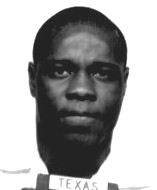
Anthony Charles Williams
Murderer Ervil LeBaron
Murderer · USA · 1972
Ervil Morrell LeBaron (1925 to August 16, 1981) was the leader of a polygamous…
35 victims
Ervil LeBaron
Murderer · USA · 1972
Ervil Morrell LeBaron (1925 to August 16, 1981) was the leader of a polygamous…
35 victims
 Brian Kevin Rosenfeld
Murderer · USA · 1985
Brian Kevin Rosenfeld Brian Kevin Rosenfeld was sentenced to three concurrent l…
23 victims
Brian Kevin Rosenfeld
Murderer · USA · 1985
Brian Kevin Rosenfeld Brian Kevin Rosenfeld was sentenced to three concurrent l…
23 victims
 Marvin Gray
Murderer · USA · 1975
Marvin Gray was convicted killer who claimed responsibility for 23 slayings and…
23 victims
Marvin Gray
Murderer · USA · 1975
Marvin Gray was convicted killer who claimed responsibility for 23 slayings and…
23 victims
 Yahweh ben Yahweh
Murderer · USA · 1980
Yahweh ben Yahweh was born and legally named Hulon Mitchell Jr. (October 27, 19…
23 victims
Yahweh ben Yahweh
Murderer · USA · 1980
Yahweh ben Yahweh was born and legally named Hulon Mitchell Jr. (October 27, 19…
23 victims
 Latonia Bellamy
Murderer · USA · 2010
Latonia Bellamy was sentenced to life plus 30 years in prison on February 8, 20…
2 victims
Latonia Bellamy
Murderer · USA · 2010
Latonia Bellamy was sentenced to life plus 30 years in prison on February 8, 20…
2 victims
 James Bryant Hudson
Murderer · USA · 2002
James Bryant Hudson was 57 at the time of execution and was pronounced dead at…
3 victims
James Bryant Hudson
Murderer · USA · 2002
James Bryant Hudson was 57 at the time of execution and was pronounced dead at…
3 victims
 Joseph Medley
Murderer · USA · 1940
Joseph Medley was a male White person identified as being associated with robbe…
3 victims
Joseph Medley
Murderer · USA · 1940
Joseph Medley was a male White person identified as being associated with robbe…
3 victims
 Volkert Van der Graaf
Murderer · Netherlands · 2002
Volkert van der Graaf (born July 9, 1969) was a confessed murderer of Dutch pol…
1 victim
Volkert Van der Graaf
Murderer · Netherlands · 2002
Volkert van der Graaf (born July 9, 1969) was a confessed murderer of Dutch pol…
1 victim
- Gender
- male
- Country
- USA
- Location
- Harris County, Texas, USA
- Date of birth
- November 8, 1959
- Age at first offence
- 19
- Characteristics
- serial rapist, kidnapping, rape, torture, drug addict
- Victim profile
- Vickie Lynn Wright (female, 13)
- Method of murder
- Beating with a board
- Date(s) of murder
- June 12, 1978
- Years active
- 1978
- Date of arrest
- Next day
- Status
-
Executed
Executed by lethal injection in Texas on May 28, 1987
Case identification
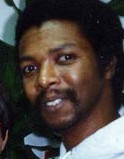
Anthony Charles Williams
STATUS and final statement
Williams was executed by lethal injection in Texas on May 28, 1987.
Williams made the following final statement:
Mother, I am sorry for all the pain I’ve caused you. Please forgive me. Take good care of yourself. Ernest and Otis, watch out for the family. Thank all of you who have helped me. I thank you all.
Background
Williams was 27 years old at the time of his execution and had a high school education level or GED.
Williams was described by his attorneys as having violent behavior linked to brain damage from a childhood accident. His attorneys argued that Williams did not get full medical examination or proper legal representation at trial.
At the time of the trial, the defense characterized Williams as a slow learner who had suffered difficulties since he was run over by a car. The defense introduced psychiatric testimony indicating that Williams was borderline mentally retarded, and the state rebutted with its own psychiatric testimony.
Williams’s attorneys blamed his violent behavior on brain damage suffered in a childhood accident. They argued that Williams did not get full medical examination or proper legal representation at trial.
Williams was a carpenter.
The offence
Thirteen-year-old Vickie Lynn Wright went with her sister to the Big Texas Bowling Alley in Houston, Texas. After their arrival, Wright went outside to get some change left in a friend’s car, a 1977 El Camino. When she did not return, her sister and friends went to the parking lot to look for her. They discovered that the El Camino was gone. They called Wright’s parents and the police.
Williams abducted Wright from a bowling alley parking lot in northeast Houston on June 1, 1978, and then raped and bludgeoned her to death.
Evidence at trial indicated that Wright was beaten with a 2-by-4 board and strangled, and that she was raped after she died.
The police discovered skid marks, a package of Kool cigarettes, matches and a blood-stained board near Wright’s body. The body was discovered in a wooded area near Williams’s neighborhood at approximately 4:40 p.m. on June 13, 1978.
An autopsy showed that Wright died from a skull fracture and intercranial hemorrhage from a blunt trauma to the head. The evidence showed that the skull fracture could have been caused by the board found at the scene. Bloody material was found in her vagina; seminal fluid was found in her mouth and rectum.
Williams denied killing the girl, but he told police that he had abducted her and hit her with a board in a field.
Timeline
- June 1, 1978 — Wright was abducted from a bowling alley parking lot in northeast Houston; Williams later raped and bludgeoned her to death.
- June 12, 1978 (approx. 8:45 p.m.) — Wright went with her sister to the Big Texas Bowling Alley in Houston.
- June 12, 1978 (between 9 and 10 p.m.) — Williams’s friends saw Williams driving an El Camino recklessly; he stopped to talk and told them the car belonged to his girl friend; he had blood on his shirt that he claimed to have received in a fight.
- June 13, 1978 (1:00 a.m.) — A.L. Anderson noticed the El Camino with its flashers on in front of her house.
- June 13, 1978 (4:00 a.m.) — Anderson awoke and noticed the car was still there; she reported it to police.
- June 13, 1978 (approx. 7:30 a.m.) — Police arrived; a tire, hub cap and part of the jack were missing from the vehicle; the spare tire had been put on the car.
- June 13, 1978 (approx. 4:40 p.m.) — Wright’s body was discovered in a wooded area near Williams’s neighborhood.
- June 13, 1978 (6:30 p.m. approx.) — Detective Zeringue arrived at the homicide scene and showed people gathering at the site a picture of the El Camino.
- June 13, 1978 (7:55 p.m.) — Williams was arrested, Miranda warnings were read, and he was taken to the police station.
- September 25, 1978 — The jury answered “yes” to both special issue questions and the court assessed punishment at death.
- October 14, 1981 — The Texas Court of Criminal Appeals affirmed Williams’s conviction.
- March 8, 1982 — The United States Supreme Court denied certiorari.
- October 7, 1985 — A stay was granted pending federal habeas proceedings.
- March 17, 1986 — Judge Bue dismissed Williams’s application for federal habeas relief and issued a certificate of probable cause to appeal.
- May 29, 1986 — Williams’s stay of execution was in effect pending the outcome of the federal appeal.
- January 28, 1987 — The federal appeal decision was issued (Anthony Charles Williams, Petitioner-Appellant v. James A. Lynaugh, Interim Director, Texas Department of Corrections, Respondent-Appellee).
- May 28, 1987 — Williams was executed by lethal injection in Texas.
Investigation
Detective Zeringue arrived at the scene about 6:30 p.m. He showed people gathering at the site a picture of the El Camino.
Two of Williams’s friends recognized the vehicle and told the detective they had seen Williams driving it the night before.
The police went to Williams’s home. Williams ran out the back gate to a nearby abandoned house. The police found him hiding in the attic.
Arrest and police questioning
Williams was arrested at 7:55 p.m. The police read Williams his Miranda warnings and took him to the police station.
At the station, Williams gave a written confession admitting that he accosted Vicky at the bowling alley, took her to a dark place by the bayou, and hit her in the face with his fist and with a board.
Williams denied having sex with Wright. Williams’s palm prints and a finger print were found on the El Camino.
Type O blood, which was Wright’s blood type, was found on the board, on Williams’s clothes and inside the El Camino.
Trial
Charges and plea
Williams was indicted for the capital murder of Vicky Lynn Wright while in the course of committing kidnapping, robbery and aggravated rape. He pled not guilty.
Guilt phase
At the conclusion of the guilt phase, the jury found Williams guilty of capital murder.
Punishment phase and evidence
During the separate punishment phase, the court sentenced Williams to death based on the jury’s responses to the two special issue questions.
Two special issue questions were put to the jury in accordance with Texas law:
- whether the conduct of the defendant that caused the death of the deceased was committed deliberately and with the reasonable expectation that the death of the deceased or another would result; and
- whether there was a probability that the defendant would commit criminal acts of violence that would constitute a continuing threat to society.
During the punishment phase, the state presented evidence of four extraneous and unadjudicated offenses that Williams allegedly committed:
- the rape of a sixteen-year-old acquaintance in April 1978;
- the abduction and sodomy-rape of a woman on April 5, 1978;
- the abduction of a woman from a post office, her rape and nonfatal shooting on June 1, 1978; and
- the abduction and sodomy-rape of a woman on June 10, 1978.
Each victim testified and three identified Williams as their assailant. In the fourth crime, Williams was identified by a witness who interrupted the crime.
The state also presented a witness who testified that Williams suspiciously approached her in her apartment complex parking lot after midnight on April 5, 1978. The witness testified that Williams requested help with jumping his car battery, but walked off when she told him that her boy friend, who was upstairs, would help.
In mitigation, the defense offered testimony of Williams’s family and friends who promised they would help rehabilitate him if he were given a life sentence.
These witnesses testified that Williams had been hit by an automobile at age six and, since the accident, had been a slow learner and complained of headaches.
The defense introduced psychiatric testimony indicating that Williams was borderline mentally retarded; the state rebutted with its own psychiatric testimony.
On September 25, 1978, the jury answered “yes” to both special issue questions, and the court assessed punishment at death.
Jury selection disputes (Witherspoon)
Williams first contended that the trial court failed to correctly apply the Witherspoon standard in excluding prospective juror Mary Oligney for cause based on her views against the death penalty.
The court considered that Oligney initially equivocated during voir dire, but later concluded that regardless of the circumstances she “would say ‘no’ with the death.” The ultimate statement of irrevocable opposition supported her exclusion under Witherspoon.
Williams also challenged the trial court’s refusal to exclude for cause Alva Jean Wagner, the twelfth juror selected, arguing she showed bias in favor of the death penalty and inability to consider life imprisonment.
The Texas Court of Criminal Appeals found that Wagner was not unwilling to follow the law in determining whether the accused was guilty of capital murder and was not incapable of considering life imprisonment as an appropriate punishment. It held Wagner was a qualified juror under Witherspoon because she was capable of voting for life imprisonment.
The appeals court held Oligney was excludable because she was incapable of voting for the death penalty in a capital murder case.
Sentencing
The court sentenced Williams to death based on the jury’s answers to the two special issue questions.
Appeals
Direct appeal (Texas)
Williams appealed to the Texas Court of Criminal Appeals, which affirmed on October 14, 1981.
Williams v. State, 622 S.W.2d 116 (Tex. Crim. App. 1981) (en banc).
Denial of certiorari
The United States Supreme Court denied certiorari on March 8, 1982.
Williams v. Texas, 455 U.S. 1008, 102 S. Ct. 1646, 71 L. Ed. 2d 876 (1982).
The Texas Court of Criminal Appeals stayed Williams’s execution pending his application for state habeas relief. After exhausting state appeals, Williams filed for federal habeas relief in the United States District Court for the Southern District of Texas on October 4, 1985.
A stay was granted on October 7, 1985.
Federal habeas and appeal (5th Circuit)
Judge Bue dismissed Williams’s application, Williams v. McCotter, Civ. No. H-85-5650 (S.D. Tex. March 17, 1986), and issued a certificate of probable cause to appeal to the court of appeals on May 29, 1986.
Federal appellate case identification: 809 F.2d 1063 Anthony Charles Williams, Petitioner-Appellant v. James A.
Docket number: 86-2190.
Federal Circuits: 5th Cir. January 28, 1987.
Before POLITZ, GARWOOD and JOLLY, Circuit Judges. E. GRADY JOLLY, Circuit Judge, delivered the opinion.
Williams raised claims including:
- improper juror selection based on the Witherspoon standard for excluding Mary Oligney,
- refusal to exclude for cause Alva Jean Wagner,
- ineffective assistance of counsel, particularly at the punishment phase, including alleged failures relating to investigation and discovery concerning extraneous offenses, and
- violations of his fifth and sixth amendment rights related to psychiatric evidence during the penalty stage.
The federal court held:
- The Witherspoon standard was correctly applied and the jury selection claims failed.
- Williams failed to allege sufficient ineffective assistance of counsel.
- Williams’s fifth and sixth amendment rights were not violated by the state’s use of psychiatric evidence during the punishment phase.
- The district court’s denial of Williams’s petition for writ of habeas corpus was affirmed (“AFFIRMED”).
Psychiatric evidence issue (Estelle v. Smith)
Williams argued that the state’s psychologist testified during the penalty stage based on a pretrial psychiatric examination conducted without advising him of his right to remain silent and right to consult with counsel, and that Estelle v. Smith supported exclusion.
The court held that Estelle v. Smith did not control because Williams’s counsel had been given advance written notice that the scope of the state's psychiatric examination would include a determination of Williams’s future dangerousness, and because Williams introduced psychiatric evidence at the penalty stage regarding future dangerousness.
The federal court also held that the testimony at issue was not based on an interview with Williams: none of the future-dangerousness testimony by Dr. Jerome Brown was obtained from or based upon his interview with Williams, and Dr. Brown’s opinion reflected years of professional experience.
The court further noted that even if a factual predicate existed, Williams waived objections by introducing psychiatric evidence on the critical issue and because the state used its evidence in rebuttal properly limited to the issue raised.
Other details
Williams’s confession and physical evidence described at trial
Williams gave a written confession admitting he accosted Vicky at the bowling alley, took her to a dark place by the bayou, and hit her in the face with his fist and with a board.
Palm prints and a fingerprint were found on the El Camino.
Type O blood matching Wright’s blood type was found on the board, on Williams’s clothes and inside the El Camino.
Witness and family accounts at the time of execution
Wright’s mother, Beth, waited outside the prison and received word of the execution from prison officials, expressing disbelief.
Wright’s mother said: “We've gone through hell. I don't believe he's dead. I'm going to have to have an autopsy. I want to see him in his coffin.”
Wright’s daughter, Tina, complained that prison officials would not allow her in the death chamber or permit a videotape to be made of the execution, and said: “There's no provision for the victims.”
Conduct on the day of execution and last meal
Williams was calm as he awaited execution, playing dominoes with guards, according to a spokesman for the Texas Department of Corrections.
He visited with a sister and brother, each for about an hour, and read a newspaper.
Late in the evening, he talked with his mother for nearly 30 minutes by telephone.
He ate a piece of fish as his last meal.
No one represented his family at the execution.
At the execution, the account stated that Williams jumped on a gurney with a smile before being executed by injection.
Williams addressed his brothers Ernest and Otis and said: “Ernest and Otis, watch over mother.” He also said: “Watch over the family. I want to thank all those who helped me. I thank you all.”
Jury timeline and conviction details
The account stated that a jury took six minutes to convict him and nine minutes to sentence him for the slaying of 13-year-old Vickie Lynn Wright of Houston.
Procedural history and stays
At the time of federal appeal, Williams’s stay of execution remained in effect pending the outcome of the appeal.
State and federal courts rejected requests for stays on the execution day, and the United States Supreme Court refused an emergency request for a fourth stay.
Prior or extraneous offences introduced at punishment phase
The punishment phase involved testimony from victims of four extraneous and unadjudicated offences, including multiple abductions and rapes, one nonfatal shooting, and the rape of a sixteen-year-old acquaintance in April 1978.
Outcome
The federal appellate court affirmed the district court’s denial of Williams’s petition for writ of habeas corpus.
He was pronounced dead 10 minutes after the injection began at 12:12 A.M.
Spotted an error, or have more information about this case?