Alan Willet
Murderer Brian Kevin Rosenfeld
Murderer · USA · 1985
Brian Kevin Rosenfeld Brian Kevin Rosenfeld was sentenced to three concurrent l…
23 victims
Brian Kevin Rosenfeld
Murderer · USA · 1985
Brian Kevin Rosenfeld Brian Kevin Rosenfeld was sentenced to three concurrent l…
23 victims
 Russell Ellwood
Murderer · USA · 1991
Russell Ellwood was a former taxi driver. Authorities suspected him of killing…
20 victims
Russell Ellwood
Murderer · USA · 1991
Russell Ellwood was a former taxi driver. Authorities suspected him of killing…
20 victims
 Robert Martines Perez
Murderer · USA · 1994
Name: Robert Martines Perez · Other name used in proceedings: Robert Martinez P…
15 victims
Robert Martines Perez
Murderer · USA · 1994
Name: Robert Martines Perez · Other name used in proceedings: Robert Martinez P…
15 victims
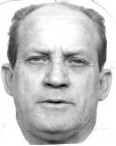 Billy Frank Vickers
Murderer · USA · 1993
Billy Frank Vickers Vickers was executed by lethal injection in Texas on Januar…
14 victims
Billy Frank Vickers
Murderer · USA · 1993
Billy Frank Vickers Vickers was executed by lethal injection in Texas on Januar…
14 victims
 Waltraud Wagner
Serial killer · Austria · 1983
Waltraud Wagner was an Austrian nurse nicknamed a “Death Angel.” She was 49 at…
15 victims
Waltraud Wagner
Serial killer · Austria · 1983
Waltraud Wagner was an Austrian nurse nicknamed a “Death Angel.” She was 49 at…
15 victims
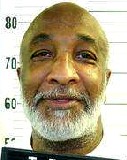 Walter Lee Caruthers
Murderer · USA · 1980
Walter Lee Caruthers was the defendant. Reginald Watkins was his co-defendant.…
1 victim
Walter Lee Caruthers
Murderer · USA · 1980
Walter Lee Caruthers was the defendant. Reginald Watkins was his co-defendant.…
1 victim
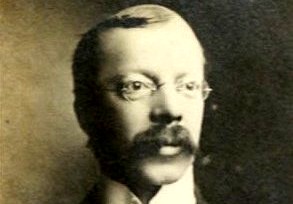 Dr. Hawley Harvey Crippen
Murderer · United Kingdom · 1910
Hawley Harvey Crippen (11 September 1862 – 23 November 1910), usually known as…
1 victim
Dr. Hawley Harvey Crippen
Murderer · United Kingdom · 1910
Hawley Harvey Crippen (11 September 1862 – 23 November 1910), usually known as…
1 victim
 Anthony Spann
Murderer · USA · 1997
Anthony Spann was sentenced to death on June 23, 2000. Spann was indicted on mu…
1 victim
Anthony Spann
Murderer · USA · 1997
Anthony Spann was sentenced to death on June 23, 2000. Spann was indicted on mu…
1 victim
 John Glenn Roe
Murderer · USA · 1984
John Glenn Roe was executed by lethal injection in Ohio on February 3, 2004. ·…
1 victim
John Glenn Roe
Murderer · USA · 1984
John Glenn Roe was executed by lethal injection in Ohio on February 3, 2004. ·…
1 victim
- Gender
- male
- Country
- USA
- Location
- Johnson County, Arkansas, USA
- Date of birth
- 1947
- Age at first offence
- 46
- Characteristics
- parricide
- Victim profile
- Eric Willett, 13 (his son) and Roger Willett (his mentally retarded brother)
- Method of murder
- Beating with an eight-pound window weight
- Date(s) of murder
- September 14, 1993
- Years active
- 1993
- Date of arrest
- Same day (suicide attempt)
- Status
-
Executed
Executed by lethal injection in Arkansas on September 8, 1999
Case record: Alan Willett
Overview
Alan Willett was convicted of two counts of capital murder involving the 1993 Johnson County killings of his 13-year-old son, Eric, and his mentally retarded brother, Roger. Willett’s daughter and another son survived the attack. After resentencing, he was again sentenced to death. He executed by lethal injection in Arkansas on September 8, 1999.
Timeline
- 1993 — Alan Willett committed the Johnson County killings of his 13-year-old son, Eric, and his mentally retarded brother, Roger.
- 1995 — The Arkansas Supreme Court affirmed Willett’s convictions in Willett v. State, 322 Ark. 613, 911 S.W.2d 937 (1995) and affirmed convictions for attempted murder of his surviving children, Jonathan and Ruby; the court reversed and remanded for resentencing due to error in completion of forms relating to mitigating circumstances.
- August 1996 — A resentencing hearing was held; a jury found that the statutory aggravating circumstance existed beyond a reasonable doubt, that it outweighed mitigating circumstances beyond a reasonable doubt, and that it justified a death sentence for each of the capital murders.
- January 22, 1999 — A hearing was held; Willett waived his right to postconviction remedies under Ark. R. Crim. P. 37 and his right to appointment of an attorney under Rule 37.5.
- May 6, 1999 — The Arkansas Supreme Court delivered an opinion in a motion for final review and remanded for a competency examination and hearing regarding Willett’s waiver of postconviction remedies.
- December 17, 1998 — The Arkansas Supreme Court delivered an opinion in Alan WILLETT v. STATE of Arkansas, CR 97-341.
- September 8, 1999 — Alan Willett was executed by lethal injection in Arkansas.
The offence
Alan Willett was found guilty of slaying his son, Eric, and his mentally handicapped brother, Roger, in 1993.
During the resentencing evidence, the jury considered testimony of Willett’s daughter, Ruby, law-enforcement officials, and medical experts, and reviewed exhibits, photographs, and Willett’s videotaped statement.
Willett’s statement indicated that he considered murdering his family in August by carbon monoxide poisoning, and that he drove his family to a nearby lake to carry out this plan but did not complete the murders. One month later, he stated that he sat up all night planning to kill his family and then to commit suicide.
Early in the morning of September 14, 1993, Willett chose an eight-pound window weight as his weapon. According to the evidence presented, he first attacked his daughter Ruby because she, as the oldest, would be most likely to talk him out of his plan. Ruby was struck on the head and, when she screamed, Willett attempted to smother her.
The noise roused Ruby’s 13-year-old brother, Eric, who entered the room while Ruby was seeking to flee with the youngest brother, Jonathan, in her arms. The evidence described that Willett struck Jonathan on the head and then turned his attention to Eric while Ruby and Jonathan escaped. Willett’s statement said that Eric practically ran into the weapon and fell to the ground when he was struck on the head.
Willett then turned upon his own mentally handicapped brother, Roger, told him to turn around, and struck him on the head. The blow did not stun Roger, and Willett repeated the attack with as many as five blows until Roger fell to the floor. The evidence described that Willett returned to Eric and struck him again to make sure he was dead, before Willett locked himself in the bathroom and cut himself on the wrists and throat.
Medical testimony described that Eric may have lived as long as thirty minutes after being struck, and that Roger was still alive when officers arrived soon after Eric’s death.
Ruby and Jonathan survived, and the convictions and sentence for attempted murder of Ruby and Jonathan were affirmed in Willett I and were not at issue in the appeal in the resentencing decision described in the December 17, 1998 opinion.
Investigation and evidence presented at resentencing
The jury considered:
- testimony of Ruby
- testimony of law-enforcement officials
- testimony of medical experts
- exhibits
- photographs
- Willett’s videotaped statement
Trial and appellate review (Arkansas Supreme Court opinions)
Convictions and resentencing history
The Arkansas Supreme Court affirmed Willett’s convictions and sentences in Willett v. State, 322 Ark. 613, 911 S.W.2d 937 (1995), which included affirming convictions for attempted murder of Jonathan and Ruby. The court reversed and remanded for resentencing due to error in the completion of the forms relating to mitigating circumstances which made it impossible to discern whether the jury found any mitigating circumstances to consider during the penalty phase.
During resentencing in August 1996, evidence was presented that Willett committed the capital murders of Roger and Eric in an especially cruel or depraved manner as those terms are defined by Ark. Code Ann. § 5-4-604, the statute establishing aggravating circumstances. Evidence was also presented that a number of mitigating circumstances existed.
The jury unanimously found:
- the statutory aggravating circumstance existed beyond a reasonable doubt
- the aggravating circumstance outweighed beyond a reasonable doubt all mitigating circumstances found to exist
- the aggravating circumstance justified a sentence of death beyond a reasonable doubt for each of the capital murders
Appellant brought an appeal, and the Arkansas Supreme Court affirmed.
Standards of review and legal issues in the December 17, 1998 opinion
The December 17, 1998 opinion stated standards including:
- the test for sufficiency of evidence was whether there was “substantial evidence” to support the verdict
- on appeal, review was conducted in the light most favorable to the appellee, sustaining conviction if there was any substantial evidence to support it
- evidence was substantial if it was of sufficient force and character to compel reasonable minds to reach a conclusion and pass beyond suspicion and conjecture
- review of imposition of death penalty included examining whether substantial evidence supported the jury’s unanimous finding that the statutory aggravating circumstance existed, that it outweighed all mitigating circumstances, and that it justified a sentence of death beyond a reasonable doubt
Aggravating circumstance: “especially cruel or depraved manner”
The Arkansas Supreme Court concluded that substantial evidence supported the jury’s finding that:
- intent to inflict mental anguish upon Eric could have been inferred from the circumstances
- intent could be inferred from the circumstances of the crime
- the jury was not required to accept appellant’s explanation of his own motives
- the jury was allowed to consider evidence showing Eric watched his father’s attack upon his brother and sister
- beyond a reasonable doubt, the evidence supported findings that Eric suffered indescribable mental anguish and suffered uncertainty as to his ultimate fate as his father turned his attack upon him
The court also found substantial evidence supported the jury’s finding that Roger’s death resulted from an especially cruel or depraved manner, including:
- the first blow to the head with a window weight did not stun Roger
- repeated blows were required to put Roger on the floor
- Roger remained alive until officers arrived
- the serious physical abuse first created a substantial risk of death and, when continued and intensified, finally resulted in Roger’s death
The supreme court concluded there was substantial evidence to support the jury’s finding that the aggravating circumstance existed beyond a reasonable doubt in each count of capital murder.
Mitigating circumstances found
The jury found nine mitigating circumstances existed, listing the factors:
- the capital murders were committed while Alan Willett was acting under unusual pressures
- before the 14th of September, 1993, Alan Willett had no history of criminal conduct
- before the 14th of September, 1993, Alan Willett helped coach Little League baseball and, in particular, helped a brain-damaged child
- after the 14th of September, 1993, Alan Willett had no significant disciplinary problems with the prison system
- the crime committed on the 14th day of September, 1993, was out of character for Alan Willett
- Alan Willett cooperated with law enforcement by voluntarily giving a statement as to what happened on the 14th day of September, 1993
- Alan Willett exhibited remorse for having committed the offense
- Alan Willett could be a productive prisoner without the possibility of parole
- Alan Willett directly suffered from the offense and would continue to suffer
Balancing and imposition of sentence
Following the determination of aggravating and mitigating circumstances, the jury decided whether the aggravating circumstances outweighed beyond a reasonable doubt any mitigating circumstances found by any jurors. The court stated that:
- when the jury finds that mitigating circumstances exist, if one juror determines that the aggravating circumstances do not exceed the mitigating circumstances beyond a reasonable doubt, the death sentence cannot be imposed
- in this case, the jury unanimously found one aggravating circumstance existed and that it outweighed the mitigating factors beyond a reasonable doubt
- the balancing of mitigating and aggravating circumstances was the duty of the jury
The court then affirmed that substantial evidence supported jury findings beyond a reasonable doubt that:
- an aggravating circumstance existed
- it outweighed mitigating circumstances found to exist
- the aggravating circumstance that the capital murders were committed in an especially cruel and depraved manner justified the imposition of a death sentence
Constitutionality argument and affirmance
The December 17, 1998 opinion addressed a constitutional argument that the death sentences violated the Eighth and Fourteenth amendments and concluded that the death penalty in this case was constitutionally imposed. The court affirmed the verdict and sentence, stating:
- “Affirmed.”
The opinion included separate writings:
- Imber, J., concurring in part
- Newbern and Imber, JJ., dissenting
- Annabelle Clinton Imber, Justice, concurring
- David Newbern, Justice, dissenting These writings included extensive discussion of standards applied and the “especially cruel or depraved manner” aggravating circumstance.
Execution and final meal
Alan Willett executed by lethal injection in Arkansas on September 8, 1999.
The record described that Willett’s last meal was:
- Beef jerky
- barbecue-flavored potato chips
- onion dip
- garlic dip
- buttered popcorn
- Pepsi
The lethal injection of a drug was administered at 9:02 p.m. CDT, and Willett was pronounced dead at 9:16 p.m. CDT. Willett made no last statement. After being asked if he had any last words, Willett responded: “None.”
Willett was described as the 4th condemned inmate put to death in 1999 in Arkansas and the 21st person executed by the state of Arkansas since Furman v. Georgia, 408 U.S. 238 (1972), after new capital punishment laws came into force on March 23, 1973. He was also described as the 570th person executed overall since America resumed executions on January 17, 1977.
The execution was described as occurring in a rare double execution alongside Mark Gardner, who was also executed on the same day. The record described that Mark Gardner was executed first because he had the lower inmate number (SK901) than Alan Willett (SK930). Another part of the execution description stated that Willett went into the same chamber just under an hour after Gardner and died at 10:15 p.m. EDT, 16 minutes after receiving the injection, while Gardner was pronounced dead at 9:15 p.m. EDT, 13 minutes after the injection was administered.
Appeals and postconviction waiver proceedings (May 6, 1999 opinion)
Background of proceedings
The May 6, 1999 opinion stated:
- Willett was convicted of two counts of capital murder and convictions were affirmed in Willett v. State, 322 Ark. 613, 911 S.W.2d 937 (1995), with remand for resentencing
- upon resentencing, Willett was again sentenced to death
- the Arkansas Supreme Court affirmed his sentence of death in Willett v. State, 335 Ark. 427, 983 S.W.2d 409 (1998)
Motion for final review and competency to waive postconviction remedies
A hearing was held on January 22, 1999, and Willett waived his right to postconviction remedies under Ark. R. Crim. P. The State filed a Motion for Final Review.
The Arkansas Supreme Court denied the motion and remanded for a competency examination and hearing. The court held:
- the standard for competency to elect execution was different from the standard for competency to stand trial
- the waiver of rights to postconviction remedies following affirmance of a death sentence was governed by Franz v. State, 296 Ark. 181, 754 S.W.2d 839 (1988) and subsequent cases
- the trial court erred in allowing Willett to waive his right to possible postconviction relief without a competency examination to determine whether he had the capacity to choose between life and death and knowingly and intelligently to waive all rights to postconviction review of the death sentence
The opinion stated that the record reflected Willett’s desire to waive further postconviction remedies and his right to an attorney, but the record failed to reflect that a competency examination was conducted; it only reflected the trial court’s opinion that nothing had been brought to the court’s attention indicating a question concerning Willett’s competence.
The court remanded the matter to the trial court for a competency examination and hearing, and stated that after the trial court held its hearing and made a judicial determination on Willett’s competency to elect execution and waive his right to postconviction remedies under Rule 37 (including his right to an attorney under Rule 37.5), the State would bring the record of the lower court proceeding for review in accordance with the procedure set forth in Franz.
The disposition included:
- “Motion denied; remanded.”
Aftermath and related remarks
The record included additional context and participants surrounding the executions:
- The executions were described as scheduled despite an earlier plea from Pope John Paul II to Arkansas Gov. Mike Huckabee to commute the two death penalties into life prison sentences; Huckabee decided not to intervene.
- Death penalty opponents held vigils at several sites, including a small group outside the prison and another outside the governor’s mansion in Little Rock.
- Executions of more than one inmate on the same day were described as rare among U.S. states, limited so far to Arkansas and South Carolina, and described as the 4th multiple execution in Arkansas since 1990; South Carolina had carried out 1 double execution.
- The record stated that 5 relatives of Gardner’s victims watched him die on closed circuit television.
- It stated that no relatives came to the prison to witness Willett’s execution.
Other details
Family relationships and surviving relatives
Alan Willett’s daughter survived the attack, and another son survived the attack. In the appellate discussion, Willett’s surviving children were identified as Jonathan and Ruby.
Willett’s 13-year-old son was identified as Eric. His brother was identified as Roger and was described as mentally retarded/mentally handicapped.
Legal representatives and court personnel (from the December 17, 1998 opinion)
The appellate listing included:
- Appeal from Johnson Circuit Court, with John S. Patterson as Judge
- William M. Pearson, James S. Dunham, and J. Thomas Sullivan for appellant
- Winston Bryant, Att’y Gen., by: David R. Raupp, Sr. Ass’t Att’y Gen., for appellee
- Ray Thornton, Justice
Arkansas Supreme Court citations and notes (from the December 17, 1998 opinion)
The opinion discussed:
- Willett v. State, 322 Ark. 613, 911 S.W.2d 937 (1995) (Willett I)
- Willett v. State, 335 Ark. 427, 983 S.W.2d 409 (1998)
- Miller v. State, 269 Ark. 341, 605 S.W.2d 430 (1980)
- Miller v. Lockhart, 65 F.3d 676 (8th Cir. 1995)
- Kemp v. State, 324 Ark. 178, 919 S.W.2d 943 (1996)
- Franz v. State, 296 Ark. 181, 754 S.W.2d 839 (1988)
- State v. Robbins, 335 Ark. 380, 985 S.W.2d 293 (1998)
- Jackson v. Virginia, 443 U.S. 307 (1979)
- Lewis v. Jeffers, 497 U.S. 764 (1990)

Spotted an error, or have more information about this case?