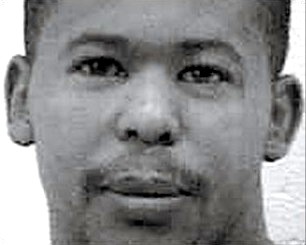
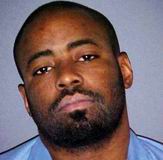
Kenneth Wilson
Murderer Brian Kevin Rosenfeld
Murderer · USA · 1985
Brian Kevin Rosenfeld Brian Kevin Rosenfeld was sentenced to three concurrent l…
23 victims
Brian Kevin Rosenfeld
Murderer · USA · 1985
Brian Kevin Rosenfeld Brian Kevin Rosenfeld was sentenced to three concurrent l…
23 victims
 Russell Ellwood
Murderer · USA · 1991
Russell Ellwood was a former taxi driver. Authorities suspected him of killing…
20 victims
Russell Ellwood
Murderer · USA · 1991
Russell Ellwood was a former taxi driver. Authorities suspected him of killing…
20 victims
 Robert Martines Perez
Murderer · USA · 1994
Name: Robert Martines Perez · Other name used in proceedings: Robert Martinez P…
15 victims
Robert Martines Perez
Murderer · USA · 1994
Name: Robert Martines Perez · Other name used in proceedings: Robert Martinez P…
15 victims
 Billy Frank Vickers
Murderer · USA · 1993
Billy Frank Vickers Vickers was executed by lethal injection in Texas on Januar…
14 victims
Billy Frank Vickers
Murderer · USA · 1993
Billy Frank Vickers Vickers was executed by lethal injection in Texas on Januar…
14 victims
 Andrew Chabrol
Murderer · USA · 1991
Andrew Chabrol was executed by electrocution in Virginia on June 17, 1993. Andr…
1 victim
Andrew Chabrol
Murderer · USA · 1991
Andrew Chabrol was executed by electrocution in Virginia on June 17, 1993. Andr…
1 victim
 Vladmir Romanov
Serial killer · 1991
Vladimir Romanov was a resident of the Russian exclave in the Baltic Region and…
11 victims
Vladmir Romanov
Serial killer · 1991
Vladimir Romanov was a resident of the Russian exclave in the Baltic Region and…
11 victims
 William Tager
Murderer · USA · 1994
William Tager was born on November 9, 1947. He was a Charlotte, North Carolina…
1 victim
William Tager
Murderer · USA · 1994
William Tager was born on November 9, 1947. He was a Charlotte, North Carolina…
1 victim
- Gender
- male
- Country
- USA
- Location
- Newport News, Virginia, USA
- Date of birth
- 1964
- Age at first offence
- 29
- Characteristics
- attempted rape, abuse
- Victim profile
- Jacqueline M. Stephens, 31 (his neighbor)
- Method of murder
- St abbing with knife
- Date(s) of murder
- March 27, 1993
- Years active
- 1993
- Date of arrest
- —
- Status
-
Executed
Executed by lethal injection in Virginia on November 17, 1998
Case overview
Kenneth L. Wilson was put to death by injection at the Greensville Correctional Center in Virginia. He was executed on November 17, 1998, and was pronounced dead at 9:09 p.m. He made no final statement and did not respond when asked by Warden David Garraghty if he had anything to say.
Timeline
- March 27, 1993 — Jacqueline Stephens was found naked, bound in a spread-eagle fashion to her bed, with multiple stab wounds in her chest, neck, cheek, eyebrow, and arm. The events began at approximately 3:00 a.m. when Wilson entered Stephens' home in Newport News, Virginia.
- May 10, 1993 — Dr. Don Killian reported that Wilson was competent to stand trial.
- October 27, 1993 — The trial court granted Wilson’s motion for a neurological, psychological, psychiatric and physical evaluation and appointed Dr. Killian to conduct it.
- November 5, 1993 — Dr. Killian met with Wilson; Wilson declined to discuss his thoughts, feelings, or actions around the time of the crime and stated his attorneys had advised him not to discuss the details.
- November 15, 1993 — At a hearing, Wilson confirmed he did not want to speak to Dr. Killian.
- October 2, 1995 — Wilson’s conviction became final when the United States Supreme Court denied certiorari.
- 1997 — Wilson filed his federal petition for a writ of habeas corpus.
- June 2, 1998 — The appeal was argued.
- August 27, 1998 — The United States Court of Appeals for the Fourth Circuit decided the case (No. 98-2, CA-96-1133-AM).
- November 17, 1998 — Wilson was executed by injection in Virginia; he was pronounced dead at 9:09 p.m.
The offence
On March 27, 1993, Jacqueline Stephens was found naked and bound in a spread-eagle fashion to her bed with multiple stab wounds.
Wilson forced Stephens, her twelve year-old daughter Altomika, and fourteen year-old Takeshia Banks upstairs at knifepoint. Wilson ordered Altomika and Takeshia into a bedroom and took Jacqueline into her own bedroom. While Wilson and Jacqueline were in her bedroom, Altomika heard her mother say, "Kenny, why you doing this to me? I go with Pinkey [Altomika's father], why you doing this to me?"
Approximately twenty-five minutes later, Wilson and Jacqueline returned to the bedroom where the girls were. At Wilson's request, Jacqueline told the girls not to say anything, and she then took a shower. While Jacqueline was showering, Wilson ordered Takeshia to disrobe, tied both girls to a bed, and blindfolded them.
Wilson, while naked, proceeded to stab both girls, cutting them in the neck. After Takeshia screamed, Jacqueline confronted Wilson in the hallway. A struggle between Wilson and Jacqueline ensued, and Altomika thought she heard her mother fall down the stairs. Altomika and Takeshia escaped their bindings and barricaded the bedroom door, but Wilson soon returned and threatened to kill Jacqueline if the girls did not open it. The girls complied, and Wilson secured their bindings and blindfolded them again. He left briefly, returned, and taunted the blindfolded girls with the knife. Wilson left again, yelling at Jacqueline to find her car keys.
Altomika heard her mother begin to scream then suddenly stop screaming. Wilson returned once more, threatened to kill the girls, and then withdrew. A neighbor saw Wilson depart in Jacqueline's vehicle at approximately 6:30 a.m. Shortly thereafter, police found Jacqueline’s naked body covered with blood and tied to her bed.
Pubic hairs and a dried white substance which appeared to be semen were observed on Jacqueline’s body.
Wilson entered Stephens’ home armed with a knife. Wilson knew Stephens because his cousin was her boyfriend. Wilson ordered Stephens, her daughter and the daughter’s friend to disrobe, blindfolded the girls, and tied them to a bed in the daughter’s room. Over several hours Wilson threatened Stephens and the girls. On one visit to the girls’ room he cut each of them. Wilson demanded Stephens’ car keys and drove off in Stephens’ car after police were called by a neighbor who saw him drive off.
Police found Stephens tied to the bed posts, her body covered with blood. She had been stabbed more than 10 times. The friend had a stab wound on her neck; the daughter was stabbed close to the carotid artery and jugular vein. Her vocal cord nerve was severed.
Offence charges and conviction
Wilson was charged with murder during the commission of attempted rape, attempted rape, grand larceny, and several counts of abduction and malicious wounding. Wilson was convicted of capital murder, attempted rape, 3 counts of abduction, 2 counts of malicious wounding and grand larceny. After the sentencing phase, the jury recommended a death sentence based on findings of future dangerousness and vileness, and the trial court sentenced him to death.
Investigation and evidence
Pubic hairs and a dried white substance which appeared to be semen were observed on her body. Wilson was found in a trash dumpster acting "peculiar" a few hours later.
Blood tests taken at a hospital the next day revealed cocaine and opiates in his system. Wilson was also experiencing rhabdomyolysis, a condition involving the breakdown of muscle tissue produced by severe intoxication with certain drugs, including cocaine.
Trial and mental health evaluations
Wilson was charged with murder during the commission of attempted rape and was convicted on all counts after trial, at which Wilson testified.
Wilson’s original trial counsel requested a psychological evaluation to determine both Wilson’s competency to stand trial and his sanity at the time of the offense. On May 10, 1993, Dr. Don Killian, a court-appointed clinical psychologist, reported that Wilson was competent to stand trial. In a separate report, headed "for defense attorney only," Dr. Killian reported that Wilson was sane at the time of the offense.
In late October, Wilson’s new trial counsel filed a "Motion for Neurological, Psychological, Psychiatric and Physical Evaluation of the Defendant." The trial court granted the motion on October 27 and appointed Dr. Killian to conduct the evaluation.
On November 5, 1993, Dr. Killian met with Wilson, but Wilson declined to discuss "his thoughts, feelings, or actions" around the time when the crime occurred and stated that his attorneys had advised him not to "discuss the details of these activities with anyone." At a November 15 hearing, Wilson confirmed he did not want to speak to Dr. Killian.
A jury convicted Wilson on all counts. Following the sentencing phase, the jury recommended a death sentence based on future dangerousness and vileness.
Dr. Brad Fisher’s report (federal habeas proceedings)
Wilson relied on the report of Dr. Brad Fisher, a clinical forensic psychologist appointed by the district court to assist with the preparation of Wilson’s federal habeas petition. Dr. Fisher met with Wilson, examined his medical and family history, and reviewed portions of the transcript from Wilson’s trial. Dr. Fisher found "the evidence is suggestive but not conclusive about the existence of a temporary condition that might have led to a plea of insanity." Dr. Fisher concluded "there is little evidence of a permanent major thought disorder, psychosis, or major organic impairment."
Appeal and habeas proceedings
United States Court of Appeals for the Fourth Circuit (No. 98-2)
Kenneth L. Wilson appealed the district court’s dismissal of his amended petition for a writ of habeas corpus. The court affirmed the district court’s judgment.
Wilson raised various claims regarding his mental capacity at the time of Jacqueline Stephens’ murder. The appeal also addressed claims about Dr. Killian’s evaluation, ineffective assistance of counsel, actual innocence, sufficiency of the evidence for attempted rape, and jury instructions relating to parole eligibility.
Evaluation by Dr. Killian
Wilson claimed Dr. Killian performed an inadequate evaluation of his sanity at the time of the offense and alleged errors attributable to Dr. Killian and trial counsel.
The court held that the Constitution did not entitle a criminal defendant to the effective assistance of an expert witness and rejected attempts to frame expert inadequacy as a constitutional right. The court also discussed Ake v. Oklahoma and the distinction between access to a competent psychiatrist for evaluation and claims about the substantive adequacy of an evaluation. The court concluded that Dr. Killian’s evaluation satisfied any standard implied by Ake, noting Dr. Killian interviewed Wilson for approximately ninety minutes and explored Wilson’s educational background, medical history, and criminal record, and evaluated Wilson’s cognitive processes and understanding of the legal proceedings. The court also noted that Wilson himself declined to discuss details with Dr. Killian and refused to speak with him, including after consultation with attorneys.
The court found the following colloquy occurred between Wilson and the judge:
THE COURT: Do you desire the psychiatric or psychologi- cal evaluation which you originally indicated to your law- yers that you did desire? Are you giving that up now?
THE DEFENDANT: Yes, sir.
After a brief recess, the court stated:
THE COURT: All right, Mr. Wilson. What is your pleasure with respect to the psychiatric or psychological evaluation?
THE DEFENDANT: I do not want to speak to him.
THE COURT: You do not want to speak to Doctor Killian, correct?
THE DEFENDANT: Correct.
Ineffective assistance of counsel
Wilson claimed trial counsel was ineffective for failing to develop evidence of insanity and for failing to request a confidential mental health evaluation before trial. The court applied Strickland v. Washington standards and concluded Wilson did not show deficient performance and prejudice.
The court found trial counsel reasonably relied on Dr. Killian’s report concluding Wilson was not mentally ill at the time of the offense. The court also found counsel made efforts to locate witnesses related to Wilson’s alternative theory. The court further held that presenting an insanity defense while Wilson testified he did not commit the crime would have undermined Wilson’s trial strategy and credibility. The court also considered Dr. Fisher’s findings as limited and inconclusive, characterizing Dr. Fisher’s support for a theory of insanity as "suggestive but not conclusive," and found no prejudice under Strickland.
Actual innocence claims
Wilson alleged actual innocence based on Dr. Fisher’s report, asserting that voluntary intoxication produced temporary insanity and that his intoxication was severe enough to negate mens rea. The court held these claims failed under a demanding standard requiring reliable evidence not presented at trial and a showing that a constitutional violation probably resulted in the conviction of one who is actually innocent.
The court rejected voluntary intoxication as a basis for temporary insanity providing a defense, noting that voluntary intoxication generally does not provide a defense unless it induces permanent insanity. The court also addressed mens rea, stating that even if the jury learned of Dr. Fisher’s report, a reasonable juror could find Wilson guilty based on the conduct and threats described at trial, along with the jury already being aware of Wilson’s intoxication.
Attempted rape sufficiency of evidence
Wilson claimed there was insufficient evidence to convict him of attempted rape. The court found ample evidence supported the conviction for attempted rape. It discussed the elements of attempted rape under Virginia law, requiring a direct but ineffectual act toward its consummation and intent to engage in sexual intercourse.
The court cited the Virginia Supreme Court’s finding that Wilson’s nudity, isolating Stephens from the young girls, binding Jacqueline naked to her bed, and the presence of what appeared to be pubic hairs and semen on Jacqueline’s body satisfied the overt act requirement. The court held that physical evidence supported or permitted the inference that the dried white substance was semen and that the pubic hairs belonged to Wilson, and it also stated physical evidence was not necessary to show a direct act toward raping Jacqueline. It referenced that, in Fortune, evidence of removing clothes, exposing himself, forcing the victim into a bedroom, and touching her breast during a struggle satisfied the overt act requirement.
The court also found sufficient evidence supported intent to rape, relying on Wilson’s nudity and actions, including ordering Takeshia Banks to disrobe and taking Jacqueline into a bedroom, as consistent with preparation for sexual intercourse.
The court addressed Wilson’s argument that circumstantial evidence must exclude every reasonable hypothesis of innocence, and held it declined to apply that stricter standard on collateral attack.
Jury instruction on parole eligibility
Wilson argued the trial court should have instructed the jury about the actual effects of his life sentence, specifically that he would not be eligible for parole for twenty-five years. The court rejected this argument, citing Peterson v. Murray and related precedent, and distinguishing Simmons v. South Carolina. The court held that neither the Eighth Amendment nor the Due Process Clause required the parole eligibility instruction sought by Wilson.
Disposition
For the foregoing reasons, the Fourth Circuit affirmed the judgment of the district court.
Concurring opinion by Circuit Judge Michael
Circuit Judge Michael concurred in the result and joined the majority reasoning except for parts II and V. He disagreed with the majority’s suggestion about the due process right to a court-appointed psychiatrist and disagreed with aspects of the majority’s discussion. He also wrote separately on issues concerning the right to an appropriate examination and counsel’s responsibilities, and on interpretation of Simmons.
Michael stated he agreed with the majority’s conclusion in part V that Wilson had no due process right to inform the sentencing jury when he would become eligible for parole.
Michael wrote:
- that due process required an indigent defendant to receive an appropriate mental examination meeting the minimum standard of care set by the clinical psychology profession;
- that Dr. Killian’s ninety-minute interview and half-page report did not clearly meet that standard;
- and that Wilson’s petition should be denied on other grounds, including procedural default and harmless error analysis as discussed in his opinion.
Michael included additional discussion and footnotes regarding procedural default, waivers, counsel’s duties, and parole instruction issues. He also described a proposed standard dividing labor between psychiatrist performance and defense counsel assistance.
Clemency and execution
Wilson’s lawyers petitioned the governor for clemency. The petition sought commutation of Wilson’s death sentence to life without parole for the sake of Wilson’s sons, ages 13 and 6.
The petition argued:
"Losing a parent to execution is different than losing a parent another way. When a parent dies from illness or even homicide, sympathy and community support for the children of the deceased abounds. Not so with the children of a person who is executed,"
A governor denied clemency and stated that Wilson was on parole when Jacqueline M. Stephens was killed in Newport News on March 27, 1993. The governor also stated:
"He also bound, stabbed and, for 3 hours, terrorized Ms. Stephens' 12-year-old daughter and another 14-year-old girl who was spending the night in Ms. Stephens' home,"
"There never has been any question as to Wilson's guilt."
Before the execution, relatives of the victim’s family had been expected to attend but did not show up. As the execution hour approached, about a dozen death penalty opponents waited outside the main prison gate.
On Monday, the U.S. Supreme Court voted 7-2 to deny Wilson a stay of execution.
Earlier in the day, Wilson met with his parents, a sister, and his 2 sons. Larry Traylor, a Department of Corrections spokesman, said relatives of the victim’s family had been expected to attend the execution but did not show up.
Aftermath
Wilson was executed by injection at the Greensville Correctional Center in Virginia. He was pronounced dead at 9:09 p.m. Warden David Garraghty asked if he had anything to say; Wilson made no final statement and did not respond.
Spotted an error, or have more information about this case?