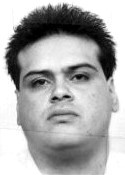
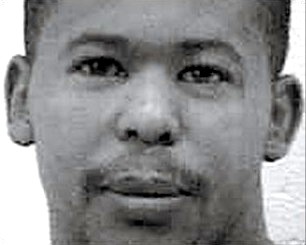
Jackie Barron Wilson
Murderer Brian Kevin Rosenfeld
Murderer · USA · 1985
Brian Kevin Rosenfeld Brian Kevin Rosenfeld was sentenced to three concurrent l…
23 victims
Brian Kevin Rosenfeld
Murderer · USA · 1985
Brian Kevin Rosenfeld Brian Kevin Rosenfeld was sentenced to three concurrent l…
23 victims
 Yahweh ben Yahweh
Murderer · USA · 1980
Yahweh ben Yahweh was born and legally named Hulon Mitchell Jr. (October 27, 19…
23 victims
Yahweh ben Yahweh
Murderer · USA · 1980
Yahweh ben Yahweh was born and legally named Hulon Mitchell Jr. (October 27, 19…
23 victims
 Russell Ellwood
Murderer · USA · 1991
Russell Ellwood was a former taxi driver. Authorities suspected him of killing…
20 victims
Russell Ellwood
Murderer · USA · 1991
Russell Ellwood was a former taxi driver. Authorities suspected him of killing…
20 victims
 Robert Martines Perez
Murderer · USA · 1994
Name: Robert Martines Perez · Other name used in proceedings: Robert Martinez P…
15 victims
Robert Martines Perez
Murderer · USA · 1994
Name: Robert Martines Perez · Other name used in proceedings: Robert Martinez P…
15 victims
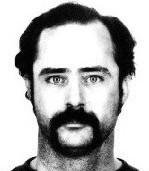 Robert Alton Harris
Murderer · USA · 1978
Robert Alton Harris was an American career criminal and murderer who was execut…
2 victims
Robert Alton Harris
Murderer · USA · 1978
Robert Alton Harris was an American career criminal and murderer who was execut…
2 victims
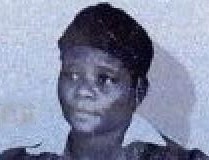 Ruby McCollum
Murderer · USA · 1952
Ruby McCollum (August 31, 1909–May 23, 1992) was the subject of a notorious mur…
1 victim
Ruby McCollum
Murderer · USA · 1952
Ruby McCollum (August 31, 1909–May 23, 1992) was the subject of a notorious mur…
1 victim
 Kiana Barker
Murderer · USA · 2010
Kiana Barker was a foster mother who tried to adopt Viola Vanclief in 2010. Bar…
1 victim
Kiana Barker
Murderer · USA · 2010
Kiana Barker was a foster mother who tried to adopt Viola Vanclief in 2010. Bar…
1 victim
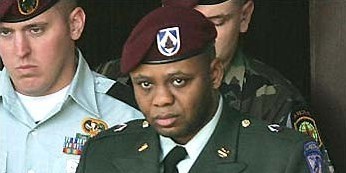 Hasan Akbar
Murderer · Kuwait · 2003
Sergeant Hasan Akbar was a U.S. Army soldier convicted for the murder of two fe…
2 victims
Hasan Akbar
Murderer · Kuwait · 2003
Sergeant Hasan Akbar was a U.S. Army soldier convicted for the murder of two fe…
2 victims
 Melissa Friedrich
Murderer · Canada · 1991
Melissa Friedrich was also known as Melissa Stewart and Melissa Ann Weeks (also…
1 victim
Melissa Friedrich
Murderer · Canada · 1991
Melissa Friedrich was also known as Melissa Stewart and Melissa Ann Weeks (also…
1 victim
 Sarah Malcolm
Murderer · United Kingdom · 1733
Sarah Malcolm was a powerfully built 22-year-old Irish laundress employed in th…
3 victims
Sarah Malcolm
Murderer · United Kingdom · 1733
Sarah Malcolm was a powerfully built 22-year-old Irish laundress employed in th…
3 victims
- Gender
- male
- Country
- USA
- Location
- Dallas County, Texas, USA
- Date of birth
- February 12, 1967
- Age at first offence
- 21
- Characteristics
- kidnapping, rape
- Victim profile
- Lottie Margaret Rhodes (female, 5)
- Method of murder
- Suffocation / Running over her with a car
- Date(s) of murder
- November 30, 1988
- Years active
- 1988
- Date of arrest
- December 7, 1988
- Status
-
Executed
Executed by lethal injection in Texas on May 4, 2006
Case record: Jackie Barron Wilson
Background
Jackie Barron Wilson was a Hispanic male who knew the victim. Wilson had lived until recently in the same apartment complex as the victim’s family. Wilson was a friend of the victim’s live-in babysitter, Joe Martinez. The victim was five-year-old Lottie Maggie Rhodes (“Maggie”).
On the evening prior to the victim’s death, November 29, 1988, Wilson consumed alcohol, marijuana, and cocaine. Later that evening, Wilson was seen driving an automobile in the direction of, and was placed at, the apartment complex, including in one of the apartments after midnight.
The offence
At an early morning time on November 30, 1988, the victim was kidnapped from her bedroom in the middle of the night, sexually assaulted (including anally-raped and some form of vaginal penetration), asphyxiated (smothered or strangled), and run over by a car.
The medical examiner determined that the cause of death could be attributed to:
- a major crush-force injury to the head, caused by the tire of an automobile running over it; and
- asphyxiation from smothering or strangulation. Either injury was sufficient to cause her death.
The medical examiner determined that bruising indicated the victim was still alive both when sexually-assaulted and when run over by the vehicle.
Investigation
Vehicle search and forensic examinations
Police obtained a consent to search from the vehicle’s owner, Frank Uriqueza, and impounded the vehicle. The vehicle was a 5 Mercury Cougar. The vehicle had three Eagle G.T. tires and one Nito tire.
Upon more thorough examination, Greenwell found the Nito tread pattern appeared consistent with the pattern on the deceased’s leg and the G.T. pattern appeared consistent with the pattern on the deceased’s shoulders.
Greenwell also examined the undercarriage of the vehicle and discovered hair imbedded in the grease behind the left front wheel, on the transmission housing between the two front wheels, near the left rear wheel, the rear axle, and below the driver’s door. Greenwell also found what appeared to be flesh and hair near the left rear tire. On the fender just behind the front left tire, Greenwell found what appeared to be blood.
Evidence from the undercarriage was examined, photographed, removed where possible, and submitted to the Institute of Forensic Sciences for examination and analysis. Greenwell obtained tire tread impressions from the vehicle and testified to the differences between Nito and G.T. tire treads and to the placement of the tires on the vehicle.
After examining the exterior, Greenwell systematically searched and vacuumed the interior of the vehicle. The search produced loose hairs from the front left quadrant of the interior. The material Greenwell collected was turned over to the Institute of Forensic Sciences for analysis.
Charles Linch, a trace evidence analyst with the Southwestern Institute of Forensic Sciences, testified that he received evidence samples in connection with the instant case, including samples collected by Greenwell in the search of the vehicle. For comparison purposes, Dr. Gilliland submitted a known “hair standard” from the deceased. Linch compared the hair and fiber samples with the known hair standard and concluded that the hair samples from the vehicle came from the deceased.
Linch testified that carpet fibers from inside the vehicle and a hair from deceased were found in a sample from the vehicle’s undercarriage. Linch agreed that such a finding was consistent “with the head hair of [deceased] coming into contact at some point in time, with those [carpet] fibers inside the vehicle.”
Max Courtney, an expert in tire tread comparisons and impressions, testified regarding the vehicle’s tread marks. Courtney examined the tires on the vehicle and compared their tread patterns with photographs of the tire tread impressions on the deceased. Courtney concluded that the Nito tire impression on deceased’s leg shared “a correspondence of class characteristics” with the Nito tire tread pattern on the vehicle. Courtney also concluded that all “observable class characteristics” of the vehicle’s Eagle G.T. tires matched the impressions on the deceased’s shoulders.
The court record stated that class characteristics were preserved in the deceased’s skin, while the deceased’s body was not conducive to preservation of “individual characteristics,” which would identify which particular tire of a given class actually caused injuries.
Vehicle ownership and timing
Frank Uriqueza testified that he bought three Eagle G.T. tires for the vehicle and that those tires had been on the vehicle for two months prior to the search of the vehicle.
Uriqueza testified that Wilson borrowed the vehicle on November 29, 1988, and returned the vehicle and awakened Uriqueza shortly before 4:40 a.m. on November 30, 1988. Uriqueza got out of bed and asked Wilson where the vehicle was parked. Wilson responded that the vehicle was parked in a different place than usual.
Apartment window damage, fingerprints, and blood samples
The victim’s mother came home from work about 11:20 p.m. on November 29, 1988. Both of her children slept in one bedroom. Joe Martinez, the live-in babysitter, slept on the couch in the living room. At midnight, the deceased was asleep in bed.
The victim’s mother testified that the temperature was warm in the victim’s bedroom, indicating that the window immediately above the victim’s bed was closed. She further testified that the window in the children’s room had a lock at the top that she installed herself in addition to the regular lock at the bottom. She also testified that the apartment complex had repaired the window in the children’s bedroom one month prior to the deceased’s death. She had cleaned the deceased’s bedroom before going to work on November 29 and noticed the window was locked. The window had no screen.
Early on November 30, Martinez and two friends were outside the apartment near the deceased’s window. The deceased’s mother talked to Martinez and friends for a “couple of minutes” through her bedroom window and then saw them leave through a gate. The deceased’s mother went to sleep sometime after 1:25 or 1:30 a.m. after telling Martinez to come inside.
After the victim’s mother awoke at 8:00 a.m., she felt a cold draft coming from the children’s bedroom, went in to locate the draft, and realized the deceased was missing. She noticed that the window pane by the deceased’s bed was broken and that the curtains were torn and “messed up.” When she and Martinez could not find the deceased, she called the Arlington Police Department.
Arlington police detective Mike Bosillo arrived at the apartment at 8:40 a.m. and noticed the opened, broken window pane and bent curtain rod above the deceased’s bed. While at the apartment, Bosillo learned that a young girl’s body had been found in Grand Prairie. Bosillo carried a photograph of the deceased to Grand Prairie, nine miles from the deceased’s apartment in Arlington, and identified the body as the deceased.
Arlington Police crime scene search officer Glenn Cole examined the deceased’s apartment for evidence. The examination revealed fingerprints on several pieces of broken glass from the bedroom window. Cole found a patent fingerprint on a piece of glass under a doll beneath the bed covers.
Cole testified the window was broken from the outside. Outside the deceased’s window, Cole collected a piece of weather stripping pulled from the window and found fingerprints on several pieces of glass.
A “patent” fingerprint was described as one apparent to the naked eye without need for developing. A “latent” print was described as one that must be treated to become visible.
Cole compared the recovered fingerprints to known fingerprints of Wilson and matched the fingerprint on the glass found in the deceased’s bed to Wilson. Cole also matched fingerprints from two other pieces of glass to Wilson.
Cole determined that, on a piece of glass found outside, Wilson’s thumb print appeared on one side of the fragment and Wilson’s index and middle fingerprints appeared on the other side of the same fragment. Cole testified that the evidence was consistent with Wilson breaking out a portion of the window, placing his thumb on one side of a piece of broken glass and his second and third fingers on the other side of the same piece of glass, and lifting the glass out of the window.
Along with the broken glass, police recovered five blood samples from the apartment area. Cole collected three suspected blood samples from the window sill in the deceased’s bedroom and one from the wall by the deceased’s bed. Cole recovered a fifth blood sample from the outside window sill. Cole submitted the samples for analysis, but the Institute determined the samples were too small to fully analyze. Van Winkle, the Institute serologist, testified that examination of the samples confirmed human blood, but could not reveal any person’s identity.
Witness observations
An eleven-year-old witness testified that in June 1988 Wilson and the deceased attended a birthday party at the apartment complex. During the party, Wilson stroked the deceased’s hair and commented on how pretty the deceased’s hair was.
Martinez testified that Wilson had lived in the apartment complex previously. Martinez testified that the deceased avoided Wilson when Wilson was around the apartment. Martinez last saw Wilson in the complex on Halloween 1988, approximately one month before the deceased’s death.
Martinez testified that the deceased’s mother returned home from work on November 29 at about 11:30 p.m. Around 11:50, the deceased was asleep in her bed. Martinez left the apartment. When Martinez returned at approximately 2:00 a.m., he noticed that the deceased was uncovered. Martinez covered the deceased and noticed that the window above the deceased’s bed was closed and locked.
Antonio Lopez testified that Wilson and Victor Herrera arrived at Lopez’s apartment on November 29 with a twelve pack of beer and a bottle of Seagram’s liquor. Lopez testified that Wilson and Herrera arrived in the vehicle. Lopez saw Wilson ingest one line of cocaine. Wilson told Lopez that the vehicle was a “fast car” before Wilson “peeled out” of the parking lot. Lopez observed the smoke caused by the vehicle’s spinning tires at approximately 10:45 p.m. as Wilson and Herrera drove away. Lopez testified that Wilson was driving the vehicle.
Carol Gonzales testified that Wilson and Herrera arrived at her apartment at approximately 11:00 p.m. on November 29 with beer and Seagram’s. Gonzales requested that Wilson leave after Wilson became angry and got into an argument with a friend of Gonzales. Wilson told Gonzales that he did not feel welcome, and left some time between midnight and 1:00 a.m. Gonzales testified that Wilson “peeled out” when leaving in the vehicle.
Able Loya worked at an Arlington gas station approximately one mile from Gonzales’s apartment and was working his regular shift from 4:00 p.m. to midnight on November 29. Loya was still at the station at approximately 12:30 a.m. on November 30 when Wilson and Herrera drove into the station. Loya remembered seeing the vehicle before and observed that Wilson was driving the car when it pulled into the station. Loya testified that Wilson got out of the car and pumped $2.00 worth of gas. Loya talked to Wilson briefly and accepted payment for the gas. Loya testified that Wilson also gave him a beer.
Victor Herrera testified that he was with Wilson on November 29 and that at about 6:30 p.m. Wilson asked Herrera if he wanted to buy some cocaine. Wilson was aware that Herrera was carrying $110. The two purchased cocaine from a friend of Wilson’s and ingested some. Herrera testified that Wilson and Herrera had used cocaine and other drugs on previous occasions.
On January 4, 1989, police obtained a warrant to search Wilson’s apartment for specific articles of clothing. At trial, Herrera identified an exhibit as the sweatshirt worn by Wilson on the night of November 29, 1988, and described Wilson’s pants. The described pants were not discovered in the search of Wilson’s apartment. Herrera also identified the vehicle in which Herrera and Wilson traveled on November 29. Herrera testified that Wilson was the person driving the vehicle on the night of November 29 and the morning of November 30.
Herrera testified that Wilson and Herrera bought beer and Seagram’s at a liquor store. While waiting for Tony Lopez to arrive home, the two drank beer and liquor and ingested three or four lines of cocaine. After Lopez arrived, the trio continued drinking and ingesting cocaine and marijuana until about 10:30 p.m. Herrera requested that Wilson take him home and the two left, but Wilson took Herrera to Gonzales’s apartment. Herrera wanted to leave and go home because he was bored and did not know any of Wilson’s friends. After leaving the apartment, the pair stopped by a gas station and then Wilson took Herrera home. Herrera returned home at 12:20 a.m.
Susan Jennings, one of the deceased’s neighbors, testified that Wilson and two companions came to her apartment some time after 1:00 a.m. on November 30. A neighbor visiting Jennings left after Wilson appeared. Jennings testified that Wilson and his companions chatted in Jennings’s apartment for a few minutes before Jennings asked them to leave. Jennings locked the door behind the trio but did not check her window, which she knew was locked before Wilson arrived. After Wilson left, Jennings laid down fully clothed on her couch and went to sleep.
Jennings awakened when she realized someone was fondling her. Jennings testified that at first she thought it was her husband, but when she awakened from her “groggy” state she recognized Wilson and started screaming. Jennings testified that her window was up. Wilson began claiming that Jennings had let him in. Jennings became more irate and ordered Wilson out of the apartment. Wilson offered Jennings some “speed” in return for sexual favors. Jennings testified that she ordered Wilson out again and noticed Wilson headed in the direction of the deceased’s apartment. Jennings testified that she was unaware of any other incident until the next morning, when Arlington police came to her door to inquire about Jennings’s knowledge of the missing deceased.
In the related federal habeas factual background, the victim’s body was found in a field in a remote area of Dallas County early in the morning of November 30, 1988 by a truck driver driving by on a nearby road.
Arrest
Trial
The jury convicted Wilson of capital murder.
The record referenced a prior conviction and a remand for a new trial. A jury convicted Petitioner of capital murder, and punishment was assessed at death by lethal injection. The record also stated that the case was appealed to the Texas Court of Criminal Appeals, and that the court affirmed the conviction and death sentence in an unpublished opinion.
The federal habeas factual background also stated that Wilson was convicted on 27 September 1989 of murder in the course of a kidnapping, a capital offense under Texas Penal Code § 19.03(a)(2), and was sentenced to death. It further stated that the Texas Court of Criminal Appeals reversed the conviction and death sentence and remanded for a new trial (Wilson v. State, 863 S.W.2d 59 (Tex.Crim.App. 1993)). At the remand trial in 1994, Wilson was again convicted and sentenced to death.
The Texas Court of Criminal Appeals affirmed. It stated Wilson filed a state habeas application in June 1997, and relief was denied without an evidentiary hearing after the convicting court’s findings and conclusions were adopted, including denial of relief.
Sentencing
At punishment, the record stated that the jury assessed a death sentence by lethal injection.
The federal habeas factual background stated that the jury was required to answer three questions at the punishment phase:
- Whether the conduct of the defendant that caused the death of the deceased was committed deliberately and with the reasonable expectation that the death of the deceased or another would result;
- Whether there was a probability that the defendant would commit criminal acts of violence that would constitute a continuing threat to society; and
- Taking into consideration all of the evidence, including the circumstances of the offense, the defendant’s character and background, and the personal moral culpability of the defendant, whether there was a sufficient mitigating circumstance or circumstances to warrant that a sentence of life imprisonment rather than a death sentence be imposed.
The jury answered the first two questions “yes” and the third “no,” thereby assessing a death sentence.
Appeals
Texas Court of Criminal Appeals
The Texas Court of Criminal Appeals reversed and remanded based on a trial court error in granting the State’s challenge for cause to venire member Boyd Lewis. The record described extensive voir dire questioning and the trial court’s ruling. The Court’s disposition stated that, finding the disposition controlled by Garrett v. State, the judgment was reversed and the cause remanded to the trial court. The record also contained concurring and dissenting opinions discussing Garrett.
Federal habeas corpus proceedings and certificate of appealability
A state prisoner Jackie Barron Wilson filed a petition for writ of habeas corpus pursuant to Title 28, United States Code, Section 2254. The district court declined to grant a Certificate of Appealability (COA). Wilson sought a COA asking that the court certify five issues for appeal, and each COA request was denied.
The federal proceedings described claims including an Equal Protection claim about excusing jurors, insufficiency of evidence claims, ineffective assistance of counsel claims at trial and on appeal, and a claim regarding parole eligibility instructions. The federal report recommended denial of the petition and the petition for writ of habeas corpus was denied.
The record also described that after federal habeas relief was denied, the district court declined to grant a Certificate of Appealability (COA), and Wilson’s COA request was denied.
Outcome
Jackie Barron Wilson was executed by lethal injection in Texas on May 4, 2006.
Spotted an error, or have more information about this case?