Earl Von Denton
Spree killer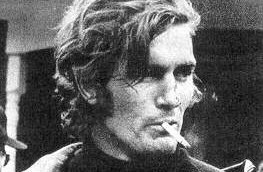 Paul John Knowles
Spree killer · USA · 1974
Paul John Knowles (April 17, 1946 – November 18, 1974) was an American spree ki…
35 victims
Paul John Knowles
Spree killer · USA · 1974
Paul John Knowles (April 17, 1946 – November 18, 1974) was an American spree ki…
35 victims
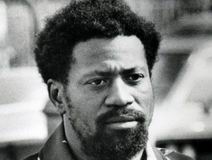 Bobby Joe Maxwell
Spree killer · USA · 1978
Name: Bobby Joe Maxwell Sex: M Race: B Type: T Motive: PC-nonspecific Method of…
11 victims
Bobby Joe Maxwell
Spree killer · USA · 1978
Name: Bobby Joe Maxwell Sex: M Race: B Type: T Motive: PC-nonspecific Method of…
11 victims
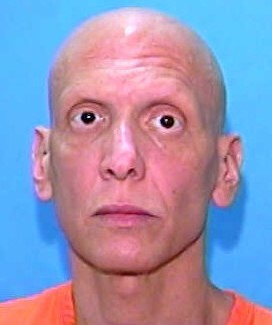 Manuel Pardo
Spree killer · USA · 1986
Manuel Pardo, Jr. was a former police officer who was convicted of nine counts…
9 victims
Manuel Pardo
Spree killer · USA · 1986
Manuel Pardo, Jr. was a former police officer who was convicted of nine counts…
9 victims
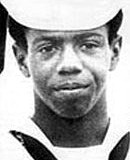 Mark Essex
Spree killer · USA · 1973
Mark James Robert Essex was a Navy veteran who engaged in a shooting and arson…
9 victims
Mark Essex
Spree killer · USA · 1973
Mark James Robert Essex was a Navy veteran who engaged in a shooting and arson…
9 victims
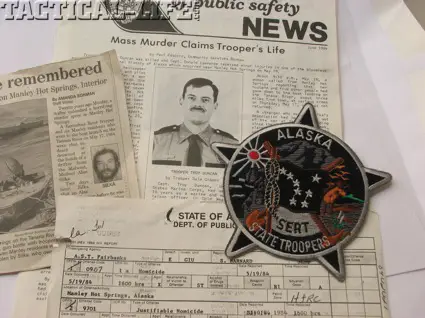 Michael Alan Silka
Spree killer · USA · 1984
Michael Alan Silka was killed during a shoot-out with the police on May 19, 198…
9 victims
Michael Alan Silka
Spree killer · USA · 1984
Michael Alan Silka was killed during a shoot-out with the police on May 19, 198…
9 victims
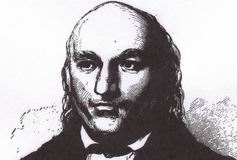 Rev. George Carawan
Murderer · USA · 1852
November 1853 — Carawan was convicted; immediately after the verdict he shot th…
1 victim
Rev. George Carawan
Murderer · USA · 1852
November 1853 — Carawan was convicted; immediately after the verdict he shot th…
1 victim
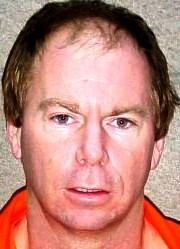 Gregory Dickens
Murderer · USA · 1991
Gregory Dickens was a Caucasian defendant. · Bryan Bernstein and Laura Bernstei…
2 victims
Gregory Dickens
Murderer · USA · 1991
Gregory Dickens was a Caucasian defendant. · Bryan Bernstein and Laura Bernstei…
2 victims
 Zhang Yunliang
Mass murderer · China · 2009
Zhang Yunliang Zhang Yunliang died in the fire on 5 June 2009. The Chengdu bus…
26 victims
Zhang Yunliang
Mass murderer · China · 2009
Zhang Yunliang Zhang Yunliang died in the fire on 5 June 2009. The Chengdu bus…
26 victims
 Liz Carroll
Murderer · USA · 2006
Liz Carroll was sentenced to 54 years to life in prison on February 22, 2007. M…
1 victim
Liz Carroll
Murderer · USA · 2006
Liz Carroll was sentenced to 54 years to life in prison on February 22, 2007. M…
1 victim
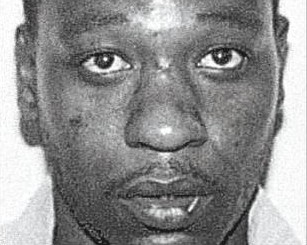 Tony Albert Mackall
Murderer · USA · 1986
Tony Albert Mackall was convicted of robbery, displaying a firearm in a threate…
1 victim
Tony Albert Mackall
Murderer · USA · 1986
Tony Albert Mackall was convicted of robbery, displaying a firearm in a threate…
1 victim
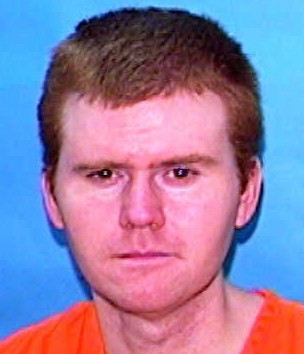 Jonathan Huey Lawrence
Murderer · USA · 1998
Jonathan Huey Lawrence was born 04/12/75. His case references included DC# 8985…
1 victim
Jonathan Huey Lawrence
Murderer · USA · 1998
Jonathan Huey Lawrence was born 04/12/75. His case references included DC# 8985…
1 victim
- Gender
- male
- Country
- USA
- Location
- Oregon/???/Arkansas, USA
- Date of birth
- 1949
- Age at first offence
- 28
- Characteristics
- fugitive, escape
- Victim profile
- Men and women
- Method of murder
- Shooting
- Date(s) of murder
- June -July 1977
- Years active
- 1977
- Date of arrest
- J uly 13, 1977
- Status
-
Executed
Executed by lethal injection in Arkansas on January 8, 1997
Case record: Earl Von Denton
Status
Earl Von Denton was executed by lethal injection in Arkansas on January 8, 1997.
Background
Earl Van Denton was one of three men executed on a single night in southern Arkansas. He was described as an escapee from an Oklahoma prison who went on a murder spree over three states.
Earl Van Denton and Paul Ruiz had cemented their prison friendship with a jail break from the Oklahoma State Prison at McAlester on June 23, 1977.
The offence
Earl Van Denton and Paul Ruiz were believed to have committed seven murders, some randomly, after their escape from prison in Oklahoma.
Marvin Richie was a town marshal of the Town of Magazine, Arkansas. Opal James was an employee of the Corps of Engineers of the United States Army.
Earl Van Denton was convicted of capital murder and sentenced to die for the killing of Marvin Ritchie and Opal James. The killings took place in 1977.
Investigation
The narrative described that investigators say that after the jail break, Ruiz and Denton “killed almost at their convenience” over the next two weeks.
Arrest / capture
The killers were caught in Portland, Ore., two weeks later.
Trial
Earl Van Denton and Paul Ruiz were tried three times.
First trial
The first trial took place in Logan County, Arkansas. It resulted in the conviction of both defendants and the imposition of sentences of death. These first convictions occurred in 1978.
The convictions were reversed by the Supreme Court of Arkansas on the ground of error in denying a motion for change of venue based on pervasive pretrial publicity: “Ruiz v. State, 265 Ark. 875, 582 S.W.2d 915 (1979).”
Second trial
After a change of venue to Conway County, Arkansas, the appellants were again tried, convicted, and sentenced to death.
After proceedings in the state courts, the nature of which is summarized in prior opinions of this Court, the convictions were upheld but the sentence was set aside because one of the aggravating circumstances found by the jury with respect to both appellants duplicated an element of the underlying capital felony murders, “murder committed in the course of a robbery”: “Ruiz v. Lockhart, 806 F.2d 158 (8th Cir. 1986).”
Resentencing / third trial
In response to the decision in Ruiz, the State of Arkansas undertook proceedings to retry the question of the penalty to be imposed on Ruiz and Denton. This retrial again resulted in sentences of death, which were affirmed by the Supreme Court of Arkansas: “Ruiz v. State, 299 Ark. 144, 772 S.W.2d 297 (1989).”
Victims and crimes described in the narrative
Marvin Richie
Marvin Richie was described as the good-natured town marshal of Magazine, Ark.
On June 29, Richie got a call from a man outside town who said he saw two men pushing a tire down a road. Richie went to see if he could help. Ruiz and Denton bound him and put him in the back seat. Later that day they used his patrol car to block an isolated road as two park rangers happened by.
Within a few hours, Richie was shot and died.
Opal James
Opal James was described as a park ranger and as an employee of the Corps of Engineers of the United States Army.
After the killers shot Richie, Mr. Small was handcuffed to him and made to crawl into the trunk. The narrative described that they shot Small in the chest and left him handcuffed to a dead man for five hours in sweltering heat; Small lived after his lung collapsed.
Opal James was said to have been killed later.
Opal James’s body was missing for three days. It was later found, and Mrs. Jester was 25 when they found his body on July 1, 1977.
The narrative stated that Ruiz and Denton kept Opal James alive a little longer than the other men they shot because they believed he knew the back roads.
Appellate and habeas proceedings
U.S. Court of Appeals case
On Appeal from the United States District Court for the Eastern District of Arkansas No. 94-3402EA:
Paul Ruiz, Appellant, v. Larry Norris, Director, Arkansas Department of Correction, Appellee.
Submitted: September 14, 1995 Filed: December 11, 1995 RICHARD S. ARNOLD, Chief Judge.
The habeas corpus petitions of Paul Ruiz and Earl Van Denton, both under sentence of death, were “once again before” the court.
The petition stated that Ruiz and Denton had been convicted of capital murder and sentenced to die for the killing of Marvin Ritchie and Opal James.
The petitions were dismissed by the District Court: “Ruiz v. Norris, 868 F. Supp. 1471 (E.D. Ark. 1994).”
The U.S. Court of Appeals “affirm[ed]” and “adopt[ed] the District Court’s reasoning,” and “The judgment is affirmed.”
Grounds raised jointly: evidentiary hearing on ineffective assistance
Ruiz and Denton argued the District Court abused its discretion by refusing to hold an evidentiary hearing on their ineffective-assistance-of-counsel claim.
They argued that the District Court indicated that an evidentiary hearing would be held and then refused. They also argued they were not given sufficient time to develop evidence necessary to demonstrate ineffective assistance.
The U.S. Court discussed the standard of review and described the District Court’s reasons for dismissing the ineffective-assistance claim, including the District Court’s statement:
“Petitioners have presented this Court with no specific examples of incidents at trial where trial counsel failed to exercise the customary skill and diligence that a competent attorney would have exercised under similar conditions. Petitioners have presented this Court with no specific arguments that, but for trial counsel's ineffectiveness, the outcome of their trial would have been different.”
— 868 F. Supp. at 1557.
The U.S. Court concluded it could not agree the District Court rushed to judgment by dismissing without an evidentiary hearing.
The U.S. Court described a chronological sketch of the habeas proceeding, including:
- The second habeas petition being under consideration since its filing on August 17, 1989.
- As amended, it raised twenty-one points of error.
- Three years of investigation, briefing, and supplemental briefing followed.
- Ruiz’s counsel from the beginning being replaced on May 14, 1994, with additional investigation and briefing.
- The District Court setting July 22, 1994, as the final date for filing pleadings.
- Petitioners filing no additional pleadings setting forth evidence and legal arguments relating to their ineffective-assistance claim.
- On August 3, 1994, the District Court filing an 87-page Memorandum Opinion and Order dismissing the habeas petition, concluding ineffective assistance claims were “unsubstantiated and conclusory.”
- Petitioners filing a Motion for Re-Hearing and requesting an evidentiary hearing on August 12.
- The District Court granting an opportunity to present claims in appropriate form by August 22, 1994.
- Petitioners filing a pleading captioned “Statement of Fact Issues, Witnesses And Expected Testimony Requiring An Evidentiary Hearing.”
- The District Court concluding the petitioners failed to allege factual issues requiring an evidentiary hearing: “App. 721.”
The U.S. Court acknowledged a potential conflict of interest existed in that “Mr. Cambiano had served as trial counsel and habeas counsel for Ruiz,” and stated the conflict contributed to delay in raising the claim.
Grounds jointly raised: duplication in aggravating circumstances
Ruiz and Denton claimed that one aggravating circumstance duplicated an element of death-eligible homicides, specifically murder committed for the purpose of avoiding or preventing an arrest.
The U.S. Court addressed the constitutional narrowing function argument and discussed case law including “Lowenfield v. Phelps, 484 U.S. 231 (1988)” and “Perry v. Lockhart, 871 F.2d 1384 (8th Cir.), cert. denied, 493 U.S. 959(1989),” stating:
“In Perry, we held that Arkansas's capital-murder statute had sufficiently narrowed the ‘class of death eligible murderers from all other murderers’ by ‘defin[ing] a specific group of crimes as capital murder eligible for the death penalty.’”
The U.S. Court concluded the duplication did not render the death-penalty scheme unconstitutional or violate the petitioners’ rights.
Grounds: unanimity instruction claim at guilt phase
Ruiz and Denton alleged that the trial court committed constitutional error at the guilt phase of their second trial by submitting multiple theories of guilt without instructing jurors they must reach a unanimous verdict on at least one of the theories.
The U.S. Court reproduced trial instructions. It stated the jury was instructed:
“Paul Ruiz and Earl Van Denton are charged with the offense of capital murder. To sustain this charge, the State must prove the following things beyond a reasonable doubt: Count one, first. That Paul Ruiz and Earl Van Denton committed or attempted to commit the crimes of robbery or kidnapping or both. Two, that in the course of it and in fervor of that crime or crimes or an immediate flight therefrom Paul Ruiz and Earl Van Denton caused the death of Marvin Ritchie or Opal James under circumstances manifesting an extreme indifference to the value of human life or count two, first, that with the premeditated and deliberate purpose of causing the death of any person, Paul Ruiz and Earl Van Denton caused the death of Marvin Ritchie and Opal James. Second, that those deaths were caused in the course of the same criminal episode.”
As part of count one, the State’s contentions were described, and the instructions included explanations of robbery and kidnapping:
“To prove robbery, the State must prove beyond a reasonable doubt that, with the purpose of committing a theft, Paul Ruiz and Earl Van Denton employed or threatened to employ physical force upon another.”
“To prove kidnapping, the State must prove beyond a reasonable doubt first, that Paul Ruiz and Earl Van Denton did without consent of Marvin Ritchie, Opal James, and David Small, or any of them restrain all or any of them so as to interfere substantially with his liberty. And second, that Paul Ruiz and Earl Van Denton restrained Marvin Ritchie and Opal James and David Small or any of them with the purpose of A., using either of them as a shield or hostage; B., facilitating the commission of robbery or flight therefrom -- thereafter; C., inflicting physical injury on any of them; D., terrorizing any of them.”
— App. 524-26.
The U.S. Court stated the claim was procedurally defaulted because it was not raised on direct appeal from the second trial or during state postconviction proceedings.
The U.S. Court discussed efforts to avoid procedural bar and stated it could not consider the issue on its merits “now,” and also addressed Denton’s argument that his first habeas counsel was ineffective.
Other claims and adoption of reasoning
Ruiz and Denton raised additional claims, including:
- Resentencing verdict forms limiting the jury’s consideration of mitigating evidence, referenced to “Mills v. Maryland, 486 U.S. 367 (1988).”
- The District Court erred by refusing to hold an evidentiary hearing on the sua sponte dismissal, for failure to meet statutory qualifications, of a large number of veniremen.
- Ruiz, individually, argued that a severance should have been granted at the 1989 sentencing trial due to a “Batson v. Kentucky, 476 U.S. 78 (1986), violation.”
The U.S. Court stated it affirmed and adopted the District Court’s reasoning and concluded: “The judgment is affirmed.”
Execution details on January 8, 1997
The narrative described that as the first execution began at 7 P.M., Earl Van Denton was buckled to a cross-shaped metal gurney with his arms outstretched. Needles were inserted into both forearms. He was asked if he had anything to say, and he replied:
“No,” he said.
The executioners injected him with poison, described as “a solution of sodium pentothal, Pavulon and potassium chloride, as he lay quietly.”
He coughed once and closed his eyes. The official time of death was 7:09 P.M.
Other details: related quoted statements in the narrative
Anne Jester said:
“I hope I have some relief and the nightmares will stop,”
and also said:
“it is always that they have escaped again, and are after me,”
and that:
“I believe there is a God. God can forgive him.”
Virginia Hamilton said:
“It's not fair,”
and:
“Yeah,”
and:
“I hate them.”
She also stated:
“They took the shirt off my dad's back before they killed him,”
and:
“I couldn't tell them from the lawyers,”
and:
“I couldn't tell them from the lawyers,” she said, and began to cry.
Sister Joan Pytlik said:
“Forgive them, Father; they don't know what they are doing,”
Rita Spillenger told protesters:
“The world looks at us in bewilderment.”
Angela Smith Cunningham was described as wanting to know one thing as the execution neared: would he beg for his life, “like my mother did.”
Pat Bane said:
“I see no reason to fear Paul today, or to have a reason to see him dead,”
Kirt Wainwright’s victim was described as Angela Smith Cunningham, described as “just 11 on July 19, 1988.”
Case participants named
- Earl Van Denton (defendant; condemned; executed)
- Paul Ruiz (co-defendant; condemned; executed)
- Larry Norris (Director, Arkansas Department of Correction; appellee in the cited appeal)
- Richard S. Arnold (Chief Judge)
- Marvin Richie (victim; Town Marshal of the Town of Magazine, Arkansas)
- Opal James (victim; employee of the Corps of Engineers of the United States Army; park ranger)
- David Small (victim described as a park ranger who survived)
- Anne Jester (Opal James’s daughter)
- Virginia Hamilton (whose father was murdered by Earl Van Denton and Paul Ruiz after their escape from prison in Oklahoma; described as a small-town marshal)
- Opal James’s daughter’s statements were attributed to Anne Jester
- Sister Joan Pytlik (Roman Catholic nun in Little Rock)
- Rita Spillenger (executive director of the American Civil Liberties Union of Arkansas)
- Pat Bane (friend; spiritual adviser and a Catholic lay minister for Paul Ruiz)
- Angela Smith Cunningham (described as 11 on July 19, 1988)
Spotted an error, or have more information about this case?