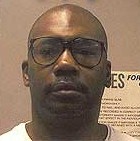
Jessie Lee Wise
Murderer Ervil LeBaron
Murderer · USA · 1972
Ervil Morrell LeBaron (1925 to August 16, 1981) was the leader of a polygamous…
35 victims
Ervil LeBaron
Murderer · USA · 1972
Ervil Morrell LeBaron (1925 to August 16, 1981) was the leader of a polygamous…
35 victims
 Marvin Gray
Murderer · USA · 1975
Marvin Gray was convicted killer who claimed responsibility for 23 slayings and…
23 victims
Marvin Gray
Murderer · USA · 1975
Marvin Gray was convicted killer who claimed responsibility for 23 slayings and…
23 victims
 Yahweh ben Yahweh
Murderer · USA · 1980
Yahweh ben Yahweh was born and legally named Hulon Mitchell Jr. (October 27, 19…
23 victims
Yahweh ben Yahweh
Murderer · USA · 1980
Yahweh ben Yahweh was born and legally named Hulon Mitchell Jr. (October 27, 19…
23 victims
 Charles Manson
Murderer · USA · 1969
Charles Milles Manson (born November 12, 1934) was an American criminal and mus…
9 victims
Charles Manson
Murderer · USA · 1969
Charles Milles Manson (born November 12, 1934) was an American criminal and mus…
9 victims
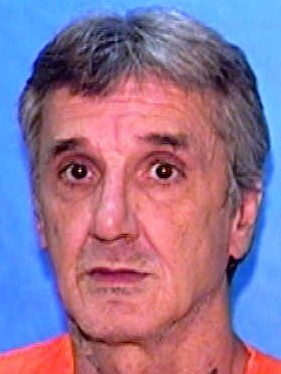 Olen Clay Gorby
Murderer · USA · 1990
Olen Clay Gorby was born on 11/27/49 and was living in a homeless shelter at th…
1 victim
Olen Clay Gorby
Murderer · USA · 1990
Olen Clay Gorby was born on 11/27/49 and was living in a homeless shelter at th…
1 victim
 Brenda Bratschi
Murderer · USA · 2004
Brenda Bratschi was convicted of murder in the 2004 death of Randy Bratschi and…
1 victim
Brenda Bratschi
Murderer · USA · 2004
Brenda Bratschi was convicted of murder in the 2004 death of Randy Bratschi and…
1 victim
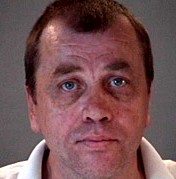 David William Tiley
Murderer · United Kingdom · 2007
David William Tiley was born in 1960. In 1995, he received a six-year jail term…
2 victims
David William Tiley
Murderer · United Kingdom · 2007
David William Tiley was born in 1960. In 1995, he received a six-year jail term…
2 victims
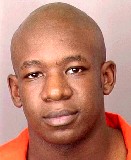 Yokamon Hearn
Murderer · USA · 1998
Yokamon Laneal Hearn was convicted of capital murder and sentenced to death for…
1 victim
Yokamon Hearn
Murderer · USA · 1998
Yokamon Laneal Hearn was convicted of capital murder and sentenced to death for…
1 victim
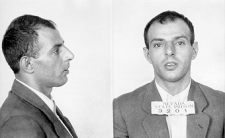 Joseph Behiter
Murderer · USA · 1931
Joseph Behiter was executed by asphyxiation-gas in Nevada on July 13, 1934. Beh…
1 victim
Joseph Behiter
Murderer · USA · 1931
Joseph Behiter was executed by asphyxiation-gas in Nevada on July 13, 1934. Beh…
1 victim
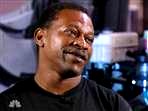 Sterling Spann
Murderer? · USA · 1981
Sterling Spann was a former death row inmate whose death sentence was overturne…
1 victim
Sterling Spann
Murderer? · USA · 1981
Sterling Spann was a former death row inmate whose death sentence was overturne…
1 victim
- Gender
- male
- Country
- USA
- Location
- St. Louis County, Missouri, USA
- Date of birth
- April 8, 1953
- Age at first offence
- 18
- Characteristics
- robbery
- Victim profile
- Ralph Gianino, 39 / Geraldine Rose McDonald, 49
- Method of murder
- Beating with a pipe wrench
- Date(s) of murder
- 1971 / 1988
- Years active
- 1971–1988
- Date of arrest
- August 30, 1988
- Status
-
Executed
Executed by lethal injection in Missouri on May 26, 1999
Case overview
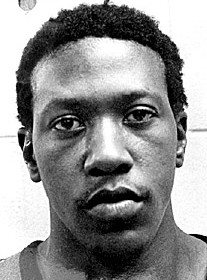
Jessie Lee Wise was executed in Missouri on May 26, 1999.
Jessie Lee Wise was convicted of first-degree murder and sentenced to death in a Missouri state court for the murder of Geraldine McDonald on August 27, 1988. Wise was also sentenced to life in prison for robbery and 40 years in prison for armed criminal action and stealing.
Timeline
- August 27, 1988 — Jessie Wise attacked Geraldine McDonald without provocation and beat her to death with a pipe wrench; he took her money, jewelry, credit cards, and later stole her automobile.
- August 30, 1988 — Police found McDonald’s automobile parked about one block away from Wise’s residence in south St. Louis.
- January 4, 1972 — Wise was sentenced to life in prison for Murder First Degree from St. Louis, Missouri (in connection with the earlier killing of Ralph Gianino).
- March 15, 1991 — Wise was sentenced to death on a Murder First Degree conviction from St. Louis County.
- December 4–12, 1990 — Wise was tried by jury in St. Louis County Circuit Court and found guilty of murder first degree; the jury recommended a sentence of death.
- March 28, 1991 — Wise filed an appeal of his conviction and sentence.
- August 28, 1991 — Wise filed a motion for post-conviction relief.
- March 2–3, 1992 — An evidentiary hearing was held in St. Louis County Circuit Court on Wise’s motion for post-conviction relief.
- April 20, 1992 — Wise’s motion for post-conviction relief was denied by the court.
- June 21, 1994 — Wise’s appeal for post-conviction relief was denied by the Missouri State Supreme Court.
- February 10, 1995 — Wise filed a habeas corpus petition in the United States District Court for Eastern Missouri.
- September 27, 1996 — The habeas corpus petition was denied by the United States District Court for Eastern Missouri.
- December 20, 1996 — Wise appealed the District Court’s ruling to the United States Court Eighth Circuit Court of Appeals.
- February 20, 1998 — The United States Court Eighth Circuit Court of Appeals affirmed the decision of the District Court.
- April 22, 1999 — The Missouri State Supreme Court set an execution date of May 26, 1999 for Jessie Lee Wise.
- May 26, 1999 — Missouri executed Jessie Lee Wise by lethal injection.
Background
On August 27, 1988, Jessie Wise was working as a custodian in an apartment complex in Clayton, Missouri. He went to the apartment of Mrs. Geraldine McDonald to discuss washing and waxing her car.
At the time, Wise also worked as a maintenance man at the condominium complex where McDonald lived.
Wise had a prior Murder First Degree conviction. On January 4, 1972, Wise was sentenced to life in prison for Murder First Degree from St. Louis, Missouri. He was paroled in 1984.
The offence
On the morning of August 27, 1988, Jessie Wise went to Mrs. Geraldine McDonald’s apartment and told her that he needed thirty dollars in advance. She declined.
As Mrs. McDonald walked away, Wise took a pipe wrench, followed her down the hallway, and struck her three or four times with the wrench in the back of the head.
After the attack, Wise took Mrs. McDonald’s money, jewelry, and credit cards.
Over the next two days, Wise returned to Mrs. McDonald’s apartment and took more jewelry. He also stole Mrs. McDonald’s automobile. Wise traded some of the jewelry for cocaine, gave some of the jewelry to his wife, and pawned the rest of the items.
Mrs. McDonald’s husband and their two daughters found Mrs. McDonald’s body two days later face down in a pool of blood in the doorway to the master bedroom. Many of the drawers in the bedroom were open, and several jewelry boxes were on the floor. The pipe wrench was on a chair next to the body.
On August 30, 1988, police found Mrs. McDonald’s automobile parked about one block away from Wise’s residence in south St. Louis.
Investigation
Police interviewed Wise in his apartment. They found Mrs. McDonald’s car keys on a bedroom table.
Police recovered Mrs. McDonald’s credit cards from Wise’s jacket pocket and a pawn ticket, which later was used to track down some of the stolen jewelry.
During his interrogation at the police station, Wise confessed to the crime. He told police that he was desperate for money and decided he would not leave the apartment empty handed. Wise also told police how he had returned to the apartment over the course of the next two days and stole more jewelry and her automobile.
Police recovered one of Mrs. McDonald’s rings from Mrs. Wise, and Wise’s fingerprints were found in Mrs. McDonald’s apartment and automobile.
Arrest and charges
Wise was indicted for first degree murder, first degree robbery, two counts of armed criminal action, and felony stealing.
Trial
Wise was tried by jury in St. Louis County Circuit Court. The trial occurred over December 4–12, 1990. The jury found Wise guilty of murder first degree and recommended a sentence of death.
In the trial in the McDonald case, Wise was 36 and represented himself with the help of two public defenders, Bret Strand and Marty McClain of Columbia, Missouri. At trial, Wise represented himself in the guilt phase and later sought to be represented by counsel in the sentencing phase.
The state's evidence included:
- a confession to Clayton police later repudiated by Wise,
- Wise’s fingerprint at the murder scene,
- recovery of jewelry and a car that Wise had stolen from Mrs. McDonald,
- and the pipe wrench as the murder weapon.
The pipe wrench handle was found near the body, and its jaw part was found in Wise’s storage locker.
In argument for the death penalty, prosecutors relied on the prior murder conviction and argued that the beating death of McDonald, age 49, was “particularly brutal and heinous.”
Wise argued that he should get a new trial or an acquittal, saying the state had failed to prove its case.
Sentencing
On March 15, 1991, Wise was sentenced to death on a Murder First Degree conviction from St. Louis County.
In addition to the death sentence for murder, Judge Melvyn W. Wiesman sentenced Wise to:
- life in prison for robbery,
- 40 years in prison for armed criminal action and stealing.
Appeals
Post-conviction relief
Wise filed an appeal of his conviction and sentence on March 28, 1991, and filed a motion for post-conviction relief on August 28, 1991.
An evidentiary hearing was held on Wise’s motion for post-conviction relief on March 2–3, 1992. On April 20, 1992, the court denied Wise’s motion for post-conviction relief.
On June 21, 1994, Wise’s appeal for post-conviction relief was denied by the Missouri State Supreme Court.
Federal habeas corpus and Eighth Circuit appeal
Wise filed a habeas corpus petition in the United States District Court for Eastern Missouri on February 10, 1995.
On September 27, 1996, the District Court denied Wise’s petition without holding an evidentiary hearing.
On December 20, 1996, Wise appealed to the United States Court of Appeals for the Eighth Circuit.
On February 20, 1998, the Eighth Circuit affirmed the District Court’s denial of Wise’s habeas corpus petition.
Outcome
The United States Court of Appeals for the Eighth Circuit affirmed the District Court’s denial of Wise’s petition for a writ of habeas corpus.
The Missouri State Supreme Court set the execution date of May 26, 1999 for Jessie Lee Wise on April 22, 1999.
Execution
Missouri executed Jessie Lee Wise by lethal injection on May 26, 1999.
Other details
Last meal and final statement
After dining on his last meal of steak and shrimp, Wise directed a final statement to The Rev. Carole Mehl of Kansas City, whom he befriended three years earlier:
"Carole, I love you. Remember me," he said.
Representation and self-representation litigation in federal appeal
The Eighth Circuit opinion described that Wise argued:
- the trial court erred in permitting him to represent himself,
- the trial court deprived him of due process by letting him represent himself in a second competency hearing held on June 15 and June 28, 1990,
- the trial court should have held that hearing ex parte due to confidentiality concerns,
- the trial court should have held yet another competency hearing after irrational behavior during the trial,
- the trial court violated his right not to be a witness against himself by ordering a psychological examination by Dr. Michael Armour,
- the trial court deprived him of his right to be confronted with witnesses against him by limiting cross-examination of prosecution witness Dexter Davis,
- and that the trial court deprived him of constitutional rights during sentencing by permitting evidence and remarks about his prior conviction, denying a continuance prior to sentencing, and providing constitutionally ineffective counsel in sentencing.
The Eighth Circuit’s decision stated that it affirmed the denial of Wise’s habeas corpus petition and rejected each of Wise’s arguments as described in the opinion.
Prior murder conviction details
The prior murder conviction referenced in the case facts involved the killing of Ralph Gianino.
Ralph Gianino was 39 when he was murdered. The Eighth Circuit described that Wise was convicted in connection with that murder and sentenced to life in prison; Wise was paroled in 1984.
The case facts also described family circumstances including Barbara Gianino’s actions after discovering her husband’s body, and that she did not call the police immediately. It also described that an 18-year-old man had been arrested for the murder, that he had robbed Gianino of $26, and that he had spent the night driving around with the body still in the car before being arrested.
The narrative also described that Barbara Gianino received $20,000 in life insurance and raised her children without remarrying.
Competency and mental health history (as reflected in appellate narrative)
The federal appellate narrative discussed competency to stand trial and multiple competency hearings, including one held in May 1990 and another held on June 15 and June 28, 1990. It also described that Dr. Michael Armour examined Wise in June 1990 to determine whether he was competent to stand trial, and that a trial judge relied in part on Dr. Armour’s opinion.
The appellate narrative also discussed testimony by experts in connection with the June 1990 competency hearing. It described that two of the three experts who examined Wise concluded that he had no mental disease and that he was competent to be tried.
Co-defence and appointment details (as reflected in appellate narrative)
In the May 11, 1990 proceedings, Wise moved to represent himself and the trial court conducted a hearing on his competence.
The appellate narrative described that Wise had standby counsel, Timothy Braun, who served as Wise’s attorney until Wise exercised his right to represent himself. The trial court ordered Braun to serve as standby counsel, ready to consult with Wise.
Witness cross-examination limitation (as reflected in appellate narrative)
The appellate narrative described that Wise wished to examine prosecution witness Dexter Davis about several offenses for which Davis was “wanted” to suggest Davis was testifying in exchange for immunity. The trial court did not permit Wise to do so.
Sentencing-phase family presence
The narrative described that some relatives of Wise’s first victim sat in the front row and wept during the sentencing phase, and that the judge declared a recess, removed the jury from the courtroom, and had the family members move to a location farther from the jury.
Spotted an error, or have more information about this case?