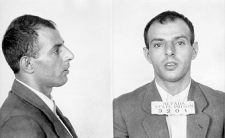
Joseph Behiter
Murderer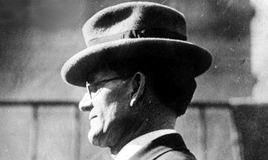 William Hale
Murderer · USA · 1921
Name: William Hale · Known as: the so-called "King of the Osage Hills" · Occupa…
24 victims
William Hale
Murderer · USA · 1921
Name: William Hale · Known as: the so-called "King of the Osage Hills" · Occupa…
24 victims
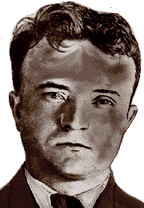 Paul Jaworski
Murderer · USA · 1926
Paul Jaworski was born in Poland as Paul Poluszynski in 1900. He later immigrat…
20 victims
Paul Jaworski
Murderer · USA · 1926
Paul Jaworski was born in Poland as Paul Poluszynski in 1900. He later immigrat…
20 victims
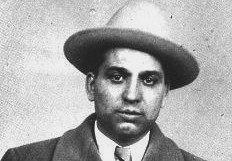 Harry Maione
Murderer · USA · 1937
Harry “Happy” Maione (1908 – February 19, 1942) was a New York mobster who serv…
12 victims
Harry Maione
Murderer · USA · 1937
Harry “Happy” Maione (1908 – February 19, 1942) was a New York mobster who serv…
12 victims
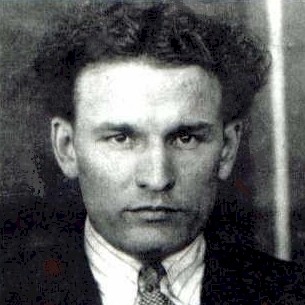 William Kenneth Wagner
Murderer · USA · 1924
William Kenneth (Kinnie) Wagner (born February 18, 1903 in Scott County, VA) wa…
6 victims
William Kenneth Wagner
Murderer · USA · 1924
William Kenneth (Kinnie) Wagner (born February 18, 1903 in Scott County, VA) wa…
6 victims
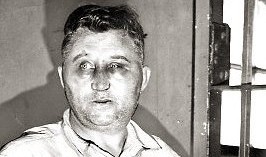 Harry Powers
Murderer · USA · 1931
Harry Powers was executed by hanging on March 18, 1932, at the West Virginia Pe…
5 victims
Harry Powers
Murderer · USA · 1931
Harry Powers was executed by hanging on March 18, 1932, at the West Virginia Pe…
5 victims
 Herman Drenth
Murderer · USA · 1931
Herman Drenth was also known by the aliases Harry F. Powers and Cornelius O. Pi…
5 victims
Herman Drenth
Murderer · USA · 1931
Herman Drenth was also known by the aliases Harry F. Powers and Cornelius O. Pi…
5 victims
 James Roy Knox
Murderer · USA · 1982
James Roy Knox murdered pharmacist Joseph Sanchez during a robbery at Joe’s Pha…
1 victim
James Roy Knox
Murderer · USA · 1982
James Roy Knox murdered pharmacist Joseph Sanchez during a robbery at Joe’s Pha…
1 victim
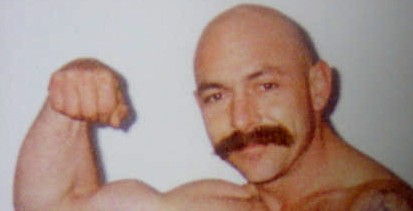 Rex Allan Krebs
Murderer · USA · 1998
Rex Allan Krebs was a 33-year-old registered sex offender. He had served ten ye…
2 victims
Rex Allan Krebs
Murderer · USA · 1998
Rex Allan Krebs was a 33-year-old registered sex offender. He had served ten ye…
2 victims
 Joe Leonard Lambright
Murderer · USA · 1980
Joe Leonard Lambright was a defendant in a joint trial with Robert Douglas Smit…
1 victim
Joe Leonard Lambright
Murderer · USA · 1980
Joe Leonard Lambright was a defendant in a joint trial with Robert Douglas Smit…
1 victim
 Kuno Hofmann
Murderer · Germany · 1972
Kuno Hofmann was a German labourer who was deaf mute. He was born in 1931. He h…
2 victims
Kuno Hofmann
Murderer · Germany · 1972
Kuno Hofmann was a German labourer who was deaf mute. He was born in 1931. He h…
2 victims
 Wendi Andriano
Murderer · USA · 2000
Wendi Andriano was sentenced to death on December 22, 2004. Wendi Elizabeth Och…
1 victim
Wendi Andriano
Murderer · USA · 2000
Wendi Andriano was sentenced to death on December 22, 2004. Wendi Elizabeth Och…
1 victim
- Gender
- male
- Country
- USA
- Location
- Las Vegas, Nevada, USA
- Date of birth
- 1901
- Age at first offence
- 30
- Characteristics
- —
- Victim profile
- Sylvia Reither also known as Maxine Armstrong
- Method of murder
- Hitting with a miner's pick
- Date(s) of murder
- July 23, 1931
- Years active
- 1931
- Date of arrest
- —
- Status
-
Executed
Executed by asphyxiation-gas in Nevada on July 13, 1934
Case details
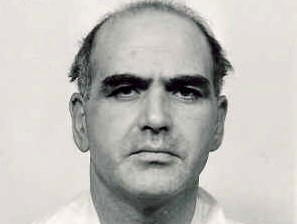
Joseph Behiter was executed by asphyxiation-gas in Nevada on July 13, 1934.
Behiter was convicted of murder in the first degree for the killing of Sylvia Reither, better known as " Maxine Armstrong, " and was sentenced to death. The matter was before the Supreme Court of Nevada as Supreme Court of Nevada State v. Behiter (appeal from the Eighth Judicial District Court, Clark County). J. Emmett Walsh presided as the judge.
Behiter was a native of Missouri and was 33 years old. His occupation was listed as cook.
Timeline
- July 23, 1931 — Sylvia Reither (" Maxine Armstrong ") was found lying nude crosswise her bed in her apartment in a pool of blood, unconscious and in a dying condition.
- July 24, 1931 — Sheriff Joe Keate and Deputy Glenn E. Bodell questioned Behiter in the early morning hours following the homicide.
- November 2, 1931 — Judgment was pronounced.
- September 18, 1933 — The appeal from the judgment and the order denying a new trial was submitted for decision.
- March 5, 1934 — The appeal was decided by the Supreme Court of Nevada (By the Court, Sanders, C. J.).
- June 1, 1934 — A petition for rehearing was filed.
- June 1, 1934 — Rehearing was denied (Per Curiam).
- July 13, 1934 — Behiter was executed by asphyxiation-gas in Nevada.
Background
Sylvia Reither, referred to throughout the record as " Maxine, " habitated the restricted district in the city of Las Vegas, Nevada. She and her consort, Fred Green, occupied apartment No. 6 of the Dees Apartments in that district.
The offence
Between the hours of 8 and 9 o'clock, nearer 8 than 9, on the morning of July 23, 1931, Maxine was found lying nude crosswise her bed in her apartment in a pool of blood, unconscious and in a dying condition.
Upon removal to the Las Vegas Hospital, a surgeon discovered that her skull had been crushed. She died within an hour after the examination without regaining consciousness.
Fred Green testified that when he entered apartment No. 6 at about the hour of 8:30 on the morning of July 23, he discovered that the screen and the lock on the rear door had been torn and broken. After calling to Maxine and receiving no reply, he started towards the bedroom and met Behiter coming out. When asked what he was doing there, Behiter replied that he heard her scream, and that a colored person ran out. Green and Behiter engaged in a scuffle, and Green called for help.
One Norman Westmoreland, an occupant of an apartment near by, responded within a few minutes and held Behiter while Green entered the room. Seeing Maxine in the condition described, Green rushed back and exclaimed: " He killed her. "
Behiter exclaimed: " I didn't do it. Let me go. Turn me loose. I didn't kill her, but I saw a nigger kill her. "
After Behiter was taken to jail, Green, Westmoreland, and others went into the room and saw on the bed a hammer, described in evidence as a prospector's pick, the handle of which was smeared with blood. The pick had been taken from Westmoreland's automobile parked at the Dees Apartments.
Mrs. I. O. Friend testified that she stood across the street, opposite the apartment and in plain view; that her attention was attracted by loud screams of a woman, which impressed her as death screams, pleading for life; and that she saw no person run out of the apartment.
Investigation
After the homicide, Behiter was taken to jail by a night officer.
Shortly after Behiter had been taken to jail, he was brought back to the place of the homicide by Joe Keate, the sheriff, and his deputy, Glenn E. Bodell. Behiter protested his innocence, disclaimed having killed the deceased, and stated that a " nigger, " or colored person, killed her.
Officer Keate testified that when Behiter had been taken back to jail, Keate had several conversations with him during the day in which Behiter maintained that he did not kill Maxine. Keate testified that because of the persistent statements of the defendant, he felt that he should satisfy himself whether he had to look for another person.
Keate testified that in the nighttime he contacted his deputy, Glenn E. Bodell, and requested him to come with him because Keate was going to take Behiter down to the apartment and learn more about the crime.
The sheriff and his deputy handcuffed Behiter at the hour of 2:30 o'clock on the morning of July 24, after the homicide. They placed him in an automobile and drove to the apartment. On arrival, they went into the kitchen, turned on the light, and led Behiter into the bedroom, with the sheriff standing on one side and the deputy on the other.
The sheriff testified that both questioned Behiter kindly, using no force and no promises or threats. In response to questioning, Behiter maintained that a colored person or nigger killed Maxine.
Mary Young incident and related evidence
A witness for the state, Mary Young, testified that at about 8 o'clock on the morning of the 23d, Behiter entered her room in the Honolulu Inn in the restricted district in the city of Las Vegas. The inn was a short distance from the Dees Apartments. Young testified that Behiter's presence awakened her and that she was frightened by him standing over her, looking mad. She testified that he had something concealed in his shirt; that she screamed and he told her to hush; that a difficulty between them ensued; and that both landed out into the street when others, hearing the disturbance, appeared. Young testified that Behiter quieted down.
Over Behiter's objections, Young was asked questions about the condition of her room. Young testified that the drawers of her dresser had been opened and their contents disheveled and confused. The state's attorney stated in response to the court's questions that the purpose of this questioning was to show motive and Behiter's state of mind.
Arrest
Behiter was taken to jail by a night officer after the scuffle.
The sheriff and his deputy handcuffed Behiter at the hour of 2:30 o'clock on the morning of July 24 and transported him to the apartment where the homicide had occurred.
Trial
Charges and plea
Behiter relied upon his plea of "Not Guilty" and his defense of "Not Guilty by Reason of Insanity."
He was convicted of murder in the first degree for the killing of Sylvia Reither, better known as " Maxine Armstrong, " and was sentenced to death.
Verdict and sentencing
The jury selected and returned the following verdict: "We, the jury in the above-entitled cause, find the defendant, Joseph Behiter, guilty of murder in the first degree as charged in the information, and fix his punishment at death."
On the date fixed for the pronouncement of judgment, Behiter moved the court for a new trial on the ground of after-discovered evidence, set forth in the affidavit of one of counsel for the defendant, and the motion was overruled.
Judgment was pronounced in accordance with the verdict and Behiter was sentenced to death by lethal gas in the mode and manner as prescribed by the law of this state.
Evidence and testimony
Behiter as a witness
After the state rested, Behiter was called as a witness in his own behalf.
Behiter testified that he stopped in at Mary Young's place of business to talk to her, with no intention of having trouble; that it seemed to him that he lost his head and became very much frightened; and that from that time he had no recollection whatever of what he did or what occurred up to the time he was being beaten at the Dees Apartments.
Behiter testified that everything seemed dark and that he was off, hazy minded, and suffering from headache. He testified that he had tried the very best he could to remember what occurred after the difficulty with Mary Young, but could not do so.
Behiter testified that about four or five years ago he had been hit over the head with a pistol at Poplar Bluff, Mo., that he went to a hospital there and took treatment for said injury, that he stayed in the hospital for about a week, and that since that time he was subject to pains in the head and was suffering from the same character of pains on the morning of the homicide.
Behiter testified about his conversations with Officer Bodell at the hour of 2:30 o'clock on the morning of July 24 and the incidents that occurred during that conversation, tending to show that his answers were involuntary.
Officer Bodell’s testimony and palm prints
Officer Bodell was called as a witness for Behiter.
On direct examination, Bodell qualified as an expert on fingerprints. On cross-examination, over Behiter's objections, Bodell stated that he, not long after the homicide, made palm prints from the blood-smeared railing of the bed in apartment No. 6 of the Dees Apartments, which had forty-two characteristics of the palm prints made by him of Behiter's right hand.
Behiter also presented several witnesses who had known him for a few months in Las Vegas who testified that they considered him mentally unsound, including deposition witnesses who gave reasons for considering him insane.
Rebuttal witnesses for the state testified that in their opinion Behiter was sane and knew right from wrong.
Appeals
The case was appealed to the Supreme Court of Nevada from an order denying a new trial and from the judgment.
The appeal was considered by By the Court, Sanders, C. J. The court noted that no point was made that the evidence was insufficient to support the verdict, judgment, and sentence.
Issues on appeal
The errors relied upon for reversal related solely to the court's rulings on questions of law arising in the course of the trial. The assignments were classified and discussed in the opening brief under general topics:
- Error in admission of evidence
- Errors in instructions and refusal to give instructions requested by the defendant
- Improper argument of the district attorney
- Error in refusing to grant a new trial upon the ground of after-discovered evidence
Supreme Court’s discussion of specific rulings
The Supreme Court discussed whether testimony of Behiter’s admissions and confession was improperly admitted and whether statements quoted amounted to a confession or only admissions. It concluded:
- "We do not think the statements quoted amount to a confession. At most, they were admissions of certain facts which indicated the guilt of defendant."
- The court described an admission as "something less than a confession" and discussed the rule that, with reference to admissions as distinguished from confessions, it was not necessary to show preliminarily that they were made voluntarily without coercion, intimidation, or promise of reward or immunity.
The court also addressed evidence of another offense involving Behiter’s entry into Mary Young’s room in the Honolulu Inn and stated that the evidence was admissible for two reasons:
- It tended directly to prove Behiter's guilt of the charge.
- No injury resulted because Behiter grounded his defense of insanity on the alleged offense and testified that after his entry into Mary Young’s room he lost his memory and had no recollection of what occurred afterwards.
The court also addressed the claimed improper cross-examination of Bodell regarding the results of comparison of palm prints.
Jury instructions on insanity
The court discussed exceptions to instructions Nos. 14 and 15. The instructions included: "To establish a defense on the ground of insanity, it must be clearly proved that at the time of committing the act, the defendant was laboring under such a defect or suffering from disease of the mind as not to know the nature or quality of the act he was doing, or, if he did know it, that he did not know that he was doing what was wrong. The true test of insanity is whether the accused, at the time of committing the crime, was conscious that he was doing what he should not do; and if he was conscious that he was doing wrong and acted through malice or motives of revenge, he cannot avail himself of the defense of insanity. Plaintiff's Instruction No. 38 c."
"With regard to methods of proof upon which the defense of insanity may be established, the law from which consideration of public policy, the welfare of society and the safety of human life, proceeds with great caution, and has adopted a certain standard by which the insanity of the party on trial may be proved when relied upon."
"The burden of proving insanity rest upon the defendant and to warrant you in acquitting him solely upon that ground, his insanity at the time of committing the homicide?if you find that he did commit it ' must be established by a preponderance of proof. The evidence of insanity must outweigh and overcome the presumption of and evidence in favor of sanity in some appreciable degree, and render it more probable that he was insane than that he was sane. Insanity, being [55 Nev. 236, Page 255] a fact to be proved by the defendant, must be established by evidence in the case with the same clearness and certainty as any other fact alleged by the defendant in his defense; that is to say, the proof must be such in amount that if the single issue of sanity or insanity of the defendant should be submitted to the jury in a civil case, they would find that he was insane. Insanity is not proved or established by simply raising a doubt as to whether it exists or not. Plaintiff's Instruction No. 38 d."
The court held it could not say the errors complained of resulted in a miscarriage of justice or prejudiced Behiter in respect to a substantial right.
After-discovered evidence and argument
The court stated it was constrained to hold the ruling was correct regarding the refusal to grant a new trial upon the ground of after-discovered evidence, citing State v. Willberg.
The court also considered improper argument claims. It stated it could not say the argument complained of was reversible error after examining the entire record and concluded: "After an examination of the entire record, we conclude that no verdict other than guilty of murder in the first degree, as charged in the information, could have been reached."
Decision on appeal
The Supreme Court affirmed the judgment and ordered the district court to make the proper order for carrying into effect the judgment rendered by the warden of the state prison.
Opinions and rehearing
Ducker, J. concurred.
Coleman, J. concurred, stating that although the trial court erred in permitting the cross-examination of Behiter's witness Bodell, he believed Behiter was not prejudiced.
Coleman, J. dissented.
On Petition for Rehearing June 1, 1934, it stated: "Rehearing denied."
Aftermath
Behiter was executed by asphyxiation-gas in Nevada on July 13, 1934.
Spotted an error, or have more information about this case?