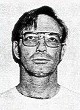
William Woratzeck
Murderer Ervil LeBaron
Murderer · USA · 1972
Ervil Morrell LeBaron (1925 to August 16, 1981) was the leader of a polygamous…
35 victims
Ervil LeBaron
Murderer · USA · 1972
Ervil Morrell LeBaron (1925 to August 16, 1981) was the leader of a polygamous…
35 victims
 Brian Kevin Rosenfeld
Murderer · USA · 1985
Brian Kevin Rosenfeld Brian Kevin Rosenfeld was sentenced to three concurrent l…
23 victims
Brian Kevin Rosenfeld
Murderer · USA · 1985
Brian Kevin Rosenfeld Brian Kevin Rosenfeld was sentenced to three concurrent l…
23 victims
 Marvin Gray
Murderer · USA · 1975
Marvin Gray was convicted killer who claimed responsibility for 23 slayings and…
23 victims
Marvin Gray
Murderer · USA · 1975
Marvin Gray was convicted killer who claimed responsibility for 23 slayings and…
23 victims
 Yahweh ben Yahweh
Murderer · USA · 1980
Yahweh ben Yahweh was born and legally named Hulon Mitchell Jr. (October 27, 19…
23 victims
Yahweh ben Yahweh
Murderer · USA · 1980
Yahweh ben Yahweh was born and legally named Hulon Mitchell Jr. (October 27, 19…
23 victims
 Gregory Sturm
Murderer · USA · 1990
Gregory Allen Sturm · Aug. 19, 1990 — Gregory A. Sturm convicted in the deaths…
3 victims
Gregory Sturm
Murderer · USA · 1990
Gregory Allen Sturm · Aug. 19, 1990 — Gregory A. Sturm convicted in the deaths…
3 victims
 James Von Brunn
Murderer · USA · 2009
James Wenneker von Brunn (July 11, 1920 – January 6, 2010) was an American man…
1 victim
James Von Brunn
Murderer · USA · 2009
James Wenneker von Brunn (July 11, 1920 – January 6, 2010) was an American man…
1 victim
 Willie Bosket
Homicide · USA · 1978
Willie Bosket was a juvenile who committed robberies and related violent attack…
2 victims
Willie Bosket
Homicide · USA · 1978
Willie Bosket was a juvenile who committed robberies and related violent attack…
2 victims
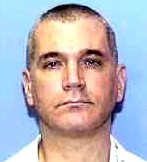 John David Battaglia
Murderer · 2001
John David Battaglia was charged and convicted in Dallas County of capital murd…
2 victims
John David Battaglia
Murderer · 2001
John David Battaglia was charged and convicted in Dallas County of capital murd…
2 victims
- Gender
- male
- Country
- USA
- Location
- Pinal County, Arizona, USA
- Date of birth
- September 11, 1945
- Age at first offence
- 35
- Characteristics
- robbery, arson, torture, mentally ill, alcohol
- Victim profile
- Linda Louise Leslie (female, 36)
- Method of murder
- Strangulation
- Date(s) of murder
- March 6, 1980
- Years active
- 1980
- Date of arrest
- —
- Status
-
Executed
Executed by lethal injection in Arizona on June 25, 1997
Case information
Defendant: William Lyle WORATZECK Victim: Linda Louise Leslie
Timeline
- March 6, 1980 — Linda Louise Leslie was killed inside her trailer; an undetermined amount of money was taken; the trailer was then lit on fire.
- September 10, 1980 — Start of trial.
- September 15, 1980 — Jury verdict.
- November 10, 1980 — Sentencing.
- September 16, 1986 — The United States Court of Appeals for the Ninth Circuit affirmed the denial of Woratzeck’s petition for writ of habeas corpus (Woratzeck v. Ricketts, 808 F.2d 1322).
- December 17, 1982 — The Arizona Supreme Court affirmed Woratzeck’s death sentence in Woratzeck I.
- June 14, 1995 — Argued and submitted (No. 94-99009).
- June 21, 1995 and Aug. 18, 1995 — Submission deferred.
- Sept. 17, 1996 — Submitted.
- Sept. 24, 1996 — Decided (No. 94-99009).
- June 20, 1997 — Woratzeck filed a motion seeking permission to file a successive petition for habeas corpus.
- June 24, 1997 — The Supreme Court of Arizona denied all relief; the Ninth Circuit denied the motion.
- June 25, 1997 — Executed by lethal injection in Arizona.
Background
Linda Louise Leslie was a 36-year-old woman who suffered from Huntington's disease and had the mental capacity of a 15-year-old. She was physically disabled. She lived in a trailer located in a trailer park being purchased by Woratzeck from Leslie’s aunt, Medina, and Medina’s brother. Medina made the monthly rental payments to Woratzeck for Leslie’s trailer. Leslie received day-to-day assistance from other friends.
In February 1980, Woratzeck was over $2,000 behind in his payments to the Medinas for the trailer park property, and Medina withheld payment of the February rent on Leslie’s trailer.
Woratzeck’s attorneys and family protested to the end that only circumstantial evidence convicted him. Police detected bodily fluids that could have been Leslie’s and fibers from the carpet at the death scene. Woratzeck said he did not kill Leslie, was not sure who did, but thought some facts unexamined at trial needed to be aired. In a death row telephone interview, Woratzeck said that although he was married at the time, he had a relationship with Leslie and introduced men to her so they too could have sex with her. He said that among those men was a Casa Grande police officer. His attorneys doubted the conspiracy theory but claimed police gave up the investigation too early without pursuing the possibility of other suspects. Woratzeck spent 17 years appealing his case.
The offence
On March 6, 1980, about 2:30 a.m., Woratzeck broke into Leslie’s room and beat her with a hammer. He stabbed her three times with a steak knife, and he strangled her so violently he broke bones in her neck. He then robbed her of approximately $107 and set the shed on fire, burning Leslie’s body.
The medical examiner testified that the assailant stabbed Leslie three times, strangled her, and delivered two blows to her head. Leslie’s trailer was then lit on fire.
Investigation and evidence
Police detected bodily fluids that could have been Leslie’s as well as fibers from the carpet at the death scene. The main evidence against Woratzeck was found on the clothing he wore the night of the killing.
During later federal habeas proceedings, Woratzeck argued that crime scene evidence (the victim’s nightgown, Woratzeck’s shirt, pants, and boots), long thought destroyed, may still exist. Under a successive-petition standard, the Ninth Circuit concluded that Woratzeck failed to establish a prima facie case that the evidence still existed.
A card retrieved from a file stated in part: "(All other exhibits are either filmable or released/destroyed) L.J.S. 12-30-87," and "I did not have access to complete file to investigate."
Arrest
Trial
Presiding Judge: Robert R. Bean Prosecutor: W. Allen Stooks Start of Trial: September 10, 1980 Jury verdict (September 15, 1980): The jury convicted him of first-degree felony-murder, second-degree burglary, and armed robbery, and acquitted him on the arson count.
Woratzeck was indicted by a grand jury of Pinal County, Arizona, for first-degree felony-murder (Ariz. Rev. Stat. Ann. Sec. 13-1105.A.2), arson of an occupied structure (id. Sec. 13-1704), second-degree burglary (id. Sec. 13-1507), and armed robbery (id. Sec. 13-1904).
Sentencing
A sentencing hearing was held pursuant to Ariz. Rev. Stat. Ann. Sec. 13-703, and Woratzeck was sentenced to death on the first-degree felony-murder count.
The sentencing judge found aggravating circumstances including pecuniary gain and especially heinous/cruel/depraved. The record also reflects that the cruel element struck on appeal is mentioned. The mitigating circumstances were stated as none.
Sentencing date: November 10, 1980. The sentencing court also imposed consecutive prison terms of 11.25 years and 15.75 years on the burglary and robbery counts.
Appeals
Arizona Supreme Court: The Arizona Supreme Court affirmed the convictions and sentences in State v. Woratzeck, 134 Ariz. 452, 657 P.2d 865 (1982).
Woratzeck’s petition for post-conviction relief was denied by the trial court under Ariz. R. Crim. P. 32, and the Arizona Supreme Court denied review.
Federal habeas corpus proceedings were denied, and the Ninth Circuit affirmed in Woratzeck v. Ricketts, 799 F.2d 1365 (9th Cir. 1986) and again in multiple subsequent decisions, including:
- Woratzeck v. Ricketts, 808 F.2d 1322 (9th Cir. 1986) (affirmed the district court’s denial of a petition for writ of habeas corpus; effective assistance of counsel and due process claims were rejected).
- Woratzeck v. Ricketts, 820 F.2d 1450 (9th Cir. 1987).
- Woratzeck v. Ricketts, 859 F.2d 1559 (9th Cir. 1988).
- Woratzeck v. Stewart, 97 F.3d 329 (9th Cir. 1996) (petition dismissed/denied after habeas proceedings).
- Woratzeck v. Stewart (No. 97-80296), where the Ninth Circuit denied permission to file a second successive habeas petition.
Ninth Circuit (808 F.2d 1322)
Woratzeck appealed from the district court’s denial of his habeas corpus petition pursuant to 28 U.S.C. Sec. 2254 and raised claims including ineffective assistance of counsel and due process violations. The Ninth Circuit concluded with an AFFIRMED disposition.
The Ninth Circuit addressed, among other matters:
- A claim that counsel was ineffective for not requesting a jury instruction concerning a claim of right defense to robbery or theft.
- A claim that counsel was ineffective for not requesting an instruction that theft was a lesser included offense of armed robbery.
- Claims of ineffective assistance during the sentencing proceeding, including issues relating to aggravating circumstances and mitigating evidence.
- A due process challenge to the trial judge’s failure to instruct the jury sua sponte on claim of right and lesser included defenses.
Ninth Circuit (94-99009; 118 F.3d 648)
In a separate appeal, the Ninth Circuit addressed six principal issues, including:
- whether the aggravating factor “especially cruel, heinous, or depraved” was unconstitutionally vague at the time he was sentenced,
- whether the sentencing court failed to consider mitigating evidence in the record,
- whether a second aggravating factor failed to channel discretion when applied to felony-murder,
- whether both aggravating factors found at sentencing were established beyond a reasonable doubt,
- whether the district court should have granted an evidentiary hearing on ineffective assistance of counsel, and
- whether the sentence of death violated the Eighth Amendment.
The Ninth Circuit concluded: AFFIRMED.
Successive petition request (No. 97-80296)
Woratzeck sought permission to file a second petition for writ of habeas corpus. The Ninth Circuit denied the motion, applying 28 U.S.C. § 2244(b)(3) and the standards in § 2244(b)(2).
Woratzeck argued successive claims including:
- the possible continued existence of crime scene evidence that could be tested with DNA,
- a claim under Arizona v. Youngblood based on loss/destruction of potentially exculpatory evidence absent bad faith,
- a jury-foreman misconduct theory based on statements during deliberations and alleged background information discrepancies,
- an Eighth Amendment “freakish and wanton” scheduling argument,
- an Equal Protection theory that Arizona singled him out,
- and a clemency hearing conflict-of-interest theory regarding involvement of two prior lawyers.
The Ninth Circuit denied the motion and stated MOTION DENIED.
Outcome
Woratzeck was executed by lethal injection in Arizona on June 25, 1997.
Aftermath
When Woratzeck was strapped to the lethal injection table, he said: "I want the state of Arizona to know they are executing an innocent man. Tell my wife I love her and tell the rest of my family I love them."
Woratzeck’s last meal was: 16-ounce top sirloin steak (medium rare), French fries, onion rings, 12 deep-fried butterfly shrimp, one whole cherry cheesecake, one case Pepsi Cola, one pot of Coffee.
Other details
Indicted counts and verdicts
Woratzeck was indicted for:
- first-degree felony-murder (Ariz. Rev. Stat. Ann. Sec. 13-1105.A.2),
- arson of an occupied structure (id. Sec. 13-1704),
- second-degree burglary (id. Sec. 13-1507),
- armed robbery (id. Sec. 13-1904).
The jury convicted on:
- first-degree felony-murder,
- second-degree burglary,
- armed robbery,
and acquitted on:
- arson count.
Aggravating circumstances and sentencing notes
Aggravating circumstances listed included:
- Pecuniary gain
- Especially heinous/cruel/depraved (with mention that cruel struck on appeal appears in the record)
Mitigating circumstances were listed as none.
Last meal and execution statement
Woratzeck’s last meal and his statement at the execution table are recorded in the case record.
Published opinions and cited cases
Published opinions mentioned include:
- State v. Woratzeck, 134 Ariz. 452, 657 P.2d 865 (1982)
- Woratzeck v. Ricketts, 799 F.2d 1365 (9th Cir. 1986)
- Woratzeck v. Ricketts, 808 F.2d 1322 (9th Cir. 1986)
- Woratzeck v. Ricketts, 820 F.2d 1450 (9th Cir. 1987)
- Woratzeck v. Ricketts, 859 F.2d 1559 (9th Cir. 1988)

Spotted an error, or have more information about this case?