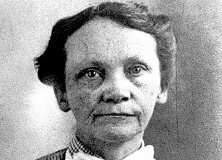
Amy Archer-Gilligan
Serial killer Bertha Gifford
Serial killer · USA · 1909
Bertha Gifford (1872- August 20, 1951) was a farmwife in rural Catawissa, Misso…
17 victims
Bertha Gifford
Serial killer · USA · 1909
Bertha Gifford (1872- August 20, 1951) was a farmwife in rural Catawissa, Misso…
17 victims
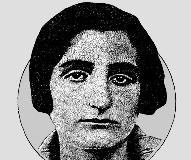 Della Sorenson
Serial killer · USA · 1918
Della Sorenson was a Nebraska woman who killed relatives by poisoning. She was…
8 victims
Della Sorenson
Serial killer · USA · 1918
Della Sorenson was a Nebraska woman who killed relatives by poisoning. She was…
8 victims
 Tillie Klimek
Serial killer · USA · 1914
Ottilie “Tillie” Klimek, also known as Ottilie “Tillie” Klimek (or Tillie Gbure…
6 victims
Tillie Klimek
Serial killer · USA · 1914
Ottilie “Tillie” Klimek, also known as Ottilie “Tillie” Klimek (or Tillie Gbure…
6 victims
 Tillie Klimek
Serial killer · USA · 1914
Ottilie “Tillie” Klimek (also known as Tillie Gburek) was a Polish American ser…
6 victims
Tillie Klimek
Serial killer · USA · 1914
Ottilie “Tillie” Klimek (also known as Tillie Gburek) was a Polish American ser…
6 victims
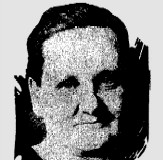 Anna Cunningham
Serial killer · USA · 1918
Mrs. Anna Cunningham was a Chicago widow. She lived on a farm at Bachley Corner…
5 victims
Anna Cunningham
Serial killer · USA · 1918
Mrs. Anna Cunningham was a Chicago widow. She lived on a farm at Bachley Corner…
5 victims
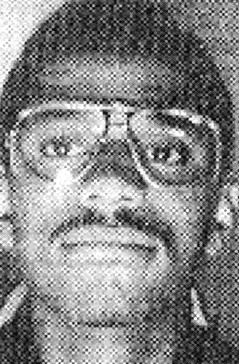 Dwayne Weeks
Murderer · USA · 1992
Dwayne Weeks was convicted in Delaware of the 1992 murder of his estranged wife…
2 victims
Dwayne Weeks
Murderer · USA · 1992
Dwayne Weeks was convicted in Delaware of the 1992 murder of his estranged wife…
2 victims
 Jacques Delisle
Murderer · Canada · 2009
Jacques Delisle (born 1935, Montreal, Canada) was a Canadian judge who sat on t…
1 victim
Jacques Delisle
Murderer · Canada · 2009
Jacques Delisle (born 1935, Montreal, Canada) was a Canadian judge who sat on t…
1 victim
 Dana Ray Edmonds
Murderer · USA · 1983
Dana Ray Edmonds Edmonds was sentenced to death after a bench trial in 1983 for…
1 victim
Dana Ray Edmonds
Murderer · USA · 1983
Dana Ray Edmonds Edmonds was sentenced to death after a bench trial in 1983 for…
1 victim
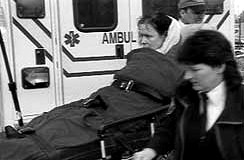 Rachel Capra Craig
Homicide · Canada · 2001
Rachel Capra Craig was a Canadian woman accused of the murder of her fourteen-y…
1 victim
Rachel Capra Craig
Homicide · Canada · 2001
Rachel Capra Craig was a Canadian woman accused of the murder of her fourteen-y…
1 victim
 Jeremy Gross
Murderer · USA · 1998
Jeremy Gross was convicted of murder, felony murder, conspiracy to commit robbe…
1 victim
Jeremy Gross
Murderer · USA · 1998
Jeremy Gross was convicted of murder, felony murder, conspiracy to commit robbe…
1 victim
- Gender
- female
- Country
- USA
- Location
- Windsor, Connecticut, USA
- Date of birth
- October 1868
- Age at first offence
- 40
- Characteristics
- attempt to collect insurance money, to inherit, poisoner
- Victim profile
- Men and women (husbands and residents of her nursing home)
- Method of murder
- Poisoning ( arsenic or strychnine)
- Date(s) of murder
- 1908 - 1916
- Years active
- 1908–1916
- Date of arrest
- May 8, 1916
- Status
-
Life imprisonment
Sentenced to death on June 18, 1917; granted a new trial; pleaded guilty of murder in second degree and sentenced to life in prison on July 1, 1919; declared insane in 1924 and transferred to Connecticut Hospital for the Insane in Middletown, where she remained until her death on 23 April 1962.
Case overview
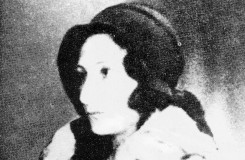
Amy Archer-Gilligan (1868–1962) was a serial killer in Windsor and Connecticut who systematically murdered people by poisoning, including at least five people tied to her nursing home, one of whom was her second husband. She ran a private nursing home in Windsor, Connecticut, married and killed elderly men, and convinced elderly women to name her in their wills before poisoning them too.
Background
Amy E. Duggan (later known as Amy Archer-Gilligan) was born in October 1868 to James Duggan and Mary Kennedy in Milton, a suburb of Litchfield, Connecticut, the eighth of ten children. She was taught at the Milton school and went to the New Britain Normal school in 1890.
Amy married James Archer in 1897 and had a daughter, Mary J. Archer, born in December 1897.
In 1901, Amy and James Archer got their first job as caretakers. They were hired to take care of John Seymour, an elderly widower, and settled in his home at Newington, Connecticut. Seymour died in 1904, and his heirs turned the residence into a boarding house for the elderly while allowing the Archers to stay. The Archers provided care for the elderly for a fee and in turn paid rent to Seymour’s family. They ran the house under the name of “Sister Amy’s Nursing Home for the Elderly.”
In 1907, Seymour’s heirs decided to sell the house. The Archers moved to Windsor, Connecticut, used their savings to purchase a residence of their own, and converted it into their business, the Archer Home for the Elderly and Infirm.
James Archer died in 1910 of apparently natural causes. The official cause of death was Bright’s disease, a generic term for kidney diseases. Amy had taken out an insurance policy on him a few weeks before his death, and she was able to continue running the Archer Home.
In 1913, Amy married her second husband, Michael W. Gilligan, a widower with four adult sons. He was reportedly wealthy and interested in both Amy and investing in the Archer Home. Michael died 20 Feb 1914. The official cause of death was “acute bilious attack,” described as severe indigestion. Archer-Gilligan’s husband had drawn up a will leaving her all his estate.
The offence
Between 1907 and 1917, there were 60 deaths in the Archer Home. Only 12 had died between 1907 and 1910, while 48 had died between 1911 and 1916.
Relatives of clients became suspicious as they tallied the large numbers of residents dying. The pattern of dying occurred not long after giving their caretaker large sums of money.
The victims included Franklin R. Andrews, an apparently healthy man. On the morning of May 29, 1914, Andrews was doing gardening in the Archer house and his health collapsed within a day, with him dead by the evening. The official cause of death was gastric ulcer. His sister Nellie Pierce inherited his personal papers and noted occasions where Archer-Gilligan pressed Andrews for money.
Across the case, bodies of Gilligan, Andrews, and three other boarders were exhumed. All five had died of poisoning, either by arsenic or strychnine. Authorities also found that local merchants could testify Archer-Gilligan had been purchasing large quantities of arsenic, supposedly to “kill rats.” A look into Gilligan’s will helped establish it was actually a forgery, written in Amy’s handwriting.
At least four female patients were described as meeting similar fates after changing their wills to make Gilligan their beneficiary, and authorities alleged she convinced nine elderly women to name her in their wills before poisoning them.
Investigation
Relatives grew suspicious and Pierce reported her suspicions to the local district attorney, who mostly ignored her. Pierce then took her story to The Hartford Courant.
On May 9, 1916, the first of several articles on the “Murder Factory” was published. A few months later, the police started seriously investigating the case. The investigation took almost a year to complete.
The bodies of Gilligan, Andrews, and three other boarders were exhumed after the investigation developed. Local merchants were able to testify about purchases of arsenic. An examination of a will written in Amy’s handwriting supported allegations of forgery. Bodies were described as showing clear signs of poisoning.
A separate account described an arrest in 1916 after state police concluded she had shortened the lives of up to two dozen or so men by poisoning them with arsenic. It also described bottles of arsenic being found.
Arrest
Archer-Gilligan was arrested and tried for murder. One account described her arrest in 1916.
Trial
Archer-Gilligan was originally tried on five counts and ultimately had charges reduced to a single count for Franklin R. Andrews.
On June 18, 1917, a jury found her guilty and she was sentenced to death. She appealed and was granted a new trial in 1919. During the second trial, she pleaded insanity, and Mary Archer testified that her mother was addicted to morphine. Archer-Gilligan was found guilty of second degree murder and sentenced to life imprisonment.
The trial ended abruptly on July 1, with a plea of guilty of murder in the second degree, which carried a life sentence.
Sentencing
On June 18, 1917, Archer-Gilligan was sentenced to death.
On July 1, 1919, after a new trial and a plea of guilty of murder in the second degree, she was sentenced to life in prison.
Appeals
Archer-Gilligan appealed the conviction and was granted a new trial in 1919.
Aftermath
In 1924, Archer-Gilligan was declared temporarily insane and was transferred to Connecticut Hospital for the Insane in Middletown. She remained there until her death on 23 April 1962.
Other details
The case attracted wide publicity and was cited as an inspiration for the play and later film, Arsenic and Old Lace. It was described as transforming the Connecticut situation into two sisters, Abby and Martha Brewster, who poisoned elderly gentlemen with elderberry wine spiked with arsenic and buried them in a cellar. The play opened on Broadway at the Fulton Theater on January 10, 1941, and a Frank Capra movie was described as following, starring Cary Grant as Mortimer.
A critic’s quoted statement included: “You wouldn't believe homicidal mania could be such fun!”
A separate discussion of later years included claims that arsenic might have been used in embalming and that arsenic found after exhumations might be explained without poisoning. Ruth Bonito advanced the view that evidence against Amy Duggan Archer Gilligan was circumstantial and that she did not confess. Dr. Nicholas Bellantoni confirmed arsenic was widely used for embalming from the Civil War to about 1910, while saying he was not sure those facts could be connected to the Gilligan case.
A New York Times discussion also described: “Police Believe Archer Home for Aged a Murder Factory,” which appeared in The Hartford Courant. The quoted headline was “Police Believe Archer Home for Aged a Murder Factory,” screamed the Hartford Courant on May 9, 1916. Laura Kahkonen, the director of the Windsor Public Library, described ongoing queries about the old home for the aged.
The home named “Sister Amy’s Nursing Home for the Elderly” was described as operating in Newington, Connecticut after Amy and James Archer became caretakers in 1901, and the Archer Home for the Elderly and Infirm was described as operating after the move to Windsor following 1907. The buildings later contained three apartments, with the lurid past put behind it.
Spotted an error, or have more information about this case?