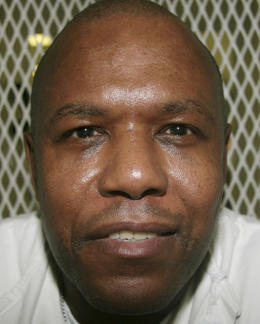
Ronald Raymond Woomer
Spree killer Paul John Knowles
Spree killer · USA · 1974
Paul John Knowles (April 17, 1946 – November 18, 1974) was an American spree ki…
35 victims
Paul John Knowles
Spree killer · USA · 1974
Paul John Knowles (April 17, 1946 – November 18, 1974) was an American spree ki…
35 victims
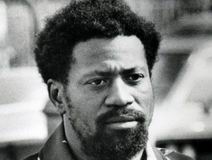 Bobby Joe Maxwell
Spree killer · USA · 1978
Name: Bobby Joe Maxwell Sex: M Race: B Type: T Motive: PC-nonspecific Method of…
11 victims
Bobby Joe Maxwell
Spree killer · USA · 1978
Name: Bobby Joe Maxwell Sex: M Race: B Type: T Motive: PC-nonspecific Method of…
11 victims
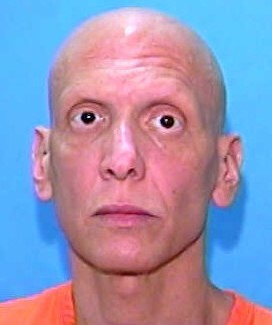 Manuel Pardo
Spree killer · USA · 1986
Manuel Pardo, Jr. was a former police officer who was convicted of nine counts…
9 victims
Manuel Pardo
Spree killer · USA · 1986
Manuel Pardo, Jr. was a former police officer who was convicted of nine counts…
9 victims
 Mark Essex
Spree killer · USA · 1973
Mark James Robert Essex was a Navy veteran who engaged in a shooting and arson…
9 victims
Mark Essex
Spree killer · USA · 1973
Mark James Robert Essex was a Navy veteran who engaged in a shooting and arson…
9 victims
 Michael Alan Silka
Spree killer · USA · 1984
Michael Alan Silka was killed during a shoot-out with the police on May 19, 198…
9 victims
Michael Alan Silka
Spree killer · USA · 1984
Michael Alan Silka was killed during a shoot-out with the police on May 19, 198…
9 victims
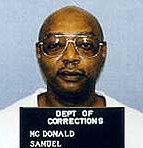 Samuel Lee McDonald
Murderer · USA · 1981
Name: Samuel Lee McDonald · Case citation: State of Missouri v. Samuel Lee McDo…
1 victim
Samuel Lee McDonald
Murderer · USA · 1981
Name: Samuel Lee McDonald · Case citation: State of Missouri v. Samuel Lee McDo…
1 victim
 Tommy Sands Groover
Murderer · USA · 1982
Tommy Sands Groover was born on 04/03/58. He was tried in the Fourth Judicial C…
3 victims
Tommy Sands Groover
Murderer · USA · 1982
Tommy Sands Groover was born on 04/03/58. He was tried in the Fourth Judicial C…
3 victims
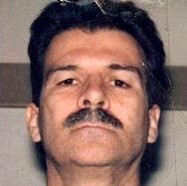 William Mentzer
Murderer · USA · 1983
William Mentzer was a contract killer with ties to drug syndicates. He was also…
5 victims
William Mentzer
Murderer · USA · 1983
William Mentzer was a contract killer with ties to drug syndicates. He was also…
5 victims
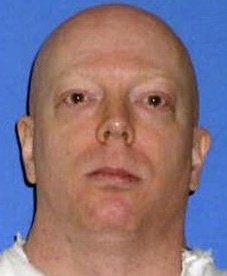 Eric Charles Nenno
Murderer · USA · 1995
Eric Charles Nenno was convicted of capital murder and rape for the rape and mu…
1 victim
Eric Charles Nenno
Murderer · USA · 1995
Eric Charles Nenno was convicted of capital murder and rape for the rape and mu…
1 victim
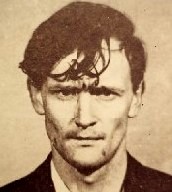 Gwynne Evans
Murderer · United Kingdom · 1964
Gwynne Evans was convicted for the capital murder of John Alan West, committed…
1 victim
Gwynne Evans
Murderer · United Kingdom · 1964
Gwynne Evans was convicted for the capital murder of John Alan West, committed…
1 victim
- Gender
- male
- Country
- USA
- Location
- South Carolina, USA
- Date of birth
- 1964
- Age at first offence
- 15
- Characteristics
- robbery, rape, kidnapping, drug addict
- Victim profile
- John Turner, 67 / Arnie Richardson, 27, and Earldean Wright, 35 / Della Sellers, 34
- Method of murder
- Shooting
- Date(s) of murder
- February 21/22, 1979
- Years active
- 1979
- Date of arrest
- February 1979
- Status
-
Executed
Executed by electrocution in South Carolina on April 27, 1990
Timeline
- April 27, 1990 — Ronald Raymond Woomer was executed by electrocution in South Carolina.
Background
Ronald Raymond Woomer was a South Carolina inmate who was executed by electrocution in South Carolina on April 27, 1990. Immediately before being put to death, he said in a low, shaky voice from the electric chair: “I'm sorry,” and he also said, “I claim Jesus Christ as my Saviour,” adding: “I only wish everyone could feel the love I feel for Him.” William D. Catoe, Deputy Commissioner of Corrections for operations, said prison officials switched on the current at 1:05 A.M. and that Mr. Woomer was pronounced dead seven minutes later. Mrs. Sellers’s husband, Don, who witnessed the execution, said: “It was too easy.” A cheer erupted from a waiting crowd of about 80 death penalty proponents, including relatives of Mr. Woomer’s victims, as the hearse bearing the body left the death house. A group of about 50 death-penalty foes ended a candlelight vigil in front of the Governor’s mansion about the time execution occurred. Mr. Woomer’s death sentence was carried out after the Supreme Court denied requests for a stay and Gov. Carroll A. Campbell Jr. turned down a plea for clemency Thursday. On his last day of life, Mr. Woomer told The Charlotte (N.C.) Observer that his final thoughts would be “that I'm going home - I can rest.” The newspaper quoted him as saying he wanted the pain and suffering to end for the familiies of his victims, and he added: “If the Lord sees fit to end that by me going in there and sitting down in the electric chair, whatever He says is good enough for me.” Mr. Woomer was visited Thursday by his father, two sisters and a brother. Two other people had been put to death in South Carolina since the death penalty was reinstated in 1976. Mr. Woomer was the 123rd person put to death nationwide since then.
The offence
Ronald Woomer’s path to death row began on Feb. 21, 1979, when he and Eugene Skaar left West Virginia with a plan to steal rare coins from a collector, John Turner, 67, in Cottageville, S.C. When the pair reached Mr. Turner’s home on Feb. 22, they took the coins and fatally shot him in the head, as the police said. From there, Mr. Woomer and Mr. Skaar drove to a neighboring community and forced their way into the home of Arnie Richardson, looking for money and guns. Mr. Woomer shot Mr. Richardson, 27, in the head, killing him, and then killed Mr. Richardson’s 35-year-old mentally handicapped sister-in-law, Earldean Wright, to silence her screams. Later that day, Mr. Woomer and Mr. Skaar kidnapped Mrs. Sellers, 34, and Wanda Summers, 24, from a convenience store on Pawleys Island, where the women worked. Both were raped and shot. Mrs. Sellers died and Ms. Summers survived, losing half her face to a shotgun blast. Mr. Skaar killed himself to avoid capture and Mr. Woomer surrendered peacefully when the police closed in on their Myrtle Beach hotel late that day. Ronald Raymond Woomer was sentenced to death for one of several murders he committed in February 1979. Woomer and Gene Skaar traveled from West Virginia to South Carolina on February 20 for the express purpose of committing robbery and murder. On February 22 they drove to the Colleton County home of John Turner where they stole a coin collection and clothing. Woomer killed Turner with a pistol shot to the head. A few hours later they committed another robbery at a home in Georgetown County during which Woomer killed a man, woman, and young child with several shotgun blasts to their heads. Later that same day they robbed a small grocery store and kidnapped two women, Mrs. Della Sellers and Mrs. Wanda Summers. They drove to a dirt road in Horry County where both women were raped. Woomer marched the women down the road and fired his shotgun at them. The blast destroyed the lower half of Mrs. Summers’ jaw; although Woomer believed that she was dead, she survived to testify at trial. Realizing that Mrs. Sellers was only slightly wounded by the shotgun blast, Woomer fired a fatal pistol shot to her head.
Investigation
Dr. Mario Galvarino testified for the State at the second sentencing proceeding about psychiatric evaluations and Miranda-type warnings given during commitments. Dr. Galvarino testified that Woomer was given paraphrased Miranda warnings during both commitments and that Dr. Galvarino told Woomer: “You can tell me as much as you want, or as little as you want, but you have to realize that whatever you tell me can be held against you, since we do not have any privacy, and I will have to forward a report to the Court.” Dr. Galvarino also testified that he told Woomer: “I told him that he could tell me as much or as little as he wanted, about the offense, or the case, but whatever he told me could be used against him since I did not have any privacy, furthermore, a copy of my statement will be sent to court.”
Arrest
Woomer and Eugene Skaar traveled to South Carolina for robberies and murders. After Mr. Skaar killed himself to avoid capture, Mr.
Trial
Woomer was convicted of the murder of Mrs. Sellers, assault and battery with intent to kill Mrs. Summers, criminal sexual conduct in the first degree of Mrs. Summers, and kidnapping of both women. After receiving testimony during a separate sentencing proceeding, the jury found the existence of two statutory aggravating circumstances—rape and kidnapping—and recommended that Woomer be sentenced to death. The South Carolina Supreme Court affirmed the convictions but vacated the death sentence and remanded for resentencing due to insufficient jury charges and improper closing argument from the state prosecutor during the sentencing proceeding. On remand, another jury again found that the murder of Mrs. Sellers was accompanied by the statutory aggravating circumstances of kidnapping and rape and recommended the death sentence. This sentence was affirmed on appeal.
Sentencing
Ronald Raymond Woomer was sentenced to death by the Court of General Sessions for Horry County, South Carolina. In both sentencing proceedings, Woomer urged the juries to consider four statutory mitigating circumstances concerning his mental capacity at the time of the alleged crimes: the murder committed while under the influence of mental or emotional disturbance; acting under duress or domination of another person; substantial impairment in the capacity to appreciate criminality or to conform conduct to law; and the age or mentality of the defendant at the time of the crime. After receiving testimony during the first sentencing proceeding, the jury recommended a death sentence based on aggravating factors of rape and kidnapping; that death sentence was reversed due to insufficient jury charges and improper argument of the prosecuting attorney unrelated to the appeal. At the second sentencing proceeding, the evidence offered in mitigation centered on testimony from Woomer’s mother about his allegedly troubled childhood and testimony from three correctional officers about his good behavior during his interim incarceration in an attempt to show his adaptation to prison and that he would not pose a threat to those with whom he would have contact if given a life sentence. At the second sentencing proceeding, neither Woomer nor Drs. Camp and Lockhart testified.
Appeals
Woomer filed a petition for a writ of habeas corpus in federal court after exhausting state post-conviction remedies. In 856 F.2d 677, Ronald Raymond Woomer appealed from the denial of his petition for a writ of habeas corpus challenging his death sentence under the fifth and sixth amendments. The United States Court of Appeals for the Fourth Circuit affirmed. On appeal, Woomer challenged the admission of psychiatric testimony at the second sentencing proceeding concerning his future dangerousness, arguing that it violated his fifth amendment privilege against self-incrimination and his sixth amendment right to counsel. He also contended he was denied effective assistance of counsel because his appointed attorneys failed to investigate and present in mitigation available psychiatric and expert testimony concerning his drug use. The district court denied the petition, finding that admission of the psychiatric testimony did not violate Woomer’s fifth amendment privilege. The district court found that admission violated Woomer’s sixth amendment right to counsel but determined the violation was harmless. The district court also found that Woomer was not denied effective assistance of counsel. In the Fourth Circuit decision, the court concluded it did not need to analyze harmless error for the admission of the psychiatric testimony did not violate Woomer’s sixth amendment right to counsel. The Fourth Circuit described Woomer’s state psychiatric examination proceedings. Shortly after Woomer’s arrest in February 1979, defense counsel moved for, and the State consented to, Woomer’s commitment to a state psychiatric hospital for determination of his competency to stand trial. In March, on motion of the State and with express consent of his defense counsel, he was recommitted for an examination to determine his sanity at the time of the alleged crimes. Woomer was found competent to stand trial and not mentally ill. Dr. Galvarino gave an opinion about Woomer’s future dangerousness: “He's not insane. It is my opinion that Mr. Woomer does have an antisocial personality trait. That means that he will not conform to authority. He will not conform to the Law, furthermore, he will, in all liklihood [sic], if the situation will arise, repeat, over and over, the crimes that he has perpetrated in the past. This type of individual, in my opinion, they thrive on people's pain, and they will do their utmost in order to obtain their satisfaction, which, in this case, only can be obtained through people's suffering. I do not perceive any type of treatment for this type of individual.” Woomer argued that Dr. Galvarino’s testimony on future dangerousness violated his rights because he and his attorney were not specifically advised that the evaluations might provide a foundation for the opinion. The Fourth Circuit addressed precedent including Estelle v. Smith and quotations from it. The court included the statement: “A criminal defendant, who neither initiates a psychiatric evaluation nor attempts to introduce any psychiatric evidence, may not be compelled to respond to a psychiatrist if his statements can be used against him at a capital sentencing proceeding.” The court also included: "Any statements which are made by a defendant during such an examination cannot be used in a capital sentencing proceeding unless he was advised of his Miranda rights and knowingly waived them." The court also included another quotation: "A criminal defendant has a sixth amendment right to the assistance of counsel prior to a custodial court-ordered psychiatric evaluation." In discussing Miranda warnings, the Fourth Circuit included quotation from Miranda v. Arizona: "the warning given [the defendant] were a fully effective means 'to notify [him] of his right of silence and to assure that the exercise of the right [would] be scrupulously honored.'" The Fourth Circuit also addressed ineffective assistance using the Strickland v. Washington framework, and it included: “errors so serious that counsel was not functioning as the 'counsel' guaranteed the defendant by the Sixth Amendment.” It also included: “deprive the defendant of a fair trial, a trial whose result is reliable.” The court also included: “there is a reasonable probability that, but for” the absence of the general and speculative testimony of Drs. Allen and Morgan concerning Woomer’s drug use, the jury would not have recommended a death sentence. In 905 F.2d 1533, the Fourth Circuit addressed two appeals (Nos. 90-4002 and 90-4003) arising from separate actions by Ronald R. Woomer attacking his conviction of capital murder, assault and battery with intent to kill, criminal sexual conduct in the first degree, and kidnapping. A death sentence was imposed by the Court of General Sessions for Horry County, South Carolina. The court affirmed. No. 90-4002 was an effort by Woomer to obtain relief from the Fourth Circuit’s decision in Woomer v. Aiken by claiming that Supreme Court opinions in Powell v. Texas and Satterwhite v. Texas established a Sixth Amendment right to counsel in connection with court-ordered psychiatric evaluations, required specific notice of the scope and purpose of the examination, and that any violation was not harmless error beyond a reasonable doubt. In No. 90-4002, the district court denied relief and also denied a motion to stay the execution of Ronald R. Woomer, which had been set for 1:00 a.m., Friday, April 27, 1990, in Columbia, South Carolina. No. 90-4003 involved a petition for habeas corpus relief under 28 U.S.C. Sec. 2254. The district court initially dismissed the petition as an abuse of the writ, but upon a motion for reconsideration it vacated its prior order and considered two issues presented as grounds “H” and “I.” Ground “H” alleged misconduct of the prosecutor denied a meaningful sentencing trial, including withholding a police inventory sheet documenting the contents of the motel room where Woomer was arrested; an attempt to create a false impression to the jury that no evidence confirmed Woomer’s drug use and Skaar’s domination over Woomer; and a prosecution witness offered perjured testimony. Ground “I” alleged denial of meaningful capital sentencing in violation of constitutional rights due to deficiencies in the mental examination performed by the State Hospital and the expert testimony arising out of that examination; the prosecutor’s failure to provide information about Woomer’s drug and alcohol use and Skaar’s domination over Woomer to the State Hospital and inadequate procedures used by the hospital rendering its evaluation unreliable; certain information unknown to the prosecutor relating to the State Hospital’s chief psychiatrist who testified against Woomer rendering Woomer’s examination and the expert’s testimony unreliable; and that the State breached its duty to disclose the information regarding the psychiatrist to the defense. In No. 90-4003, the district court heard several days of testimony supporting and opposing relief, made extensive findings of fact and conclusions of law, found Woomer’s constitutional rights had not been violated, denied the motion for the Great Writ, and denied the motion to stay execution. The Fourth Circuit consolidated all appeals, including those on the merits and those from orders denying a stay of execution. The Fourth Circuit heard argument on the consolidated appeals and affirmed the district court’s actions on the reasoning set forth by the district judges in their respective orders. The Fourth Circuit considered petitions to stay execution set for 1:00 a.m., Friday, April 27, 1990, pending full briefing and pending appeal to the United States Supreme Court, and it denied the petitions to stay execution.
Outcome
The Fourth Circuit affirmed the actions of the district courts upon reasoning set forth in their respective orders, including denial of a petition for habeas corpus relief and denial of requests to stay execution. Woomer v. Aiken was affirmed in 856 F.2d 677. Woomer’s appeals in 905 F.2d 1533 were also affirmed. Execution occurred by electrocution on April 27, 1990.
Other details
Woomer’s last-day interviews included statements about “pain and suffering” ending for the “familiies” of his victims and a statement about going in and sitting down in the electric chair based on “the Lord’s” will. During psychiatric commitments, Dr. Galvarino testified that Woomer clearly understood the warnings and voluntarily cooperated during the examinations, and that Woomer invoked his right to remain silent at one point during the sanity evaluation, stating that he had been informed by his counsel to say nothing about pending charges or any prior offenses. Woomer testified at the first sentencing proceeding about a history of drug use including amphetamines, valium, marijuana, quaaludes, and alcohol, and about the day of the murders he consumed quaaludes, valium, marijuana and alcohol. Dr. Wayne Lockhart examined Woomer in July 1979 at defense counsel’s request to determine psychological factors that might explain his behavior regarding the charged offenses. Lockhart diagnosed Woomer as having a drug dependency and an antisocial personality disorder and testified that Woomer was not insane but was easily influenced, immature, and impulsive. Dr. Edmond Camp examined Woomer in April 1979 at defense counsel’s request, noted Woomer’s drug history, diagnosed an untreatable antisocial personality disorder, and testified that Woomer did not have a conscience. Camp said: “[B]oth legally and morally, [Woomer] knows the difference between right and wrong. It's simply that he doesn't care. .... He does what he wants to do, when he wants to do it, because he wants to do it, and if it's an illegal act and there are witnesses, then he simply kills them.” At the first sentencing proceeding, the jury recommended a death sentence based on the aggravating factors of rape and kidnapping after hearing testimony offered in mitigation from Dr. Lockhart and Dr. Camp. At the second sentencing proceeding, Woomer’s prior drug use was pursued during cross-examination of Dr. Galvarino and briefly discussed by a former girlfriend. In Woomer’s state post-conviction relief proceeding, the testimony included Dr. Harold Morgan, a forensic psychiatrist, and Dr. Donald Allen, Chairman of the Department of Pharmacology at the University of South Carolina School of Medicine. Allen and Morgan testified they were available and would have testified if called by Woomer at the second sentencing proceeding in 1981. Dr. Allen stated: “Based on what I know about the compounds, and based on what I know about the amounts of the materials that he was consuming, it's my professional opinion that they had to have had an effect on his behavior.” Allen also testified the drugs “could have” affected perception and reality, impulse control, and ability to control behavior on the day of the murders, and he conceded there was no way to determine whether Woomer was specifically under the influence at the time of the crimes. Dr. Morgan testified he would have testified that Woomer was a heavy drug user with an antisocial personality disorder, and that in his opinion there was a “substantial possibility” that at the time the murder was committed Woomer was under the influence of mental or emotional disturbance, influenced by Skaar, and that his ability to appreciate criminality was substantially impaired. Morgan conceded his impressions were not based on “a full comprehensive diagnostic work-up.” A footnote in the appellate decision stated: “Skaar later committed suicide when the motel in which he and Woomer were staying was surrounded by law enforcement personnel.” The appellate record also included that Woomer received life sentences for the murders committed in Colleton and Georgetown Counties. The appellate record included discussion of the South Carolina death penalty statute quoted as: “Upon conviction or adjudication of guilt of a defendant of murder, the court shall conduct a separate sentencing proceeding to determine whether the defendant should be sentenced to death or life imprisonment. .... In the sentencing proceeding, the jury or judge shall hear additional evidence in extenuation, mitigation or aggravation of the punishment.” The appellate record included discussion of S.C. Code Ann. Sec. 44-23-420 in part: “The report of the designated examiners shall not contain any findings nor shall the examiners testify on the question of insanity should it be raised as a defense unless further examination on the question of insanity is ordered by the court.” The appellate record included Miranda v. Arizona citation and references to social worker and psychologist testimony that they advised Woomer of constitutional rights prior to conducting an examination. In 905 F.2d 1533, the Fourth Circuit noted that the district court denied relief and denied a motion to stay execution set for 1:00 a.m., Friday, April 27, 1990, in Columbia, South Carolina, and that the Fourth Circuit denied petitions to stay execution pending full briefing and pending appeal to the United States Supreme Court.
Spotted an error, or have more information about this case?