
Windel Ray Workman
Murderer Brian Kevin Rosenfeld
Murderer · USA · 1985
Brian Kevin Rosenfeld Brian Kevin Rosenfeld was sentenced to three concurrent l…
23 victims
Brian Kevin Rosenfeld
Murderer · USA · 1985
Brian Kevin Rosenfeld Brian Kevin Rosenfeld was sentenced to three concurrent l…
23 victims
 Yahweh ben Yahweh
Murderer · USA · 1980
Yahweh ben Yahweh was born and legally named Hulon Mitchell Jr. (October 27, 19…
23 victims
Yahweh ben Yahweh
Murderer · USA · 1980
Yahweh ben Yahweh was born and legally named Hulon Mitchell Jr. (October 27, 19…
23 victims
 Russell Ellwood
Murderer · USA · 1991
Russell Ellwood was a former taxi driver. Authorities suspected him of killing…
20 victims
Russell Ellwood
Murderer · USA · 1991
Russell Ellwood was a former taxi driver. Authorities suspected him of killing…
20 victims
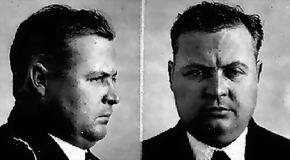 David Curtiss Stephenson
Murderer · USA · 1925
David Curtiss “Steve” Stephenson (21 August 1891 – 28 June 1966) was an America…
1 victim
David Curtiss Stephenson
Murderer · USA · 1925
David Curtiss “Steve” Stephenson (21 August 1891 – 28 June 1966) was an America…
1 victim
 Joseph Young
Murderer · USA · 2005
Joseph (Joe Black) Young was a reputed hitman for the Bonanno crime family. He…
1 victim
Joseph Young
Murderer · USA · 2005
Joseph (Joe Black) Young was a reputed hitman for the Bonanno crime family. He…
1 victim
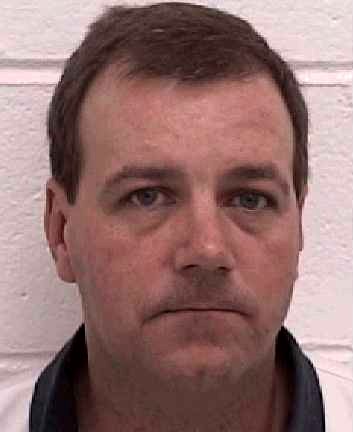 Samuel David Crowe
Murderer · USA · 1988
Samuel David Crowe was sentenced to death in Douglas County in November 1989. H…
1 victim
Samuel David Crowe
Murderer · USA · 1988
Samuel David Crowe was sentenced to death in Douglas County in November 1989. H…
1 victim
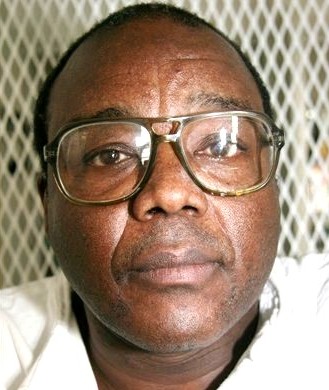 Johnny Ray Johnson
Murderer · USA · 1994
Johnny Ray Johnson was convicted and sentenced to death in Texas for capital mu…
3 victims
Johnny Ray Johnson
Murderer · USA · 1994
Johnny Ray Johnson was convicted and sentenced to death in Texas for capital mu…
3 victims
 Ellizabeth Rainey
Murderer · USA · 2013
Ellyzabeth Rainey Ellyzabeth Rainey pleaded guilty and was sentenced to 41 year…
1 victim
Ellizabeth Rainey
Murderer · USA · 2013
Ellyzabeth Rainey Ellyzabeth Rainey pleaded guilty and was sentenced to 41 year…
1 victim
 John Earl Baughman
Murderer · Antigua and Barbuda · 1995
John Earl Baughman was tried and convicted in Antigua and Barbuda for the murde…
1 victim
John Earl Baughman
Murderer · Antigua and Barbuda · 1995
John Earl Baughman was tried and convicted in Antigua and Barbuda for the murde…
1 victim
- Gender
- male
- Country
- USA
- Location
- Oklahoma County, Oklahoma, USA
- Date of birth
- January 7, 1958
- Age at first offence
- 29
- Characteristics
- child abuse
- Victim profile
- Amanda Holman, 2 (his live-in girlfriend's daughter)
- Method of murder
- Beating
- Date(s) of murder
- January 10, 1987
- Years active
- 1987
- Date of arrest
- Same day
- Status
-
Executed
Executed by lethal injection in Oklahoma on August 26, 2004
Background
Windel Ray Workman was convicted and sentenced to death for the January 10, 1987, murder of Amanda Holman, 2, in Oklahoma City. Amanda was the daughter of Workman’s girlfriend. Workman was convicted of first-degree child abuse murder of his live-in girlfriend’s two-year-old daughter.
Workman maintained his innocence until the end of his life and claimed that Amanda’s injuries were caused by falls from her bed and in the bathtub. He also made additional claims about possible fault involving Amanda’s mother or grandmother.
The offence
At about 10:30 a.m. on January 10, 1987, Workman and his live-in girlfriend, Rebecca Holman, brought twenty-eight-month-old Amanda Holman to South Community Hospital in Oklahoma City. Amanda was pronounced dead upon arrival.
Amanda had numerous bruises on her face, chest, back, and buttocks. The emergency room doctor and nurse who unsuccessfully attempted to revive Amanda suspected child abuse after observing the bruises. The medical examiner determined that Amanda died from blunt head injury and that the death was a homicide, not an accident. The medical examiner testified that Amanda’s three serious head injuries could have killed her and noted additional injury to the child’s abdomen and buttocks. The medical evidence also included the principle that bruising cannot occur post-mortem, so injuries observed had to be inflicted before death.
Workman testified that during the last two days Amanda had fallen three times: once off her bed hitting a dresser, then out of the bathtub, and finally off the bed again hitting her head on the floor.
At trial, evidence from physicians and testimony included that Amanda’s injuries were consistent with being hit by a fist, a hard object, or being slammed into a wall. Three doctors who treated or examined Amanda said her injuries were consistent with being hit by a fist, a hard object, or being slammed into a wall.
“most definitely”
The doctor from the Children’s Hospital concluded that, based on the autopsy report, photos of Amanda, and discussions with the medical examiner, Amanda had been “most definitely” a victim of child abuse.
Investigation
The police were called to the hospital and spoke with Workman about Amanda’s injuries. Workman told them that Amanda had fallen backwards out of bed the night before.
Workman admitted to spanking the child hard, leaving bruises on her body. He also described playing “pitch” with Amanda, in which he threw the girl up in the air and caught her.
Trial
Workman was tried by jury in the District Court of Oklahoma County, Oklahoma, under Case No. CRF-87-254, before the Honorable John M. Amick, District Judge. Workman was represented by counsel.
The jury returned a verdict of guilty and set punishment at death. The trial court sentenced Workman in accordance with the jury’s verdict.
Jury verdict and jury instructions (elements and instructions)
At trial, the jury was instructed on the elements of the crime as:
- “The death of a human being;”
- “That this human being was under the age of eighteen years;”
- that “The death occurred as a result of the willful or malicious use of unreasonable force upon the child;”
- that these actions had been committed “By the defendant Windel Ray Workman.”
The jury also convicted Workman of child abuse murder in the first degree.
Aggravating circumstances
During the sentencing stage, the jury found the existence of aggravating circumstances, including that the murder was “especially heinous, atrocious, or cruel,” and recommended imposition of the death penalty. The jury found a second aggravating circumstance that there existed “a probability the defendant would commit criminal act of violence that would constitute a continuing threat to society.”
The trial court used OUJI-CR 436. The aggravating circumstance “especially heinous, atrocious or cruel” was limited to instances where torture or serious physical abuse preceded death.
Workman challenged the constitutionality and sufficiency of the aggravating circumstance and also challenged the jury instructions concerning the requirements for death eligibility.
Evidence regarding custody during the time of injury
Testimony indicated Amanda had been in Workman’s care during the time she incurred her injuries. Court records indicated he had a history of abusing the child.
Several employees of Amanda’s daycare testified they had noticed bruises and other injuries on Amanda in the days preceding her death. Amanda cried when Workman came to pick her up from the center.
January 7, 1987 was the last day Workman picked Amanda up from daycare. On that day, Amanda screamed and cried when she saw Workman at the door. She climbed into the lap of a stranger and wet her pants. Workman’s comment about Amanda’s behavior was that the child, for some reason, “doesn't like me.”
Workman kept Amanda home by himself on January 8 and 9. On January 8, Workman testified that he heard Amanda fall in her room and believed that she had hit a dresser. The two-year-old told him that her stomach hurt afterwards. On cross-examination, Workman admitted spanking Amanda on the 8th. On January 9, Workman testified that Amanda fell again in the bathtub.
Workman did not tell the police about the bathtub fall in initial interviews because he said he had left her unaccompanied at the time in contravention of a promise he had made her mother. That evening, Amanda began to vomit.
After Amanda could not be resuscitated on January 10, Workman and Amanda’s mother took Amanda to the hospital and she was pronounced dead on arrival.
Workman’s own witness, his second wife, testified that she had seen Workman spank their daughter too hard two or three times, causing the child to wet her pants. Amanda’s pediatricians testified that Amanda’s mother had been a concerned parent, bringing Amanda in for treatment of even minor injuries.
Witness and court record issues raised at trial
Workman asserted there was insufficient evidence to support his conviction and that the trial court erred in refusing to grant mistrials and in admitting two photographs of Amanda’s face and buttocks.
He also argued that photographs taken after an autopsy were confusing pre-mortem bruising with post-mortem lividity. The court found the photographs admissible where their probative value outweighed prejudicial effect, and found no evidence that an autopsy had been performed in relation to the photographs.
Workman further contended the jury instruction about the aggravating circumstance “the murder was especially heinous, atrocious or cruel” was unconstitutionally vague and challenged the other aggravating circumstance regarding future dangerousness.
Sentencing
The jury convicted Workman of child abuse murder in the first degree and returned a verdict of guilty and set punishment at death. The trial court sentenced Workman to death.
The jury found two aggravating circumstances: (1) “especially heinous, atrocious, or cruel,” and (2) that “there exists a probability the defendant would commit criminal act of violence that would constitute a continuing threat to society.”
Appeals
Direct appeal (state)
Workman appealed to the Oklahoma Court of Criminal Appeals.
On direct appeal, Workman challenged Oklahoma’s first-degree murder statute as vague and challenged jury instructions as not properly relaying requirements of the statute. He also argued the jury instructions were insufficient under the Eighth and Fourteenth Amendments because they allowed conviction without proof of mens rea for the killing as opposed to mens rea for the commission of child abuse.
In addition, he asserted that the trial court erred in various evidentiary and procedural rulings, including the court’s handling of juror impartiality and requests for mistrial.
The Oklahoma Court of Criminal Appeals affirmed the judgment and sentence.
Federal habeas corpus (10th Cir.)
Workman filed a petition for a writ of habeas corpus in federal court under 28 U.S.C. § 2254.
The United States Court of Appeals for the Tenth Circuit addressed challenges including:
- an attorney conflict of interest claim,
- the retention of a juror who initially expressed difficulty believing the defense theory and later agreed she could be fair,
- challenges to jury instructions,
- vagueness of the “especially heinous, atrocious or cruel” aggravator,
- cumulative error,
- and requested to hold the case in abeyance in light of Ring v. Arizona.
The Tenth Circuit affirmed the district court’s dismissal of Workman’s petition. It held that no additional culpability finding was required under Enmund or Tison where the defendant actually killed his victim.
Procedural and legal holdings addressed in the federal appeal
The Tenth Circuit considered Workman’s Enmund/Tison objection and explained that the constitutional check is satisfied in felony murder cases where the defendant actually killed the victim.
It also held that Workman’s right to an impartial jury was not unconstitutionally impaired by the retention of a juror who initially expressed doubts and then agreed she could be fair.
The Tenth Circuit also found Oklahoma’s “especially heinous, atrocious or cruel” aggravating circumstance not unconstitutionally vague given the limiting language about torture or serious physical abuse preceding death.
It denied Workman’s request to hold the appeal in abeyance and denied remand for an evidentiary hearing.
Outcome
Workman’s death sentence remained in effect through state and federal proceedings. The Oklahoma Court of Criminal Appeals set August 26 as the execution date for Oklahoma County death row inmate Windel Ray Workman.
Workman was executed by lethal injection in Oklahoma on August 26, 2004.
He died at 6:08 p.m. after receiving a fatal cocktail of drugs at the Oklahoma State Penitentiary in McAlester.
Aftermath
Workman made a final statement while strapped to a gurney in the death chamber, speaking to his two lawyers:
“Thanks for everything you've done,”
“I appreciate it. Keep up the good fight. Understand what I'm saying? OK, let's go.”
For his final meal, Workman requested a combination barbecue meat dinner and iced tea, and he also requested a combination barbecue platter and an unsweetened 32-ounce iced tea.
Other details
Workman was 46 at the time of execution and had been in prison for 17 years.
The court record referenced a direct appeal citation: Workman v. State, 824 P.2d 378 (Okl. Crim. 1991) (Direct Appeal). The federal habeas appeal citation included: Workman v. Mullin, 342 F.3d 1100 (10th Cir. 2003).
Workman did not appeal to the U.S. Supreme Court.
The Oklahoma Pardon and Parole Board denied clemency on August 5.
On July 10, 1987, a court note in the federal appeal summary referenced the procedural history in the state trial, including that during the sentencing stage the jury found aggravating circumstances and recommended the death penalty.
A former Oklahoma City police officer, Michael Roach, and his partner, Monte Fairchild, described their investigation of Amanda Holman’s murder and their interrogation of Workman.
Workman was scheduled to be executed at 6 p.m. CST.
He became the sixth person executed in Oklahoma in 2004 and the 158th since Oklahoma reinstated capital punishment in 1977.
Reuters reported Workman as the “sixth person executed in Oklahoma this year” and noted the United States Supreme Court had lifted a national death penalty ban one year after Oklahoma reinstated capital punishment in 1977.
In an executive-day report, Workman was described as a white man and as scheduled to be executed for the 1985 murder of Amanda Hollman in Oklahoma City; the rest of the proceedings described the murder date as January 10, 1987.

Spotted an error, or have more information about this case?