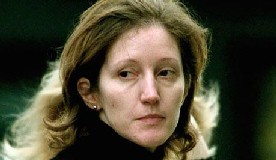
Jane Andrews
Murderer Theresa Riggi
Murderer · United Kingdom · 2010
Theresa Riggi was a mother who killed her three young children at their home in…
3 victims
Theresa Riggi
Murderer · United Kingdom · 2010
Theresa Riggi was a mother who killed her three young children at their home in…
3 victims
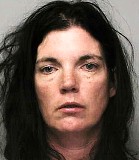 Fiona Donnison
Murderer · United Kingdom · 2010
Fiona Donnison was 45 years old at the time she showed up in front of local aut…
2 victims
Fiona Donnison
Murderer · United Kingdom · 2010
Fiona Donnison was 45 years old at the time she showed up in front of local aut…
2 victims
 Rekha Kumari-Baker
Murderer · United Kingdom · 2007
Davina and Jasmine Kumari-Baker were murdered by their mother, Rekha Kumari-Bak…
2 victims
Rekha Kumari-Baker
Murderer · United Kingdom · 2007
Davina and Jasmine Kumari-Baker were murdered by their mother, Rekha Kumari-Bak…
2 victims
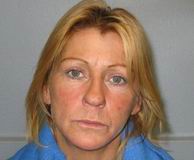 Tracey Van Dungey
Murderer · United Kingdom · 2004
Tracey Antoinette Van Dungey was 43 (16/10/67) and lived on Sugden Way, Barking…
2 victims
Tracey Van Dungey
Murderer · United Kingdom · 2004
Tracey Antoinette Van Dungey was 43 (16/10/67) and lived on Sugden Way, Barking…
2 victims
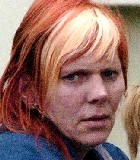 Edith McAlinden
Murderer · United Kingdom · 2004
Edith McAlinden (born 1968) — accused; convicted for murder; mother of John McA…
1 victim
Edith McAlinden
Murderer · United Kingdom · 2004
Edith McAlinden (born 1968) — accused; convicted for murder; mother of John McA…
1 victim
 Ineta Dzinguviene
Murderer · United Kingdom · 2009
Ineta Dzinguviene was convicted of murdering her newborn son, Paulius Dzingus,…
1 victim
Ineta Dzinguviene
Murderer · United Kingdom · 2009
Ineta Dzinguviene was convicted of murdering her newborn son, Paulius Dzingus,…
1 victim
 Daniel Lee Doyle
Murderer · USA · 1981
Daniel Lee Doyle was sentenced to death on May 13, 1982. He was convicted of fi…
1 victim
Daniel Lee Doyle
Murderer · USA · 1981
Daniel Lee Doyle was sentenced to death on May 13, 1982. He was convicted of fi…
1 victim
 Griselio Torresola
Murderer · USA · 1950
Griselio Torresola (1925 – November 1, 1950) was one of two Puerto Rican Nation…
1 victim
Griselio Torresola
Murderer · USA · 1950
Griselio Torresola (1925 – November 1, 1950) was one of two Puerto Rican Nation…
1 victim
 Michael Monert
Serial killer · USA · 1989
Michael Monert was a serial killer who was convicted for killing three women in…
3 victims
Michael Monert
Serial killer · USA · 1989
Michael Monert was a serial killer who was convicted for killing three women in…
3 victims
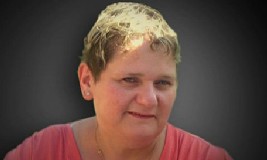 Dominique Cottrez
Infanticide · France · 1989
Dominique Cottrez was a French woman aged 45. She was described as a nursing as…
8 victims
Dominique Cottrez
Infanticide · France · 1989
Dominique Cottrez was a French woman aged 45. She was described as a nursing as…
8 victims
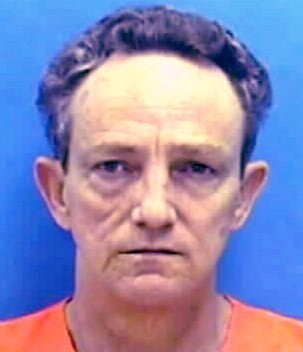 Charles Kenneth Foster
Murderer · USA · 1975
Charles Kenneth Foster was indicted in the Fourteenth Judicial Circuit, Bay Cou…
1 victim
Charles Kenneth Foster
Murderer · USA · 1975
Charles Kenneth Foster was indicted in the Fourteenth Judicial Circuit, Bay Cou…
1 victim
- Gender
- female
- Country
- United Kingdom
- Location
- Fulham, West London, England, United Kingdom
- Date of birth
- 1967
- Age at first offence
- 33
- Characteristics
- abuse, domestic violence, rape
- Victim profile
- Tom Cressman, 39 (her boyfriend)
- Method of murder
- S mashed him with a cricket bat and then stabbed him with a knife
- Date(s) of murder
- September 17, 2000
- Years active
- 2000
- Date of arrest
- —
- Status
-
Life imprisonment
Sentenced to life imprisonment on May 16, 2001
Case summary
Jane Andrews (born 1967) was a former Royal dresser for Sarah, the Duchess of York. Andrews was convicted of murdering her lover Tom Cressman in 2001 and was sentenced to life imprisonment on May 16, 2001.
Background
Andrews was born in Cleethorpes, North Lincolnshire, and she was the youngest of three children. Her father worked as a joiner and her mother was a social worker. Andrews attended grammar school and she was described as promising and intelligent.
Her family later moved to a small townhouse in Grimsby due to debt. During her teenage years, Andrews struggled with depression, panic attacks, and an eating disorder. At age 15, she attempted suicide by overdose after her mother discovered her truancy. Two years later, at age 17, she became pregnant and had an abortion, which she said was traumatizing.
Andrews aspired to leave her blue-collar roots. She enrolled in a fashion course at the Grimsby College of Art. She worked designing children’s clothes at Marks and Spencer. At age 21, she answered an anonymous advert in The Lady magazine for a personal dresser. Six months later, she interviewed with Sarah, Duchess of York, and began working for her at Buckingham Palace four days later. Andrews purchased a new flat in Battersea Park, with a salary described as 18,000 euros. It was alleged that Andrews stole approximately 250,000 euros worth of jewels from the Duchess’s suitcases in 1995, but the allegations were never proven.
Andrews was dismissed after the job. Buckingham Palace officials stated her departure was part of a cost-cutting exercise and said there was no truth in other suggestions about the reason for her termination.
Other details
Andrews was described as being on anti-depressants. Her hair was described as having changed color and later falling out. She was also seeing a psychotherapist after she made allegations of abuse as a child.
Relationships
Marriage to Christopher Dunn-Butler
In August 1990, after a short courtship, Andrews married Christopher Dunn-Butler, an IBM executive twenty years her senior. The couple divorced five years later. Andrews cited “pressures of work” as the reason for the split, while Dunn-Butler cited multiple counts of infidelity on Andrews’s part. Andrews admitted to her infidelity, saying, “I had a couple of flings. I'm not proud of it.”
Relationship with Dimitri Horne
After her divorce, Andrews met Dimitri Horne, the son of a Greek shipping magnate. After a bitter breakup, Andrews trashed the flat they shared. She overdosed again but survived without seeking medical treatment.
During this time, it was alleged that the Duchess was having an affair with Tuscan aristocrat Count Gaddo della Gheradecsu, and it was said he also had feelings for Andrews. Shortly after this alleged fling, Andrews was dismissed from her job as the Duchess’s royal dresser.
Relationship with Thomas Cressman
Andrews met Thomas Cressman, a former stockbroker, in 1998 through a mutual acquaintance. Cressman ran a business selling car accessories and mixed in upper echelons of London society. Andrews moved into Cressman’s flat in Fulham shortly into their relationship due to supposed financial hardships.
Andrews worked at the Claridge’s Hotel in October 1999 as a PR manager, but she left after two months. During the next two years, her hopes were described as being pinned on Cressman as her future husband and the father of her children.
The offence
In September 2000, Andrews accompanied Cressman on holiday in Italy and to his family’s villa on the French Riviera. During the vacation, it was described that Andrews expected Cressman to propose marriage, but Cressman told her he had no intention of marrying her.
After returning to their Fulham flat, Andrews and Cressman allegedly got into a heated argument. Cressman reportedly called police and said, “somebody is going to get hurt”, but police never came to his apartment.
That night, while Cressman was sleeping, Andrews smashed him with a cricket bat and then stabbed him with a knife. Andrews fled the scene.
Investigation and arrest
After killing Cressman, Andrews contacted her ex-husband Christopher Dunn-Butler shortly afterward. She also sent text messages to friends asking about her lover’s whereabouts and well-being. She claimed to have no involvement in Cressman’s death and stated that he was being blackmailed.
After being untraceable for days, police located Andrews in Cornwall, England. She was found overdosed in her car. She survived her suicide attempt. After a police interrogation, Andrews was arrested for murder.
Trial
In May 2001, eight months after Tom Cressman’s murder, Jane Andrews went to trial at Old Bailey in London.
During trial, prosecutors stated that the motive for the killing was a woman scorned. Andrews testified in her own defence that Cressman had been abusive to her during their relationship. She cited his sexual obsessions and an incidence from two years earlier where she had broken her arm while dancing, stating that Cressman had pushed her. She also claimed she suffered abuse during childhood, which led her to kill.
Andrews’s barrister John Kelsey-Fry QC claimed she was not guilty of murder due either to provocation, diminished responsibility because of her mental illness, self-defence or a bit of all three.
The jury deliberated for eleven hours and 44 minutes. Andrews was convicted of murder on a majority decision. She was sentenced to life in prison.
Sentencing
On May 16, 2001, the Recorder of London, Judge Michael Hyam, sentenced Andrews to life imprisonment. Judge Michael Hyam said:
In killing the man you loved you ended his life and ruined your own.
It is evident that you made your attack upon him when you were consumed with anger and bitterness.
Nothing could justify what you did. It was a brutal attack and even if you felt yourself wronged you were attacking an unarmed man who had possibly been asleep a few minutes before you attacked him.
After you had struck him first with a cricket bat and then stabbed him with a knife you left him to die without remorse.
After the sentencing, Andrews appealed against her conviction, claiming she would not have murdered Mr Cressman had she not been repeatedly sexually abused as a child. Her claims were rejected.
Appeals
Andrews’s appeal involved “fresh” psychiatric evidence strengthening the plea of diminished responsibility. The appeal against conviction was to be heard on September 23.
Outcome
Andrews served her sentence and later escaped from custody. In November 2009, after having served nine years in custody, Andrews escaped from East Sutton Park Prison in Kent, England. After being an escapee for three days, she was captured in a hotel room with her family just six miles away from the prison. She was ultimately not charged with absconding. She remained eligible for early release in 2012.
On April 27, 2012, Andrews was refused parole. Rick Cressman said, “For the time being, she’s staying behind bars,” and he said that his brother Thomas was stabbed to death by Andrews at the house they shared in Fulham after he was clubbed unconscious with a cricket bat.
A source at the parole board said Andrews could have been “released back into the community” if her parole hearing had been successful. Rick Cressman said:
As a family, we’re relatively relieved to hear that she’s not being hurried out, bearing in mind her lack of remorse.
Rick Cressman also said:
We find it hard to see how social experts can suggest she is rehabilitated when she has shown no remorse.
He said:
We question her stability of character, but are hopeful there is a way for her to find that remorse and, perhaps, eventually rejoin society.
He added:
As far as I know, she’s not being moved to an open prison.
Aftermath
Following Andrews’s conviction, headlines portrayed her as the “Fatal Attraction killer” and claimed she beat her boyfriend with a cricket bat and stabbed him in the chest with a kitchen knife after he refused to marry her. It was also stated that she tried to destroy Cressman’s reputation by detailing his interest in sadomasochistic sexual practices, and that she claimed that on the morning of the day he died he had tied her up and beaten and anally raped her.
Detective Chief Inspector Jim Dickie said:
She murdered him in life and murdered him again in death by trying to ruin his reputation.
In a statement, the Cressman family said:
Although the verdict we have just heard will not bring Tom back, we now have a conclusion. Our faith in British justice has been rewarded.
The jury has confirmed the view of the family and the police that this was a case of premeditated murder, and that Jane Andrews's lies to cover up her actions were not believed.
After the verdict, Harry Cressman said:
I feel she is going to have the holiday she deserved.
He also said:
She tried hard to destroy his reputation but, thank the Lord, she didn't do it.
Andrews’s father David gasped in disbelief and her mother June wept in despair during the verdict.
Verbatim quotations from trial and related events
Andrews told the jury, “Everybody kept on calling us Mr and Mrs Cressman.” She also left an answerphone message complaining: “Oh it's loonybin Janey, you don't give a toss if I'm walking home at 1am.”
Cressman called police, saying: “Somebody is going to get hurt.”
Andrews told the jury:
He started hitting me and said I had ruined him. He said he was going to f****** kill me.
I just froze. He got hold of my hair and was trying to hit me. I picked up the knife because I didn't want him anywhere near me.
We came together and the next thing I knew he was on top of me.
It must have gone into him. I crawled from underneath him and ran out of the room.
After the verdict, Andrews’s family reportedly made statements about the case, and media coverage included a telephone call to a friend and other interviews.
During the appeal discussion, a psychiatrist, Dr Fiona Mason, argued that Andrews would have found behaviour such as Cressman’s “extremely difficult to cope with” and described symptoms including depression, anxiety and fear. Dr Fiona Mason said:
She became unable to remove herself from the relationship, and was increasingly hopeless. She also became depressed, anxious and fearful - such a pattern of symptoms is not uncommon in women involved in violent, abusive, traumatic relationships. It is also common that those suffering from such symptoms do not seek medical attention or help, for a number of reasons, including guilt and shame.
Andrews said:
I've caused all this heartache and grief to so many people and there is absolutely nothing I can do about that. To even say the word 'sorry' is so feeble, insignificant. But I am. I'm a much stronger person now, and if I was given the chance I could talk about things that I was incapable of talking about at the trial. That doesn't mean I'm trying to blame anyone else for Tom's death. I was responsible and I have to live with that every second of my life. I just want people to understand what has happened and hopefully make some sense of it.
Andrews said:
I was texting absolute gibberish. Why did I say I didn't know what had happened? I can sit here now and say I didn't want to believe what had happened. At the time I was feeling sheer terror, absolute disbelief. There was no pretending. There's a big difference. People think I tried to cover things up. Every single day I want to remember everything.
During account of the conflict, Andrews said the operator heard Cressman say:
We are rowing and someone is going to get hurt. I would like somebody here to stop us hurting each other, because if we don't have somebody here soon, somebody is.
Andrews said Cressman told her:
I'm really going to hurt you and nobody will believe you.
Other details
Andrews was described as being held at Holloway Prison and later at HMP Bullwood Hall in Essex. It was stated she was on suicide watch at Holloway Prison prior to the start of her prison term.
She was described as having dressed in black from head to toe during each day of her Old Bailey trial.
During reporting around 2001 and later, multiple accounts described alleged financial matters involving Andrews during her time working for the Duchess, including thefts and silverware and jewellery found when police searched a property.
The coverage included reporting that Andrews had a borderline personality disorder diagnosis, and that she had been portrayed as a devious social climber. Andrews was also described as bowing to authority and as being formal and cold. She was said to have stated that she did not want sympathy and wanted understanding, saying:
I don't want sympathy. I just want understanding.
In prison, Andrews said:
Now every time I write a letter, even to my mum, I have to think about each word and how it would look in a newspaper.
Andrews said:
I could have given you a list of all the people who would talk about me on camera.
She also said:
I just want people to understand what has happened and hopefully make some sense of it.

Spotted an error, or have more information about this case?