
Theresa Riggi
Murderer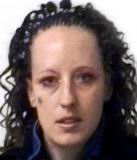 Joanna Dennehy
Murderer · United Kingdom · 2013
Name: Joanna Dennehy · March 2013 — Three murders were carried out in the Unite…
3 victims
Joanna Dennehy
Murderer · United Kingdom · 2013
Name: Joanna Dennehy · March 2013 — Three murders were carried out in the Unite…
3 victims
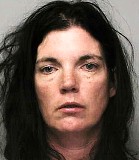 Fiona Donnison
Murderer · United Kingdom · 2010
Fiona Donnison was 45 years old at the time she showed up in front of local aut…
2 victims
Fiona Donnison
Murderer · United Kingdom · 2010
Fiona Donnison was 45 years old at the time she showed up in front of local aut…
2 victims
 Jeyavani Vageswaran
Murderer · United Kingdom · 2014
Jeyavani Vageswaran committed suicide by hanging herself the same day. Jeyavani…
2 victims
Jeyavani Vageswaran
Murderer · United Kingdom · 2014
Jeyavani Vageswaran committed suicide by hanging herself the same day. Jeyavani…
2 victims
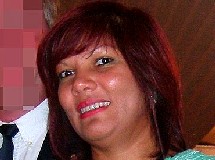 Rekha Kumari-Baker
Murderer · United Kingdom · 2007
Davina and Jasmine Kumari-Baker were murdered by their mother, Rekha Kumari-Bak…
2 victims
Rekha Kumari-Baker
Murderer · United Kingdom · 2007
Davina and Jasmine Kumari-Baker were murdered by their mother, Rekha Kumari-Bak…
2 victims
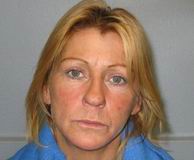 Tracey Van Dungey
Murderer · United Kingdom · 2004
Tracey Antoinette Van Dungey was 43 (16/10/67) and lived on Sugden Way, Barking…
2 victims
Tracey Van Dungey
Murderer · United Kingdom · 2004
Tracey Antoinette Van Dungey was 43 (16/10/67) and lived on Sugden Way, Barking…
2 victims
 Bunthawee Rimmer
Murderer · United Kingdom · 2011
Bunthawee Rimmer was a Thai woman who lived at Castle Lane in Haverhill. Rimmer…
1 victim
Bunthawee Rimmer
Murderer · United Kingdom · 2011
Bunthawee Rimmer was a Thai woman who lived at Castle Lane in Haverhill. Rimmer…
1 victim
 Jessica Blackwell
Murderer · USA · 2011
Jessica Francis Blackwell was a Roanoke woman accused of stabbing a Roanoke man…
1 victim
Jessica Blackwell
Murderer · USA · 2011
Jessica Francis Blackwell was a Roanoke woman accused of stabbing a Roanoke man…
1 victim
 Tyrone Darks
Murderer · USA · 1994
Tyrone Peter Darks was convicted of the first degree murder of his former wife,…
1 victim
Tyrone Darks
Murderer · USA · 1994
Tyrone Peter Darks was convicted of the first degree murder of his former wife,…
1 victim
 David James Roberts
Murderer · USA · 1974
David James Roberts David James Roberts was resentenced to six life sentences i…
4 victims
David James Roberts
Murderer · USA · 1974
David James Roberts David James Roberts was resentenced to six life sentences i…
4 victims
 Jeffrey Motts
Murderer · USA · 1995
Jeffrey Brian Motts was executed by lethal injection in South Carolina on May 6…
3 victims
Jeffrey Motts
Murderer · USA · 1995
Jeffrey Brian Motts was executed by lethal injection in South Carolina on May 6…
3 victims
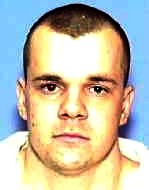 Jeffery Lee Wood
Murderer? · USA · 1996
Jeffery Lee Wood (TDCJ Number 999256) was born on 08/19/73 and was 24 when he w…
1 victim
Jeffery Lee Wood
Murderer? · USA · 1996
Jeffery Lee Wood (TDCJ Number 999256) was born on 08/19/73 and was 24 when he w…
1 victim
- Gender
- female
- Country
- United Kingdom
- Location
- Edinburgh, Scotland, United Kingdom
- Date of birth
- 1963
- Age at first offence
- 47
- Characteristics
- child killer, domestic dispute
- Victim profile
- Her eight-year-old twin sons Austin and Gianluca and five-year-old daughter Cecilia
- Method of murder
- Stabbing with knife
- Date(s) of murder
- August 4, 2010
- Years active
- 2010
- Date of arrest
- Same day (suicide attempt)
- Status
-
Died in custody
Committed suicide in prison on March 10, 2014
Case record: Theresa Riggi
Background
Theresa Riggi was a mother who killed her three young children at their home in Edinburgh.
Her children were Austin and Gianluca (both eight years old) and Cecilia (five years old). Their father was Pasquale Riggi.
Theresa Riggi had been involved in a legal action over the children’s custody, described as a “bitter” custody battle and also as a divorce and custody dispute between Riggi and Pasquale Riggi.
Riggi was California-born and moved to the UK. She lived in Aberdeen and later in Edinburgh during the period leading up to the killings.
Riggi and the children disappeared in July 2010 and were the subject of a missing persons appeal. Police later traced them to a flat on the west side of Edinburgh later the same month, but officers took no further action.
Riggi and her husband spoke by telephone 48 hours before the children were found dead. During the conversation Riggi asked if Pasquale Riggi was going to take the children away. He replied that she had left him no choice. Riggi replied: “Say goodbye then” and then hung up.
Riggi’s lawyer described her as having personality disorders and said she feared the children would be taken away. The court heard that Riggi was described as a paranoid and hysterical woman.
The court also heard evidence relating to Riggi’s control of the children’s movements and communications. Riggi insisted her children wore electronic “locators” when with their father, and later they carried mobile phones pre-programmed to call her number.
Riggi’s insistence on the “locators” and mobile phones was presented as part of a possessive approach to the children. The situation worsened as the custody dispute developed.
The offence
Riggi killed her three children at a property on Slateford Road in Edinburgh. The children were found dead at their flat after a suspected gas explosion at the flat. Their bodies were discovered lying side by side on the bedroom floor.
Each child was found with stab wounds. The court heard that the violinist stabbed each of her children eight times. Paramedics believed the children had been dead for some hours.
The DailyMail account described three separate knives being used, with each child stabbed eight times, and described bruises and abrasions and stab wounds to the chest.
The court also heard that Riggi had attempted to cover up the deaths with a gas explosion at the townhouse and then tried to kill herself by jumping from a balcony. She survived the fall.
Charges and pleas at the time of proceedings
Riggi was originally charged with murder. She later admitted culpable homicide on the grounds of diminished responsibility.
A charge set out alleged additional conduct relating to the gas explosion: removing a gas hob from its fixings and undoing screws from the burner valves, allowing gas to escape; securing windows and doors and igniting the gas, causing an explosion; and that fire following caused damage, put people in danger and severely injured Riggi.
The Crown accepted her guilty pleas to culpable homicide on the basis of diminished responsibility.
Investigation
After the killings, police entered the house and saw the three children lying side by side on the bedroom floor.
Police also found three knives nearby, each covered in blood. Large amounts of blood were noted in numerous places throughout the house.
A building manager, Derek Knight, found the bodies following a gas explosion at the property on Slateford Road, Edinburgh.
Police and fire crews had been called to the scene to reports of a suspected gas explosion.
A witness, Jordan Cochrane, said he saw Riggi climb onto the balcony after the blast before “intentionally” falling head-first. He managed to break her fall. Riggi was found with stab wounds and other injuries including a collapsed lung, cuts to her neck and wrist, and fractures.
Pathologists found all three children had multiple bruises and abrasions and died of stab wounds to the chest.
Arrest
Riggi’s body was found at the high-security prison hospital later after the sentence, following a committal to prison and transfer to Rampton. The provided material did not describe an arrest date or custody transfer procedure as an arrest event; it described her being taken for medical and then court proceedings.
Trial
At her preliminary hearing, Riggi wept and appeared in the dock at the High Court.
The court was told that Riggi and Pasquale Riggi had been living in Aberdeen before the killings, with Riggi taking the children unknown to Mr Riggi.
The court heard that police eventually traced the missing children to an Edinburgh address and that Riggi failed to appear at a custody hearing. The judge instructed that she be traced and a decision taken by social workers on whether her children should be taken into care.
On August 3, Riggi failed to turn up to a custody hearing. The next day the children were found dead.
Witness and court statements
The statement by Pasquale Riggi was read out on his behalf. David Sinclair, of Victim Support Scotland, read a statement for Pasquale Riggi that included the following quotation: “I will never forget Austin, Luke and Cecilia. They left everlasting impressions on me. I think about them at least 100 times each day. They are in my thoughts when I wake in the morning and before I go to sleep at night. They were such wonderful energetic, bright and happy children. Those of us who had the pleasure of knowing Cecilia, Luke and Austin, looked forward to watching them grow while they independently navigate through their unique life journeys. We are so thankful for the opportunity we had to know and love them and the memories that we made together, allowing us to cherish them so dearly now.”
The statement also included the following quotation: “The horrific manner in which my children died will leave an indelible mark on the rest of my life. As a father, my natural instincts were geared towards safeguarding my children from the dangers of this world. It pains me to the core that I was unable to protect them from the selfish, brutal and murderous act that ended their lives so unfairly. There is no justification for this heinous crime, repeated three times, nor is there any sentence that can provide justice for the overwhelming loss of three lives and the subsequent painful grief and devastation caused to surviving family and friends.”
Judge Lord Bracadale made the following statement at sentencing, in court:
You have pled guilty to charges of repeatedly stabbing to death each of your twin sons, Austin and Luke, aged 9 years, and your daughter Cecilia, aged 5 years. The result of these acts is a devastating family tragedy. The father of the children, Pasquale Riggi, and the wider family, have been left utterly bereft by the loss of the children. And you, who had a genuine but abnormal and possessive love of your children, have lost them and are brought to this sorry pass. I accept that it was your intention to commit suicide and that in a number of different ways you attempted to do that. Indeed, but for the quick thinking and brave action of Mr Jordan Cochrane in breaking your fall when you jumped from the second floor balcony, you might well have succeeded. There has been extensive examination of your state of mind by psychiatrists. You are not mentally ill. The psychiatrists have agreed that you were suffering from personality disorders which substantially impaired your ability to make decisions. As a result, the Crown have accepted your plea of guilty to culpable homicide on the basis of diminished responsibility. Mr Findlay has fully explored the development of the events as you saw them which brought you to the stage where you committed these acts. You, and others, must understand that while your responsibility is diminished, you are still responsible for your actions. The effect of the diminished responsibility is to reduce these crimes from what would have been exceptionally wicked crimes of murder to what are still very serious crimes of culpable homicide. The number and nature of the stab wounds to each child is indicative of a truly disturbing degree of violence which, in order to bring about the deaths of three children, must have been sustained over a significant period of time. It is difficult to envisage the physical commission of such acts. Dr Crichton considers that the degree of violence and the sustained nature of it are inexplicable in terms of your disorder of the mind. It is clear that any degree of responsibility for such ghastly and grotesque acts must be visited with a lengthy sentence of imprisonment. I am required to identify the appropriate sentence for these offences and then to consider whether and, if so, to what extent, a discount should be applied to reflect the stage at which you intimated your intention to plead guilty. I am bound to say that I have found the task of identifying the appropriate sentence particularly difficult, having regard to the nature of the disorder of your mind; the uncertainties recognised by the psychiatrists; and the inexplicable extreme and sustained violence involved. Taking all the considerations together as best I can I consider that the appropriate sentence for the three charges, taken together, leaving out of account the stage at which you intimated your intention to plead guilty would be one of 18 years imprisonment. As to discount, it seems to me that in the light of the facts of the case and the agreement of the views of the psychiatrists the plea of guilty to culpable homicide was inevitable. Accordingly, I shall limit the discount to 2 years and pass a sentence of 16 years imprisonment, backdated to 4 August 2010. I make a recommendation in terms of section 6(1) of the Immigration Act 1971 for deportation. You also become subject to automatic listing in terms of the Protection of Vulnerable Groups (Scotland) Act 2007.
A further remark attributed to Lord Bracadale at sentencing included the quotation: “The effect of the diminished responsibility is to reduce these crimes from what would have been exceptionally wicked crimes of murder to what are still very serious crimes of culpable homicide.”
The court also heard a remark attributed to Lord Bracadale: “The number and nature of the stab wounds to each child is indicative of a truly disturbing degree of violence which, in order to bring about the deaths of three children, must have been sustained over a significant period of time. It is difficult to envisage the physical commission of such acts.”
Defence counsel Donald Findlay told the court:
However irrational and however insane, that was the world as Theresa Riggi saw it. Killing them was the last gift she could give them.
At another point, defence counsel Donald Findlay said:
Theresa Riggi is not evil, she is not wicked, she is not a monster. If it is possible to love one’s children too much, she loved them too much. They were a part of her. She was a part of them. She believed she and the children were safer together in death than they ever could be in life. It wasn’t the children who were to die that day. It was all four of them who were to die that day.
There was also evidence presented as Riggi’s reported statements to a chaplain, quoted as: “I’m not meant to be here.”
And: “She said she had to protect the children and get away from ‘the evil’.”
When staff accused her of stealing a knife, Riggi returned it, telling them: “I just want to be with my babies.”
The prosecutor Alex Prentice QC said the couple had been due to appear at a hearing the day before the youngsters’ deaths.
A police statement quoted was attributed to Det Supt Allan Jones: “This has been a very sad case in which the lives of three beautiful young children were cut tragically short. Mr Riggi, who lost his loved ones through their untimely death, and his family and friends are very much in our thoughts. It was a difficult inquiry for everyone involved and I would like to commend the professionalism of all those who worked on it.”
A police spokeswoman quoted after Riggi’s death later said: “We were called to Rampton in the early hours of this morning to the death of a woman. It’s not being treated as suspicious and we are preparing a file for the coroner.”
Sentencing
Lord Bracadale sentenced Theresa Riggi to 16 years in prison after she pled guilty to the culpable homicide of Augustino, Gianluca and Cecilia Riggi.
At sentencing, Lord Bracadale accepted that it was Riggi’s intention to commit suicide and that she attempted to do that in a number of different ways. He said that but for Jordan Cochrane breaking her fall when she jumped from the second-floor balcony, she might well have succeeded.
He stated she was not mentally ill and that psychiatrists had agreed she suffered from personality disorders which substantially impaired her ability to make decisions. He said the Crown accepted her plea of guilty to culpable homicide on the basis of diminished responsibility.
Lord Bracadale explained that the effect of diminished responsibility was to reduce the crimes from murder to culpable homicide.
He also stated that “The number and nature of the stab wounds to each child” indicated a degree of violence sustained over a significant period of time.
He identified the appropriate sentence for the three charges taken together as one of 18 years imprisonment, and then limited a discount to 2 years due to the stage at which she intimated she would plead guilty, passing a sentence of 16 years imprisonment backdated to 4 August 2010.
He recommended deportation in terms of section 6(1) of the Immigration Act 1971.
He said she became subject to automatic listing in terms of the Protection of Vulnerable Groups (Scotland) Act 2007.
Appeals
No appeal information was included in the provided material.
Outcome
After being sentenced, Riggi was held at Cornton Vale Prison and later transferred to Rampton Secure Hospital in Nottinghamshire.
A police spokeswoman confirmed that police were called to Rampton in the early hours of the morning to the death of a woman, and that it was not being treated as suspicious while a file was prepared for the coroner.
Theresa Riggi was found dead at Rampton Secure Hospital. She was believed to have committed suicide inside the hospital. Her death was in March 2014.
Aftermath
The father of the children, Pasquale Riggi, was described as left bereft by the loss of the children. He made a statement expressing grief and also described the lack of justification for the killings repeated three times.
Riggi had been held at Cornton Vale Prison before transfer to Rampton. The provided material described that she had been disfigured for life by a fellow inmate while being held in Cornton Vale women’s prison in 2012, and that she was moved to Rampton from a psychiatric unit in Scotland because medics there were felt to be better placed to treat her.
Rampton Secure Hospital was described as a high-security facility and as housing other notorious patients, including “Angel of Death” child killer Beverley Allitt and that Soham murderer Ian Huntley was also once treated there.

Spotted an error, or have more information about this case?