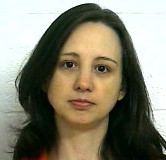
Brenda Andrew
Murderer Megan Huntsman
Murderer · USA · 1996
Megan Huntsman was 40 at sentencing. She was a mother of three children who wer…
6 victims
Megan Huntsman
Murderer · USA · 1996
Megan Huntsman was 40 at sentencing. She was a mother of three children who wer…
6 victims
 Angela Johnson
Murderer · USA · 1993
Angela Jane Johnson was convicted in federal court of aiding and abetting the m…
5 victims
Angela Johnson
Murderer · USA · 1993
Angela Jane Johnson was convicted in federal court of aiding and abetting the m…
5 victims
 Michele Kalina
Murderer · USA · 1996
Michele Kalina pleaded guilty to murder for one of five infants she initially w…
5 victims
Michele Kalina
Murderer · USA · 1996
Michele Kalina pleaded guilty to murder for one of five infants she initially w…
5 victims
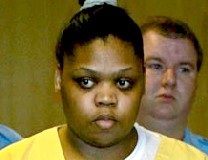 Tiffany Hall
Murderer · USA · 2006
Tiffany Hall was 24 when she was charged in September 2006. She later entered a…
5 victims
Tiffany Hall
Murderer · USA · 2006
Tiffany Hall was 24 when she was charged in September 2006. She later entered a…
5 victims
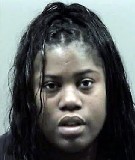 Banita Jacks
Murderer · USA · 2007
Banita Jacks was a Washington, DC resident convicted of murdering her four daug…
4 victims
Banita Jacks
Murderer · USA · 2007
Banita Jacks was a Washington, DC resident convicted of murdering her four daug…
4 victims
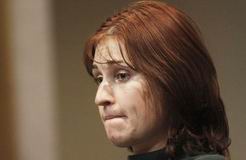 Holly Grigsby
Murderer · USA · 2011
Holly Grigsby was sentenced to life in prison without parole on July 15, 2014.…
4 victims
Holly Grigsby
Murderer · USA · 2011
Holly Grigsby was sentenced to life in prison without parole on July 15, 2014.…
4 victims
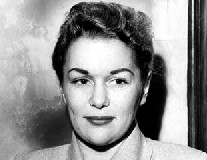 Barbara Graham
Murderer · USA · 1953
Barbara Graham (June 26, 1923 – June 3, 1955) was an American criminal and conv…
1 victim
Barbara Graham
Murderer · USA · 1953
Barbara Graham (June 26, 1923 – June 3, 1955) was an American criminal and conv…
1 victim
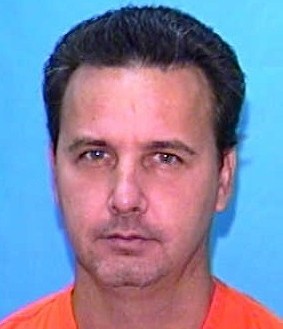 Gary Ray Bowles
Serial killer · USA · 1994
Gary Ray Bowles (b. January 25, 1962) was a Florida death row prisoner. At the…
6 victims
Gary Ray Bowles
Serial killer · USA · 1994
Gary Ray Bowles (b. January 25, 1962) was a Florida death row prisoner. At the…
6 victims
- Gender
- female
- Country
- USA
- Location
- Oklahoma County, Oklahoma, USA
- Date of birth
- December 16, 1963
- Age at first offence
- 38
- Characteristics
- parricide, financial gain, abuse
- Victim profile
- Robert Dale Andrew, 39 (her husband)
- Method of murder
- Shooting
- Date(s) of murder
- November 20, 2001
- Years active
- 2001
- Date of arrest
- February 28, 2002
- Status
-
Sentenced to death
Sentenced to death on September 22, 2004
Case record: Brenda Evers Andrew
Background
Brenda Evers Andrew was a white female who appeared as 5 ft. 3 in. tall and 110 pounds, with brown hair and brown eyes. Her body marks included “ABD: SCAR C LOW 4" c section CHE: DISC L LOW BIRTH MARK”.
Brenda Andrew was a stay-at-home mom and Sunday school teacher. She married her high school sweetheart, Rob, and together they had two children: Tricity and Parker Andrew. At the age of 40, she separated from Rob.
Brenda Andrew began divorce proceedings after Rob Andrew moved out of the family home in late September 2001. She did not attend Rob Andrew’s funeral, choosing instead to go to Mexico with James Pavatt and the children.
Brenda Andrew and James Pavatt had met while attending the same church and began teaching a Sunday school class together. They began having a sexual relationship.
The offence
Brenda Andrew’s husband, Robert (“Rob”) Andrew, was shot to death at their Oklahoma City home sometime around 7:00 p.m. on November 20, 2001. Brenda Andrew was also shot in the arm during the incident. Rob Andrew was shot twice with a shotgun.
The Andrews were separated at the time. Rob Andrew was at the home to pick up the two minor children for visitation over the Thanksgiving holiday. The custom was that Brenda Andrew would bring the children out to the car and Rob Andrew would take them from there. On this night, Brenda Andrew asked Rob Andrew to come into the garage to light the pilot light on the furnace because it had gone out.
Brenda Andrew’s version after that point was that two masked men entered the garage, Rob Andrew turned to face the men and was shot in the abdomen, and Rob grabbed a bag of aluminum cans to defend himself and was shot again. Brenda Andrew stated that she was hit during this second shot. After that, she called 911 and reported her husband had been shot.
Undisputed facts showed that after Rob Andrew was shot, Brenda Andrew called 911 and reported her husband had been shot. Emergency personnel arrived and found Rob Andrew’s body on the floor of the garage; Rob Andrew had suffered extensive blood loss and emergency personnel were unable to revive him. Brenda Andrew had also suffered a superficial gunshot wound to her arm. The Andrew children were found in a bedroom watching television with the volume turned up very high and oblivious to what had happened in the garage.
Investigation
Rob Andrew’s shotgun was missing from the home. A spent 16-gauge shotgun shell was found in the garage on top of the family van. Rob Andrew owned a 16-gauge shotgun, but had told several friends that Brenda Andrew refused to let him take it when they separated.
One witness testified to seeing Brenda Andrew at an area used for firearm target practice near her family’s rural Garfield County home eight days before the murder and later found several 16-gauge shotgun shells at the site.
Brenda Andrew’s superficial wound was caused by a .22 caliber bullet, apparently fired at close range, which was inconsistent with Brenda Andrew’s claim that she was shot at some distance. About a week before the murder, Pavatt purchased a .22 caliber handgun from a local gun shop.
Janna Larson, Pavatt’s daughter, testified that on the day of the murder Pavatt borrowed her car and claimed he was going to have it serviced. When he returned it the morning after the murder, the car had not been serviced, but Larson found one round of .22 caliber rimfire ammunition on the floorboard. In a conversation later that day, Pavatt told Larson never to repeat that Brenda Andrew had asked him to kill Rob Andrew, and he threatened to kill Larson if she did. He also told Larson to throw away the .22 round she found in her car.
Police searched the home of Dean Gigstad, the Andrews’ next-door neighbor, after the Gigstads reported finding suspicious things in their home. Police found evidence that someone had entered the Gigstads’ attic through an opening in a bedroom closet. A spent 16 gauge shotgun shell was found on the bedroom floor, and several .22 caliber rounds were found in the attic itself. There were no signs of forced entry into the Gigstad home. Gigstad and his wife were out of town when the murder took place, but Brenda Andrew had a key to their home.
The .22 caliber round found in Janna Larson’s car was of the same brand as the three .22 caliber rounds found in the Gigstads’ attic. The .22 caliber bullet fired at Brenda Andrew and retrieved from the Andrews’ garage appeared consistent with bullets in these unfired rounds. These rounds were capable of being fired from the firearm that Pavatt purchased a few weeks before the murder; further testing was not possible because that gun was never found.
The 16 gauge shotgun shell found in the Gigstads’ home was of the same brand as the 16 gauge shell found in the Andrews’ garage. Ballistics comparison showed similar markings, indicating that they could have been fired from the same weapon. Whether these shells were fired from the 16-gauge shotgun Rob Andrew had left at the home was impossible to confirm because that gun remained missing.
Within days after the shooting, before Rob Andrew’s funeral, Brenda Andrew, James Pavatt and the two minor children left the State and crossed the border into Mexico. They were apprehended while attempting to re-enter the United States in late February 2002.
Brenda Andrew met while attending the same church as Pavatt, and at some point began teaching a Sunday school class with him. She and Pavatt began having a sexual relationship.
Around the same time, Pavatt, a life insurance agent, assisted Rob Andrew in setting up a life insurance policy through Prudential worth approximately $800,000. In late September 2001, Rob Andrew moved out of the family home, and Brenda Andrew initiated divorce proceedings a short time later.
On October 25-26, 2001, brake lines on Rob Andrew’s automobile were cut. The next morning, Pavatt persuaded his daughter to call Rob and claim that Brenda Andrew was at a hospital in Norman, Oklahoma and needed him immediately. An unknown male also called Rob that morning and made the same plea. Rob Andrew discovered the tampering to his car before placing himself in any danger and notified police.
One call came from a pay phone in Norman near Larson’s workplace, and the other came from a pay phone in south Oklahoma City, according to Rob Andrew’s cell phone records.
The day before Rob Andrew’s funeral, Brenda Andrew and Pavatt and their children went on the run. Three months later, Pavatt and Brenda Andrew were arrested as they tried to cross the border back into the United States.
Teresa Sullivan, who was a federal inmate at the Oklahoma County jail after apprehension, testified that Brenda Andrew told her that she and Pavatt killed her husband for money, the kids, and each other. Brenda Andrew also told Sullivan that Pavatt shot Brenda Andrew in the arm to make it look as if she was a victim.
Expert testimony opined that Brenda Andrew’s arm wound was not self-inflicted but part of a scheme to stage the scene to make it look like she was a victim, like her husband.
Arrest
After being apprehended while attempting to re-enter the United States in late February 2002, Brenda Andrew came into contact with Teresa Sullivan at the Oklahoma County jail.
Trial
Brenda Andrew was charged in Oklahoma County District Court Case No. CF-2001-6189 with First-Degree (malice) Murder in violation of 21 O.S.2001, § 701.7(A), and Conspiracy to Commit First Degree Murder in violation of 21 O.S.2001, § 421.
The State filed a Bill of Particulars alleging three aggravating circumstances:
- that the person committed the murder for remuneration or the promise of remuneration or employed another to commit the murder for remuneration or the promise of remuneration;
- the murder was especially heinous, atrocious, or cruel; and
- the existence of the probability that the defendant will commit criminal acts of violence that would constitute a continuing threat to society.
A jury trial was held before Honorable Susan W. Bragg, District Judge, in June and July 2004. The jury found Brenda Andrew guilty of both counts and found the existence of two aggravating circumstances: that the murder was for remuneration and that the murder was especially heinous, atrocious, or cruel.
The jury set punishment at death on the first-degree murder count and 10 years and a $5,000.00 fine on the conspiracy count.
The trial evidence included that after his brake lines were cut, Rob Andrew asked about removing Brenda Andrew as beneficiary of his life insurance policy. Evidence was presented that in the months preceding the murder, Brenda Andrew and Pavatt attempted to transfer ownership of the insurance policy to Brenda Andrew without Rob Andrew’s knowledge by forging his signature to a change-of-ownership form and backdating it to March 2001.
The State presented evidence that Pavatt obtained information over the Internet about Argentina because he had heard that country had no extradition agreement with the United States. Larson also testified that after the murder, Brenda Andrew and Pavatt asked her to help them create a document with the forged signature of Rob Andrew granting permission for his children to travel with Brenda Andrew out of the country. Brenda Andrew also asked Larson to transfer funds from her bank account to Larson’s own account so Larson might wire the money after they left town.
Brenda Andrew’s behavior was described by several witnesses experienced in dealing with people in traumatic situations as uncharacteristically calm for a woman whose husband had just been gunned down.
The appellate opinion recounted multiple evidentiary issues raised by Brenda Andrew on appeal, including the denial of a request for change of venue and claims relating to hearsay, other crimes evidence, authentication, and counsel issues, and it described that some asserted errors were harmless.
Sentencing
Judge Susan Bragg formally sentenced Brenda Andrew in accordance with the jury verdict on September 22, 2004.
Brenda Andrew received a death sentence on the first-degree murder count in Oklahoma County District Court Case No. CF-2001-6189. On the conspiracy to commit first degree murder count, she was sentenced to 10 years and a $5,000.00 fine.
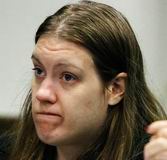
At the sentencing, Brenda Andrew appeared in Oklahoma County District Court. She was defiant and claimed she was innocent of Rob Andrew’s shooting death even as the judge formally sentenced her.
Brenda Andrew stated:
“The verdict which sentenced me to the death penalty is an egregious miscarriage of justice. I am an innocent woman, wrongfully convicted.”
She also stated:
“I plan to fight for my freedom to the end and the end is neither execution nor imprisonment, it is the complete vindication of my name.”
She further stated:
“God knows my heart and He will deliver me out of this situation.”
Assistant District Attorney Gayland Gieger responded:
“Ms. Andrew has shown absolutely no remorse for her criminal actions from day one.”
and:
“It certainly doesn't surprise me that she continues to show no remorse after being found guilty of murder.”
Assistant District Attorney Fern Smith stated:
“I was surprised not only by what Brenda Andrew said, but by the way she said it, calling her demeanor flippant and arrogant.”
She further stated:
“The fact that she said the jury was wrong in what they did, that it wasn't based on the evidence, that her conviction was egregious, was disrespectful to the court and to the jury.”
Defense attorney Greg McCracken stated:
“She looks forward to the appeals process. She looks forward to a new trial and a new day.”
Defense attorney George Miskovsky III stated:
“Based on the fact that this is going to be appealed, I don't anticipate her making any comment. But she might.”
Witness Michael Welch stated:
“With all the evidence that was presented in front of me, I wouldn't change my mind one inch.”
He also stated:
“What was done wasn't an accident. It was deliberately done.”
Brenda Andrew stated:
“I love my children dearly. I am a loving, gentle and compassionate mother.”
She also stated:
“I noticed the supposed God-fearing people who celebrated my death sentence and I see that as human sickness.”
Appeals
Brenda Andrew appealed to the Court of Criminal Appeals of Oklahoma in Andrew v. State, Appellant v. State of Oklahoma, Appellee, No. D-2004-1010.
The appellate opinion described:
- the trial court’s denial of her motion for change of venue after a hearing on January 9 and 21, 2003;
- claims about admission of evidence and other crimes evidence;
- claims about authentication of audio tapes;
- claims about whether her statements to police required Miranda warnings;
- claims about exclusion of defense witnesses based on discovery violations;
- ineffective assistance of counsel claims;
- claims about jury instructions, including flight and use of other crimes evidence; and
- second-stage issues challenging the sufficiency of evidence supporting aggravating circumstances and the adequacy of instructions.
The appellate court held that the conviction and death sentence were affirmed. It found sufficient evidence to support the especially heinous, atrocious, or cruel aggravating circumstance and sufficient evidence to support the murder for remuneration aggravating circumstance, and it noted the jury did not find a probability of continuing threat to society.
The appellate opinion summarized mitigating evidence presented to the jury as including:
- that the defendant did not have any history of prior criminal activity;
- that the defendant had never committed acts of violence in the past;
- that the defendant was a good mother who loved her children very much;
- that the death penalty would deprive Tricity and Parker Andrew of their only living parent;
- that the defendant had a family who loved her and valued her life;
- that the defendant had many relatives who would visit her in prison if given the opportunity;
- that the defendant was a kind and giving neighbor and friend;
- that the defendant had education and might be able to help other inmates;
- that the defendant was a dedicated employee who worked hard;
- that the defendant had been a model inmate since being incarcerated at the Oklahoma County Jail; and
- that the defendant had always been active in school and church activities.
The appellate opinion stated it found no error warranting reversal of conviction or sentence.
There were separate opinions:
- One judge concurred in agreement with affirming the conviction and sentences and discussed the strength of the evidence of guilt.
- Another judge agreed with affirming the result but disagreed with parts of the majority’s analysis and expressed concerns about the reliability of the death sentence if improper evidence and argument affected the sentencing.
- Another judge wrote that the majority’s reasoning was not sufficient to find the jury unaffected by certain evidence and would reverse and remand for resentencing.
- Another judge stated that they could not agree with affirming the conviction and found merit in Appellant’s Propositions I, II, III and IV and would reverse and remand for a new trial.
The separate opinions included verbatim statements, including in the dissents about the prosecutor’s remarks, such as:
“I'm sure you noticed from the witness stand, Tricity did not beg for her mother's life.”
and:
“Would you put your 15-year-old niece on the stand to do that? I wouldn't.”
and:
“Rob Andrew's parents would like to visit him in prison ․ the only place they get to visit is his grave.”
and:
“Did they have to say it? Wasn't it conveyed? Wasn't their message conveyed to you what punishment they want,”
and:
“They're [the victim's family] prohibited by law from asking for a specific punishment.”
Outcome
The appellate court affirmed Brenda Andrew’s convictions and death sentence.
Other details
Brenda Andrew was described in the appellate record as charged conjointly with James Dwight Pavatt, but the defendants were severed for trial. Pavatt was convicted of both counts, received the death penalty, and appealed his Judgment and Sentence, which was affirmed in Pavatt v. State, 2007 OK CR 19, 159 P.3d 272.
The appellate opinion discussed that:
- during sentencing deliberations, a jury note asked whether “life without parole” meant incarceration until natural death, and the trial court answered it was self-explanatory;
- evidence included recordings of telephone conversations between Brenda Andrew and Pavatt to the insurance company’s home office inquiring about the status of the policy and attempting to persuade them a legitimate ownership change had been made;
- the State argued Brenda Andrew and Pavatt conspired to kill Rob Andrew for an $800,000 life insurance policy; and
- Pavatt never named a second assailant in relation to the letter and the confessional issues discussed in the appellate record.
In the narrative portion, Brenda Andrew was characterized as the only woman on Oklahoma’s death row.
Spotted an error, or have more information about this case?