Paula Angel
Murderer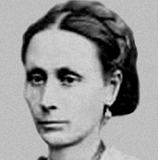 Lydia Sherman
Murderer · USA · 1864
Lydia Sherman was also known as “The Derby Poisoner.” She was born in 1824 in B…
10 victims
Lydia Sherman
Murderer · USA · 1864
Lydia Sherman was also known as “The Derby Poisoner.” She was born in 1824 in B…
10 victims
 Martha Grinder
Murderer · USA · 1864
Martha Grinder was convicted of murder in the first degree for poisoning Mary C…
2 victims
Martha Grinder
Murderer · USA · 1864
Martha Grinder was convicted of murder in the first degree for poisoning Mary C…
2 victims
 Ann Bilansky
Murderer · USA · 1859
Ann Bilansky was executed by hanging in Minnesota on March 23, 1860 for the ars…
1 victim
Ann Bilansky
Murderer · USA · 1859
Ann Bilansky was executed by hanging in Minnesota on March 23, 1860 for the ars…
1 victim
 Marissa Devault
Murderer · USA · 2009
Marissa Devault (36) was convicted of first-degree murder in the 2009 slaying o…
1 victim
Marissa Devault
Murderer · USA · 2009
Marissa Devault (36) was convicted of first-degree murder in the 2009 slaying o…
1 victim
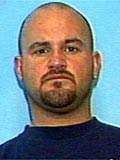 Lawrence Hensley
Spree killer · USA · 1999
Lawrence Hensley was described by neighbours as a private, church-going man who…
4 victims
Lawrence Hensley
Spree killer · USA · 1999
Lawrence Hensley was described by neighbours as a private, church-going man who…
4 victims
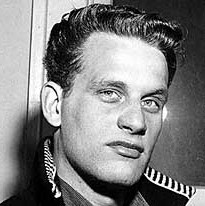 Gary Addison Taylor
Serial killer · USA · 1972
Gary Addison Taylor Gary Addison Taylor was born in 1936 in Michigan. He spent…
20 victims
Gary Addison Taylor
Serial killer · USA · 1972
Gary Addison Taylor Gary Addison Taylor was born in 1936 in Michigan. He spent…
20 victims
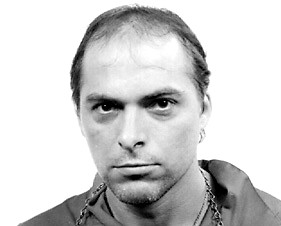 John Matthew Stephenson
Murderer · USA · 1996
John Matthew Stephenson was sentenced to death on June 17, 1997. He was on deat…
3 victims
John Matthew Stephenson
Murderer · USA · 1996
John Matthew Stephenson was sentenced to death on June 17, 1997. He was on deat…
3 victims
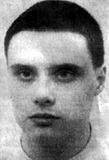 Alex Wiens
Murderer · Germany · 2009
Alex Wiens (also known as Alexander Weins) was tried in Dresden, Germany, for t…
1 victim
Alex Wiens
Murderer · Germany · 2009
Alex Wiens (also known as Alexander Weins) was tried in Dresden, Germany, for t…
1 victim
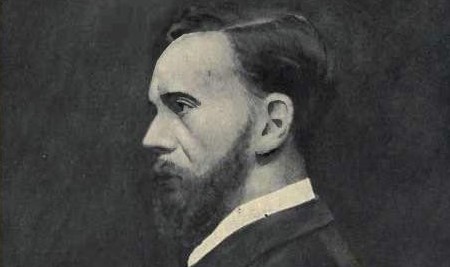 George Lamson
Murderer · United Kingdom · 1881
George Lamson was an English physician who, after the Crimean War, suffered fro…
1 victim
George Lamson
Murderer · United Kingdom · 1881
George Lamson was an English physician who, after the Crimean War, suffered fro…
1 victim
- Gender
- female
- Country
- USA
- Location
- San Miguel County, New Mexico, USA
- Date of birth
- 1842 ?
- Age at first offence
- 19
- Characteristics
- —
- Victim profile
- Juan Miguel Martin (her married lover)
- Method of murder
- Stabbing with knife
- Date(s) of murder
- March 23, 1861
- Years active
- 1861
- Date of arrest
- Next day
- Status
-
Executed
Executed by hanging at Las Vegas on April 26, 1861
Case record: Paula Angel
Background
Paula Angel was also known as Pablita Martin. She was a 19 year old Hispanic girl, with other reports differing on her age. She was the only woman ever executed in New Mexico while it was a territory.
Paula Angel was executed in Las Vegas, San Miguel County, New Mexico, on April 26, 1861.
The offence
Paula Angel stabbed her married boyfriend, Juan Miguel Martin, to death. The killing occurred when he refused to leave his wife for her.
Another account described Paula Angel’s crime as murder on March 23, 1861, when she stabbed her lover, Miguel Martin. In that account, Miguel Martin was married to another woman at the time and was the father of five children. Paula was described as being 26 or 27 years old at the time.
An additional account described the killing as occurring after Miguel Martin announced he wanted to break off the affair, and that Paula requested a final assignation. As they embraced one last time, she plunged “a butcher knife into his back.”
Investigation
A jailer taunted Paula Angel daily leading up to her execution. The quote attributed to the sheriff was: “I'm going to hang you until you're dead, dead, dead,”.
Arrest
Paula Angel was arrested within a day or so of the killing.
Trial
Paula Angel was brought to trial during the March 1861 term of San Miguel County District Court.
One account stated that Paula Angel was tried during the March 1861 term, found guilty of first-degree murder, and that District Court Judge Kirby Benedict imposed death by hanging as the only sentence allowed by New Mexico’s territorial law.
Another account stated that she went on trial only five days after the commission of the crime, and that she was tried on March 28, 1861. In that account, she was convicted and sentenced to die by hanging on April 26.
Defense attorney Spruce M. Baird represented Paula Angel. It was stated that Baird argued her case in both Spanish and English.
In describing Baird’s argument to the jury, the following quote appeared:
“disturbed by her lover's rejection. Do not be so cold in soul as to demand death of this fair maiden who has been wronged by an uncaring adulterer.”
Judge Kirby Benedict ordered Paula Angel to pay for all the costs of legal action against her, including her own hanging.
Sentencing
Paula Angel was sentenced to death by hanging.
The execution date was set for Friday, April 26, 1861.
Appeals
No appeal information was provided.
Outcome
Paula Angel was executed by hanging at Las Vegas on April 26, 1861.
She was taken from the jail in a wagon to a suitable tree from which she was to hang. When they arrived at the place of execution, Paula put up such a fight with the sheriff as she stood on the back of the wagon, that the sheriff had to start over and get her properly tied up before he could draw the wagon from under her.
A specific execution sequence was described as follows: Sheriff Antonio Abad Herrera selected a large cottonwood in a nearby grove. Paula was driven there in a wagon that carried her coffin. The wagon was driven under the noose, and Paula’s neck was placed in the noose. It was then said that the sheriff had forgotten to tie her arms, and that she grabbed hold of the rope and was “frantically trying to pull herself upward from the strangling noose.” Herrera grasped her around the waist and tried to pull her downward while Paula clung to the rope.
Spectators rushed forward, pulled Herrera to the ground, and cut Paula down. Herrera protested that “justice had not been done,” but the crowd contended that Paula had been hanged—albeit unsuccessfully—and that the sentence carried out.
Colonel J. D. Sena stepped forward and addressed the crowd by reading from the warrant of execution. He emphasized that Paula had to be “hanged by the neck until dead.”
Paula Angel was again stood on the back of the wagon with her hands tied behind her back, and after the rope was retied amid the jeers and catcalls, she did not survive the second hanging.
Aftermath
Paula Angel remained the only woman executed in New Mexico while it was yet a territory, and it was stated that no woman had been executed in New Mexico since.
A later reference mentioned that Linda Henning nearly became the second woman executed there. That later trial involved the planned and bloody murder of Girly Chew Hossencofft, the estranged wife of her boyfriend; the jury rejected the death penalty. The later account stated that Henning was convinced that Girly Chew was a reptilian alien queen from another galaxy.
Other details
San Miguel County Sheriff Antonio Abad Herrera daily taunted Paula Angel while she was awaiting her appointed day of execution. One described quote was: “Paula Angel, you have only _____ days more to live,” reducing the figure from day to day.
It was stated that Jose Sena was the sheriff appointed for San Miguel County in December 1860.
District Court Judge Kirby Benedict was identified as a judge involved in Paula Angel’s trial.
It was stated that Paula Angel was driven on her own coffin to the site of her execution and that the execution was witnessed by ranchers and townsmen.
A memorialization narrative also appeared in which a folk ballad titled “La Homicida Pablita” was said to have been composed by Juan Angel, Paula’s cousin, in 1861. It was stated that the ballad included several elements of Paula’s story, including her final ride on the wagon that carried her to the gallows.
The execution warrant and the sheriff’s return were described as follows:
- Governor Abraham Rencher issued a writ for the execution of Paula Angel, sentenced to be hung, at the March term, 1861, of the District Court for San Miguel County (described as noted in an Executive Record entry dated April 3, 1861).
- A warrant issued by Governor Abraham Rencher was described as being dated April 3, 1861 and written in Spanish. The warrant addressed the Sheriff of San Miguel County and included the following quoted opening: “Greetings,”
- The warrant included the following quoted language:
Whereas I have received official information that at the March 1861 term of District Court, held in and for the county of San Miguel, in the Territory of New Mexico, where, one Paula Angel, was convicted at said court of the crime of murder committed against the body of one Miguel Martin, and was sentenced by said court to suffer the penalty of death:
With this you are ordered that on the 26th of April of 1861, you take the said Paula Angel from the jail of the County of San Miguel, in which she now finds herself incarcerated, to some appropriate place within the limits of said county, and within a distance of one mile from the seat of that county, and that between the hours of ten in the morning and four in the afternoon of said day, 26th of April 1861, you then and there hang the said Paula Angel by the neck until she is dead, dead, dead; and may God have mercy on her soul.
- The reverse side of the warrant was described as containing a simple handwritten statement and signature of San Miguel County Sheriff Antonio Abad Herrera. The quoted Spanish phrase was: “Retornado y cumplido este mandato, hoy Abril 26 de 1861 .”(This order was completed and returned today, April, 26, 1861)
A condition of uncertain historical documentation was described in which some records for due-process proceedings were said to have been missing, while other materials were said to have been located. The case was said to have had only two extant items related to Paula’s trial at the State Records Center and Archives: an entry of the case name and number, Territory of New Mexico vs Paula Angel, 73b, in a surviving San Miguel County District Court docket index; and an April 3, 1861, Executive Record entry where Governor Abraham Rencher noted issuing his writ for the execution of Paula Angel.
It was stated that the case file had disappeared between the publication of books and the transfer of court records in 1976.
A November 1907 reference regarding Sierra County women tried for capital murder was described as stating: “No woman has ever been hanged in New Mexico.”
A folklore tale about an unnamed weeping woman (“llorona”) was described as telling of a young woman condemned to hang for killing her lover, and said that no one dared “pull the rope” and that she was set free, but later died and her spirit was condemned to wander the hills at the outskirts of Las Vegas.
An additional narrative discussed that Paula Angel was said to have lived in the San Miguel County town of Loma Parda with her parents, and described Loma Parda as a collection of buildings along the Rio Mora, referred to as “Sodom on the Mora,” with gamblers, “harlots and saloon keepers,” and soldiers at Fort Union about six miles away.
It was stated that there was no indication of where the crime was committed in that account, and that it was “most unlikely that Paula was one of the town's prostitutes.”
Timeline
- March 23, 1861 — Paula Angel stabbed her lover, Miguel Martin, in one account.
- March 28, 1861 — Paula Angel went on trial and was convicted in one account; defense attorney Spruce M. Baird represented her before Judge Kirby Benedict.
- April 3, 1861 — Governor Abraham Rencher issued a writ for the execution of Paula Angel (Executive Record entry described as dated April 3, 1861).
- April 26, 1861 — Paula Angel was executed by hanging at Las Vegas. The sheriff certified compliance with the order to hang Paula Angel on April 26, 1861.

Spotted an error, or have more information about this case?