
Alex Wiens
Murderer Thomas Selmayr
Murderer · Germany · 2011
March 21, 2011 — Police investigated the deaths of two girls, aged eight and 11…
2 victims
Thomas Selmayr
Murderer · Germany · 2011
March 21, 2011 — Police investigated the deaths of two girls, aged eight and 11…
2 victims
 Armin Meiwes
Murderer · Germany · 2001
Armin Meiwes was a German man who became known as the “Rotenburg Cannibal” or “…
1 victim
Armin Meiwes
Murderer · Germany · 2001
Armin Meiwes was a German man who became known as the “Rotenburg Cannibal” or “…
1 victim
 Detlev Guenzel
Murderer · Germany · 2013
November 4, 2013 — Detlev Günzel collected Wojciech Stempniewicz and drove him…
1 victim
Detlev Guenzel
Murderer · Germany · 2013
November 4, 2013 — Detlev Günzel collected Wojciech Stempniewicz and drove him…
1 victim
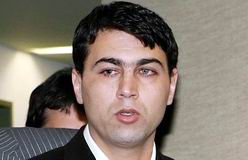 Herisch Ali Abdullah
Murderer · Germany · 2005
Defendant: Herisch Ali Abdullah, 25, Iraqi man and asylum seeker · Victim: Rudo…
1 victim
Herisch Ali Abdullah
Murderer · Germany · 2005
Defendant: Herisch Ali Abdullah, 25, Iraqi man and asylum seeker · Victim: Rudo…
1 victim
 Magnus Gäfgen
Murderer · Germany · 2002
Magnus Gäfgen (born April 11, 1975 in Frankfurt am Main) was a German child mur…
1 victim
Magnus Gäfgen
Murderer · Germany · 2002
Magnus Gäfgen (born April 11, 1975 in Frankfurt am Main) was a German child mur…
1 victim
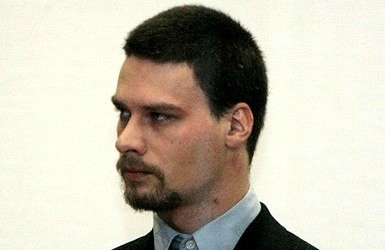 Zdenek Hrbac
Murderer · Germany · 2007
Zdenek Hrbac Zdenek Hrbac was sentenced to life in prison on December 15, 2007.…
1 victim
Zdenek Hrbac
Murderer · Germany · 2007
Zdenek Hrbac Zdenek Hrbac was sentenced to life in prison on December 15, 2007.…
1 victim
 Paul Harold Orgeron
Mass murderer · USA · 1959
Paul Harold Orgeron died in the explosion. Paul Harold Orgeron was an ex-convic…
5 victims
Paul Harold Orgeron
Mass murderer · USA · 1959
Paul Harold Orgeron died in the explosion. Paul Harold Orgeron was an ex-convic…
5 victims
 Warren Leslie Forrest
Serial killer? · USA · 1974
Warren Leslie Forrest was described as 25 years old, 5’9” tall, 155 lbs, with l…
6 victims
Warren Leslie Forrest
Serial killer? · USA · 1974
Warren Leslie Forrest was described as 25 years old, 5’9” tall, 155 lbs, with l…
6 victims
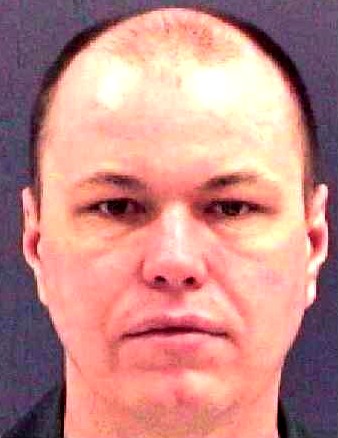 Virgil Presnell
Murderer · USA · 1976
Virgil Delano Presnell Jr. was convicted in 1976 and was sentenced to death in…
1 victim
Virgil Presnell
Murderer · USA · 1976
Virgil Delano Presnell Jr. was convicted in 1976 and was sentenced to death in…
1 victim
 Tyrone Leroy Fuller
Murderer · USA · 1988
Tyrone Leroy Fuller Tyrone Leroy Fuller was scheduled to be executed after 6 p.…
1 victim
Tyrone Leroy Fuller
Murderer · USA · 1988
Tyrone Leroy Fuller Tyrone Leroy Fuller was scheduled to be executed after 6 p.…
1 victim
 Leo Edwards
Murderer · USA · 1980
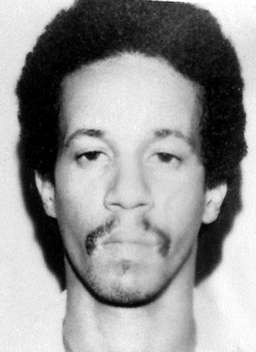
Name: Leo Edwards Jr. Age: 36 Race: black Home: New Orleans Status at time of e…
3 victims
Leo Edwards
Murderer · USA · 1980
Name: Leo Edwards Jr. Age: 36 Race: black Home: New Orleans Status at time of e…
3 victims
 Yosvanis Valle
Murderer · USA · 1999
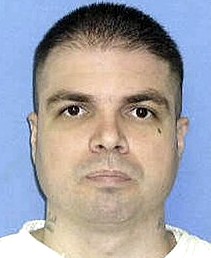
Yosvanis Valle was born on 09/07/1975. He was a Hispanic male and was from Hava…
4 victims
Yosvanis Valle
Murderer · USA · 1999
Yosvanis Valle was born on 09/07/1975. He was a Hispanic male and was from Hava…
4 victims
- Gender
- male
- Country
- Germany
- Location
- Dresden, Saxony, Germany
- Date of birth
- 1980
- Age at first offence
- 29
- Characteristics
- domestic violence, motive unknown
- Victim profile
- Marwa Ali El-Sherbini, 31 (three months pregnant)
- Method of murder
- St abbing with knife
- Date(s) of murder
- July 1, 2009
- Years active
- 2009
- Date of arrest
- Same day
- Status
-
Life imprisonment
Sentenced to life imprisonment on November 11, 2009
Case identification
Alex Wiens (also known as Alexander Weins) was tried in Dresden, Germany, for the murder of Marwa Ali El-Sherbini and the attempted murder of her husband, Elwy Ali Okaz.
Background
Marwa Ali El-Sherbini was born in 1977 in Alexandria, Egypt, to the chemists Ali El-Sherbini and Laila Shams. In 1995, she graduated from El Nasr Girls' College, where she acted as a student speaker. She studied pharmacy at Alexandria University and obtained a bachelor's degree in pharmaceutical sciences in 2000. From 1992 to 1999, she was a member of the Egypt national handball team.
In 2005, El-Sherbini moved with her husband, Elwy Ali Okaz, to Bremen, Germany. In 2008, the couple and their two-year-old son moved to Dresden, where Okaz obtained a doctoral research position at the Max Planck Institute for Molecular Cell Biology and Genetics. El-Sherbini worked at the University Hospital Dresden and at a local pharmacy as part of an accreditation programme to practice pharmacy in Germany. Together with others, El-Sherbini founded a registered voluntary association aimed at establishing an Islamic cultural and education centre in Dresden.
At the time of her death, El-Sherbini was three months pregnant and expecting her second child.
Alex Wiens (Russian: Алекс Винс; also known as Alexander Weins) was born in 1980 in Perm, Russia. After leaving school, he completed a vocational training programme as a warehouseman. In 1999, after a conscripts' medical examination, he was exempted from compulsory military service in the Russian armed forces. It was stated that Wiens probably suffered from a severe and chronic psychosis. In 2003, he immigrated to Germany and gained German citizenship as a result of his ethnic origin.
In Germany, he worked as a builder and caretaker, but he had been living on welfare benefits for the long-term unemployed at the time of the murder. At the time of sentencing in November 2009, Wiens was 28 years old, unmarried, and had no children.
The offence
Verbal abuse and earlier court case
On 21 August 2008, Wiens and El-Sherbini met at a public playground in Dresden's Johannstadt district, where Wiens's niece and El-Sherbini's son were playing. A quarrel occurred over whose child should use the playground's swing. Wiens began shouting verbal abuse at El-Sherbini. El-Sherbini, wearing an Islamic headscarf, was called “Islamist”, “terrorist” and (according to one report) “slut”.
Other people present tried to intervene, but Wiens continued the verbal abuse for several minutes, directing epithets in Russian and German at Russian-speaking bystanders who attempted to reason with him. El-Sherbini called the police on a bystander's mobile phone. Within a few minutes, four police officers arrived in two vehicles at the scene. El-Sherbini and Wiens were questioned; El-Sherbini was subsequently driven away in one of the police vehicles.
Wiens was charged with defamation and given a penalty order to pay a fine of €330. After formally objecting and refusing to pay the fine, Wiens was tried at the district court of Dresden. He was found guilty and fined €780 in November 2008. During that trial, Wiens claimed mitigating circumstances for the act of insulting El-Sherbini, suggesting that “people like her” were not really human beings and therefore incapable of being insulted. The public prosecutor appealed the verdict, aiming at a custodial sentence due to the openly xenophobic character of the incident. Wiens appealed as well and was granted a court-appointed defence counsel. His counsel intended to withdraw the appeal before the scheduled hearing at the regional court, but Wiens objected.
Attack in the courtroom (appeal hearing)
The appeal hearing at the regional court in Dresden took place on 1 July 2009. Nine people were present in the courtroom: three judges, the prosecutor, Wiens as the defendant, his court-appointed defence counsel, El-Sherbini as a witness for the prosecution, and her husband and son as observers. No security personnel were present and no security searches of individuals and their possessions were carried out.
During the proceedings, Wiens appeared reserved but was noted for extreme statements. He said that Muslims were monsters to him and asked the court why they were not deported after the 9-11-attacks. He stated that German people should not mingle with foreigners and declared that he would vote for the far right National Democratic Party of Germany.
The judge requested a verbatim record while the defence counsel tried to mediate. Wiens continued in this manner, prompting the judge to ask whether he had ever visited a concentration camp. After Wiens's defence presentation, El-Sherbini testified. After El-Sherbini had testified, the judge asked whether there were any further questions. Wiens replied and asked why above all El-Sherbini was in Germany. The judge rejected the question; Wiens then responded with a further question, and the defence counsel motioned for recess.
El-Sherbini tried to leave. When she, her husband, and their three-year-old son were at the door, Wiens suddenly attacked El-Sherbini with a kitchen knife with an 18 cm (7 in) long blade, which he had taken into the courtroom in a backpack.
El-Sherbini received more than 15 stab wounds to the upper body and arm. The attack was carried out with such force and suddenness that it resulted in a notable absence of defence wounds.
While trying to protect his wife, El-Sherbini's husband, Okaz, was stabbed at least 16 times to the head, neck, upper body and arm. Wiens's defence counsel tried to help El-Sherbini by obstructing Wiens with chairs and a table. The couple's three-year-old son was injured while being ushered to safety.
The attack happened at 10:23 am, time-stamped by the judge having raised a security alarm.
A police officer in the court building, testifying in an unrelated case, was called to the scene by the commotion. The officer mistook Okaz for the attacker and shot him in the lower leg. Wiens was apprehended on the spot after one of the judges pointed out that it was Wiens, not Okaz, who was the assailant. While under arrest, Wiens begged the police officers to shoot him dead.
Okaz, critically wounded in the stabbing attack, was in a coma for two days. He was subsequently treated for several weeks in a hospital near Dresden for the stabbing and shooting injuries. El-Sherbini died in the court building at 11:07 am, succumbing to her injuries.
Investigation and arrest
Wiens was arrested at the crime scene. A remand order followed the suspicion of murder of El-Sherbini and attempted murder of Okaz.
Trial
Charges and procedural steps
Wiens was held on remand on suspicion of murder of El-Sherbini and attempted murder of Okaz. The public prosecutor's office formally charged him with murder, attempted murder, and grievous bodily harm on 25 August 2009.
Prosecutors cited perfidiousness and malice (based on hatred against non-Europeans and Muslims) as qualifying characteristics for the murder charge. A change of venue application by Wiens's defence lawyer was refused by the upper regional court.
After a psychiatric assessment, full criminal responsibility was assumed. However, the defendant had been diagnosed by Russian doctors to suffer from severe and chronic psychotic conditions; prosecutors requested relevant information from the Russian authorities before trial. The requested documents arrived shortly before the end of the murder trial and did not affect its outcome.
The trial at the upper regional court in Dresden began on 26 October 2009 and took place under strict security precautions due to alleged death threats to Wiens. All concurrent trials were transferred to other local venues due to security concerns, the great interest by the national and international media, and the public.
El-Sherbini's widower, brother and parents acted as “co-claimant” and were represented by eight lawyers. On the first day of the trial, the entire prosecution counsel consisted of eight lawyers from Germany, France, and Egypt. Wiens arrived shrouded behind a mask, sunglasses, hat, and a hood. The judge asked him to remove his head attire and confirm his name and date of birth. Wiens complied, except for removing his sunglasses, for which he was fined for contempt of court.
The defence counsel motioned for the judges to be removed from the trial on the grounds of bias, arguing they were colleagues of witnesses and worked near the crime scene. This was denied by a separate panel that had ruled on this motion.
Okaz testified on the first day of the trial. Witnesses during the first week included an appointed medical examiner on the causes of the victim's death, the judge who had presided over the regional court trial on 1 July 2009, another judge (Schöffe) who had co-presided over that trial, a social worker on the defendant's previous behaviour, the court-appointed counsel who had previously represented the defendant, a court security officer, and the judge of the defamation trial at the district court.
Witnesses in the second week included people present in the playground confrontation on 21 August 2008 and the police officers responding to the attack on that date. The police officer who had mistakenly shot Okaz exercised the right to remain silent during the murder trial because a criminal investigation against him was ongoing.
Court conduct and medical incident during trial
At the beginning of the third day of the trial, Wiens incurred a self-inflicted injury by banging his head against a table. He was diagnosed with haematomas and a suspected traumatic brain injury. After a hospital-based medical examination, he was judged fit to stand trial. While continuing noncompliant and destructive behaviour, he was temporarily restrained by nine security officers in court.
The closing arguments were heard on 9 and 10 November 2009. The prosecution and the co-plaintiffs argued for a conviction for murder and attempted murder with the qualification of heinous crime. The defence applied for a conviction for manslaughter and attempted manslaughter, arguing the killing occurred in the heat of the moment and that the defendant may have a paranoid personality disorder.
The verdict was delayed because medical information requested from Russian authorities arrived on 9 November 2009. The material attested “undifferentiated schizophrenia” in 2000, requiring additional testimony by a medical expert witness.
Verdict and sentencing
On 11 November 2009, Wiens was found guilty of the murder of El-Sherbini and the attempted murder of Okaz, and he was sentenced to life imprisonment.
Judge Birgit Wiegand stated that the court found Wiens guilty of a heinous crime because the offence was carried out in front of the child, against two people, in a treacherous way, and in a court of law. She stated: “It meant that Wiens received the maximum sentence for this crime.”
Appeals
Wiens appealed the conviction, but the appeal was rejected by the Federal Court of Justice. A decision published on 18 June 2010 stated that the appeal was unfounded and that the verdict and sentence of the regional court in Dresden were final as a matter of criminal law.
Outcome
Judge Birgit Wiegand delivered sentencing on 11 November 2009 with a life imprisonment term for Wiens following conviction for murder and attempted murder.
Redress for the victim’s family
In October 2009 in an out-of-court discussion, lawyers on behalf of El-Sherbini’s family and widower approached the Ministry of Justice of the State of Saxony about compensation. In the verdict on 11 November 2009, Judge Birgit Wiegand granted the claimant’s request (Adhäsionsantrag, § 406 StPO) to claim for damages against the defendant in an adherent case within the remit of the criminal case.
It established without a separate trial for a private law claim that Wiens had an obligation to compensate Okaz and El-Sherbini’s beneficiaries for having harmed Okaz and killed El-Sherbini.
Investigation into the police shooting
El-Sherbini’s brother cited the shooting of Okaz as indicative of racism in Germany. Following a complaint, a criminal investigation against the Bundespolizei officer who shot Okaz was launched.
In October 2009, a criminal investigation for involuntary manslaughter and denial of assistance was launched against the judge who presided over the July trial and against the president of the regional court.
On 29 December 2009, the public prosecutor’s office in Dresden announced that all investigations had been closed on 21 December 2009 without indictment because no suspicion of a criminal offence could be substantiated. Prosecutors argued it was particularly difficult to assess the situation for the intervening police officer, stating: “Elwy Okaz and Alex Wiens were both covered in blood and Elwy Okaz had just managed to grab the handle of the knife with his hand, making it appear as though he was the attacker”. They also cited further difficulties, stating: “the actual attacker—Wiens—was holding the blade of the knife, which added to the impression that he was the one being attacked”. The prosecutors concluded that the shooting of Okaz was a tragic mistake.
In January 2010, a lawyer acting for El-Sherbini’s family filed a complaint against the prosecutors’ decisions to close the investigations against the police officer, the judge presiding in the 1 July 2009 trial, and the regional court president.
Media and public reaction
Initial media reporting
The killing was reported on 1 July 2009 in German radio and television and in print media on the following day. In a Deutschlandfunk report broadcast on 1 July, El-Sherbini was referred to as “32[ sic ]-year old” witness.
The Minister of Justice for Saxony, Geert Mackenroth, visited the crime scene on the same day and publicly expressed “deep compassion for the victim's family, for the victim herself”. Another politician called for an investigation, and the Association of Judges in Saxony (Sächsischer Richterbund) demanded a review of security procedures in court buildings.
In The Guardian, Anja Seeliger wrote that “the German media initially reported on the case at the back page”, and that only in the light of the vociferous protests by thousands of Egyptians in Cairo did “the German federal government, which had kept silent for nearly a week, issued words of sorrow.”
Response by Jewish and Muslim organisations in Germany
On 6 July 2009, the General Secretaries of Germany’s Muslim and Jewish Councils visited El-Sherbini’s husband in hospital. Stephan Kramer, General Secretary of the Central Council of Jews in Germany, stated: “You don't have to be Muslim to oppose anti-Muslim behavior, and you don't have to be Jewish to oppose anti-Semitism. We must stand together against such inhumanity.” Kramer later wrote: “… as a Jew I know that anyone who attacks a person because of their race, nationality or religion is not only attacking the minority, they are attacking democratic society as a whole.” He also deplored “the largely unchecked hate propaganda against Muslims”.
The Central Council of Muslims in Germany suggested that the death of El-Sherbini resulted from growing “Islamophobia”, evidenced in many Internet discussion boards, and it called upon Muslims not to instrumentalise the woman's death.
Egyptian researchers at the University of Dresden stated they had not been subject to discrimination and that they saw the killing as an isolated incident. A local Islamic association in Dresden stated that its planned centre for cultural exchange would be named after El-Sherbini to promote mutual understanding between Muslims and non-Muslims.
Public commemoration
On 6 July 2009, about 2,000 Muslims of the Egyptian community and other nationalities in Germany held funeral prayers for El-Sherbini in Dar Al-Salam Mosque in Berlin. Five days later, a public memorial was organized by civil rights groups in Dresden with more than 1,000 people attending. The memorial included the Egyptian ambassador and officials from the state of Saxony, and white roses and photos of El-Sherbini and her family were placed outside Dresden City Hall.
Around the same time, the Max Planck Institute for Molecular Cell Biology and Genetics issued a statement expressing shock and sympathy on the occasion of the official ceremony. The Max Planck Society had strongly condemned the attack on 8 July and stated: “The fact that the attack was racially motivated is especially distressing to us, considering that the Max Planck Society is a scientific research organisation with staff members from the most various nations.”
In December 2009, the Ministry of Justice in Saxony announced plans to commemorate El-Sherbini’s death with a memorial plaque in the regional court building. The plaque was planned to state in German and Arabic: “[Marwa El-Sherbini] She fell victim to Islamophobia and xenophobia. With dignity and commendable moral courage she withstood this.”
International reactions involving Egypt and Germany
El-Sherbini’s death caused public and media attention in Egypt accompanied by strong anti-German sentiments. Egypt’s Prosecutor General Abdel Meguid Mahmud announced that a prosecutor from Alexandria would be dispatched to Germany to assist in the investigation. The Egyptian Pharmacists' Association called for a boycott of German drugs.
At El-Sherbini’s funeral in Alexandria, mourners referred to her as “a 'martyr' of the head scarf” and accused Germany of “racism” and “Islamophobia.” Mourners carried banners criticising both German and Egyptian authorities' reactions to the crime. Egyptian police temporarily cordoned off the German embassy in Cairo to protect it from angry protesters. The German government later issued a statement of condolence.
Some Egyptian commentators adopted a reconciling approach. In the opinion section of Al-Ahram Weekly, Abdel-Moneim Said called on those mourning Marwa El-Sherbini “not [to fall] into the same morass of bigotry and hatred that killed her,” and urged that they “create Arab-Muslim-European fronts, together with other faiths, to stand up against fanaticism, bigotry and discrimination on both sides.”
Iranian President Mahmoud Ahmadinejad blamed the German government and called for international condemnation of Germany. In a letter to UN Secretary General Ban Ki-moon, Ahmadinejad demanded firm action against Germany and stated that “there is a strong view that the crime was a pre-planned attempt engineered by the judicial system and security forces.”
Media reactions to the murder trial
Interviewed by Deutschlandfunk radio, Al Jazeera correspondent to Germany Aktham Suliman said that their viewers watched the trial closely because they were disaffected by the initial reaction in Germany to the killing. He also noted that perceptions of a speculated verdict of not guilty by reason of insanity differed vastly between Al Jazeera and Deutschlandfunk audiences. He explained that former audiences tended to apprehend such a verdict as an absence of punishment in terms of criminal justice, whereas Deutschlandfunk audiences tended to discern “with containment away from public life” through being involuntary committed to a forensic psychiatry institution.
Media scientist Hanan Badr commented on reporting in Germany and Egypt as being “a prime example of mass-media miscommunication between cultures”.
Other details
Wiens’s defence during the murder trial sought a conviction for manslaughter and attempted manslaughter based on the claim that the killing occurred in the heat of the moment and that the defendant may have a paranoid personality disorder. Prosecutors requested information from Russian authorities due to the defendant’s diagnosis of severe and chronic psychotic conditions, and the documents arrived shortly before the end of the murder trial. The murder verdict was delivered after additional medical expert testimony was required due to the arrival of information attesting “undifferentiated schizophrenia” in 2000.
Spotted an error, or have more information about this case?