Mary Ann Ansell
Murderer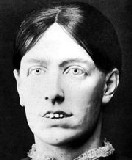 Mary Pearcey
Murderer · United Kingdom · 1890
Mary Pearcey (Mary Eleanor Wheeler; also known as Mary Eleanor) was born in 186…
2 victims
Mary Pearcey
Murderer · United Kingdom · 1890
Mary Pearcey (Mary Eleanor Wheeler; also known as Mary Eleanor) was born in 186…
2 victims
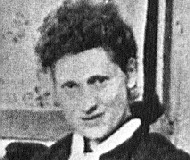 Ada Chard Williams
Murderer · United Kingdom · 1899
Ada Chard Williams (also referred to as Ada Chard-Williams and Mrs. Hewetson in…
1 victim
Ada Chard Williams
Murderer · United Kingdom · 1899
Ada Chard Williams (also referred to as Ada Chard-Williams and Mrs. Hewetson in…
1 victim
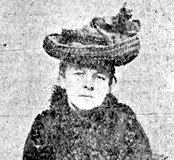 Emily Swann
Murderer · United Kingdom · 1903
Emily Swann (42-year-old mother of 11 children; defendant; convicted of murderi…
1 victim
Emily Swann
Murderer · United Kingdom · 1903
Emily Swann (42-year-old mother of 11 children; defendant; convicted of murderi…
1 victim
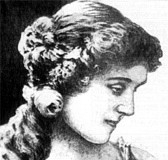 Louise Masset
Murderer · United Kingdom · 1899
Louise Masset was convicted of murdering her son, Manfred Louis Masset, and was…
1 victim
Louise Masset
Murderer · United Kingdom · 1899
Louise Masset was convicted of murdering her son, Manfred Louis Masset, and was…
1 victim
 Anthony Kirkland
Serial killer · USA · 1987
Anthony Kirkland (born September 13, 1968) was an American serial killer. In 19…
5 victims
Anthony Kirkland
Serial killer · USA · 1987
Anthony Kirkland (born September 13, 1968) was an American serial killer. In 19…
5 victims
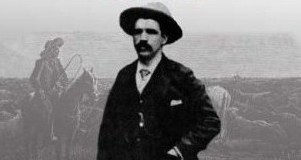 Jackson Lee Davis
Murderer · USA · 1896
Jackson Lee Davis, also known as Diamondfield Jack, was an inmate. · June 4, 18…
2 victims
Jackson Lee Davis
Murderer · USA · 1896
Jackson Lee Davis, also known as Diamondfield Jack, was an inmate. · June 4, 18…
2 victims
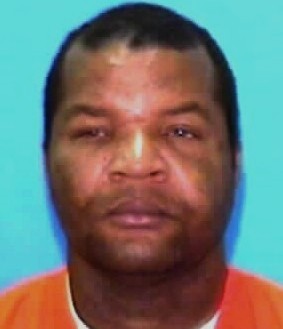 Harry Butler
Murderer · 1997
03/13/97 — Date of offense: Harry Butler was convicted and sentenced to death f…
1 victim
Harry Butler
Murderer · 1997
03/13/97 — Date of offense: Harry Butler was convicted and sentenced to death f…
1 victim
 Sinedu Tadesse
Murderer · USA · 1995
Sinedu Tadesse (1974 - May 28, 1995) was a junior at Harvard University when sh…
1 victim
Sinedu Tadesse
Murderer · USA · 1995
Sinedu Tadesse (1974 - May 28, 1995) was a junior at Harvard University when sh…
1 victim
 Mark Wesley Bailey
Murderer · USA · 1998
Mark Wesley Bailey was convicted in Virginia for the capital murder of his two-…
2 victims
Mark Wesley Bailey
Murderer · USA · 1998
Mark Wesley Bailey was convicted in Virginia for the capital murder of his two-…
2 victims
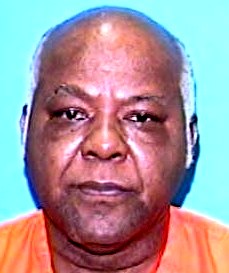 Jack Dempsey Ferrell
Murderer · USA · 1981
Defendant: Jack Dempsey Ferrell Date of birth: 08/05/40 District/County/Case nu…
2 victims
Jack Dempsey Ferrell
Murderer · USA · 1981
Defendant: Jack Dempsey Ferrell Date of birth: 08/05/40 District/County/Case nu…
2 victims
- Gender
- female
- Country
- United Kingdom
- Location
- Watford, Hertfordshire, England, United Kingdom
- Date of birth
- 1877
- Age at first offence
- 22
- Characteristics
- poisoner, financial gain
- Victim profile
- Her sister Caroline Ansell, 19
- Method of murder
- Poisoning (phosphorous)
- Date(s) of murder
- March 9, 1899
- Years active
- 1899
- Date of arrest
- —
- Status
-
Executed
Executed by hanging at St. Albans on July 19, 1899
Case record: Mary Ann Ansell
Background
Mary Ann Ansell (1877–1899) was an English house maid.
Mary Ann Ansell came from a family with a history of mental illness. Her mother told the press that “she “had been silly since the time she was at school” and that she sometimes talked to herself.” Before her eventual execution, there was considerable public pressure for a reprieve, on the grounds of her gender, youth, and perceived lack of mental capacity (both of herself, and other members of her family).
Leavesden Mental Asylum was a facility in which Caroline Ansell resided. The Metropolitan Asylums Board built Leavesden Mental Asylum at Abbots Langley in Buckinghamshire to serve north London. The asylum opened in 1870 to house “quiet and harmless imbeciles” and soon had over 1500 patients, of which some 900 were women.
Caroline Ansell was a patient at Leavesden Asylum and was described as nineteen year old. Caroline came from a family with a background of mental health problems.
Mary Ann Ansell was engaged, but neither she nor her fiancée had any money and had had to postpone their wedding because they could not afford the cost of a marriage licence described as seven shillings and sixpence (37.5p). Mary Ann Ansell devised a plot to insure her sister’s life and then kill her to obtain the pay out.
The offence
Mary Ann Ansell intended to poison her sister, Caroline Ansell, who was an inmate at Leavesden Asylum.
Mary Ann Ansell took out an insurance policy on her sister’s life. The sum assured was described as £22 10s, and as £22 in other passages; the intention appeared to be to obtain 11 pounds from an insurance cover on Caroline. For a premium described as three old pence (1.5p) a week, Mary Ann Ansell would get £22 on the death of her sister.
Mary Ann Ansell used phosphorous in the cake.
Mary Ann Ansell purchased phosphorous-based rat poison from a local shop near where she worked. She stirred the poison into a cake mix, baked the cake, and sent it through the post to her sister on Ward 7 at Leavesden. Mary Ansell sent the cake on the 9th of March 1899. The cake was tainted with phosphorous.
Caroline decided to share the cake with some of her friends and all became ill. Caroline ate considerably more of the cake than the rest had, and therefore had far more severe symptoms. The staff were dealing with an outbreak of typhoid amongst the inmates, and it was some time before Caroline was seen by a doctor. The doctor admitted Caroline to the infirmary but it was too late to save her.
An autopsy was carried out by Dr. Blair, who declared the cause of death to be phosphorous poisoning. The cause of death was traced back to the remains of the cake and, via the postmark on the wrapping paper, it came in back to Mary Ann.
Investigation
Mary Ann Ansell was arrested and charged with the murder by Supt. Wood.
Mary Ann Ansell vehemently denied the charge. She told Supt. Wood: “I know nothing whatever about it. I am as innocent a girl as ever was born”. She said she had purchased the rat poison to kill rats in her employer’s home.
Mary Ann Ansell’s mistress, Mrs. Maloney, told the police that the house was not infested with vermin and that she had not asked for any rat poison to be purchased.
A Home Office file made public in 2000 revealed that Mary Ann Ansell admitted sending Caroline the poisoned cake, mistakenly thinking that the death would not be investigated because her sister was in an asylum.
Arrest
Mary Ann Ansell was arrested after the poisoned cake was traced back to her via the postmark.
Trial
Mary Ann Ansell came to trial at Hertford Assizes in St. Albans on the 30th of June 1899 before Mr. Justice Mathew, and the proceedings lasted two days.
The prosecution made much of Mary Ann’s motive and brought forward various witnesses to bolster the case. A shop assistant from Bloomsbury gave evidence of Mary Ann buying the poison for the purpose of killing rats, which at the time did not seem unusual.
Evidence was presented as to the cause of Caroline’s death and the origins of the cake.
Mary Ann continued to plead her innocence but had no convincing defence. The jury took two hours to find her guilty and did not make a recommendation to mercy, despite her age.
Sentencing
After the guilty verdict, Mary Ann Ansell was sentenced to death. She was returned to St. Albans Prison.
St. Albans Prison had facilities for female prisoners but had not had an execution since 1880, when Thomas Wheeler was hanged there (the father of Mary Eleanor Wheeler). St. Albans Prison did not have a gallows and had to borrow one from neighbouring Bedford prison.
Appeals
A resolution passed by the Metropolitan Asylums Board urged for clemency for Mary Ann. Some newspapers, including the Daily Mail, asked for a reprieve and tried to paint Mary Ann as a poor maidservant. The Daily Mail headline was “A one-sided investigation” and it complained that the Home Office had not made any effort to assess Mary Ann’s mental state.
A hundred Members of Parliament had signed a petition on the day before she was due to die, calling for a week's postponement in carrying out the sentence while her mental state was determined.
The Home Secretary, Sir Mathew White Ridley, was not moved by all this and determined that the law must take its course.
A letter from the Home Office was dated July 15th 1889 to Mr. Jobson, who had organised the public petition to save Mary Ann. The letter stated:
“The Secretary of State having carefully considered all circumstances of the case and having caused special medical enquiry to be made as to the convict’s mental condition by Dr. D. Nicholson, Visitor in Lunacy and Dr. R. Brayn , Superintendent of the Broadmoor Asylum under Section 2 of the Criminal Lunatics Act of 1884 has been unable to find sufficient grounds to justify him in advising Her Majesty to interfere with the course of law.”
The letter indicated she was legally sane under the terms of the M’Naughten Rules.
Outcome
Mary Ann Ansell was hanged by James Billington within the walls of St. Albans prison at 8 a.m. on Wednesday, the 19th of July, 1899. She was executed by hanging at St. Albans on July 19, 1899.
The press were excluded and thus there were no actual details of her execution.
A crowd estimated at around 2,000 had gathered at the main gate to see the black flag hoisted over the prison and the notice of execution posted. Some knelt silently in prayer at the appointed hour. In another passage, after the execution, a large crowd gathered and cheered.
Mary Ann’s body was examined by the prison surgeon, Eustace Henry Lipscombe, who signed the death certificate as required by law.
An inquest was held at 10am. The Chief Warder told the jury that Mary’s death hade been “instantaneous” and that her neck had been broken. Mary Ann was buried in an unmarked grave within the prison later in the day.
In 1931, her remains were re-interred in the St. Albans City cemetery.
Other details
Mary Ann Ansell was at 22 at the time of her death. She was described as the youngest woman to be hanged in the “modern era” (post-1868 reform act, so non-public, and also by the “long drop” method). She was described as the youngest woman to be hanged in private and the last woman to be hanged in the nineteenth century. She was also described as the fourth of five women to be executed by James Billington.
Of the 23 women executed in private between 1868 and 1899, 12 or just over half were convicted of murder by poisoning.
Mary Ann secured her place in history as the youngest woman to be hanged in private and the last woman to be hanged in the nineteenth century.
References and other named items included: Look For the Woman by Jay Robert Nash (M. Evans and Company, Inc. 1981) and CapitalPunishment.org.
Spotted an error, or have more information about this case?