
Jodi Arias
Murderer Miranda Barbour
Murderer · USA · 2013
Miranda Barbour, 19, defendant. · Elytte Barbour, 22, defendant and husband of…
100 victims
Miranda Barbour
Murderer · USA · 2013
Miranda Barbour, 19, defendant. · Elytte Barbour, 22, defendant and husband of…
100 victims
 Tiffany Hall
Murderer · USA · 2006
Tiffany Hall was 24 when she was charged in September 2006. She later entered a…
5 victims
Tiffany Hall
Murderer · USA · 2006
Tiffany Hall was 24 when she was charged in September 2006. She later entered a…
5 victims
 Banita Jacks
Murderer · USA · 2007
Banita Jacks was a Washington, DC resident convicted of murdering her four daug…
4 victims
Banita Jacks
Murderer · USA · 2007
Banita Jacks was a Washington, DC resident convicted of murdering her four daug…
4 victims
 Holly Grigsby
Murderer · USA · 2011
Holly Grigsby was sentenced to life in prison without parole on July 15, 2014.…
4 victims
Holly Grigsby
Murderer · USA · 2011
Holly Grigsby was sentenced to life in prison without parole on July 15, 2014.…
4 victims
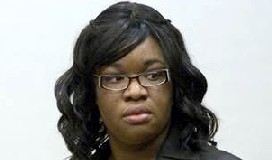 Jessica Tata
Murderer · USA · 2011
Jessica Tata was a Houston home day care owner who fled to Nigeria after a fire…
4 victims
Jessica Tata
Murderer · USA · 2011
Jessica Tata was a Houston home day care owner who fled to Nigeria after a fire…
4 victims
 Amanda Bennett
Murderer · USA · 2011
Amanda Bennett was an Indiana woman who shot her three children and set the fam…
3 victims
Amanda Bennett
Murderer · USA · 2011
Amanda Bennett was an Indiana woman who shot her three children and set the fam…
3 victims
 Gary Lee Roll
Murderer · USA · 1992
Gary Lee Roll — defendant; executed in Missouri on August 30, 2000. · David Rho…
3 victims
Gary Lee Roll
Murderer · USA · 1992
Gary Lee Roll — defendant; executed in Missouri on August 30, 2000. · David Rho…
3 victims
 Elizabeth Fenning
Attempted murder? · United Kingdom · 1815
Elizabeth Fenning was executed by hanging on July 26, 1815. Elizabeth Fenning (…
0 victims
Elizabeth Fenning
Attempted murder? · United Kingdom · 1815
Elizabeth Fenning was executed by hanging on July 26, 1815. Elizabeth Fenning (…
0 victims
 Graham Stafford
Murderer? · Australia · 1991
Graham Stuart Stafford was convicted in 1992 of the murder of twelve-year-old L…
1 victim
Graham Stafford
Murderer? · Australia · 1991
Graham Stuart Stafford was convicted in 1992 of the murder of twelve-year-old L…
1 victim
 Jimmy Maketta
Serial killer · South Africa · 2005
Jimmy Maketta was born in 1964 or 1965. He was a South African rapist and seria…
16 victims
Jimmy Maketta
Serial killer · South Africa · 2005
Jimmy Maketta was born in 1964 or 1965. He was a South African rapist and seria…
16 victims
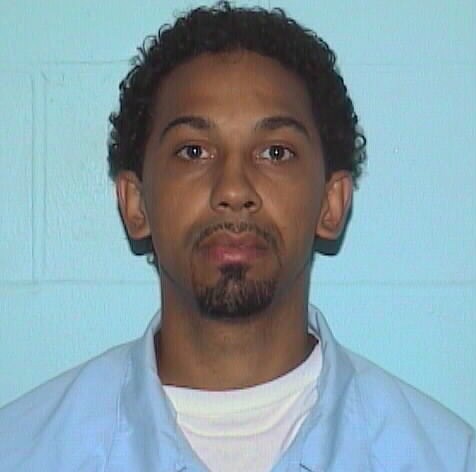 Kevin Taylor
Spree killer · USA · 2001
Kevin Taylor was 27 years old when Chicago police arrested him on the South Sid…
4 victims
Kevin Taylor
Spree killer · USA · 2001
Kevin Taylor was 27 years old when Chicago police arrested him on the South Sid…
4 victims
- Gender
- female
- Country
- USA
- Location
- Mesa, Maricopa County, Arizona, USA
- Date of birth
- July 9, 1980
- Age at first offence
- 28
- Characteristics
- jealous rage, domestic violence
- Victim profile
- Travis Victor Alexander, 30 (her ex-boyfriend)
- Method of murder
- Stabbing with knife
- Date(s) of murder
- June 4, 2008
- Years active
- 2008
- Date of arrest
- July 15, 2008
- Status
-
Found guilty of first-degree murder on May 8, 2013
Jodi Arias — Criminal case record
Background
Jodi Arias (born July 9, 1980, in Salinas, California) and Travis Alexander were involved in a relationship after meeting at a Prepaid Legal Services conference.
Travis Victor Alexander was born on July 28, 1977, in Riverside, California. After his father's death, Alexander and his siblings were taken in by their paternal grandmother, Norma Jean Preston Alexander Sarvey (1932–2012), who introduced them to The Church of Jesus Christ of Latter-day Saints. Alexander worked as a salesman for the multilevel marketing company Prepaid Legal Services and also worked as a motivational speaker.
Arias and Alexander met in September 2006 at a Prepaid Legal Services conference in Las Vegas, Nevada. On November 26, 2006, Arias was baptized into the Latter-day Saint faith by Alexander. As of February 2, 2007, Alexander and Arias were a couple.
After the two broke up on June 29, 2007, Arias moved to Mesa, Arizona until April 2008, when she moved to her grandparents' house in Yreka, California.
The offence
On June 4, 2008, Travis Alexander was killed at his home in Mesa, Arizona. His injuries included multiple stab wounds, a slit throat, and a shot to the head. The medical examiner ruled his death a homicide.
The body was discovered in a shower at Alexander's home. His throat had been cut; he had also been shot in the head and stabbed multiple times.
There were conflicting reports over the number of stab wounds, with some reports stating 29, many stating 27, and after the verdict “more than 20”.
Maricopa County Medical Examiner, Dr. Kevin Horn, testified that Alexander's jugular vein, common carotid artery, and windpipe had been slashed. Horn also testified that Alexander “may have” been dead at the time the gunshot was inflicted. Alexander's death was ruled a homicide.
Investigation
Alexander had scheduled a trip to Cancun, Mexico and missed an important conference call on the night of June 4, 2008, at 7 pm.
On June 9, after he could not be reached, people from Prepaid Legal Services went to his home to check on him. Alexander's roommates said he was out of town. They found a key to Alexander's master bedroom and entered it. They noticed large pools of blood in the hallway leading to the master bathroom, where his body was discovered in the shower.
The 9-1-1 call notifying authorities mentioned an ex-girlfriend, Arias, whom Alexander had said was stalking him, hacking into his Facebook account, and slashing tires.
A .25-caliber gun and other objects were taken in a burglary on May 28, 2008, at the residence of Arias' grandparents in Yreka, California. The grandparents' gun was never recovered. The prosecutor argued the burglary was staged by Arias and the stolen gun was used to shoot Alexander.
Several days before the trip, Arias repeatedly contacted her ex-boyfriend, Darryl Brewer, asking to borrow two 5-gallon gas cans for a trip to Arizona. The cans were not returned to Brewer. Receipts presented at trial also showed that Arias purchased a third 5-gallon gas can, sunblock, and facial cleanser from Walmart in Salinas, California, on June 3, 2008. On that evening, at an ARCO gas station in Pasadena, California, she purchased 8.301 gallons of gasoline with her debit MasterCard and four minutes later purchased 9.59 gallons of gas with cash. The MasterCard was used again on June 6, 2008, three times at a Tesoro gas station in Salt Lake City, at a Pilot Flying J travel center in Winnemucca, Nevada, and at a 7-Eleven in Sparks, Nevada.
After Alexander's death but before his body was discovered, Arias continued to call him and left several voicemail messages. It was later alleged that she accessed Alexander's voicemail messages after his death.
Arias said Alexander planned to visit her in May 2008 but his plans changed.
On June 2, 2008, Arias rented a white Ford Focus in Redding, California, about 100 miles south of her residence. She told the Budget Rent a Car staff that she would only be driving the car locally. When the car was returned on June 7, it had been driven about 2,800 miles. The car was missing all of its floor mats and had what looked like Kool-Aid stains on the front and rear seats. The car was cleaned before police were able to examine it.
A spent .25 caliber round was located near one of the sinks in the master bath. Alexander's damaged digital camera was located in the downstairs washing machine. The camera was new.
Detective Flores, via phone interview with Arias, asked her if she knew a possible motive for why someone would want to damage Alexander's camera. Although images had been deleted, Mesa Police were able to recover the images. The recovered images included Arias and Alexander in sexually suggestive poses at approximately 1:40 pm on June 4, 2008. The last photo of Alexander alive, and in the shower, was taken at 5:29:20 pm on June 4. Moments later, images appear of an individual, believed to be Alexander, “profusely bleeding” on the floor.
A bloody palm print was located in the bathroom hallway, which DNA revealed to be a mixture of Arias' and Alexander's DNA.
Arias continued to insist that she had last seen Alexander in April 2008 despite being presented with DNA and photographic evidence by Detective Esteban Flores.
Ryan Burns and others who met Arias in Utah after the killing indicated she had bandages on her hands and wore long sleeves on days when it was very hot. She told different stories about how she received the cuts to her hands. Burns was told they were from an injury while working at “Margaritaville” restaurant. At trial, it was revealed by Siskiyou County, California, authorities that no such restaurant exists, nor ever existed in the area. At the time of the killing, Arias worked at Casa Ramos in Yreka.
On June 5, 2008, West Jordan, Utah, Police Officer Michael Galieti pulled Arias over while she was in the rented vehicle driving to a meeting with Burns. The front license plate of the car was missing and the rear plate was upside down. Arias attributed this to some kids at a Starbucks playing a trick on her. Burns helped Arias fix the license plate, and Galieti did not cite her for the infraction.
Arrest and pre-trial
Arias was indicted by a grand jury on a first-degree murder charge on July 9, 2008, and arrested at her grandparents' home on July 15, 2008.
She was extradited to Arizona on September 5, 2008, where she pled not guilty on September 11, 2008.
Arias gave three different accounts of her whereabouts. She originally told police she had not been in the home at the time of Alexander's death. She later told police that two intruders had broken into Alexander's home and murdered him and attacked her. Finally, she stated she killed Alexander in self-defense and she was a victim of domestic violence.
In March 2009, because of expressed concerns about possible violation of victim's rights by holding ex parte mitigation status conferences, it was ordered that the appointed mitigation master was relieved of further duties, with limited exceptions.
In May 2009, the Court could not determine whether IQ testing and/or competency screening had been previously ordered, so it was ordered that Arias submit to IQ testing and be tested for competence.
In August 2009, Victoria Washington and Kirk Nurmi were appointed as defense counsel, replacing Maria Schaffer.
In September 2009, a defense motion to extend the last day beyond March 3, 2010, was denied. In November 2009, another motion was granted after the State did not file a response, and the last day was set to August 31, 2010.
In April 2010, a motion to disqualify the Maricopa County Attorney's Office was denied.
In December 2010, after a rule of the Arizona Rules of Criminal Procedure was amended changing the “last day” in capital cases from 18 to 24 months from arraignment, the State sought the death penalty.
In January 2011, a defense filing detailed efforts by Arias' attorneys to obtain text messages and email. Initially the prosecution told the defense attorneys there were no available text messages sent or received by Alexander and then was ordered to turn over several hundred. Mesa police Detective Esteban Flores told defense attorneys that there was nothing “out of the ordinary” among Alexander's emails; about 8,000 were turned over in June 2010.
In March 2011, the court ruled that the office of the public defender did not have unilateral authority to dismantle the defense team.
On October 22, 2013, Arias filed a motion requesting that Nurmi be replaced as her lead counsel. On October 24, 2013, Arias met with the prosecution to discuss a settlement.
Trial
Jury selection
The trial commenced on December 10, 2012, in Maricopa County Superior Court before Judge Sherry K. Stephens.
During jury selection on December 20, Arias' defense attorneys argued the prosecution was “systematically excluding” women and African-Americans. Prosecutor Juan Martinez said race and sex were irrelevant to his decisions to strike certain jurors. Judge Stephens ruled the prosecution had shown no bias in jury selection.
Guilt phase
Opening arguments began on January 2, 2013. Prosecutor Juan Martinez sought the death penalty.
Arias was represented by appointed counsel L. Kirk Nurmi and Jennifer Willmott. They argued Alexander's death was a justifiable homicide committed in self-defense.
During testimony, a man testified that Arias visited him in Utah on June 5 and told him she had cut her hands on broken glass while working at a restaurant called Margaritaville. A detective testified that no restaurant by that name had ever existed in the Yreka area.
At trial, Arias testified that after she cut her finger: “I had a bazillion margaritas to make.”
The prosecution argued that since a .25 caliber round was found near Alexander's body, and a week before a gun of the same caliber went missing during a burglary of the Yreka home where Arias lived with her grandparents, she staged the burglary and used the gun to kill Alexander.
Arias took the stand in her own defense on February 4, 2013, testifying for a total of 18 days.
The length of her testimony was described as “unprecedented” by criminal defense attorney Mark Geragos in a report compiled by the Associated Press “Crimesider Staff”.
On the first day of her 18-day testimony, Arias told of being violently abused by her parents beginning when she was approximately seven years old.
Arias testified she rented a car in Redding because a budget website gave her two options—north and south—and her brother lived in Redding.
On her second day on the stand, Arias said their sex life included oral sex and anal sex. She said anal sex was painful for her the first time. She testified that while she considered oral sex and anal sex to be real sex, Alexander believed these forms of sexual activity, in contrast to vaginal sex, were technically not against Mormon rules. She said they eventually had vaginal sex, but less often.
A phone sex tape was played, in which Alexander said he wanted to zip tie her to a tree while she was dressed as Little Red Riding Hood.
Arias testified that Alexander secretly found young boys and girls sexually attractive and she tried to help him with these urges.
Arias testified her relationship with Alexander became increasingly physically and emotionally abusive. She described Alexander shaking her while saying “I'm fucking sick of you”, then screaming at her. She testified that he “body slammed me on the floor at the foot of his bed” and taunted her, saying “don't act like that hurts”, before he called her a bitch and kicked her in the ribs. She testified: “he went to kick me again, and I put my hand out.” Arias held up her left hand in the courtroom showing that her ring finger was crooked.
Arias testified that the dysfunction of their relationship reached a climax when she killed Alexander in self-defense after he became enraged following a day of sex and a gun accident, forcing her to fight for her life.
This was the third different account of how Alexander's death had occurred that Arias had offered police. Prosecutors and observers felt it severely damaged Arias' credibility as a witness, and jurors echoed that sentiment after the completion of the guilt phase.
Arias discussed comments she made in a September 2008 television interview that had been played earlier in the trial. She said: “No jury is going to convict me ... because I am innocent. You can mark my words on that.”
Discussing the statement during her testimony, Arias said: “At the time [of the interview], I had plans to commit suicide. So I was extremely confident that no jury would convict me, because I didn't expect any of you to be here.”
At the close of cross-examination, Martinez replayed the video and prompted Arias to affirm she had said during the interview that she would not be convicted because she was innocent.
At the end of the guilt phase, the jury's foreman, William Zervakos, told ABC's Good Morning America: “I think 18 days hurt her. I think she was not a good witness.”
Starting March 14, psychologist Richard Samuels testified for the defense for nearly 6 days. Samuels testified Arias was likely suffering from acute stress at the time of the killing, sending her body into a “fight or flight” mode to defend herself, causing her brain to stop retaining memory.
When asked whether this could occur even if this was a premeditated murder, as the prosecution contended, Samuels responded: “Is it possible? Yes. Is it probable? No.”
Samuels diagnosed Arias with post-traumatic stress disorder.
Prosecutor Juan Martinez attacked Samuel's credibility, accusing him of forming a relationship with Arias and being biased. Samuels previously testified he had compassion for Arias.
Beginning on March 26, Alyce LaViolette, a psychotherapist specializing in domestic violence, testified Arias was a victim of domestic abuse. LaViolette testified that most victims do not tell anyone about abuse because they feel ashamed and humiliated. LaViolette summarized emails from Alexander's close friends: “They have basically advised Ms. Arias to move on from the relationship .. that Mr. Alexander has been abusive to women.”
The jury posed nearly 160 questions to LaViolette, focusing on Arias' credibility.
Clinical psychologist Janeen DeMarte testified for the prosecution. DeMarte testified Arias did not suffer from PTSD or amnesia and found no evidence Alexander had abused Arias. DeMarte testified Arias suffered from borderline personality disorder. DeMarte testified it showed signs of immaturity and an “unstable sense of identity.” DeMarte testified people with such a disorder “have a terrified feeling of being abandoned by others.”
On April 24, the prosecution called Amanda Webb, a Walmart employee from the only Walmart in Salinas, California. Webb testified she reviewed records for June 3, 2008 and found no return of a five-gallon gas can, but there was a record of a can being sold that date and no record of any gas can return subsequently for over a week.
The final defense witness was psychologist Dr. Robert Geffner. He testified DeMarte's borderline diagnosis was “not appropriate” and that tests taken by Arias since her arrest pointed toward an anxiety disorder stemming from trauma. Geffner also testified the tests indicated Arias answered questions honestly, without lying.
Following Geffner's testimony, the state recalled Dr. Horn, who testified further on the gunshot wound. The state called Dr. Jill Hayes, a forensic neuro-psychologist, who disputed Geffner's testimony about the MMPI test and “geared toward diagnosing borderline personality disorder.” She concluded a long day in court at 8:29 p.m.
In closing arguments on May 4, Arias' defense argued the premeditation theory did not make sense:
“What happened in that moment in time? The relationship, the relationship of chaos, that ended in chaos as well. There is nothing about what happened on June 4th in that bathroom that looks planned ... Couldn't it also be that after everything they went through in that relationship, that she simply snapped? ... Ultimately, if Miss Arias is guilty of any crime at all, it is the crime of manslaughter and nothing more.”
In rebuttal, prosecutor Martinez described the extent and variety of Alexander's wounds:
“There is no evidence that he ever laid a hand on her, ever. Nothing indicates that this is anything less than a slaughter. There was no way to appease this woman who just wouldn't leave him alone,”
Arias' 18-day testimony contributed to a long defense portion of the guilt phase, leading to problems with jury members' retention. On April 3, a juror was dismissed for “misconduct”. The defense team asked for a mistrial, and the judge denied it. On April 12, another juror was excused for health reasons. On April 25, a third juror was dismissed after being arrested for a DUI offense.
On May 8, 2013, after 15 hours of deliberation, Arias was found guilty of first-degree murder. The jury verdict reflected:
- Five jurors found her guilty of first-degree premeditated murder.
- Seven jurors found her guilty of both first-degree premeditated murder and felony murder.
As the verdict was read, Arias struggled to repress tears as Alexander's family smiled and hugged each other. Several people gathered outside the courtroom began celebrating by cheering and chanting.
Verdict language
The verdict form was described as:
“The State of Arizona versus Jodi Ann Arias, verdict, count one. We the jury duly impaneled and sworn in the above and type of action upon our oaths do find the defendant, as to count one, first-degree murder, guilty.”
Aggravation phase
Following the first-degree murder conviction, the prosecution required the jury to determine whether the murder was “cruel, heinous, or depraved” in order for Arias to be eligible for the death penalty.
The aggravation phase started on May 15, 2013. The only witness was the medical examiner who performed the autopsy.
Arias' attorneys gave brief opening statements and closing arguments. They said adrenaline rushing through Alexander's body may have prevented him from feeling much pain during his death.
Prosecutor Martinez showed photos of the corpse and crime scene to the jury and paused for two minutes of silence to illustrate how long Martinez said it took for Alexander to die at Arias' hands. After less than three hours of consideration, the jury determined Arias was eligible for the death penalty.
Penalty phase
The penalty phase began on May 16, 2013. Prosecutors called Alexander's family members to offer victim impact statements.
On May 21, 2013, Arias offered an allocution in which she pleaded for a life sentence. She acknowledged her plea for life reversed remarks she made to a TV reporter shortly after her conviction, when she said she preferred the death penalty:
“Each time I said that, I meant it, but I lacked perspective,” the former waitress said. “Until very recently, I could not imagine standing before you and asking you to give me life.”
She said she changed her mind to avoid bringing more pain to members of her family in the courtroom.
At one point, she held up a white T-shirt with the word “survivor” written across it, telling the jurors she would sell the clothing and donate all proceeds to victims of domestic abuse.
She said she would donate her hair to Locks of Love while in prison and had already done so three times while in jail.
That evening, in a joint jailhouse interview with The Arizona Republic, 12 News, and NBC's Today show, Arias said she did not know whether the jury would come back with life or death:
“Whatever they come back with I will have to deal with it, I have no other choice.”
Regarding the verdict, Arias said:
“It felt like a huge sense of unreality, I felt betrayed, actually, by the jury. I was hoping they would see things for what they are. I felt really awful for my family and what they were thinking.”
On May 23, 2013, the sentencing phase resulted in a hung jury and the judge declared a mistrial for that phase. CNN reported the vote was 8 to 4 in favor of death.
After the mistrial and jury discharge, the jury foreman stated he believed Arias was mentally abused, but that had not been enough to excuse her crime. He said: “I think 18 days hurt her, I think she was not a good witness. We're charged with presuming innocence, right? But she was on the stand for so long, there were so many contradicting stories.”
He also said the jury found weighing the death sentence overwhelming, but they were horrified when their efforts ended in a mistrial:
“By the end of it, we were mentally and emotionally exhausted,” he said. “I think we were horrified when we found out that they had actually called a mistrial, and we felt like we had failed.”
On May 30, 2013, Maricopa County Attorney Bill Montgomery discussed next steps. He said he was confident an impartial jury could be seated, but it was possible lawyers and the victim's family could agree to scrap the trial in favor of a life sentence with no parole.
Arias had said: “I don't think there is an untainted jury pool anywhere in the world right now. That's what it feels like. But I still believe in the system to a degree, so we'll just go through that if that happens.”
Defense attorneys responded:
“If the diagnosis made by the State's psychologist is correct, the Maricopa County Attorney's Office is seeking to impose the death penalty upon a mentally ill woman who has no prior criminal history. It is not incumbent upon Ms. Arias' defense counsel to resolve this case.”
As of April 25, 2013, defense costs had reached almost $1.7 million, paid by taxpayers. A tweet sent on Arias' behalf indicated she may have been considering a plea deal.
Appeals and related motions
During the trial, defense attorneys filed for mistrial in January, April and May 2013.
In January, they argued Detective Esteban Flores perjured himself during a 2009 pretrial hearing aimed at determining whether the death penalty should be considered an option for jurors. Flores testified at the 2009 hearing that, based on his review of the scene and discussion with the medical examiner, it was apparent Alexander had been shot in the forehead first. The defense argued this conflicted with the medical examiner telling jurors the gunshot probably incapacitated Alexander and that, given extensive defense wounds including stab marks and slashes to his hands, arms and legs, it was not likely the shot came first. Flores denied perjury and testified he misunderstood what the medical examiner told him.
In April, the defense claimed prosecutorial misconduct and compared the case to a modern-day equivalent to the Salem witch trials. They stated:
“the prosecutorial misconduct has infested these proceedings with a level of unfairness that cannot be cured by any others means.”
The motion stated there was a “circus-like atmosphere inside the courtroom” and that prosecutor Juan Martinez yelled at witnesses, attacked witnesses on a personal level, and threw evidence. It alleged Martinez chose to release evidence and pose for pictures with his fans on the steps of the courthouse. The attorneys argued Arias could not present a complete defense and only constitutional course was to declare a mistrial.
On May 20, 2013, defense attorneys filed for mistrial again. They alleged a defense witness due to testify received threats including threats on her life if she testified for Arias. They stated that on May 19, 2013, the witness contacted counsel stating she was no longer willing to testify due to those threats. The motion also stated the threats followed threats made to Alyce LaViolette, with a record made ex-parte and under seal. The motion was denied, as was a motion for a stay to appeal to the Arizona Supreme Court.
On May 29, 2013, the Arizona Supreme Court declined to hear an appeal filed three months earlier, as did the mid-level Arizona Court of Appeals.
Nurmi had asked the high court to throw out the aggravating factor of cruelty because the judge allowed it to go forward based on a different theory of how the murder occurred. The state had originally claimed Arias first shot Alexander; based on that theory, Judge Stephens found probable cause to determine the crime was committed in an especially cruel manner, an aggravating factor under state law. Right before trial, prosecutor Martinez revealed a new theory that Arias shot Alexander after he was already dead.
Aftermath and media coverage
The case gained widespread media attention and was described as a “circus,” “runaway train,” and a worldwide sensation, with coverage including a live, unedited Web feed and daily coverage by cable news networks.
The case featured on an episode of 48 Hours Mystery: Picture Perfect in 2008. In 2009, 48 Hours introduced viewers to Arias in an interview used as evidence in her death penalty trial.
On September 24, 2008, Inside Edition interviewed Arias at the Maricopa County Jail. Arias stated:
“No jury is going to convict me ... because I am innocent and you can mark my words on that. No jury is going to convict me.”
Following the guilty verdict on May 8, 2013, CNN reported Arias preferred a death sentence in a television interview and that authorities placed her on suicide watch. Arias said:
“I said years ago that I'd rather get death than life, and that still is true today,”
She also said:
“I believe death is the ultimate freedom, so I'd rather just have my freedom as soon as I can get it.”
The Maricopa County Sheriff's Office stated:
“Until she is released from suicide protocol by Sheriff's officials no further media interviews of inmate Arias will be permitted,”
Alexander's sisters cried and consoled each other in court after the verdict was read. Crowds outside cheered.
Dave Hall said:
“It just feels so good ... to finally have the truth and be vindicated,”
Elisha Schabel said:
“It's not going bring Travis back. He was such a light to this world,”
Elisha Schabel also said:
“And it's important that we forgive Jodi, so she doesn't have that power to destroy our lives.”
Clancy Talbot said:
“Looking at Jodi's face, I think this is probably the first time in her life she has ever been held responsible for what she's done, ever, and I think she's in shock,”
He added:
“We have waited five years through the circus that Jodi has created.”
During the trial, public figures expressed opinions. Donald Trump wrote: “Jodi Arias has stated that she follows me on Twitter so I really hate to be saying that she is guilty but sadly, she is as guilty as it gets,” and he suggested legal advice:
“Jodi should try but the govt. should not make a deal – no jury could be dumb enough to let her off (but you never know, look at OJ & others),”
Arizona Governor Jan Brewer said:
“I don't have all the information, but I think she's guilty.”
HLN aired a daily show covering the trial called HLN After Dark: The Jodi Arias Trial.
On June 22, from the Twitter account operated by Arias' friends on her behalf, Arias tweeted:
“Just don't know yet if I will plea or appeal.”
In connection with social media during trial, USA Today reported that during defense witness Alyce LaViolette's testimony, tweets and other social media posts attacked her reputation. A quote was attributed to retired Maricopa County Superior Court Judge Kenneth Fields: “It's the electronic version of a lynch mob,”
Attorney Anne Bremner said online ridicule could affect attorneys and witnesses in high-profile trials:
“It's something to take into account,” Bremner said. “If I had kids I would consider it even more so.”
On May 24, 2013, Victoria Washington said:
“Arias' lead attorney, Nurmi, was pilloried in social media. At one point, Internet denizen photoshopped his face onto a crime-scene photo of Alexander dead in the shower of his Mesa home. I know people were aggravated with him constantly filing for mistrial, but you have to make and preserve the record for federal review (on appeal). If you don't file for mistrial, the appeals courts will say you waived it.”
Radar Online reported on May 28 that the jury foreman had been receiving threats and his son said he was receiving death threats, including threatening messages and online comments. The son's blog included:
“Today I read hate mail my dad had gotten. Some person had sent him a threatening message complete with his email address, full name, and phone number (which at the very least means that this guy should retake Hate Mail 101). I also read some comments on an article online about my dad. Surreal. They say my dad was fooled by the defendant, that he was taken with her, that he hated the prosecutor”
Other details
Arias testified she rented the car in Redding because budget options and her brother's residence were factors. During the guilt phase, there were juror dismissals for “misconduct”, health reasons, and DUI arrest.
During jury selection, Judge Stephens ruled the prosecution showed no bias.
During the trial, a member of the jury was dismissed for “misconduct”; the defense asked for a mistrial, and the judge denied it.
A jury foreman later said “I think 18 days hurt her. I think she was not a good witness,” both at the end of the guilt phase and after the sentencing mistrial.
A made-for-television movie titled “Jodi Arias: Dirty Little Secret” used actors including Tania Raymonde as Arias and Jesse Lee Soffer as Travis Alexander. Prosecutor Juan Martinez was played by Tony Plana, and detective Esteban Flores was portrayed by David Zayas. The film premiered June 22, 2013.
A criminal case against Arias resulted in defense costs reaching almost $1.7 million as of April 25, 2013, paid by taxpayers.
During opening arguments, prosecutor Juan Martinez sought the death penalty on January 2, 2013.

Spotted an error, or have more information about this case?