
Elizabeth Fenning
Attempted murder?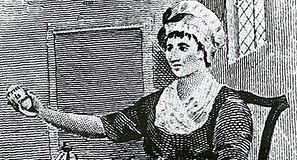 Mary Bateman
Murderer · United Kingdom · 1807
Mary Bateman (1768–1809) was known as the Yorkshire Witch. She was associated w…
1 victim
Mary Bateman
Murderer · United Kingdom · 1807
Mary Bateman (1768–1809) was known as the Yorkshire Witch. She was associated w…
1 victim
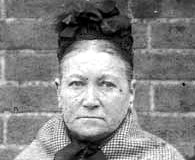 Amelia Dyer
Serial killer · United Kingdom · 1880
Amelia Dyer was convicted for the murder of Doris Marmon. She was known as a “b…
100 victims
Amelia Dyer
Serial killer · United Kingdom · 1880
Amelia Dyer was convicted for the murder of Doris Marmon. She was known as a “b…
100 victims
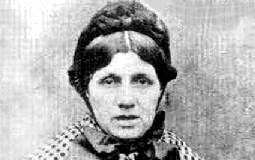 Mary Ann Cotton
Serial killer · United Kingdom · 1857
Mary Ann Cotton was executed by hanging in Durham prison on March 24, 1873. Mar…
21 victims
Mary Ann Cotton
Serial killer · United Kingdom · 1857
Mary Ann Cotton was executed by hanging in Durham prison on March 24, 1873. Mar…
21 victims
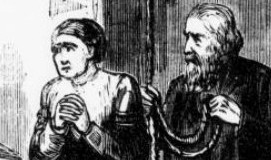 Margaret Waters
Murderer · United Kingdom · 1866
Margaret Waters was an English murderess who was hanged by executioner William…
19 victims
Margaret Waters
Murderer · United Kingdom · 1866
Margaret Waters was an English murderess who was hanged by executioner William…
19 victims
 Rosemary West
Serial killer · United Kingdom · 1971
Rosemary Pauline “Rose” West (née Letts) Rosemary Letts was born in Barnstaple,…
10 victims
Rosemary West
Serial killer · United Kingdom · 1971
Rosemary Pauline “Rose” West (née Letts) Rosemary Letts was born in Barnstaple,…
10 victims
 Santos Minjarez
Murderer · USA · 2001
Santos Minjarez was convicted of capital murder and sentenced to death on March…
1 victim
Santos Minjarez
Murderer · USA · 2001
Santos Minjarez was convicted of capital murder and sentenced to death on March…
1 victim
 Lyndsey Fiddler
Homicide · USA · 2010
Lyndsey Fiddler (also named Lyndsey Dawn Fiddler), 27, was the mother of Maggie…
1 victim
Lyndsey Fiddler
Homicide · USA · 2010
Lyndsey Fiddler (also named Lyndsey Dawn Fiddler), 27, was the mother of Maggie…
1 victim
 Stewart Wilken
Serial killer · South Africa · 1990
Stewart Wilken was sentenced to seven terms of life imprisonment on February 23…
10 victims
Stewart Wilken
Serial killer · South Africa · 1990
Stewart Wilken was sentenced to seven terms of life imprisonment on February 23…
10 victims
 Shawna Forde
Murderer · USA · 2009
Shawna Forde was sentenced to death on February 22, 2011. She was convicted of…
2 victims
Shawna Forde
Murderer · USA · 2009
Shawna Forde was sentenced to death on February 22, 2011. She was convicted of…
2 victims
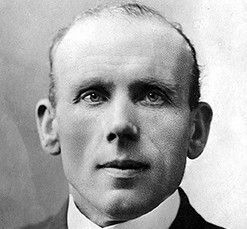 John Henry George Lee
Murderer · United Kingdom · 1884
John Henry George Lee, better known as John “Babbacombe” Lee (1864 – c. 1945),…
1 victim
John Henry George Lee
Murderer · United Kingdom · 1884
John Henry George Lee, better known as John “Babbacombe” Lee (1864 – c. 1945),…
1 victim
- Gender
- female
- Country
- United Kingdom
- Location
- London, England, United Kingdom
- Date of birth
- 1792
- Age at first offence
- 23
- Characteristics
- attempt to collect insurance money
- Victim profile
- Orlibar Turner, his wife Charlotte, and his son Robert (all survived)
- Method of murder
- Poisoning (arsenic)
- Date(s) of murder
- March 21, 1815
- Years active
- 1815
- Date of arrest
- Same day
- Status
-
Executed
Executed by hanging on July 26, 1815
Case record: Elizabeth Fenning
Outcome
Elizabeth Fenning was executed by hanging on July 26, 1815.
Background
Elizabeth Fenning (always known as Eliza) was an domestic servant. She was from the age of fourteen employed in various situations as a domestic servant. Towards the end of January 1815, she entered the service of Orlibar Turner of 68 Chancery Lane, London, in the capacity of cook. She was described as a 20-year-old maid.
In the household, Robert and Charlotte Turner lived with a housemaid, Sarah Peer, and two male apprentices all of whom “lived in”. Robert Turner was a law stationer.
The offence
Towards the end of January 1815, Fenning was hired as cook into the family of Mr Orlibar Turner, at No. 68 Chancery Lane.
On 21 March 1815, Turner, his wife Charlotte, and his son Robert, while at dinner, all ate of yeast dumplings prepared by Fenning and immediately became very sick, though the ill effect was not lasting.
Five people were discussed as having been poisoned in different parts of the record: the three Turners and Roger Gadsden, an apprentice, was also taken ill after eating a piece of dumpling, and the recorder’s summing-up also referred to “these persons” as four persons. After examination, it was found that the dumplings contained arsenic.
A packet of arsenic kept in a desk drawer had recently gone missing, and suspicion fell on Fenning.
Investigation and arrest
Fenning was arrested on the 23rd of March. She was charged with attempted murder.
She was summoned to Hatton Garden police-court, and was committed for trial. She was taken before a magistrate and committed for trial at the Old Bailey at the April Sessions, being remanded in custody to Newgate prison next door in the meantime.
An arresting officer, William Thisselton, testified in court.
Trial
Fenning was tried before the Recorder of London on the 5th of April 1815.
Charges
At the Old Bailey, Fenning was charged with feloniously administering arsenic to:
- Orlibar Turner
- Robert Gregson Turner
- Charlotte Turner (his wife)
The charge alleged that the arsenic was administered with intent to kill and murder the said persons.
Prosecution evidence and testimony
Charlotte Turner told the court that she suspected that Eliza had been seeking vengeance on the family after she had discovered her in the room of two of the apprentices one night in a partly dressed state and threatened to dismiss her. Charlotte told the court that Eliza had remained sullen and disrespectful towards her after this. Charlotte also said that Eliza had asked to be allowed to make some yeast dumplings for the family on several occasions.
Charlotte testified that:
- on Monday, the 20th of March, Eliza came into the dining-room and said the brewer had brought some yeast
- on the Tuesday morning, Charlotte agreed to the dumplings being made and directed that they were to be mixed with milk and water
- Eliza was alone in the kitchen while the dumplings were being prepared
Charlotte testified that after only eating less than a quarter of the dumpling “she felt an extreme burning pain in her stomach, which increased every minute.” She left the table and went upstairs.
Margaret Turner said that when she arrived at the house she found her husband, son and daughter extremely ill, and the prisoner was also ill and vomiting.
Margaret Turner testified: Q. Did you say anything to her while you were there that day respecting the dumplings ? A. I exclaimed to her : " Oh, these devilish dumplings ! "- supposing they had done the mischief. She said: " Not the dumplings, but the milk, madam." I asked her: "What milk?" She said: "The halfpennyworth of milk that Sally fetched to make the sauce." Q. Did she say who had made the sauce? A. My daughter. I said: "That cannot be, it could not be the sauce." She said : " Yes, Gadsden ate a very little bit of dumpling, not bigger than a nut, but licked up three parts of a boat of sauce with a bit of bread."
Robert Gregson Turner testified: Q. Did you partake of the dumplings at dinner? A. Yes, I did. Q. Did you eat any of the sauce? A. Not any portion of that whatever. Q. Were you taken ill, sir? A Soon after dinner I was, sir. I first felt an inclination to be sick : I then felt a strong heat across my chest. I was extremely sick. Q. Did it produce any swelling in you? A. I was exactly as my father and wife were, except stronger symptoms. I had eaten a dumpling and a half. I suffered more than any person. Q. Were your symptoms, and those of the others, such as could be produced by poison ? A. I should presume so : all taken in the same way, and pretty near the same time.
John Marshall, a surgeon, testified that on the evening of Tuesday, the 21st of March, he was sent for to Mr Turner's family and arrived about a quarter before nine o'clock. He testified:
- “All the afflictions of the family were produced by arsenic.”
- the prisoner was also ill, with symptoms which he said were the same “I have no doubt of it, by the symptoms.”
Mr Orlibar Turner showed Mr Marshall a dish the next morning. Marshall washed it with a tea-kettle of warm water, stirred it and let it subside, decanted off the liquid, and found half-a-teaspoonful of white powder, which he determined was arsenic. The surgeon also testified that there was no arsenic in the remains of the yeast and no arsenic in the flour-tub.
Roger Gadsden, an apprentice, had eaten a piece of dumpling after dinner, though strongly advised by Fenning not to touch it, and was also taken ill.
It was stated that the Turners kept a packet of arsenic in an unlocked drawer in the office, to control the mice that infested it. The drawer’s contents were said to be clearly labelled as poison, and Fenning was said to be able to read and write, so she could have been able to know what was written on the packet.
William Thisselton, who arrested Fenning, testified that he had asked her whether she suspected there was any thing in the flour. She said she had made a beef steak pie that day with the same flour that she had made the dumplings, that she thought it was in the yeast, and that she saw a red sediment at the bottom of the yeast after she had used it.
The prosecution case indicated that Fenning:
- had asked and received leave to make the dumplings
- was alone in the kitchen during the whole time of their preparation
- had access to arsenic kept in the office drawer
- prepared the dumplings with arsenic in the dough
Defence and Fenning’s statement
There was no defence team in those days, and Fenning was not represented by counsel. She made a statement to the court herself. She told the judge:
"My lord, I am truly innocent of all the charge, as God is my witness; I am innocent, indeed I am; I liked my place, I was very comfortable; as to my master saying I did not assist him, I was too ill. I had no concern with the drawer at all; when I wanted a piece of paper I always asked for it."
She called four witnesses who swore to her previous good character.
Fenning pleaded not guilty, urged that she had herself eaten of the dumplings, and that this was corroborated by Turner's mother, who said she had been sent for and found the prisoner very sick. The record also said Fenning tried to show that Mrs. Turner had a spite against her.
Recorder’s summing-up and jury verdict
The recorder’s summing-up included the following:
"Gentlemen, you have now heard the evidence given on this trial, and the case lies in a very narrow compass. There are but two questions for your consideration, and these are, whether poison was administered, in all, to four persons, and by what hand such poison was given. That these persons were poisoned appears certain from the evidence of Mrs Charlotte Turner, Haldebart Turner, Roger Gadsden, the apprentice, and Robert Turner; for each of these persons ate of the dumplings, and were all more or less affected - that is, they were every one poisoned. That the poison was in the dough of which these dumplings were composed has been fully proved, I think, by the testimony of the surgeon who examined the remains of the dough left in the dish in which the dumplings had been mixed and divided; and he deposes that the powder which had subsided at the bottom of the dish was arsenic. That the arsenic was not in the flour I think appears plain, from the circumstance that the crust of a pie had been made that very morning with some of the same flour of which the dumplings were made and the persons who dined off the pie felt no inconvenience whatever ; that it was not in the yeast nor in the milk has been also proved; neither could it be in the sauce, for two of the persons who were ill never touched a particle of the sauce, and yet were violently affected with retching and sickness. From all these circumstances it must follow that the poisonous ingredient was in the dough alone; for, besides that the persons who partook of the dumplings at dinner were all more or less affected by what they had eaten, it was observed by one of the witnesses that the dough retained the same shape it had when first put into the dish to rise, and that it appeared dark, and was heavy, and in fact never did rise. The other question for your consideration is, by what hand the poison was administered; and although we have nothing before us but circumstantial evidence, yet it often happens that circumstances are more conclusive than the most positive testimony. The prisoner, when taxed with poisoning the dumplings, threw the blame first on the milk, next on the yeast, and then on the sauce ; but it has been proved, most satisfactorily, that none of these contained it, and that it was in the dumplings alone, which no person but the prisoner had made. Gentlemen, if poison had been given even to a dog, one would suppose that common humanity would have prompted us to assist it in its agonies : here is the case of a master and a mistress being both poisoned, and no assistance was offered. Gentlemen, I have now stated all the facts as they have arisen, and I leave the case in your hands, being fully persuaded that, whatever your verdict may be, you will conscientiously discharge your duty both to your God and to your country."
After a few minutes deliberation, the jury returned a verdict of guilty. The recorder passed sentence of death upon the prisoner.
After the conviction, Fenning was returned to Newgate where she wrote to her fiancée:
"They have, which is the most cruellest thing in this world, brought me in guilty"
She continued:
"I may be confined most likely six months at least"
Journalists in court recorded: “She was carried from the dock convulsed with agony and uttering frightful screams.”
Sentencing and attempts at clemency
At sentencing, Fenning was sentenced to death.
The record stated that at this time many crimes, including attempted murder, still carried the death penalty, and that Fenning could have had her sentence commuted to transportation to the colonies.
Various appeals were made for clemency to:
- the Prince Regent
- the Home Secretary
- the Lord Chancellor
All were rejected, and the morning of Wednesday 26th July 1815 was set for her execution.
On the day preceding the execution, a meeting was held at the home office to consider the case. Lord Sidmouth, the Home Secretary, was out of town, but the Lord Chancellor Lord Eldon, the recorder, and Mr. Becket were present, and concluded that there was no reason for interfering. Lord Eldon summoned another meeting in the evening with the same result.
The record also said: “On hearing sentence pronounced she fell in a fit, and was moved insensible from the dock.”
Appeals
Various appeals were made for clemency to the Prince Regent, the Home Secretary and the Lord Chancellor, and all were rejected.
Execution
On the morning of Wednesday 26th July 1815, Fenning was hanged by the neck until she was dead. She was hanged in company with two other malefactors: Oldfield and Adams.
Execution preparations took place outside the Debtor's Door, with a large portable gallows brought out of Newgate and made ready outside the Debtor's Door.
Fenning was led from the condemned cell into the Press Yard around 8.00 a.m., where her hands were pinioned.
She was dressed in a white muslin gown with a high waist tied with a fashionable ribbon, a white muslin cap, and wearing a pair of high-laced lilac boots.
The Reverend Horace Cotton, the Ordinary of Newgate, accompanied her and asked her if she had anything to communicate to him in her final moments. She told him:
"Before the just and Almighty God, and by the faith of the Holy Sacrament I have taken, I am innocent of the offence with which I am charged."
She proceeded up the steps of the gallows while the crowd fell silent. John Langley, the hangman, drew the traditional white cotton night-cap over her head, but due to the size of her muslin cap he was unable to get it on. He tried to bind a muslin handkerchief over her face but it proved too small. He then used his own dirty pocket handkerchief. Fenning objected:
"Pray do not let him put it on, Mr. Cotton!"
"Pray make him take it off. Pray do, Mr. Cotton!"
So she stood silently with her arms bound, while the dirty handkerchief was tied over her face.
The record stated that she continued to wait stoically, pinioned and noosed, praying with the Ordinary while the other two criminals who were to hang with her, 51-year-old Abraham Adams and 24-year-old William Oldfield, were prepared. Oldfield had been “guilty of an odious crime” – the rape of a nine-year-old girl.
Just before the drop fell, she told Dr. Cotton once again that she was innocent.
At around 8.30 a.m., when preparations were complete, Langley withdrew the pin releasing the trap and giving the prisoners a drop of about 12-18 inches. It was reported that Eliza died easily, “almost without writhing”.
The record also contained a paragraph about her final words in an evening paper, describing a meeting at Lord Sidmouth's office and an investigation. The paragraph included the following: “We should deem ourselves wanting in justice, and a due respect for government, if we did not state that, in consequence of the many applications from the friends of this unhappy young woman who this day suffered the sentence of the law, a meeting took place yesterday at Lord Sidmouth's office (his lordship is out of town), at which the Lord Chancellor, the recorder, and Mr Beckett were present. A full and minute investigation of the case, we understand, took place, and of all that had been urged in her favour by private individuals; but the result was a decided conviction that nothing had occurred which could justify an interruption of the due course of justice. So anxious was the Lord Chancellor in particular to satisfy his own mind, and put a stop to all doubts on the part of the people at large, that another meeting was held by the same parties last night, when they came to the same determination, and in consequence the unfortunate culprit suffered the penalty of the law.”
Aftermath
Public opinion largely favoured Fenning’s innocence, and efforts were made by her friends and others to procure a remission of the sentence.
After her execution, a declaration attributed to her was included in the record:
Her father had to pay 14s. 6d. as “executioner’s fees” before obtaining her dead body for burial.
Fenning was buried five days later at St George the Martyr in London.
Her funeral took place on the 31st, beginning to move from the house of her father, in Eagle Street, Red Lion Square, about half-past three o’clock. The pall was carried by six girls dressed in white. As many as ten thousand people took part in the procession, and the record estimated ten thousand people assembled in and about the churchyard.
Samuel Parr and Charles Dickens believed in her innocence.
Other details
There was an account of a meeting held at Lord Sidmouth’s office, with Lord Chancellor Lord Eldon, the recorder, and Mr Beckett present, where it was concluded there was no reason for interfering.
The record also stated that Fenning was to be married that day, and her execution was on the day she was dressed in her wedding outfit.
The record included that in 1815 William Hone had started the “Traveller” newspaper and campaigned to save Eliza.

Spotted an error, or have more information about this case?