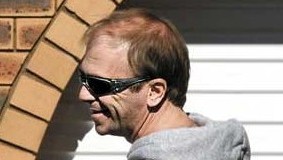
Graham Stafford
Murderer? Mark Brandon Read
Murderer? · Australia · 1979
Mark Brandon “Chopper” Read (born 17 November 1954) was an Australian ex-convic…
19 victims
Mark Brandon Read
Murderer? · Australia · 1979
Mark Brandon “Chopper” Read (born 17 November 1954) was an Australian ex-convic…
19 victims
 Arthur Stanley Brown
Murderer? · Australia · 1970
Arthur Stanley Brown (May 20, 1912 - July 6, 2002) was charged in 1998 in conne…
2 victims
Arthur Stanley Brown
Murderer? · Australia · 1970
Arthur Stanley Brown (May 20, 1912 - July 6, 2002) was charged in 1998 in conne…
2 victims
 Rupert Maxwell Stuart
Murderer? · Australia · 1958
Rupert Maxwell Stuart, also known as Rupert (“Max”) Stuart (c. 1932 - ), was an…
1 victim
Rupert Maxwell Stuart
Murderer? · Australia · 1958
Rupert Maxwell Stuart, also known as Rupert (“Max”) Stuart (c. 1932 - ), was an…
1 victim
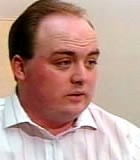 Richard Allen Williams
Murderer? · USA · 1992
Boone County Prosecutor Kevin Crane dismissed the charges in August 2003 after…
10 victims
Richard Allen Williams
Murderer? · USA · 1992
Boone County Prosecutor Kevin Crane dismissed the charges in August 2003 after…
10 victims
 Dr. Teet Härm
Murderer? · S weden · 1984
The District Court jury returned a guilty verdict, but the High Court overturne…
9 victims
Dr. Teet Härm
Murderer? · S weden · 1984
The District Court jury returned a guilty verdict, but the High Court overturne…
9 victims
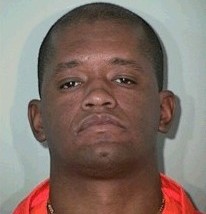 Andre Minnitt
Murderer? · USA · 1992
Andre Minnitt was convicted of crimes connected to the El Grande Market slaying…
3 victims
Andre Minnitt
Murderer? · USA · 1992
Andre Minnitt was convicted of crimes connected to the El Grande Market slaying…
3 victims
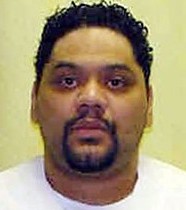 Marvallous Keene
Murderer · USA · 1992
Marvallous Keene was a Black male executed by lethal injection in Ohio on July…
5 victims
Marvallous Keene
Murderer · USA · 1992
Marvallous Keene was a Black male executed by lethal injection in Ohio on July…
5 victims
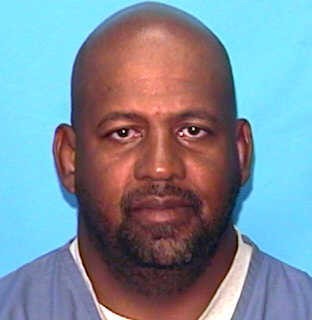 Michael Tyrone Crump
Murderer · USA · 1985
Defendant (Appellant): Michael Tyrone Crump · Plaintiff/Respondent (Appellee):…
2 victims
Michael Tyrone Crump
Murderer · USA · 1985
Defendant (Appellant): Michael Tyrone Crump · Plaintiff/Respondent (Appellee):…
2 victims
 Sidney Harry Fox
Murderer · United Kingdom · 1929
October 23, 1929 (11:40pm) — Sidney Fox raised the fire alarm at the Hotel Metr…
1 victim
Sidney Harry Fox
Murderer · United Kingdom · 1929
October 23, 1929 (11:40pm) — Sidney Fox raised the fire alarm at the Hotel Metr…
1 victim
 Angelica Alvarez
Mass murderer · USA · 2006
Angelica Alvarez was 27 years old. She was described as an Elkhart County mothe…
4 victims
Angelica Alvarez
Mass murderer · USA · 2006
Angelica Alvarez was 27 years old. She was described as an Elkhart County mothe…
4 victims
 Andrea Roberts
Murderer · USA · 2007
Andrea Roberts was a 41-year-old stay-at-home mother. Her husband, Michael Lewi…
3 victims
Andrea Roberts
Murderer · USA · 2007
Andrea Roberts was a 41-year-old stay-at-home mother. Her husband, Michael Lewi…
3 victims
 Jamie Ray Ward
Murderer · USA · 1989
Jamie Ray Ward, 41, was sentenced to death in July 1991 in Walker County for ki…
1 victim
Jamie Ray Ward
Murderer · USA · 1989
Jamie Ray Ward, 41, was sentenced to death in July 1991 in Walker County for ki…
1 victim
- Gender
- male
- Country
- Australia
- Location
- Redbank Plains, Ipswich, Queensland, Australia
- Date of birth
- 1963
- Age at first offence
- 28
- Characteristics
- torture, mutilation
- Victim profile
- Leanne Sarah Holland, 12 (the younger sister of Stafford's former partner)
- Method of murder
- Hitting with a hammer
- Date(s) of murder
- September 23, 1991
- Years active
- 1991
- Date of arrest
- —
- Status
-
Released
Conviction overturned on December 24, 2009; sentenced to 15 years to life in prison on March 25, 1992; released in June 2006
Case overview
Graham Stuart Stafford was convicted in 1992 of the murder of twelve-year-old Leanne Mary Holland. Leanne Holland was the younger sister of Stafford’s former partner, Melissa Holland. Stafford was from Goodna, near Ipswich, Queensland and worked as a sheet metal worker.
Leanne Holland was murdered in September 1991. Her viciously mutilated body was found three days after she was reported missing in nearby Redbank Plains. It is possible she was also sexually interfered with and tortured with a cigarette lighter.
Stafford appealed to the Queensland Court of Appeal, but the appeal was rejected on August 25, 1992. A petition for a pardon was presented on 18 September 1996.
In 1997, the Queensland Court of Appeal re-examined the case after Stafford lodged an application for pardon with the State Governor on the basis of evidence gathered by private detective Graeme Crowley. The Court of Appeal dismissed the appeal again by a two-to-one majority on the grounds that there was still enough evidence to convict.
Two applications for special leave to the High Court of Australia subsequently failed. Stafford was released in June 2006 after serving over 14 years in prison. Stafford, who was born in England and did not have Australian citizenship despite migrating to Australia in 1969, faced deportation in November 2006.
On April 2008, the Queensland Attorney-General referred the case to the Court of Appeal for a very rare second appeal for pardon. On December 24, 2009, the Court of Appeal overturned Graham Stafford’s conviction and ordered a retrial by a 2-1 majority. The dissenting judge wanted an immediate acquittal.
On March 26, 2010, the Queensland Director of Public Prosecutions, Tony Moynihan SC, announced there would be no new trial of Graham Stafford for the murder of Leanne Holland.
Timeline
- 25 March 1992 — Graham Stafford was convicted of the murder of Leanne Mary Holland on or about 23 September 1991; he was sentenced to 15 years to life in prison.
- 25 August 1992 — An appeal to the Court of Appeal was dismissed.
- 4 March 1993 — An application for special leave to appeal to the High Court of Australia was dismissed.
- 18 September 1996 — A petition for a pardon was presented.
- 23 September 1997 — Reasons for judgment were delivered by the Court of Appeal in CA No. 40 of 1997; appeal dismissed.
- June 2006 — Stafford was released after serving over 14 years in prison.
- November 2006 — Stafford faced deportation.
- August 18, 2007 — Brisbane Sunday Mail examination of the police investigation log was published (as included in the case material).
- April 2008 — The Queensland Attorney-General referred the case to the Court of Appeal for a second appeal for pardon.
- December 24, 2009 — The Court of Appeal overturned Stafford’s conviction and ordered a retrial by a 2-1 majority.
- 24 December 2009 — The conviction was overturned by the Court of Appeal and a retrial was ordered (as stated in the case material).
- March 26, 2010 — The Queensland Director of Public Prosecutions announced there would be no new trial.
The offence
Leanne Mary Holland was murdered on or about 23 September 1991. Stafford’s case involved a circumstantial prosecution theory.
Leanne Holland lived in a house in Goodna with her father Terry, her sister Melissa, and Stafford, who was living in a de facto relationship with Melissa.
The material included that it is possible she was also sexually interfered with and tortured with a cigarette lighter.
Investigation
The material included that police working on the Leanne Holland murder case in 1991 ignored a vital lead: a blood-stained man acting strangely not far from where her body was dumped. It included claims that the person who saw the man was never interviewed, and that no attempt was made to find him.
A note on the crime investigation log two days later said the information was “no longer relevant”, as Graham Stafford had been arrested for the schoolgirl’s murder.
The material included details from a Brisbane Sunday Mail examination of a 1991 police crime investigation log:
- A man was said to have entered an Ipswich computer store between 2pm and 3pm on the day Leanne’s body was dumped in nearby bushland.
- The worker claimed the man had bloodstains on his hands and trousers and had acted in a peculiar manner.
- A detective sergeant directed that the witness be interviewed and a statement taken, but the investigation log indicated it never happened.
- A log entry on September 28 dismissed the lead.
- Stafford was arrested that day and charged with murder.
The material also stated that earlier investigations by Graeme Crowley found other leads that were ignored by police, including:
- sightings of Leanne alive on the day after police claimed Stafford murdered her
- a vehicle other than Stafford’s near where the body was dumped
The material also stated that reports of Leanne having been seen alive on the day after the police allege she was murdered were ignored, as was a report of a vehicle other than Stafford’s being sighted near the body.
It included that for forensic scientist Angela van Daal, evidence helped convict Stafford of the murder, and that she later stated the blood identified as Leanne’s could have come from another family member. It stated that:
- the frequency of the blood type matching anyone in the general population was about one percent
- the frequency among relatives was as high as 25 percent It also stated that around the time of the murder, Leanne’s brother Craig had slashed his hand in a pub fight and had bled freely in the family home.
The material included that another twelve-year-old girl was murdered less than one kilometre away from where Leanne Holland lived within thirteen days of Leanne’s murder. It stated that the man who was charged with the second murder had been known to Leanne.
It further included claims that daughters of a police informant in the Leanne Holland case came forward claiming their father sexually abused them at the murder site, burnt them with cigarette lighters and showed them crime scene photographs of Leanne’s body.
Arrest
Stafford was arrested on September 28 after the investigation log dismissed the lead about the blood-stained man at the Ipswich computer store. He was charged with murder.
Trial
Stafford was tried and convicted of murder.
Parties and appellate bench (Court of Appeal, pardon proceedings)
The matter was:
- IN THE COURT OF APPEAL SUPREME COURT OF QUEENSLAND C.A. No. 40 of 1997 Brisbane
- THE QUEEN v. GRAHAM STUART STAFFORD (Petitioner)
- Judgment delivered 23 September 1997
- Separate reasons were delivered by Fitzgerald P., Davies J.A., and McPherson J.A., with Davies and McPherson concurring as to the order made and Fitzgerald P. dissenting.
- The outcome stated was: “APPEAL DISMISSED.”
- Hearing Date: 23 June 1997
Conviction basis at the 1992 appeal
The material described the prosecution case relied upon to convict Stafford in 1992 as a strong circumstantial case with the main features:
- On 23 September 1991, the deceased girl and Stafford were left alone in the home where they lived with the deceased’s father and sister, Melissa Holland, who was living in a de facto relationship with Stafford.
- Blood was found on several items in the boot of Stafford’s car; the blood was shown to be of the same type as the deceased’s, a type found in only 1½% of the Australian population.
- A strand of hair similar in length, colour and texture to the deceased’s hair was found in the car boot, along with a maggot of the type and age found on the deceased’s body. Swabs taken from inside the boot lid and lip had human blood on them which could not be grouped.
- Blood consistent with the deceased girl’s was found in several places in the house.
- Car tracks of the same type as Stafford’s car were found on the track which led to the body, while tyres with tracks of this kind were not uncommon.
- A hammer kept beside Stafford’s bedside table was missing; such an instrument was consistent with having caused injuries to the deceased’s head.
- Stafford lied during police interviews.
- A fold-up chair usually kept in the boot of Stafford’s car was found in the spare room in the house; Stafford claimed he put it there after cleaning the car on 23 September.
The material also stated there were other circumstantial facts of less importance and others where there was some doubt as to their accuracy.
Trial judge’s directions on circumstantial evidence (verbatim extracts)
The material included verbatim extracts from the trial judge’s summing up.
The trial judge told the jury:
“If you still feel that it is reasonably open - and you will recall that I pointed out to Mr Clark yesterday that it is not simply a question as to whether there is an hypothesis consistent with innocence open; it must be an hypothesis reasonably open consistent with innocence - if you feel that there is still such an hypothesis consistent with innocence reasonably open, then you must find that fact in favour of the accused and discard it from your further considerations. You only bring into account, in respect of the final bringing together of all these facts, those matters as to which you are finally satisfied about beyond reasonable doubt. You see, the Crown asks you really to do this - and this is what circumstantial evidence is all about. Don't feel that circumstantial evidence or a circumstantial case is a weak case because it is circumstantial; it can be very strong, depending upon the particular case. And here the Crown says to you this: `Look, we don't have any admissions by the accused that he killed the girl and there are no eyewitnesses that he killed the girl.' The Crown asks you, however, to look at all the circumstances which it can prove beyond reasonable doubt and to bring all those circumstances together; and when you bring them all together, they have such a weight that you will have left in your mind no reasonable doubt but that he killed her. That is what a circumstantial case is. Now, in respect of all the facts that you bring together in your mind to reach the conclusion of his guilt, in respect of each of those matters you must be satisfied of that fact beyond reasonable doubt; such as that it was that there was blood in the boot of the car; that it was Leanne's blood in the boot of the car on various objects, and so forth - although in respect of some of it, there is not necessarily proof that it was Leanne's blood. But if you are satisfied in association with proof that there was Leanne's blood in the boot of the car, as well you might be satisfied that the other pieces of blood are hers, too. You see, you bring together all these facts; to the extent that you are satisfied of them beyond reasonable doubt, you bring them all together, but when you are bringing them together you use only the facts that you are satisfied about beyond reasonable doubt. In respect of those essential facts, as I say, you must be satisfied of them beyond reasonable doubt, but that does not mean that every fact along the way towards reaching the conclusion of each of those essential facts must be proved beyond reasonable doubt. That does not mean that the Crown has to prove each small fact beyond reasonable doubt. It is the essential facts that you ultimately use to bring together to decide whether he is guilty or not that you must be satisfied of beyond reasonable doubt.”
The trial judge’s explanation included:
“… The Crown leads evidence of the blood of the deceased girl - assuming that you find that it was her blood - on various items in the boot of the car; of human blood, although not specifically identified as hers, also on parts of the inside of the car near the lock in the boot; and the maggot in the boot, a maggot which has been identified, not precisely, but of roughly the same age as the maggots found on the body, and identified as being identical in specie with the species of the maggots on the body. Now, there are two facts. The Crown has brought to you evidence of the blood of the victim in the boot - assuming you find it is - and of a maggot which the Crown says is very similar in age and absolutely identical in kind with the maggots on the body. The Crown leads further evidence that the accused was the only person, except for the woman Melissa, who had a key to the boot. The car was kept locked at all relevant times, and he agrees that Melissa couldn't have done it. Now, the Crown says that they are a set of facts. It cannot lead evidence that the accused man put the body of the victim in the boot of the car, but it says to you that from those basic facts you should be able to draw the conclusion beyond reasonable doubt that the body of Melissa was in the boot of that car; that is the first fact. You see, they say from the blood and the maggot you should have no reasonable doubt whatever but that there was another fact, which nobody can directly show, that the body of Melissa was in the boot of the car. JUROR: Excuse me, you are saying `Melissa'. HIS HONOUR: The body of Leanne, thank you; that the body of Leanne was in the boot of the car…”
The trial judge also included:
“… The first is the blood on the piece of blue singlet that was found in the boot, and the blood that was on the lock of the boot. That blood was found to be human blood. It was not grouped. I thought I would make it quite clear to you that it was certainly consistent. It could have been the blood of Leanne, but it was not specifically identified as hers and it could be the blood of anyone. That is the first thing. You might think that it makes no difference, taken into account with the rest of the blood which was so strongly identified as Leanne's. ...”
The material also included extensive jury direction extracts about inferences, circumstantial evidence, blood distribution, maggot evidence, and defence submissions.
Prosecution scenario as described on appeal
The material described the prosecution’s contention to the jury as including that Stafford attacked Leanne with a heavy instrument like a hammer on 23 September, cleaned up the blood in the house, took Leanne down the front stairs, and put her in the boot of his vehicle. It also described the prosecution submission that the body remained in the boot of his car from that time until 25 September before disposal in bushland.
New evidence and issues raised on appeal
1997 Court of Appeal pardon re-examination
The material included that evidence relevant to new features was available and called to the court’s attention in the 1997 appeal, including:
- Evidence demonstrating Stafford could not have committed the murder at the time when the Crown contended he had had the opportunity to do so.
- This included transcripts of interviews with four separate witnesses and a shopping docket and car wash receipt showing incompatible times.
- Experts disputed that the blood evidence was consistent with the Crown’s case due to the lack of a substantial amount of blood and the lack of a foul smell from the boot.
- The hair found on a sponge in Stafford’s car boot was not found by the officer taking evidence; it was found during a laboratory examination after the sponge had been on the floor.
- The time of death based on the maggot’s development was changed to Tuesday morning from the original Wednesday evening estimate due to an incorrect ambient temperature reading.
- Stafford was at work on the Tuesday.
- The trial judge referred to “large quantities of blood” around the house, which was said to be inconsistent with the very small amount of blood found in the bathroom.
- Several relevant pieces of information relating to tyre tracks and the missing hammer were either not presented or were misrepresented.
- The type of tyre tracks found at the murder scene was also said to be quite common.
Brisbane Sunday Mail examination and lead dismissal
The material included claims that a blood-stained man lead was never interviewed and was dismissed in the log.
Forensic scientist and pathologist evidence described in the December 2009 appeal outcome material
The material described evidence led in the later appeal process, including forensic scientist Leo Charles Freney’s evidence and pathologist Professor Anthony Joseph Ansford’s evidence, and entomologist Ms Beryl Morris’s further evidence.
The material stated that:
- Freney was persuasive that the deceased was not attacked and killed in the house where she and Stafford resided.
- Freney’s evidence was persuasive that the deceased’s body had not been in the boot of Stafford’s car at least at the time suggested by the prosecution.
- Freney stated that police statements made to Stafford during interrogations were factually incorrect, and the jury would have thought otherwise.
- Freney stated there was nothing to link the deceased to traces of blood found on or in the vicinity of the boot locking mechanism and under the boot lid or on a knife found in the glove box or a hammer found in the tool kit in the boot of Stafford’s vehicle, and that the blood on the knife and hammer might not have been human blood.
- Freney stated blood on a “blue rag” in the vehicle boot belonged to Stafford, not the deceased.
- Freney stated the quantity of blood found on the sports bag, the blanket and the green Chux cloth was insufficient to be explained by the presence of the deceased’s body in the vehicle boot and that if the body had been placed there after death there should have been other evidence of blood.
- A sponge found underneath the blanket was examined and no blood was found.
- Freney expressed that it was unlikely the hair found in the boot belonged to the deceased.
The material stated that Professor Ansford’s opinion supported Freney’s evidence, stating:
- if the body had been in the boot as the prosecution contended, there would have been more indications of blood
- if the body had been in the boot for as long as contended, from the afternoon of Monday, 23 September until the early morning of Wednesday, 25 September 1991, there would have been a detectable odour
- Ansford’s opinion concerning smell was less important because the matter was not explored with Dr Ashby who gave somewhat different evidence at trial
The material described that entomologist Ms Morris gave additional evidence at later stage and said her opinion at trial concerning the age of maggots was based on incorrect information and that it was more likely the deceased died on the morning of Tuesday, 24 September than the afternoon of Monday, 23 September.
Evidence about tyre tracks and sighting witnesses
The material also addressed evidence about car tracks and sightings of Leanne after the alleged murder time, including witnesses Ms Lawrence, Mrs Reimers, and Ms Tymon, and referenced unreliability arguments. It also described changes in opinion by Mr Lee and discussions of evidence that was not fresh or was contested.
The material included that, despite evidence concerning the time estimates and other issues, the key findings supporting the conviction at trial were said to remain overwhelming in some appellate reasoning, while other appellate reasoning described the prosecution scenario as significantly mistaken.
Appeals
Appeal after conviction (1992, Court of Appeal dismissed)
The material stated:
- On 25 March 1992, Stafford was convicted of murder of Leanne Mary Holland on or about 23 September 1991.
- An appeal to the Court of Appeal was dismissed on 25 August 1992.
- An application for special leave to the High Court of Australia was dismissed on 4 March 1993.
Pardon petition proceedings (1997, appeal dismissed)
The Court of Appeal judgment delivered on 23 September 1997 stated: APPEAL DISMISSED. Reasons included Fitzgerald P. dissenting and Davies and McPherson JJ.A. concurring.
December 2009 overturning (ordered retrial; dissent wanted acquittal)
On December 24, 2009, the Court of Appeal overturned Stafford’s conviction and ordered a retrial by a 2-1 majority.
Outcome
Stafford’s conviction was overturned by the Court of Appeal on December 24, 2009 and a retrial was ordered.
Stafford had been released in June 2006 after serving over 14 years in prison.
Other details
Family and relationships mentioned
- Leanne Holland’s father was Terry.
- Leanne’s sister was Melissa Holland.
- Stafford was described as having a de facto relationship with Melissa Holland.
- Leanne’s brother was Craig.
- Leanne’s uncle and aunt were Herbert and Lorraine Holland.
People named in the material
The material named or referenced the following individuals:
- Graeme Crowley (private detective)
- Professor Paul Wilson (Bond University) (believed Stafford was a victim of a miscarriage of justice)
- Kerry Shine (Queensland Attorney-General)
- Quentin Bryce (Queensland Governor)
- Tony Moynihan SC (Queensland Director of Public Prosecutions)
- Fitzgerald P. (Court of Appeal judge; dissenting judge)
- Davies J.A. (Court of Appeal judge; delivered reasons)
- McPherson J.A. (Court of Appeal judge; agreed)
- Dr Ashby (pathologist mentioned in trial summing up context)
- Leo Charles Freney (forensic scientist employed by Queensland Health Department at John Tonge Centre for Forensic Sciences)
- Professor Anthony Joseph Ansford (pathologist; Director of the John Tonge Centre for Forensic Sciences)
- Ms Beryl Morris (entomologist)
- Angela van Daal (forensic scientist mentioned)
- Dr Ashby was also referenced in later discussion
- Ms Bentley (forensic biologist mentioned as having been called at trial)
- Mr Clark (mentioned as counsel in summing up context)
- Mr Clark, Mr Spinaze, Mrs Mende, Mrs Mende, Arthur, Melissa Holland, and Mr Clark appeared in summing up or discussion context in the material
- Arthur (Stafford’s claimed friend whom he said he planned to see)
- Caitlin Shea (Australian Story producer) and “Australian Story producer Caitlin Shea” was included in the material
- Wikipedia.org, CourierMail.com.au, and Brisbane Sunday Mail were mentioned as included material headings, but they did not add additional case facts beyond what was described above.
Citizenship and deportation
The material stated that Stafford had migrated to Australia in 1969 and did not have Australian citizenship. It stated he faced deportation in November 2006.
Sentencing details
The material stated Stafford was sentenced to 15 years to life in prison on March 25, 1992 and was released in June 2006 after serving over 14 years.
Quotes and verbatim passages
The material included long verbatim excerpts from the trial judge’s summing up related to circumstantial evidence and jury directions. Those excerpts were reproduced above for the sections where they appeared verbatim in the provided case material.
Spotted an error, or have more information about this case?