Alice Arden
Murderer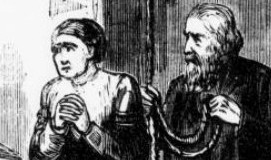 Margaret Waters
Murderer · United Kingdom · 1866
Margaret Waters was an English murderess who was hanged by executioner William…
19 victims
Margaret Waters
Murderer · United Kingdom · 1866
Margaret Waters was an English murderess who was hanged by executioner William…
19 victims
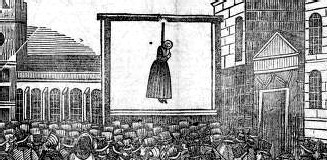 Catherine Wilson
Murderer · United Kingdom · 1854
Catherine Wilson was a British nurse who poisoned victims after befriending the…
7 victims
Catherine Wilson
Murderer · United Kingdom · 1854
Catherine Wilson was a British nurse who poisoned victims after befriending the…
7 victims
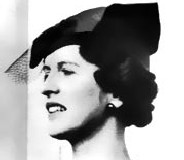 Florence Ransom
Murderer · United Kingdom · 1940
Florence Ransom was a middle-aged woman who was described as physically beautif…
3 victims
Florence Ransom
Murderer · United Kingdom · 1940
Florence Ransom was a middle-aged woman who was described as physically beautif…
3 victims
 Joanna Dennehy
Murderer · United Kingdom · 2013
Name: Joanna Dennehy · March 2013 — Three murders were carried out in the Unite…
3 victims
Joanna Dennehy
Murderer · United Kingdom · 2013
Name: Joanna Dennehy · March 2013 — Three murders were carried out in the Unite…
3 victims
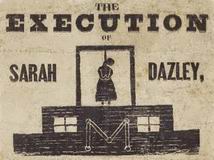 Sarah Dazley
Murderer · United Kingdom · 1842
Sarah Dazley was born in 1819 as Sarah Reynolds. Her date of execution was 5 Au…
3 victims
Sarah Dazley
Murderer · United Kingdom · 1842
Sarah Dazley was born in 1819 as Sarah Reynolds. Her date of execution was 5 Au…
3 victims
 Daniel James White
Murderer · USA · 1978
Daniel James White (September 2, 1946 – October 21, 1985) was a San Francisco s…
2 victims
Daniel James White
Murderer · USA · 1978
Daniel James White (September 2, 1946 – October 21, 1985) was a San Francisco s…
2 victims
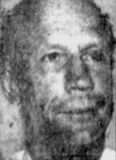 Carl Robert Brown
Mass murderer · USA · 1982
Carl Robert Brown was fatally shot and run down by two witnesses while cycling…
8 victims
Carl Robert Brown
Mass murderer · USA · 1982
Carl Robert Brown was fatally shot and run down by two witnesses while cycling…
8 victims
 Antti Sitavuori
Murderer · Finland · 1989
Antti Veikko Ilmari Siltavuori — Finland; also known as Jammu Siltavuori and Ja…
2 victims
Antti Sitavuori
Murderer · Finland · 1989
Antti Veikko Ilmari Siltavuori — Finland; also known as Jammu Siltavuori and Ja…
2 victims
 Parramore Sanborn
Murderer · USA · 1983
Parramore Lee Sanborn was born 8-3-45. The case involved the kidnapping, rape,…
1 victim
Parramore Sanborn
Murderer · USA · 1983
Parramore Lee Sanborn was born 8-3-45. The case involved the kidnapping, rape,…
1 victim
 Antuan Bronshtein
Murderer · USA · 1991
Antuan Bronshtein Antuan Bronshtein was born in the Soviet Union (Moldova) in K…
2 victims
Antuan Bronshtein
Murderer · USA · 1991
Antuan Bronshtein Antuan Bronshtein was born in the Soviet Union (Moldova) in K…
2 victims
- Gender
- female
- Country
- United Kingdom
- Location
- Faversham, Kent, England, United Kingdom
- Date of birth
- 1 516
- Characteristics
- parricide, murder for hire
- Victim profile
- Thomas Arden (her husband)
- Method of murder
- Strangulation - Stabbing with a knife
- Date(s) of murder
- February 14, 1551
- Years active
- 1551
- Date of arrest
- —
- Status
-
Executed
Executed by burning at the stake in Canterbury on February 12, 1551
Overview
Alice Arden (1516–1551) was the daughter of John Brigantine and Alice Squire. She conspired to have her husband, Thomas Arden of Faversham, murdered so she could carry on with a long-term affair with a tailor, Richard Mosby.
Background
Alice Arden lived at Faversham and married Thomas Arden on an unknown date. They made their home at Faversham Abbey, which had been dissolved in 1536. They had at least one daughter, Margaret, born in 1538. Accounts described Alice as “young, tall, and well favoured of shape and countenance”.
Alice began an affair with a tailor, Richard Mosbye, and then plotted to kill her husband. Thomas Arden was described as a “private gentleman”. Mosbye was in the service of Edward North, 1st Baron North, before setting shop in London. Mosbye frequented the house of the Ardens and the affair was carried openly.
In time, Alice came to loathe her husband and considered disposing of him. She made an early attempt on his life by poisoning him. She mixed milk and poison within a porringer and served it to Thomas for breakfast. Thomas took “a spoonful or two” before quitting his breakfast and complaining of its quality. Holinshed describes Alice’s attempted poisoning as follows:
“That I can do,” said he. “So he presently went to work, and gave it her, with directions to put it into the bottom of a porringer and so to pour milk upon it; but the woman, forgetting the direction, put in the milk first, and then the poison.”
The offence
Alice tried for two years to have her husband murdered. She enjoined her lover in the plot as well as a sworn adversary of her husband, who found two nefarious characters, Black Will and George Shakebag, to carry out the deed.
Failed attempts
Holinshed described the conspirators watching Master Arden in Poule’s (St. Paul’s Cathedral, the nave of which was a public promenade in those days) but not finding an opportunity to murder him. Holinshed also described them lying in wait on Rainham Down and then again in the Broomy Close (two places near Faversham), but failing to obtain an opportunity.
Conspiracy involving Green, Bradshaw, and Black Will
Alice and her accomplice arranged for the murder for ten pounds. Holinshed mentioned:
“They employed as their confederates one John Green, a Faversham tailor; George Bradshaw, a goldsmith of the same town; and one Black Will, of Calyce (Calais), a murderer, which murderer was privily sent for to Calyce by the earnest sute, appoyntment, and confederate of Alice Arden and Thomas Mosbye.”
The Newgate Calendar described that Alice found her accomplice in the person of Mr. Green, a local man with personal grievances against Thomas Arden. Green had claimed a piece of land on the back side of Faversham Abbey. Arden claimed the vicinity of his residence as part of his own property and successfully wrested control of Green’s land. The two men had exchanged blows and threats. Green still hated Arden and was willing to work for the murder.
Because Green and his associates were inexperienced, they decided to hire someone else to do the deed and to pay ten pounds for the completed murder. Green was employed by Sir Anthony Agers, who had business in London. Green asked Bradshaw, a goldsmith of Feversham and his neighbour, to accompany him. Bradshaw was described as a veteran soldier who had served under Sir Richard Cavendish during the Sieges of Boulogne.
During their travel they met an old acquaintance of Bradshaw known as “Black Will”. Will was described as a highwayman and as having committed “several robberies and horrid murders” in France. The conspirators armed Will “with a sword and buckler”.
Events in London and the Isle of Sheppey letter
Black Will followed Green to London. The two met Thomas Arden, who had traveled there. Green used a walk to Old St Paul’s Cathedral to have Will take a close look at his intended victim. Arden was accompanied by a servant called Michael or Marry who was loyal to Alice. Green wanted to use the servant to gain access to Arden’s lodgings, and Black Will offered to kill both master and servant. The servant was terrified and bolted the doors of their lodgings at night, preventing entry.
An attempt to ambush Arden on his return journey also failed. Arden returned home safely.
Arden had business with Thomas Cheney, Lord Warden of the Cinque Ports in South-East England. Arden had his servant travel to the Isle of Sheppey and meet Cheney. The servant returned with a letter from Cheney, which Alice concealed and had the servant claim had been lost. Thomas then traveled to the Isle of Sheppey to meet Cheney in person.
Ambush in a broom-close
Black Will and George Shakebag were instructed by Alice to ambush Arden “in a broom-close between Feversham and the Ferry”. Unfamiliar with the area, the highwaymen set their ambush at the wrong location, failing to meet Arden either on his journey to the Isle or on his return.
Valentine’s Day plan
Valentine’s Day was approaching and there would be a fair. Moseby would have to pick a fight with Thomas in public and end the life of his rival in a duel, but the plan was deemed implausible due to Thomas’ reluctance to fight.
The murder at the house
Holinshed continued: Alice procured the services of Mosbye’s sister, Cicely Pounder, and two of Arden’s domestic servants, Michael Saunderson and Elizabeth Stafford.
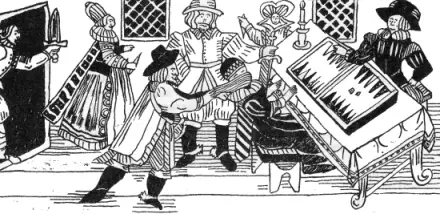
On a particular day selected Sunday, Black Will hid in a closet at the end of Arden’s parlour. After supper, Arden sat down to play some kind of game with Mosbye. Green stood at Arden’s back holding a candle “to shaddowe Black Will when he should come out”. Other conspirators waited for their cue. At a given signal, Black Will came with a napkyn in his hand, “anal sodenlye came behind Arden’s back”, threw the napkyn over his head and face, and strangled him. The narrative then described Mosbye stepping to him and striking him with a “taylor’s great pressing iron upon the scull to the braine”. It further described Mosbye immediately drawing a dagger “groat and broad” and cutting Arden’s throat. Alice stabbed the body seven or eight times. Will helped drag the body into the closet. He received eight pounds for his services. Cicely Pounder later helped transferring the body to the Almery Croft, a meadow behind the house. After that, the conspirators “danced, and played on the virginals, and were merrie.” Their noise was intended to make neighbours think Arden was still alive and entertaining friends, with the corpse dressed in night-clothes to convince them of the hour of death.
The Newgate Calendar provided a more detailed account that diverged in parts. Alice decided to kill Thomas within the walls of their house. She arranged for most servants to be sent on tasks outside the residence, “except those who were privy and consenting to the villainous design”. Black Will hid in a closet located at the parlour. At about 7 p.m., Thomas returned home to find Moseby already there. Moseby kept him distracted until the signal:
“Now I may take you, Sir!”
Black Will rushed from the closet and began strangling Arden with a towel. Moseby struck Arden with a fourteen-pound pressing iron, knocked him out, and the two men transferred him to his counting house. There, Black Will finished him. Will stole the money from the corpse’s pockets and stripped it of its rings. Alice paid him his ten pounds and Green provided him with a horse to make his escape. Alice stabbed her husband seven or eight times again. The parlour was cleaned, blood wiped away with a cloth, and the bloody knife and cloth discarded.
The delayed supper and the concealment of the corpse
Guests started arriving for a delayed supper. They included Moseby’s sister, Cicely. Alice feigned ignorance about why her husband was taking so long. She made her daughter play on the virginals and they danced, while Alice constantly reminded guests of her spouse’s absence. She sent most servants out to look for their master.
Meanwhile, Alice, her daughter Margaret Arden, Cicely Pounder, and maid Elizabeth Stafford transported the corpse outside the house. They carried it into a field adjoining to the churchyard and to Arden’s garden wall through which he went to church. They laid it down “about ten paces from the door of that garden”, making it seem that Thomas was murdered outside.
Discovery
Hollinshed account
Hollinshed described Alice waiting until the following morning to alert the town that her husband went missing. Towns-people contacted a search and the corpse was discovered. Some people saw a “long rushe or two” from the parlour floor stuck between one of his slippers and his foot. Suspicion being aroused, the house was searched and Arden was soon found murdered in his own parlour. The narrative connected public suspicion to Alice’s conduct, stating that she was “at once accused of the murder”.
Newgate Calendar account
The Newgate Calendar described that night as Alice making a show of worry and having servants search late into the night, weeping and lamenting and alerting neighbours. A local mayor was informed, and a town-wide search began. When the corpse was discovered, the searchers doubted Alice’s innocence due to the cold night, fresh snow, and the fact that the body was dressed in “its night-gown and slippers”. Fresh snow preserved footprints between the body’s position and the Ardens’ residence, indicating the body had been transported from the house to its current position.
Alice was confronted by the mayor and “very strictly examined” on the murder of her husband. She initially denied any knowledge of the deed. The towns-people searched near the house and discovered hair and blood of the victim, along with the bloody knife and cloth discarded but poorly hidden. Alice was then forced to confess and named associates.
The two Arden ladies (mother and daughter), the servant, and the maid were arrested and sent to prison. Moseby was not present. He was found sleeping at the Flower-de-Luce. With blood found on his stockings and coin purse, Moseby was arrested. Bradshaw’s arrest was described as more controversial because he was mentioned in correspondence between Alice and Green as the man who introduced them to Black Will. Bradshaw was accused of being a “procurer of Black Will”. Other accused persons protested innocence, but their protests failed to convince the court.
Trial and sentencing
Alice Arden was found guilty of the crime of murder (Petty treason) and burnt at the stake in Canterbury. The crime caused a sensation, and her execution was described as a huge event attended by people from many distant towns.
Execution
The execution took place at one o’clock in the afternoon and was over by three. Alice went out on foot dressed in a black gown and knelt praying in front of the stake. A priest helped her to her feet. She removed her shoes, black gown, and petticoat and dressed in a simple black, sleeveless shift. She was led to the stake and climbed onto a stool called the trivett. Chains were fastened around her waist, thighs, knees, ankles and chest to hold her firm, and her wrists were chained together behind the stake. The executioner removed the stool so she was left hanging in chains about three feet above the ground. Wood bundled in faggots was pushed quickly under her and set alight. Accounts described she was not strangled during the execution, that she suffered the full horror of her sentence, that small amounts of wood were added to burn her slowly, and that she survived at the stake for over an hour before dying.
Co-conspirators: arrests and executions
The conspirators were rounded up and executed by various means at different locations.
Michael Saunderson was drawn and hanged or hanged in chains at Feversham. Elizabeth Stafford, the maid, was burned at the stake in Faversham. She was dragged howling and screaming to the stake and required three men to chain her, though she was described as slim and only 16 years old. Richard Mosbye and Cicely Pounder were hanged at Smithfield. George Bradshaw was hanged in chains at Canterbury.
Fate of John Green
There were two accounts of John Green’s fate. Hollinshed stated that Green was hung at Faversham. The Newgate Calendar stated that he evaded arrest for some years, was eventually caught, and was “hanged in chains in the highway between Ospringe and Boughton”. Before his death, Green attempted to clear the name of Bradshaw by proclaiming his innocence.
Fate of Black Will
Hollinshed described Black Will as “escaped for many years, but was at length taken, and ‘brent on a seaffolde at Flushing’”. The Newgate Calendar agreed on the manner of death but placed the execution at Flushing, Zeeland.
Adam Fowle
Adam Fowle was implicated and incarcerated for some time at Marshalsea. He alone was found innocent and discharged.
Other details
Later dramatizations
In 1592, the events were dramatized in the play “Arden of Faversham”. The paternity of the play was disputed, with William Shakespeare being the most prominent candidate. The play was later adapted by George Lillo into a domestic tragedy.
Local legend
The Chamber Book of Days described local legend that “no grass would grow on the spot where Arden’s dead body was found,” with superstitions attributing this to the murder. It also included another explanation describing the widow’s curse “wishing that all the world might wonder on him.”
People and relationships named
- Alice Arden’s husband: Thomas Arden of Faversham.
- Alice Arden’s lover: Richard Mosby / Richard Mosbye.
- Lord North: Edward North, 1st Baron North (Mosbye was in his service).
- Lord Warden of the Cinque Ports: Thomas Cheney (spelled Cheney in one account).
- Mosbye’s sister: Cicely Pounder.
- Domestic servants named: Michael Saunderson / Michael, and Elizabeth Stafford.
- Daughter: Margaret Arden.
- Accomplices and associates: John Green, George Bradshaw, Black Will, George Shakebag.
- Other named figures: Sir Anthony Agers, Sir Richard Cavendish, Adam Fowle, Prune and Cole (London grocers), Michael Saunderson’s and Elizabeth Stafford’s roles as described in the accounts.
- Place references: Canterbury, Feversham, Faversham Abbey, Calyce (Calais), London, St Paul’s Cathedral, Rainham Down, Broomy Close, Isle of Sheppey, Flushing, Zeeland, Smithfield, Ospringe, Boughton, Marshalsea, Flower-de-Luce, Almery Croft, Poule’s, Abbey Street, Dunding, Preston, Gravesend, Rochester, the foot of the hill over against Chatham, Shoreham, and the “broom-close between Feversham and the Ferry” (as described).
Quotations (verbatim)
Alice’s description of the poisoned milk episode included this question:
“Mrs Alice, what sort of milk is it you gave me?”
Holinshed’s poisoning sequence included:
“That I can do,” said he.
Holinshed’s report of Alice’s confession included:
“Oh! the blood of God help me, for this blood have I shed.”
The Chamber Book of Days legend included this curse wording:
“the field he hadde cruelly taken from a widow woman, who had curst him most bitterly, even to his face, wishing that all the world might wonder on him.”
Black Will’s execution wording included:
“brent on a seaffolde at Flushing”
John Green’s execution wording in the Newgate Calendar included:
“hanged in chains in the highway between Ospringe and Boughton”

Spotted an error, or have more information about this case?