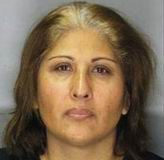
Shajia Ayobi
Murderer Miranda Barbour
Murderer · USA · 2013
Miranda Barbour, 19, defendant. · Elytte Barbour, 22, defendant and husband of…
100 victims
Miranda Barbour
Murderer · USA · 2013
Miranda Barbour, 19, defendant. · Elytte Barbour, 22, defendant and husband of…
100 victims
 Tiffany Hall
Murderer · USA · 2006
Tiffany Hall was 24 when she was charged in September 2006. She later entered a…
5 victims
Tiffany Hall
Murderer · USA · 2006
Tiffany Hall was 24 when she was charged in September 2006. She later entered a…
5 victims
 Banita Jacks
Murderer · USA · 2007
Banita Jacks was a Washington, DC resident convicted of murdering her four daug…
4 victims
Banita Jacks
Murderer · USA · 2007
Banita Jacks was a Washington, DC resident convicted of murdering her four daug…
4 victims
 Holly Grigsby
Murderer · USA · 2011
Holly Grigsby was sentenced to life in prison without parole on July 15, 2014.…
4 victims
Holly Grigsby
Murderer · USA · 2011
Holly Grigsby was sentenced to life in prison without parole on July 15, 2014.…
4 victims
 Jessica Tata
Murderer · USA · 2011
Jessica Tata was a Houston home day care owner who fled to Nigeria after a fire…
4 victims
Jessica Tata
Murderer · USA · 2011
Jessica Tata was a Houston home day care owner who fled to Nigeria after a fire…
4 victims
 Amanda Bennett
Murderer · USA · 2011
Amanda Bennett was an Indiana woman who shot her three children and set the fam…
3 victims
Amanda Bennett
Murderer · USA · 2011
Amanda Bennett was an Indiana woman who shot her three children and set the fam…
3 victims
 Sean Paul Hanify
Murderer ( claims to be a serial killer) · USA · 1989
Sean Paul Hanify described himself as a serial killer. He was convicted of firs…
8 victims
Sean Paul Hanify
Murderer ( claims to be a serial killer) · USA · 1989
Sean Paul Hanify described himself as a serial killer. He was convicted of firs…
8 victims
 Alice Mitchell
Murderer · USA · 1892
Alice Mitchell was tried for murder and entered a plea of “present insanity,” m…
1 victim
Alice Mitchell
Murderer · USA · 1892
Alice Mitchell was tried for murder and entered a plea of “present insanity,” m…
1 victim
 Mitchell Carlton Sims
Murderer · USA · 1985
Name: Mitchell Carlton Sims Also known as: “a human ashtray”; “Jeff Richardson”…
3 victims
Mitchell Carlton Sims
Murderer · USA · 1985
Name: Mitchell Carlton Sims Also known as: “a human ashtray”; “Jeff Richardson”…
3 victims
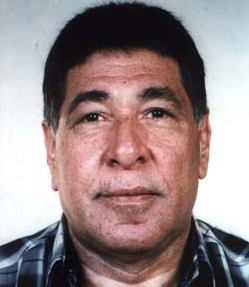 Gameel Al-Batouti
Mass murderer · USA · 1999
Gameel Al-Batouti (also rendered “Gamil ElBatouty” or “El Batouty” in U.S. offi…
216 victims
Gameel Al-Batouti
Mass murderer · USA · 1999
Gameel Al-Batouti (also rendered “Gamil ElBatouty” or “El Batouty” in U.S. offi…
216 victims
- Gender
- female
- Country
- USA
- Location
- Sacramento County, California, USA
- Date of birth
- 1966
- Age at first offence
- 45
- Characteristics
- murder for hire, domestic violence, rape?, abuser
- Victim profile
- Ghulam Ayobi, 53 (her husband)
- Method of murder
- Shooting
- Date(s) of murder
- December 18, 2011
- Years active
- 2011
- Date of arrest
- January 21, 2012
- Status
-
Life imprisonment
Sentenced to 26 years to life in prison on June 15, 2013
Case record: Shajia Ayobi
Background
Shajia Ayobi was married to Ghulam Ayobi in an arranged marriage in 1993. She said she experienced domestic abuse in the relationship, including that he flew into rages, dragged her by the hair, and poured toilet water over her head.
Ayobi testified that she suffered from post-traumatic stress disorder, which she associated with early experiences in Afghanistan, what she saw during the Soviet invasion of her homeland in the early 1980s, and domestic abuse she suffered at the hands of Ghulam Ayobi.
A first arranged marriage produced domestic abuse before what she described as what she endured in her relationship with Ghulam Ayobi.
Ayobi also went back to Afghanistan in 2007 or 2008 to work for a brief while as a linguist.
The offence
Shajia Ayobi was sentenced for the Dec. 18, 2011, shooting death of her husband, Ghulam Ayobi.
During trial, prosecutors argued that Ayobi arranged the killing herself. Prosecutors argued that Ayobi arranged the murder to avoid the stigma of a second divorce, and Deputy District Attorney Kevin Greene also argued she had a financial motive, stating she stood to collect $285,000 on an insurance policy.
The shooting occurred as Shajia Ayobi drove the couple’s Kia Sedona minivan from a Natomas home, where they had dined with friends, to their own Foothill Farms residence.
Greene said Ghulam Ayobi ended up with three bullets in his head at the age of 53.
Investigation
Sacramento police were called at 12:04 a.m. on Dec. 18 after a report of a man shot on eastbound I-80 at Norwood Avenue. Police found Ghulam Ayobi suffering from a gunshot to his upper body, and he later died at the hospital.
The information at the time indicated that the couple had left the home of a family friend in the area of Torland Street and San Juan Road in Natomas’ Gateway West neighborhood.
Police said that, without an established motive, they initially believed that Ayobi and her wife, who was with him but not injured, were targeted at random.
A nephew, Munir Safi, provided account details about what he said he observed and what Shajia Ayobi allegedly told relatives and police. Safi said that Ghulam Ayobi sat down in the passenger seat in the couple’s minivan, parked in the friends’ driveway, and apparently became aware of two people hiding in the back seat. Under duress, Safi said, Ayobi ordered her wife to drive, not look back and not ask questions. Safi said Shajia Ayobi followed directions and never got a good look at any assailants.
Safi said Shajia told relatives and police the unknown suspects wanted money. Safi said an altercation broke out as the minivan traveled eastbound on I-80 and that a shot broke out, killing Safi’s uncle. Safi said the suspects ordered Shajia to pull over on eastbound Interstate 80, east of Northgate Boulevard, and that after they fled she pulled out her cell phone and called police, who told her to meet them at the Norwood Avenue offramp.
After police did not buy Ayobi’s initial account, detectives investigated the case further. When police found problems in her account, she made up another story that the CIA put a hit out on her husband, and police later determined that jurors decided she arranged the murder herself.
Detectives re-interviewed Shajia Ayobi. Police spokesman Sgt. Andrew Pettit said detectives had wanted to speak with her for some time and that they were finally able to get a hold of her. Pettit said detectives brought her into the station Thursday afternoon and spoke with her into the evening. Pettit said the arrest press release was announced that morning. Pettit said, “Based on her interview and inconsistent statements, things just didn’t match up,” and that “In these types of investigations, our detectives are very keen on details. Some of those details were not lining up with the evidence we found.” Pettit said Ayobi made incriminating statements but did not elaborate.
Arrest
Sacramento police arrested Shajia Ayobi on Thursday, booking her into the Sacramento County Jail at 10:50 p.m. after questioning by detectives.
Police spokesman Sgt. Andrew Pettit said police suspected she played a role in the shooting. Pettit also said police were not sure whether she fabricated her previous story about a carjacking or whether there were other suspects involved.
Family spokesman Munir Safi issued a statement after the arrest: “Our family is incredibly distraught by this awful turn of events. We are withholding judgment until all facts are known and the police complete their investigation.”
Ayobi was held in the Sacramento County Main Jail on a murder charge and was ineligible for bail.
Trial
At trial, jurors considered whether the word “imminence” applied to the danger Ayobi said she feared from her husband. Juror Reg Orbeta told reporters afterward: “There was a lot of talk about definitions.”
The jury sent notes to Sacramento Superior Court Judge Helena R. Gweon twice to ask for a further meaning to the word “imminent.” Gweon told them to apply their ordinary, everyday understanding.
Deputy District Attorney Kevin Greene and defense attorney Pete Kmeto made opening statements. Greene argued that Ayobi’s plot and elaborate cover-up pointed to premeditation and first-degree murder. Greene said: “She comes up with a plot to kill him,” and that “She comes up with a web of lies to cover up the plot.”
Greene described Ayobi’s cover-up, stating: “the crying, fake; the hysteria, fake” and: “again, crying, fake; again, hysteria, fake,” and that she continued the act by sobbing and banging on the hood when police met her on Norwood Avenue after she steered the van off Interstate 80.
Kmeto argued that the killing could be viewed as self-defense based on years of abuse. Kmeto acknowledged Ayobi’s two partially false statements to police and said: “Obviously we’re disappointed,” after the verdict, and that “What this woman went through in her life, and the domestic violence that occurred – all your sympathies go to her.”
At trial, the defence argued jurors had the option of convicting Ayobi of voluntary manslaughter under a theory of imperfect self-defense. Kmeto also said the jury told him that the level of planning made it impossible for them to find she acted out of a fear of imminent harm. Kmeto said: “They struggled mightily,” and that “It was a very emotional thing for them. They couldn’t go to sleep. They stayed up all night. They became tearful in their deliberations.”
Kmeto said jurors arrived at their decision based on the facts and the law. Kmeto said: “I’m convinced these people did the best they could given the facts and the law.”
The jury convicted Ayobi of first-degree murder in the Dec. 18, 2011, shooting death of her husband.
The jury found Ayobi guilty of murder but did not have enough evidence to conclude that she pulled the trigger.
Jury foreman Matthew Smalley said: “careful deliberation of the facts” produced the eventual unanimous decision. Asked what evidence was most decisive, Smalley said: “the testimony of the defendant.”
Smalley said Ayobi’s admission that she contracted out the killing severely damaged her cause. Smalley also said: “we felt there was compelling evidence” to corroborate Ayobi’s testimony that she suffered from post-traumatic stress disorder. Smalley said: “The PTSD was certainly a factor,” and: “But we weren’t able to conclude it was the overriding factor.”
Greene argued Ayobi stood to collect on a $285,000 life insurance policy if her husband died and also argued she sought freedom from a bad marriage without the cultural stigma of divorce.
The defence argued Ayobi suffered PTSD and feared imminent danger due to domestic violence, with cultural pressures preventing her from revealing abuse. Kmeto described Ayobi and Ghulam Ayobi as “broken” people and described hostage taking and torture of Ghulam Ayobi by Soviet forces.
Kmeto asked: “Was she making this stuff up or did she honestly … believe she and her children were in imminent danger?” and said: “It’s a tragic case. The real issue is not who did it but what was in Shajia Ayobi’s mind when it happened.”
During the case, Greene argued Ayobi hired a classmate, identified as Jake Clark, to hide in the family van and shoot and kill Ghulam on the drive home from Natomas.
The alleged accomplice was Jake Clark. Clark was identified as a criminal justice classmate of Ayobi’s at Kaplan College. The first-degree murder charge in Ayobi’s case involved the contracted killing.
A jailhouse interview with Clark stated that Ayobi offered him $500 to kill her husband. Clark said he refused the offer and stated: “flat-out” had nothing to do with the killing. Clark had yet to enter a plea.
A timeline of courtroom events included that the jury declared itself at an impasse in its deliberations at about 2:30 p.m. Wednesday, and Gweon ordered jurors back to resume their discussions. Orbeta said the panel had been split 10-2 in favor of conviction when the judge ordered jurors back into deliberation.
Smalley said the jury reached its verdict about 2:30 p.m. Wednesday.
Sentencing
At sentencing on June 15, 2013, Shajia Ayobi apologized to her four teenage children for the murder of their father. She suggested she did what she did “on their behalf, sort of as a pre-emptive strike.”
Ayobi told the court: “Through all these years, I never imagined we would see this kind of day,” just before she received her 26-years-to-life sentence. She said: “I always thought it would be the opposite,” and: “I thought we’d come home and my kids would be in a pool of blood. That was my nightmare for 24 hours a day.”
The judge was Helena R. Gweon. Greene argued at sentencing, and Gweon called the case “tragic and unusual.” Gweon said: “Both Ghulam and Shajia were complex people.” The judge said: “They were well educated, intelligent, hard-working and flawed – deeply flawed.” Gweon added: “They both had their demons and they both had experienced atrocities.” The judge said Ghulam Ayobi “did many good things,” and although “he was not a perfect man … he did not deserve to be killed.”
In Ayobi’s remarks, Ayobi said she loved her husband “deeply.” She said she showed it by never turning him in to police for abusing her.
Ayobi mostly spoke about her children. The probation report indicated the couple had three girls and a boy, with ages 13 through 18.
Ayobi told the court: “They have always been my priority, no matter what.” She said: “I stayed on top of my kids and made sure they did well in school” and that they attended Muslim services. She said: “I was that kind of mother,” adding: “When they came home, the food was ready. It was warm, their clothes clean. Everything. Their doctor, everything was up to date.”
Ayobi said: “I repent every day of my life” for the killing, but that “no matter where I am my kids will be my priority. I will check on them on an everyday basis. … I’m never going to leave their sight. If I’m not there physically, emotionally I’m going to be there with them.”
All four of the children wrote letters to the court in support of their mother. One child asked: “I’m just hoping you will send my mother to a good prison that will treat her with care.” The youngest daughter said “she was depressed when Father died.” Another daughter wrote: “I still believe my parents were good people and that they had just been through a lot.”
Ferishta Kulaly, a niece on Ghulam Ayobi’s side of the family, read a statement that her uncle “loved life and shared his passion for life with others.” Kulaly also said: “If Shajia truly believed her life with her husband was so bad, she could have found another way to get out of this marriage. Divorce was an option.”
Appeals
Gweon scheduled her application of worldly consequences for the murder conviction for June 14, ahead of the June 15 sentencing.
Outcome
Ayobi was convicted of first-degree murder for the Dec.
Ayobi was sentenced to 26 years to life in prison on June 15, 2013.
Aftermath
At sentencing, Ayobi said she did not turn her husband in to police for abusing her and that her focus was her children. The family dispute and sentencing remarks reflected differing views between Ayobi and her husband’s family.
Prosecutors subsequently charged a gas station attendant she knew from her criminal justice class at Kaplan College with participating in the killing, stating she hired him to hide in the family van and to shoot and kill Ghulam on the drive home from Natomas. The alleged accomplice was Jake Clark, who was described as having been arrested and charged with murder and scheduled for court appearances in Sacramento Superior Court.
Deputy District Attorney Kevin Greene argued at trial that Ayobi killed Ghulam mainly to get out of the marriage without the cultural stigma of a second divorce. Greene also argued she had a financial motive, stating she stood to collect $285,000 on an insurance policy.
Other details
When police first investigated the Dec. 18, 2011, death, Ayobi first reported that she and her husband were carjacked while driving on Interstate 80 near Northgate Boulevard on their way home to Foothill Farms from a dinner party in North Natomas. She told police that carjackers shot and killed Ghulam while they were driving.
When police found problems in her account, Ayobi made up another story that the CIA put a hit out on her husband, who worked as a cultural sensitivity consultant for the U.S. military.
At trial, jurors considered whether they could find there was a clear and present danger. They concluded that there was no clear and present danger to Shajia Ayobi when her husband was shot in their car while he laid his head back in rest.
Reg Orbeta said, “There was a lot of talk about definitions,” and described the process of notes to the judge and the judge’s instructions about “imminent.”
Matthew Smalley stated the panel reached a unanimous decision through “careful deliberation of the facts,” and he emphasized the role of Ayobi’s testimony.


Spotted an error, or have more information about this case?