
Tasha Bates
Murderer Miranda Barbour
Murderer · USA · 2013
Miranda Barbour, 19, defendant. · Elytte Barbour, 22, defendant and husband of…
100 victims
Miranda Barbour
Murderer · USA · 2013
Miranda Barbour, 19, defendant. · Elytte Barbour, 22, defendant and husband of…
100 victims
 Tiffany Hall
Murderer · USA · 2006
Tiffany Hall was 24 when she was charged in September 2006. She later entered a…
5 victims
Tiffany Hall
Murderer · USA · 2006
Tiffany Hall was 24 when she was charged in September 2006. She later entered a…
5 victims
 Banita Jacks
Murderer · USA · 2007
Banita Jacks was a Washington, DC resident convicted of murdering her four daug…
4 victims
Banita Jacks
Murderer · USA · 2007
Banita Jacks was a Washington, DC resident convicted of murdering her four daug…
4 victims
 Holly Grigsby
Murderer · USA · 2011
Holly Grigsby was sentenced to life in prison without parole on July 15, 2014.…
4 victims
Holly Grigsby
Murderer · USA · 2011
Holly Grigsby was sentenced to life in prison without parole on July 15, 2014.…
4 victims
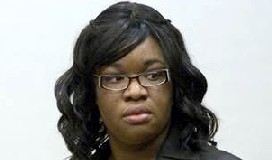 Jessica Tata
Murderer · USA · 2011
Jessica Tata was a Houston home day care owner who fled to Nigeria after a fire…
4 victims
Jessica Tata
Murderer · USA · 2011
Jessica Tata was a Houston home day care owner who fled to Nigeria after a fire…
4 victims
 Amanda Bennett
Murderer · USA · 2011
Amanda Bennett was an Indiana woman who shot her three children and set the fam…
3 victims
Amanda Bennett
Murderer · USA · 2011
Amanda Bennett was an Indiana woman who shot her three children and set the fam…
3 victims
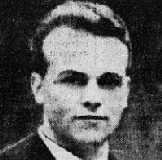 Roger Girerd
Mass murderer · France · 1965
Roger Girerd was the perpetrator of a mass murder in Charvieu-Chavagneux on May…
10 victims
Roger Girerd
Mass murderer · France · 1965
Roger Girerd was the perpetrator of a mass murder in Charvieu-Chavagneux on May…
10 victims
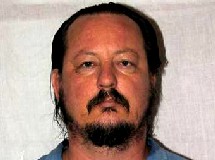 Troy Adam Ashmus
Murderer · USA · 1984
Troy Adam Ashmus was a 22-year-old carnival worker at the time of the crime. Ma…
1 victim
Troy Adam Ashmus
Murderer · USA · 1984
Troy Adam Ashmus was a 22-year-old carnival worker at the time of the crime. Ma…
1 victim
 James Kopp
Murderer · USA · 1998
James Charles Kopp (born in Pasadena, California on August 2, 1954) was an Amer…
1 victim
James Kopp
Murderer · USA · 1998
James Charles Kopp (born in Pasadena, California on August 2, 1954) was an Amer…
1 victim
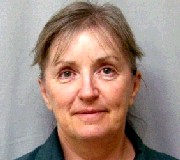 Diane Borchardt
Murderer · USA · 1994
Court: Court of Appeals of Wisconsin, District IV; State of Wisconsin v. Diane…
1 victim
Diane Borchardt
Murderer · USA · 1994
Court: Court of Appeals of Wisconsin, District IV; State of Wisconsin v. Diane…
1 victim
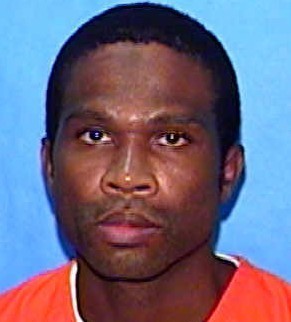 Chadwick Banks
Murderer · USA · 1992
Chadwick Banks was a Black male who was born on June 15, 1971. His aliases incl…
2 victims
Chadwick Banks
Murderer · USA · 1992
Chadwick Banks was a Black male who was born on June 15, 1971. His aliases incl…
2 victims
 Michael Hughes
Serial killer · USA · 1986
Michael Hughes was an American serial killer who was sentenced to life in priso…
8 victims
Michael Hughes
Serial killer · USA · 1986
Michael Hughes was an American serial killer who was sentenced to life in priso…
8 victims
- Gender
- female
- Country
- USA
- Location
- Bradley County, Tennessee, USA
- Date of birth
- 1986
- Age at first offence
- 26
- Characteristics
- parricide, child abuse, drugs
- Victim profile
- Her two boys, Leland, 5 and River, 3
- Method of murder
- Hyperthermia (severe overheating of the body)
- Date(s) of murder
- June 28, 2012
- Years active
- 2012
- Date of arrest
- July 18, 2012
- Status
-
Life imprisonment
Sentenced to two life terms in prison on November 25, 2013
Names and identities
- Tasha Bates was the mother of two boys, Leland Bates (5) and River Bates (3).
The offence
Tasha Bates was convicted of two counts of first-degree murder in the deaths of her two sons, Leland Bates and River Bates, who died of extreme overheating in a hot car. Their body temperatures reached at least 109 and 103 degrees inside a hot car in June 2012. Bates repeatedly insisted on the stand that she discovered them lifeless in the yard after leaving them unsupervised for a short time. The jury returned guilty verdicts on two counts of first-degree murder and the judge imposed two life sentences.
In addition to the murder convictions, Bates was also found guilty of aggravated child neglect and of facilitating the manufacture of meth. Those convictions amounted to a 40-year prison sentence that ran concurrently with her life sentences. Life sentences in Tennessee call for at least 51 years behind bars.
Investigation
Prosecutors presented evidence that manufacturing of methamphetamine was occurring at the family home. During the trial, prosecutors showed evidence of meth making at a trash-strewn home. Witness Jim Derry, a criminal analyst with Tennessee’s meth task force, described Bates’ house as a “classic meth lab.” Forensic pathologist Dr. Steven Cogswell testified about the boys’ core temperatures and their inability to have reached those levels from playing outside. Sheriff’s office investigator Monica Gatz testified about the condition of Bates’ Toyota Corolla, including which door handles worked properly and which could be opened from the inside by pulling a broken piece.
Tennessee’s vehicular overheating context was also discussed at trial, including temperature-rise explanations presented by Jan Null, a San Francisco meteorologist who specialized in vehicular overheating deaths. Null explained how a car acted “like a greenhouse” and provided estimates of temperature increases on a 103-degree afternoon.
During Detective Dewayne Scoggins’ investigation, prosecutors said Bates’s statements changed several times, and Hatchett said she ultimately admitted the children were in the car when she found them. Hatchett also said Bates stated she had fed them, while autopsy results showed no food in their stomachs. A cellphone was located inside the vehicle’s trunk, and when it was opened it appeared to be opened as if a call or text was being made. Scoggins said that on the cellphone there was conversation in text indicating drug activity.
Evidence from searches of the property, including the mobile home and a garage, indicated alleged manufacturing and use of methamphetamine, with items and garbage bags containing evidence located in material connected to Bates.
Arrest
Bates had been in jail without bond for more than a year prior to the start of the trial. Emergency responders rushed to an Armstrong Road residence of Bates’ father after Bates took the boys there. When responders arrived on the scene at Armstrong Road, the boys’ grandfather was performing CPR. River died a short time later at SkyRidge Medical Center; Leland was flown to Erlanger Medical Center’s T.C. Thompson Children’s Hospital and died later.
Trial
Jury selection and parties
Bates’s trial began in Bradley County Criminal Court before Judge Amy Reedy. The jury was described as nine men and three women, not including alternates.
The prosecution was led by Assistant District Attorney General Stephen Hatchett. The defense attorneys were Richard Hughes and Keith Roberts, with Richard Hughes identified as the public defender.
Opening statements and alleged conduct
Prosecution and defense opening statements addressed the alleged child neglect and heat-related deaths of River and Leland Bates, who were 3 and 5 years old respectively. The prosecution’s theory centered on alleged methamphetamine manufacture and use. Defense arguments emphasized Bates as a neglectful mother was not proven and argued the drug evidence could be explained by others who visited the house and were involved with drugs. The defense also challenged how drug-related materials could be linked to Bates.
Witness testimony and heat evidence
Paramedic Nick Laney testified that he observed the children, who were wet when he arrived. The initial 911 call to dispatchers was made by Mike Kile, who reported that the children had possibly drowned. Kile indicated the children were “red” in color and that they were turning purple. In a 911 tape, Kile asked Bates if the boys had been playing on the water toy. The audio portion was described as inaudible while Bates was heard crying in the background.
Emergency responders were described as managing heat-stroke/hyperthermia concerns; defense stated there was confusion in the initial call on June 28, 2012 when temperatures rose above 100 degrees. Defense asserted the children played outside all the time and Bates found them inside her car after leaving them outside unattended for a time.
Dr. Jeffrey Miller, a physician and Bradley County medical examiner, testified about River’s core temperature of 109 degrees and autopsy findings that the child had no food in his stomach. Reports indicated Leland’s body core temperature was 103 degrees upon arrival.
Jan Null’s testimony included the greenhouse analogy and temperature estimates, including:
- on a 103-degree afternoon, the car’s interior could have spiked to 120 degrees within 10 minutes, and 144 degrees within an hour.
Prosecutors also introduced evidence from a controlled experiment performed by detectives. Investigators recorded that on a 101-degree day, eight thermometers recorded a temperature of 129 degrees, with measurements collected in half-hour increments and recorded in a spreadsheet. Evidence included exterior thermometers to record ambient outside temperature and placement of thermometers at various positions inside the car, including where the children were reportedly positioned. The car was parked in the same position and location.
Defense presentation and disputed scenario
Defense counsel proposed hypothetical scenarios involving both locations, arguing that the boys may have been overheated from playing outside before possibly climbing into the car to play, or overheated before possibly climbing out of the car. The defense challenged the forensic conclusions by questioning Dr. Cogswell’s explanation that the core temperatures could not have come from playing outside and challenged the credentials and cost of Jan Null’s travel to testify.
Bates claimed she found the boys unconscious outside the car after leaving them unattended for 45 minutes. Prosecutors said Bates confessed in interviews that she discovered them inside the car. Bates was described as being in no state for questioning after each child died, according to her aunt, Tracy Honey.
Family background evidence presented at trial
The defense brought up Bates’s mother, Sandy Keith, to explain that the divorced Bates had no job or child support when she moved into Keith’s trailer in early 2012. Tracy Honey testified in tears that “Tasha was the best mother she knew how to be.” Honey added: “Growing up, she never had that childhood. ... She didn’t have the stability that she should have had.” Honey described being with Bates at hospitals where each child died and said she helped transport the mother to detectives for questioning after River passed away and then again after Leland’s death. Honey also said Bates was in no state for questioning. When pressed about whether Tasha may have lied about the boys, Honey said: “There's two people who know the truth,” and “The good Lord and Tasha.”
Sentencing
On November 25, 2013, Bradley County Criminal Court Judge Amy Reedy sentenced Tasha Bates to two life terms in prison for murder convictions.
Richard Hughes asked the court that Bates’s life sentences run concurrently, and District Attorney Stephen Hatchett did not object. Hughes said: “Justice can be accomplished with one life sentence,” and “That in no way diminishes the life of these children.”
Judge Reedy declined Hughes’s request. Reedy said: “These are two people that were murdered. Two people. Two murders.” Reedy also stated the children were “introduced into a horrible place and around horrible goings-on, and around horrible activity.”
The judge described Bates as a “dangerous offender” whose behavior indicated “little or no regard for the human life of her two boys.”
The aggravated child neglect and facilitating the manufacture of meth convictions led to a 40-year prison sentence that ran concurrently with the life sentences.
Hughes argued that Bates remained eligible for parole but that the consecutive nature of the sentences essentially nullified the chance of parole within her lifetime. Hughes stated: “She is effectively facing life without parole.”
Appeals and procedural posture
The convictions appeal process was described as automatic for a life sentence and was set to begin next year. The record did not include additional appeal outcomes.
Outcome
Tasha Bates was convicted of first-degree murder in the deaths of her two sons, Leland Bates and River Bates, and was also convicted of aggravated child neglect and facilitating the manufacture of meth. She received two life terms in prison on November 25, 2013.
Aftermath
Bates returned to Tennessee Prison for Women in Nashville to serve her sentence, where she had been since the jury’s verdict in August.
Her only surviving son, Skyler, met her in a cafeteria-like room and hugged her and talked to her in person for the first time in more than a year. Skyler sang her “Amazing Grace.”
Linda Bates, identified as the mother of Tasha Bates’ ex-husband and Skyler’s guardian, said the family had started to move on after River’s and Leland’s deaths, and that the holidays were not as hard as they were last year. She hoped to help Skyler start an anti-meth campaign to keep other parents from falling into the same spiral as his mother.
Before sentencing, prosecutors asked Linda Bates to write a victim impact statement. In it, Linda Bates appealed for mercy from the judge. She explained that her former daughter-in-law “was never taught how to be a mother,” and said she was dealing with depression at the time of the deaths. Linda Bates asked the judge to consider the effect it would have on Skyler to never see his mother free again. Linda Bates said: “For Skyler I felt like I had to write it.”
After sentencing, Linda Bates left shortly after the judge handed down her sentence and drove home to tell Skyler. The record said she backed out of the driveway and drove out to Moore's Chapel Cemetery, where she prayed and waited sitting by the boys’ graves in the cold.
Other details
- The record included discussion of a 2007 Associated Press review of 310 vehicular heat deaths involving children nationwide, stating charges were filed against parents or caregivers in 49 percent of deaths and that 81 percent of those resulted in convictions.
- The record stated the median sentence among those convictions that brought jail sentences was two years.
- The record stated that in those cases, the harshest treatment was reserved for those who intentionally left children and that, on average, those people received sentences 5 1/2 years longer.
- The record included discussion that drug- and alcohol-related cases like Bates’s were rare, occurring in only 7 percent of children’s heat-related deaths in vehicles.
- Michael Galligan, identified as a McMinnville attorney, criticized the first-degree murder verdicts and consecutive life sentences as “excessive.” He said: “I'm not saying she is without guilt,” and “She may have been negligent, reckless in the deaths of her children.” He continued: “I'm simply saying she's being punished as someone who was intending to kill their children -- when it seems clear that was never the case.” Galligan said he worried such a sentence “diminishes the criminal justice system.” He added: “If you're going to do something like this [to someone] who didn't intend to kill the children, what are you going to give to someone who did? You've gone almost as far as you can go.”
- Dr. Jeffrey Miller and others were involved in medical testimony and description of overheating/hyperthermia.
- The record reported uncertainty and dispute in the case during trial about the heat timeline and whether children could have been overheated from playing outside before entering the car or without being able to get out once overheated, including questions addressed by the defense and testimony from forensic experts.


Spotted an error, or have more information about this case?