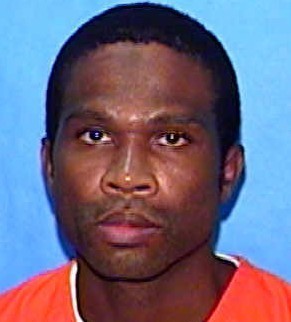
Chadwick Banks
Murderer Brian Kevin Rosenfeld
Murderer · USA · 1985
Brian Kevin Rosenfeld Brian Kevin Rosenfeld was sentenced to three concurrent l…
23 victims
Brian Kevin Rosenfeld
Murderer · USA · 1985
Brian Kevin Rosenfeld Brian Kevin Rosenfeld was sentenced to three concurrent l…
23 victims
 Russell Ellwood
Murderer · USA · 1991
Russell Ellwood was a former taxi driver. Authorities suspected him of killing…
20 victims
Russell Ellwood
Murderer · USA · 1991
Russell Ellwood was a former taxi driver. Authorities suspected him of killing…
20 victims
 Robert Martines Perez
Murderer · USA · 1994
Name: Robert Martines Perez · Other name used in proceedings: Robert Martinez P…
15 victims
Robert Martines Perez
Murderer · USA · 1994
Name: Robert Martines Perez · Other name used in proceedings: Robert Martinez P…
15 victims
 Billy Frank Vickers
Murderer · USA · 1993
Billy Frank Vickers Vickers was executed by lethal injection in Texas on Januar…
14 victims
Billy Frank Vickers
Murderer · USA · 1993
Billy Frank Vickers Vickers was executed by lethal injection in Texas on Januar…
14 victims
 Stanley Lingar
Murderer · USA · 1985
Stanley Lingar was executed by lethal injection in Missouri on February 7, 2001…
1 victim
Stanley Lingar
Murderer · USA · 1985
Stanley Lingar was executed by lethal injection in Missouri on February 7, 2001…
1 victim
 Charles Anthony Boyd
Murderer · USA · 1986
Charles Anthony Boyd was a previously convicted felon who was convicted of capi…
3 victims
Charles Anthony Boyd
Murderer · USA · 1986
Charles Anthony Boyd was a previously convicted felon who was convicted of capi…
3 victims
 Jeremy Molitor
Murderer · Canada · 2002
Jeremy Molitor was a former Canadian boxer and Commonwealth Games gold medalist…
1 victim
Jeremy Molitor
Murderer · Canada · 2002
Jeremy Molitor was a former Canadian boxer and Commonwealth Games gold medalist…
1 victim
 Dena Schlosser
Homicide · USA · 2004
Dena Schlosser (born 1969) lived in Plano, Texas. She was the mother of Margare…
1 victim
Dena Schlosser
Homicide · USA · 2004
Dena Schlosser (born 1969) lived in Plano, Texas. She was the mother of Margare…
1 victim
 Stanley Neace
Mass murderer · USA · 2011
Stanley Neace, aged 47, killed his wife and five others in Breathitt County, Ke…
5 victims
Stanley Neace
Mass murderer · USA · 2011
Stanley Neace, aged 47, killed his wife and five others in Breathitt County, Ke…
5 victims
 Daniel Remeta
Spree killer · USA · 1985
Daniel Remeta Remeta was executed by electrocution in Florida on March 31, 1998…
5 victims
Daniel Remeta
Spree killer · USA · 1985
Daniel Remeta Remeta was executed by electrocution in Florida on March 31, 1998…
5 victims
- Gender
- male
- Country
- USA
- Location
- Gadsden County, Florida, USA
- Date of birth
- June 15, 1971
- Age at first offence
- 21
- Characteristics
- parricide, rape
- Victim profile
- Cassandra Banks (his wife) and Melody Cooper, 10 (his stepdaughter)
- Method of murder
- Shooting (.32 handgun)
- Date(s) of murder
- September 24, 1992
- Years active
- 1992
- Date of arrest
- 4 days after
- Status
-
Executed
Executed by lethal injection on November 13, 2014 in Florida, following sentencing to death on April 29, 1994
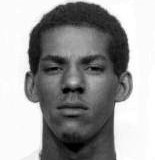
Case record: Chadwick Banks
Background
Chadwick Banks was a Black male who was born on June 15, 1971. His aliases included CHADWICKS BANKS and CHAD. He had black hair and brown eyes, and his weight was 165 lbs. He was convicted in Gadsden County, in the Second Judicial Circuit (Gadsden County, Case #92-841-CFA).
Banks pled no contest to two counts of first-degree murder for the shooting deaths of his wife, Cassandra Banks, and his stepdaughter, Melody Cooper. He also pled no contest to sexual battery on a child under the age of twelve for acts committed against Melody Cooper.
The jury recommended death by a vote of nine to three, and the trial court sentenced Banks to death.
The offence
Chadwick Banks entered Cassandra Banks’ trailer with a gun at approximately 2:50 a.m. on September 24, 1992. He shot Cassandra Banks in the head while she was asleep. Cassandra Banks died without ever gaining consciousness.
Banks then went to Melody Cooper’s bedroom at the other end of the trailer. He set the gun down and sexually battered her for approximately twenty minutes before shooting her in the top of the head, killing her.
Banks was married to Cassandra Banks. Cassandra Banks had one child from a previous relationship, Melody Cooper, who was not quite 11 years old at the time she was murdered.
Cassandra Banks and Melody Cooper were killed in the early morning hours of September 24, 1992. Banks confessed to police after their bodies were found by a family member.
Victim accounts and evidence described at trial and in later proceedings
Banks told police that Melody Cooper did not resist or try to get away. Evidence and trial testimony showed that Banks’s blood was found under Melody Cooper’s fingernails and on her pillow. The evidence also showed that Banks had sodomized Melody Cooper, with his DNA found inside her, and that there was significant trauma to her anus.
Melody Cooper’s body had been found face down, on her knees, on the floor beside her bed. She was nude below her waist, and her posterior and genitalia were exposed. Her underpants had been torn and lay under a T-shirt that had what appeared to be a footprint on it. A pubic hair deep inside her body was microscopically consistent with Banks’s pubic hair. There was also significant trauma to her anus, indicating the girl had been sodomized.
Banks’s semen was found inside her anus, on her t-shirt, on her inner thigh, on the floor, and in Banks’s own underwear. Melody’s bedroom and her bed were in disarray. She had a bruise on the right side of her forehead and an abrasion on her right eyebrow. There was a blood stain on the bed sheet. Blood identified as Banks’s was found under Melody’s fingernails and on the pillowcase, while blood on her t-shirt was identified as hers.
The medical examiner testified that, given the position of Melody’s body, which had not moved after the shot, her head must have been “pulled back real far . . . to get the gun to shoot in the top of the head”.
Banks ordered a last meal that included fried fish, homemade French fries, hush puppies, homemade banana pudding, red velvet cake, butter pecan ice cream, and a glass of ice water. He also received and ate the meal served about 10 a.m. on the day of execution.
Setting and events leading up to the killings
Banks was drinking and playing pool at a bar in Quincy about 20 miles from Tallahassee. Cassandra Banks left the bar without him after an argument. At about 3 a.m., Banks left and returned home.
According to witness testimony described in the case record, a neighbor saw Banks waiting for several minutes outside the mobile home in the dark before he entered without turning on the lights. Banks was seen leaving about an hour later. He went to a relative’s house where he slept for a few hours and stashed his gun before going to work. He was arrested there a few hours after Cassandra and Melody’s bodies were found.
Relationships described
Cassandra Banks was the wife of Chadwick Banks. She married Chadwick Banks two months before the murders. Cassandra Banks worked in Tallahassee at the Apalachee Center. Melody Cooper was Chadwick Banks’s stepdaughter.
Banks and the victims lived in a trailer near Dut’s, a nightclub owned by Cassandra’s grandmother Bernice Collins and run by her son (and Cassandra’s uncle) Leonard Collins.
Investigation and arrest
Banks was arrested four days after the 1992 slayings. He confessed that he killed Cassandra Banks after sexually assaulting Melody Cooper following the shooting of his wife.
Trial
The trial court in Gadsden County accepted Banks’s pleas of no contest:
- Count I: First-Degree Murder (Cassandra Banks)
- Count II: First-Degree Murder (Melody Cooper)
- Count III: Sexual Battery/Victim Under 12 (acts committed against Melody Cooper)
On March 14, 1994, the jury found Banks guilty on all counts.
On March 18, 1994, during advisory sentencing, the jury by a 9 to 3 majority voted for the death penalty for the murder of Melody Cooper.
On April 29, 1994, the trial court sentenced Banks as follows:
- Count I: First-Degree Murder (Cassandra Banks) — Life
- Count II: First-Degree Murder (Melody Cooper) — Death
- Count III: Sexual Battery/Victim Under 12 — Life
Sentencing
The jury recommended death. The trial court sentenced Banks to death after finding that each of the aggravators far outweighed all of the mitigating circumstances.
The trial court found the following aggravators had been established beyond a reasonable doubt:
- The defendant was previously convicted of another capital felony or a felony involving the use or threat of violence to the person.
- The capital felony was committed while the defendant was engaged in the commission of a felony.
- The capital felony was especially heinous, atrocious, or cruel.
In statutory mitigation, the court found Banks’s age but gave this factor little weight in light of his maturity and intelligence.
In nonstatutory mitigation, the trial court found:
- Banks’s service in the military
- Employment history
- Good character
- Contribution to his community and family
The court gave little weight to these factors, reasoning that they were “no more than society expects from the average individual.”
The trial court also found Banks’s potential for rehabilitation, cooperation with the police, and his love and support of his family, but none of these were given great weight.
The trial court noted that Banks initially denied involvement with the murders and cooperated with police only after being told of an eyewitness.
The trial court rejected Banks’s religious activities as a nonstatutory mitigator and found insufficient evidence to establish that the killing occurred while he was under the influence of alcohol.
During the proceeding described in the case record, Banks was 21 at the time of the murder.
Appeals and postconviction proceedings
Timeline
- September 24, 1992 — Chadwick Banks shot Cassandra Banks in the head and later shot Melody Cooper in the head after sexually battering her for approximately twenty minutes.
- 04/29/1991 — Sentenced on aggravated assault charges (as listed in the prison sentence history).
- 03/29/1991 — AGG ASSLT-W/WPN NO INTENT TO K (as listed in the prison sentence history).
- 03/16/1994 — GADSDEN 9100249 (as listed in the prison sentence history).
- 07/15/1994 — Received date listed for DC number 582127.
- 03/14/1994 — Jury found Chadwick Banks guilty on all counts.
- 03/18/1994 — Advisory sentencing: jury voted 9 to 3 for death penalty for the murder of Melody Cooper.
- 04/29/1994 — Trial court sentenced Banks: life for Cassandra Banks; death for Melody Cooper; life for sexual battery/victim under 12.
- 05/31/1994 — Banks filed direct appeal in Florida Supreme Court, pertaining only to penalty phase for murder of Melody Cooper.
- 08/28/1997 — Florida Supreme Court affirmed convictions and sentence of death.
- 10/14/1997 — Rehearing denied.
- 11/13/1997 — Mandate issued.
- 03/23/1998 — Petition for writ of certiorari denied by U.S. Supreme Court.
- 05/31/1994 — (Appeal filed date repeated in case record)
- 06/10/1999 — Banks filed rule 3.850 motion in Circuit Court (CC #92-841).
- 04/30/2001 — Motion denied (3.850).
- 05/22/2001 — Appeal filed in Florida Supreme Court (FSC #01-1153).
- 03/20/2003 — 3.850 denial affirmed.
- 01/11/2002 — Banks filed petition for writ of habeas corpus in Florida Supreme Court (FSC #SC02-63).
- 03/20/2003 — Petition denied.
- 04/21/2003 — Mandate issued.
- 12/01/2004 — Banks filed petition for writ of habeas corpus in U.S. District Court, Northern District (USDC #03-328).
- 07/29/2005 — U.S. District Court dismissed petition.
- 11/13/2014 — Chadwick Banks was executed by lethal injection in Florida.
Direct appeal (Florida Supreme Court)
Banks pled no contest to two counts of first-degree murder for the shooting deaths of his wife, Cassandra Banks, and her daughter (his stepdaughter), Melody Cooper. His appeal related solely to the penalty phase for the murder of Melody Cooper.
The Florida Supreme Court held:
- The trial court error in instructing on cold, calculated, and premeditated (CCP) factor was harmless.
- Evidence supported the finding that the murder of the stepdaughter was heinous, atrocious, or cruel (HAC).
- The trial court did not engage in impermissible doubling of aggravators.
- Evidence supported finding that Banks was not under the influence of alcohol when he assaulted and killed Melody Cooper.
- Rejection of Banks’s religious activities as mitigating in nature was not an abuse of discretion.
- Imposition of the death penalty was proportional.
The Florida Supreme Court affirmed the sentence of the trial court imposing death on Chadwick D. Banks.
Verbatim instruction referenced in the direct appeal record:
Four, the crime for which the defendant is to be sentenced was committed in a cold, calculated, and premeditated manner, without any pretense of moral or legal justification. Premeditation, within the meaning of the first degree murder law, requires proof that the homicide was committed after consciously deciding to do so. The decision must be present in the mind of the defendant at the time of the killing. The law does not fix the exact period of time that must pass before the formation of the premeditated intent to kill and the killing. The period of time must be long enough to allow reflection by the defendant. The premeditated intent to kill must be formed before the killing.
ANSTEAD, J., concurred in part and dissented in part with an opinion.
Postconviction relief (Florida Supreme Court and trial court)
After Banks’s first-degree murder convictions and death sentence were affirmed, he petitioned for postconviction relief under Florida Rule of Criminal Procedure 3.850. The Circuit Court, Gadsden County (William L. Gary, J.), denied relief. Banks appealed and also petitioned for writ of habeas corpus.
- Banks was not denied effective assistance of counsel.
- Banks was not entitled to habeas corpus relief.
The Florida Supreme Court affirmed the trial court’s denial of postconviction relief and denied habeas corpus relief.
3.850 claims and evidentiary hearing testimony described
On June 10, 1999, Banks filed a rule 3.850 motion alleging denial of effective assistance of counsel due to trial counsel’s failure to retain a mental-health expert to evaluate possible statutory and nonstatutory mitigating evidence.
Witnesses at the evidentiary hearing included:
- Steve Seliger and Armando Garcia (trial counsel for Banks)
- Dr. David Partyka and Dr. James Larson (expert witnesses retained by Banks’s postconviction counsel)
Banks argued counsel failed to seek the assistance of a mental health expert to explain mitigating evidence concerning beatings Banks received from his father from the age of three to the age of around eleven or twelve and Banks’s abuse of alcohol.
At the evidentiary hearing, Dr. Larson testified that Banks’s abuse of alcohol was his method of dealing with the physical abuse suffered as a child. Dr. Larson conceded on cross-examination that this type of testimony could backfire and leave the jury with the impression that the defendant was a dangerous individual.
Dr. Partyka testified that alcohol played a major role in the crimes and that consumption affected Banks’s judgment and inhibitions, releasing anger concerning how he had been treated as a child. Dr. Partyka admitted the degree of intoxication was based on information obtained from Banks and that he was not familiar with testimony that Banks did not show signs of intoxication the night of the murders.
The Florida Supreme Court concluded Banks failed to demonstrate deficient conduct in failing to present child abuse evidence and failed to demonstrate ineffective assistance.
Banks also argued that Seliger was ineffective for allowing Garcia to present closing argument at the penalty phase. The trial court did not rule on the issue, but allowed Seliger to address it during testimony. Seliger stated he opted to allow Garcia to make the closing argument because Garcia was “more emotional” than Seliger.
Banks also argued that Florida’s death penalty statute was unconstitutional because the jury was not required to make specific factual findings as to aggravation and mitigation, and he raised arguments based on United States Supreme Court decisions. The Florida Supreme Court rejected the constitutional challenge, and habeas relief based on those arguments was denied.
Federal habeas proceedings (11th Circuit)
Banks filed federal habeas relief after the state postconviction proceedings. The U.S. District Court for the Northern District granted summary judgment and dismissed the habeas petition.
The U.S. Court of Appeals held Banks’s federal habeas petition was untimely. The holding was based on a period that exceeded the one-year statute of limitations after second postconviction counsel’s appointment and filing for federal habeas.
The decision also described Banks’s timeline of representation:
- The first collateral counsel was Gary Printy, appointed September 2, 1998. Banks wrote multiple letters asking about postconviction motion issues and deadlines. Printy requested an extension on March 9, 1999, granted on March 22, 1999. Printy never filed the habeas petition.
- Jeffrey Hazen was appointed on October 15, 2003. Hazen filed a federal habeas petition on December 1, 2004, four years late.
- Terri Backhus was appointed April 20, 2005.
In the federal appellate decision, the court described the AEDPA one-year statute of limitations clock beginning March 24, 1998, making the federal habeas deadline March 24, 1999, and stated that Banks’s petition was filed on December 1, 2004. The decision described that even with assumptions about equitable tolling, the petition remained untimely.
Final statement and execution
Banks delivered a final statement at the execution. His final words included:
I'm very sorry for the hurt and pain I have caused you all of these years. Year after year, I have tried to come up with a reasonable answer for my actions. But how could such acts be reasonable?
On November 13, 2014, Chadwick Banks was executed by lethal injection in Florida.
Other details
Prior violence and related sentence history in the case record
The case record included prior sentence history entries for AGG ASSLT-W/WPN NO INTENT TO K and subsequent sentencing related to those aggravated assault charges.
The case record also described that prior to the instant offense, Banks had been charged with two violent felonies in which the adjudication of guilt was withheld. Upon the commission of the murders, Banks was adjudicated guilty on the two aggravated assault charges and was sentenced to five years on each charge. He was on probation for these crimes when he committed the two murders.
Execution medication protocol described
Florida used a three-drug mixture to execute prisoners: midazolam hydrochloride, vecuronium bromide and potassium chloride. The drugs were administered intravenously. The series was intended to first induce unconsciousness, then paralysis and finally cardiac arrest. Midazolam had been part of the three-drug mixture since 2013.
Prisoner visits and execution attendance described
Department of Corrections spokeswoman Jessica Cary stated Banks was visited by 14 people, including his parents, nine siblings, a friend and his spiritual adviser earlier on the day of execution. Cary also stated none of his family attended the execution.
The execution was attended by Gadsden County Sheriff Morris Young, reserve deputy Tommy Mills and GCSO Maj. James Morgan.
Annette Black, Cassandra Banks’s mother and Melody’s grandmother, said she appreciated Banks’s apology and hoped it would serve as a lesson. Rutherford Black, Rutherford Black Jr., and Gail Black were also described as joining Annette Black.
Lawyers and court officials named
Trial judge: The Honorable William Gary. Direct appeal: Teresa Sopp — Special Public Defender Attorney. Collateral appeals: Terri Backhus — Registry. Trial attorney: Stephen Seliger — Private Attorney.
In the federal appellate decision, Circuit Judge Wilson authored the opinion, and the federal district court decision involved Senior United States District Judge Roger Vinson.
Counts and sentencing labels preserved in the record
The record listed:
- Received: 07-15-94
- County: Gadsgen
- Offense date: 09/24/92
- Sentencing date: 04/29/94
- DC Number: 582127
- Case number: 92-841-CFA
Outcome
Chadwick Banks was convicted following a no contest plea and was sentenced to death for the murder of Melody Cooper, and life for the murder of Cassandra Banks. The Florida Supreme Court affirmed his convictions and death sentence. Banks was executed by lethal injection on November 13, 2014 in Florida.
Spotted an error, or have more information about this case?