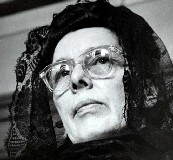
Marie Besnard
Serial killer? Helmuth Schmidt
Serial killer? · USA · 1918
Helmuth Schmidt used a false name to place advertisements, which lured young, l…
30 victims
Helmuth Schmidt
Serial killer? · USA · 1918
Helmuth Schmidt used a false name to place advertisements, which lured young, l…
30 victims
 Antoinette Scieri
Serial killer · France · 1924
Antoinette Scieri was born in Italy and emigrated to France as a child. In the…
12 victims
Antoinette Scieri
Serial killer · France · 1924
Antoinette Scieri was born in Italy and emigrated to France as a child. In the…
12 victims
 Alfred Cline
Serial killer? · USA · 1930
Alfred Cline was an American “Bluebeard” who was linked with at least nine homi…
9 victims
Alfred Cline
Serial killer? · USA · 1930
Alfred Cline was an American “Bluebeard” who was linked with at least nine homi…
9 victims
 Christine & Léa Papin
Murderers · France · 1933
Christine Papin was born 8 March 1905 and died 18 May 1937. Léa Papin was born…
2 victims
Christine & Léa Papin
Murderers · France · 1933
Christine Papin was born 8 March 1905 and died 18 May 1937. Léa Papin was born…
2 victims
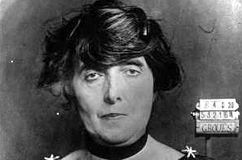 Madame Bessarabo
Murderer · France · 1920
Madame Bessarabo was tried for murder after the death of Paul Jacques and later…
1 victim
Madame Bessarabo
Murderer · France · 1920
Madame Bessarabo was tried for murder after the death of Paul Jacques and later…
1 victim
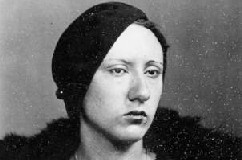 Violette Nozière
Murderer · France · 1933
Violette Nozière was convicted of parricide in 1934 for poisoning her parents i…
1 victim
Violette Nozière
Murderer · France · 1933
Violette Nozière was convicted of parricide in 1934 for poisoning her parents i…
1 victim
 Ivo Colon
Murderer · USA · 1998
Ivo Colon was convicted of capital felony murder and murder in connection with…
1 victim
Ivo Colon
Murderer · USA · 1998
Ivo Colon was convicted of capital felony murder and murder in connection with…
1 victim
 George Clifton Gilmore
Murderer · USA · 1979
George Clifton Gilmore was executed on August 31, 1990. George Clifton Gilmore…
5 victims
George Clifton Gilmore
Murderer · USA · 1979
George Clifton Gilmore was executed on August 31, 1990. George Clifton Gilmore…
5 victims
 Sabine Radmacher
Murderer · Germany · 2010
Sabine Radmacher Sabine Radmacher was fatally shot by special police units the…
3 victims
Sabine Radmacher
Murderer · Germany · 2010
Sabine Radmacher Sabine Radmacher was fatally shot by special police units the…
3 victims
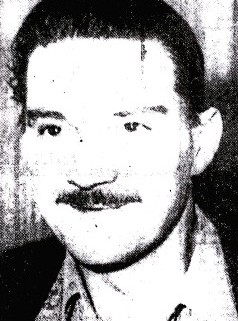 Jérôme Carrein
Murderer · France · 1975
Jérôme Carrein (1939 — June 23, 1977) was executed by guillotine in the yard of…
1 victim
Jérôme Carrein
Murderer · France · 1975
Jérôme Carrein (1939 — June 23, 1977) was executed by guillotine in the yard of…
1 victim
 Beauford White
Mass murderer · USA · 1977
Beauford White was executed by electrocution in Florida on August 28, 1987. Whi…
6 victims
Beauford White
Mass murderer · USA · 1977
Beauford White was executed by electrocution in Florida on August 28, 1987. Whi…
6 victims
- Gender
- female
- Country
- France
- Location
- Loudun, Vienne department, France
- Date of birth
- August 15, 1896
- Age at first offence
- 31
- Characteristics
- poisoner, to inherit
- Victim profile
- Auguste Antigny, 33 (her first husband) / Marie Lecomte, 86 / Toussaint Rivet, 64 / Blanche Rivet, 49 / Pierre Davaillaud, 78 (her father) / Louise Gouin, 92 (her maternal grandmother) / Marcellin Besnard, 78 (her stepfather) / Marie-Louise Besnard, 68 (her stepmother) / Lucie Bodin, 45 / Pauline Bodineau, 88 / Virginie Lalleron, 83 / Marie-Louise Davaillaud, 71 (her mother)
- Method of murder
- Poisoning (arsenic)
- Date(s) of murder
- 1927 - 1949
- Years active
- 1927–1949
- Date of arrest
- July 21, 1949
- Status
-
Died in custody
Acquitted on December 12, 1961; died on February 14, 1980
Marie Besnard
Background
Marie Besnard (also known as Marie Davaillaud) was born in Loudon, France, on August 15, 1896. She was an only child educated at a convent school. Some childhood playmates described her as somewhat mean.
In 1919, Marie married her cousin, Auguste Antigny. Antigny died on July 21, 1927. The official cause of death listed for Antigny was tuberculosis. In 1929, she married Léon Besnard, who owned a rope shop in Loudon.
Marie Besnard lived in Loudon and accumulated property, described as including six houses, a local White Horse inn, and several stud farms.
The offence
Multiple deaths were linked to arsenic poisoning.
After Léon Besnard's parents inherited family money, the couple invited them to move in with Marie and Léon. Soon thereafter, Léon’s father died apparently after eating poisonous mushrooms. Léon’s mother followed three months later, apparently of pneumonia. The parents’ estate was split between Léon and his sister, Lucie. Léon inherited the entire estate after Lucie committed suicide a few months after their mother’s death.
Marie Besnard’s father died of a cerebral hemorrhage on May 14, 1940.
Following the string of family deaths, Marie and Léon took a wealthy childless couple into their home: Touissaint Rivet and Blanche Rivet. Touissaint Rivet died of pneumonia on July 14, 1939. Madame Blanche Rivet (née Lebeau) died on December 27, 1941 from aortitis. The Rivets’ will named Marie Besnard as their only heir. Another account described that they were named as the beneficiaries of the Rivets’ total wealth.
Pauline Bodineau (née Lalleron) and Virginie Lalleron, cousins of Marie, had also named Marie as their only beneficiary. Pauline died aged 88 on July 1, 1945 after mistaking a bowl of lye for her dessert one night. Virginie died aged 83 on July 9, 1945 after making the same mistake a week later.
Marie’s mother, Marie-Louise Davaillaud (née Antigny), died on January 16. After Marie discovered Léon was having an affair, Léon remarked to a close friend, Madame Pintou, that he believed he was being poisoned, saying:
"that his wife had served him some soup on a bowl that already contained a liquid."
Léon died shortly afterwards on October 25, 1947. His doctor listed the cause of death as uremia in one account, and another account described his death as apparently from uremia.
After Léon’s death, a letter was sent to the public prosecutor in which Louise Pintou stated that Léon had expressed his concern to her that he was being poisoned by Marie. Authorities initially dismissed Pintou’s letter, but repeated demands by Pintou and others that Léon’s death be investigated led them to give in.
An autopsy later found that Léon had ingested a large amount of arsenic over a period of time.
The arsenic allegations expanded to other bodies exhumed after Léon’s exhumation.
Investigation
Léon Besnard’s body was exhumed on May 11, 1949. An autopsy found arsenic in his remains.
This discovery led to the exhumation of other bodies. By the time the investigation was over, arsenic was also found in the bodies of Léon’s parents and sister, the Rivets, and Marie’s first husband, cousins, mother and father in one account.
Judge Pierre Roger later made an official announcement after bodies were dug up and analyzed:
"We have dug up 13 bodies ... in 12 of the 13, death was caused by arsenic poisoning. One of these cases is covered by the statute of limitations, so let us call it eleven. Anyway, we have the rough picture."
In another account, the legend of Marie Besnard began in the gossip mills of Loudun. It was described that Léon had asked friends to have an autopsy performed if he died suddenly.
In the courtroom phases, the defence also argued about an alternative source for arsenic, including that arsenic could have entered bodies after burial from soil, and that the cemetery concierge had grown potatoes near the burial sites and sprinkled the patch with fertilizers containing arsenic.
Arrest
Marie Besnard was arrested and charged with multiple murder.
She was arrested and charged with 11 counts of murder in February 1952-era proceedings described in one account, and she was also described as being charged with 13 counts of murder in another account.
In one account, a police commissaire knocked on Marie Besnard’s door on a hot July morning in 1949 and ordered her to come along. The charge described was that she had poisoned with arsenic her mother, father, two husbands, father-in-law, mother-in-law, sister-in-law, grandmother-in-law, two cousins, great-aunt, and two close friends.
Marie Besnard was arrested and charged on July 21, 1949 in a separate account.
Trial
Marie Besnard faced three trials.
Her first trial began in February 1952. It was held in Poitiers in one account. Another account described the trial as opened at Poitiers in February 1952.
Defence counsel included René Hayot and Albert Gautrat, who questioned the methods used to find arsenic in bodies and accused the laboratory of losing and mishandling evidence. They also presented evidence that arsenic found in bodies could have come from the soil in the cemetery where bodies had been buried.
The autopsy report by doctor Béroud was central to the prosecutions. Béroud’s autopsy report, based on an analytical method developed by Marsh and Cribier, concluded that victims had been slowly poisoned by arsenic. Further analysis by professors Fabre, Kohn-Abrest and Griffon found abnormal levels of arsenic in exhumed bodies. Another report by professor Piedelièvre in 1954 confirmed results of the 1952 analysis but differed in some respects. The presence of abnormally high arsenic levels was also confirmed by another report by Professor Frédéric Joliot-Curie.
Béroud had difficulty in defending his results under examination from Besnard’s lawyers.
As a result, the first two trials ended without a conviction. In one account, the court could not come to a verdict and ruled it needed more time to review the scientific evidence, adjourned, and reconvened. It allowed her to post a 1,200,00-franc bond and await her next court appearance outside the confines of a jail, after hearing both sides present different interpretations of the scientific evidence.
During the second trial, three informers reported that Marie Besnard had attempted to hire them to "rub out" some gossipy neighbors.
The second trial ended up being ruled a mistrial in one account. Experts could not agree, and one became so upset he left the witness stand, sat down and folded his arms, and refused to testify.
After this, Besnard remained in jail until March 1954 in one account. In another account, she remained on hold, and she was free on bond during later proceedings.
Her third trial began again in 1961. She was not called back into court until November 20, 1961 in one account. As before, prosecution and defense presented different interpretations of the scientific evidence.
The third trial ended with a verdict. On December 12, 1961, Marie Besnard was found not guilty on all counts.
In one account, it was stated that the jury took three hours and 25 minutes to deliberate and acquitted her on December 12, 1961.
A court statement in the March 1954-related account included that the judges again declared they needed more time to come to a decision before allowing bond; it described differing scientific interpretations. Another account described that the prosecution scaled down its charges and would try to convict her for only three murders, but the case was lost and the jury acquitted her.
Sentencing
No sentencing was imposed because Marie Besnard was acquitted on December 12, 1961.
Appeals
No appeal outcome was described beyond acquittal at the third trial on December 12, 1961.
Outcome
After three trials lasting over 10 years, Marie Besnard was acquitted on December 12, 1961. She was described as a free woman in 1980.
Aftermath
Marie Besnard died on February 14, 1980.
Popular culture included:
- The 1986 television film L'Affaire Marie Besnard (The Marie Besnard Affair), which won the Sept d'or French television awards for Alice Sapritch (best actress), Yves-André Hubert (director; best movie made for TV), and Frédéric Pottecher (best writer).
- The 2006 television film Marie Besnard, l'empoisonneuse (Marie Besnard, the Poisoner), which resulted in the 2007 Best Performance by an Actress Emmy Award for Muriel Robin in the title role.
Other details
Marie’s classmate memories included descriptions that she was "vicious and immoral" and "wild with boys" in one account.
A Loudon bookseller described the town’s reputation for wickedness and referenced white wines, stating:
"I think," said a bookseller of Loudun last week, "it is because of our fine white wines. One can drink liters, like water, but suddenly it hits like a coup de fusil and even the old feel young."
The account also included the statement:
"The devil is active in Chatellerault, in Chinon and in Domfront, but above all he is active in Loudun."
A claim about Marie Besnard’s local reputation stated:
"the only woman in town who could go to communion without first going to confession."
An attorney offered a defence remark about the number of murders:
"In this country of good wines and fine living," said he, "one might possibly conceive of one murder, two murders, even three murders. But eleven murders? Preposterous!"
The case included multiple quotations tied to the trial accounts. During deliberations or testimony recollections, Marie murmured:
"Perhaps you had an antidote for arsenic."
A newspaper phrasing and headline were included:
"UN AUTRE POUR MARIE!" proclaimed newspapers in big black headlines all over France as each body was reported.
A description of postal death threats and property damage was included: it was described that death threats were sent through the mails to local gossips, and that Madame Pintou’s home was broken into where the burglar proceded to selectively destroy every gift Madame Pintou had ever received from Leon.
The case description also included that another pair of accusers was forced to flee Loudon after arsonists burned their home.
One account described that while Marie was incarcerated, "3 informers reported to the police that Marie had attempted to hire them to "rub out" some of the neighborhood gossips."
In one account, there was a mention of a prior idea about arsenic as an alternative to divorce and that Marie had once recommended arsenic to an unhappily married friend.
A number of victim listings appeared in different narrative accounts:
- A charge described in one account covered poisoning of her mother, father, two husbands, father-in-law, mother-in-law, sister-in-law, grandmother-in-law, two cousins, great-aunt, and two close friends.
- Another account described the list of exhumed bodies and deaths, including Auguste Antigny (died 1927), and other named individuals such as Madame Leconte (a cousin), Monsieur Rivet, Alice Bodin, Marie Louise Davailland, Marcellin Besnard, Pauline and Marie Lalleron, along with a variety of related family members and in-laws.
Spotted an error, or have more information about this case?